
What if the cheapest-looking new-car offer costs more by the time you’re ready to drive away? If “car buying mistakes to avoid australia” is on your search list, compare the whole purchase, not just the advertised price.
Buying a new car should feel exciting, but it’s easy to feel rushed into choosing a model, variant or add-on before you know what suits you. Offers can be hard to compare when one shows a drive-away price and another leaves costs unclear. Add a trade-in, finance paperwork and delivery estimates, and small details can become unwelcome surprises.
This guide explains how to avoid common new-car buying mistakes in Australia and compare offers on a like-for-like basis. You’ll learn what to check in drive-away prices, how to choose a suitable vehicle and review purchase terms, and what to clarify about trade-ins, finance, your order and delivery before signing. A few careful checks can help you buy with confidence, whether you work directly with a dealership or get support comparing offers.
Key Takeaways
- Write a clear buying brief before requesting quotes, so you compare cars that meet your needs.
- Check model and variant details against manufacturer or authorised dealer information, then compare offers on the same basis.
- Ask for the new-car price and trade-in value separately, with itemised details in writing, to see what each offer includes.
- Check the vehicle, selected options and stated conditions on the written order. Treat delivery estimates as estimates until confirmed by the authorised dealer.
- Use these practical checks at each stage, from comparing offers to preparing for handover, to avoid car buying mistakes in Australia.
Car buying mistakes to avoid in Australia: start with the right brief
Preventable car-buying mistakes often start before you request a quote. If you haven’t decided what the car needs to do or what total purchase commitment feels manageable, it’s harder to compare models and offers fairly.
This guide covers ten practical pitfalls, from setting priorities and assessing quotes to checking paperwork and confirming delivery. Start with a simple brief: what you need the car for, which requirements are essential, and what you can comfortably spend overall. That gives you a steadier basis for comparing models, variants and offers without being swayed by a particular feature or repayment figure.
Mistake 1: Shopping without setting a realistic total budget
A weekly repayment can make a car seem affordable, but it doesn’t show the full picture. First consider the vehicle’s quoted price and the total amount you’re prepared to commit. If you’re considering finance, review repayments separately and understand how they relate to the vehicle price and finance terms.
Allow room in your personal budget for ongoing ownership costs, such as fuel or charging, registration, insurance, servicing and tyres. Costs depend on your circumstances and how you use the car, so consider your own driving needs rather than relying on a generic estimate. A vehicle quote and a finance repayment are different figures. Don’t treat one as a substitute for the other.
Mistake 2: Choosing a car before listing practical requirements
Before settling on a make or model, think through everyday use. How many passengers do you usually carry? What needs to fit in the luggage area? Roughly how far do you travel, and are your regular trips mostly in town, on highways or on regional roads?
Separate must-haves from preferences. Passenger space or a feature you rely on may rule out some variants, while a preferred colour or optional extra may simply help you choose between otherwise suitable options. For example, a household that regularly carries bulky sports gear might prioritise luggage capacity over a feature used only occasionally.
If you’re weighing a new car against a used alternative, understanding the used car market can provide useful context. Used-car pricing and vehicle history, however, are different considerations from comparing new-car offers.
Once your needs are clear, explore options through a new-car buying service. A well-defined brief makes it easier to focus on suitable vehicles and assess each offer.
Mistakes when comparing new-car models, variants and drive-away offers
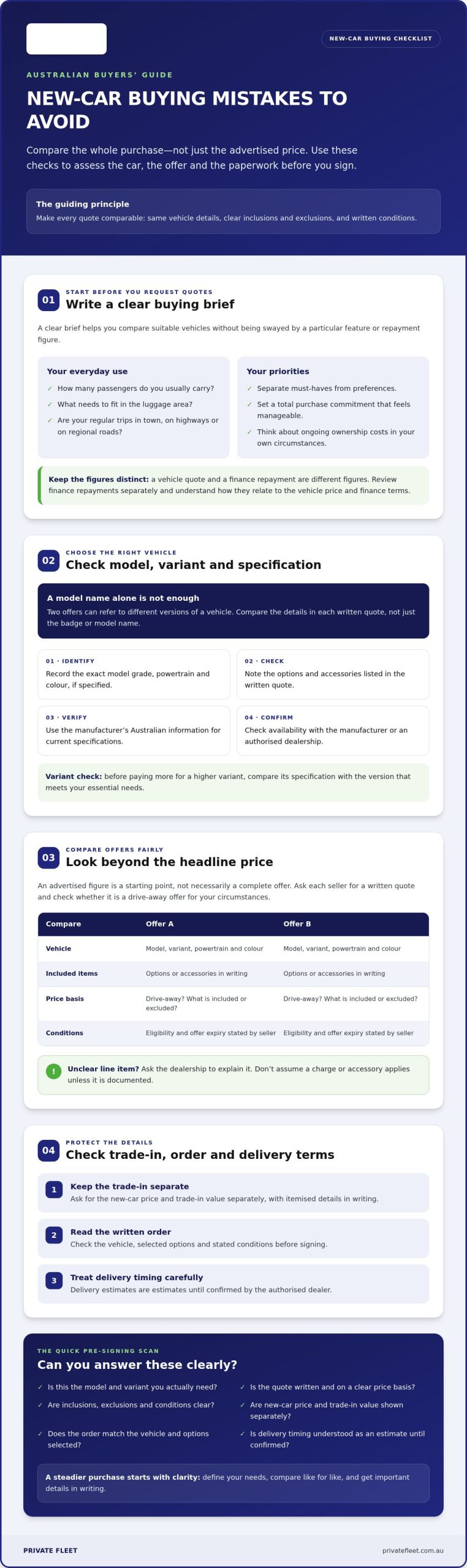
Once you know what you need from a car, compare the actual vehicles and written offers, not just model names or headline figures. A simple comparison table can show where options differ and what still needs checking. This is especially useful when similar-looking offers have different specifications or conditions.
Mistake 3: Comparing different models or variants as if they were identical
A model name alone doesn’t tell you whether two offers cover the same car. Record the exact model grade and powertrain, along with any options and accessories listed in each written quote. Compare those details with your priorities. A higher variant may include features you value, but check its specification against the version that meets your essential needs before paying more for it.
Use the manufacturer’s Australian information to check current specifications, and confirm availability with the manufacturer or an authorised dealership. Features and availability can change, so don’t rely on an old listing or assume a vehicle offered elsewhere is available in your area.
Mistake 4: Treating headline prices as directly comparable
An advertised figure is a starting point, not necessarily a complete offer. Ask each seller for a written quote and clarify whether it’s a drive-away offer for your circumstances. Check what’s included and excluded, any stated conditions, and how long the offer is valid.
Compare offers side by side using the same details:
- Vehicle: exact model, variant, powertrain and colour, if specified.
- Included items: options or accessories confirmed in the written quote.
- Price basis: whether the quote is drive-away and what it says is included or excluded.
- Conditions: any eligibility requirements or offer expiry stated by the seller.
Don’t assume a charge or accessory applies unless it’s documented. Ask the dealership to explain any unclear line item. This makes it easier to spot differences without assuming one offer is best for everyone.
For further help assessing your options, read this new-car buying service overview. Private Fleet is an independent vehicle sourcing and car buying service that works with authorised dealerships. Its tender process invites multiple dealers to compete for a buyer’s business. If you’d like support comparing options, get help comparing new-car offers by sharing your preferred make or model, postcode and buying timeframe.
Mistakes that make dealer quotes and trade-ins harder to assess
A single figure rarely tells you enough to assess a new-car offer, especially when a trade-in is included. Keep the new-car price and trade-in amount separate, then check the details behind each. Written, itemised information makes it easier to understand what’s being offered and compare proposals fairly.
Mistake 5: Judging the deal by one number without checking the full offer
Before focusing on the final quoted amount, confirm which vehicle and configuration it applies to. Check the model, variant, powertrain and options, then review the inclusions and conditions in the quote. Without those details, you may be comparing different offers.
Ask for a written, itemised quote and note when it was provided. Record its stated validity period, vehicle configuration, confirmed inclusions and any conditions. If a detail is missing or unclear, ask the dealer to clarify it in writing. Treat a verbal estimate as a reason to request a formal quote, not as a confirmed offer.
Mistake 6: Letting the trade-in obscure the new-car price
A trade-in can make the overall changeover figure look straightforward, but combining it with the new-car price can hide how each part was calculated. Ask for separate written figures for the new car and your current vehicle, where available. You can then assess the new-car offer on its own and consider the trade-in separately.
Compare trade-in proposals on consistent terms. Note whether each figure depends on an inspection, the vehicle’s condition or other stated requirements, and check that the conditions are recorded in writing. If the amount could change after an inspection, ask what factors may affect it. Don’t assume two trade-in figures are equivalent if they’re based on different conditions.
Keep a simple record for each proposal: dealer, quote date, vehicle configuration, quoted amount, trade-in figure and any conditions. This helps you avoid relying on memory or comparing a current quote with an older one. Clear questions and written answers are a practical starting point, without turning the process into a drawn-out negotiation.
For a step-by-step overview, see the new-car buying process. If you’d like help assessing your options, get help buying your new car by sharing your preferred make or model, postcode and buying timeframe.
New-car buying mistakes to avoid in finance, paperwork and order terms
After comparing vehicle offers, check finance and paperwork separately before committing. A manageable repayment doesn’t prove that the car offer suits you, and an order won’t confirm your understanding unless you’ve read what it records. The written terms matter because they set out what you’re agreeing to buy and pay.
Mistake 7: Focusing only on the repayment instead of finance terms
A repayment figure is only one part of a finance offer. Review the actual finance documents for the total amount payable and the terms that apply. Check the loan period, fees, repayment frequency and any final or residual payment listed. Ask the finance provider to explain anything you don’t understand before deciding.
Check whether optional products are included or offered separately, what they cost, and whether you need to accept them. Don’t let a finance discussion distract from assessing the vehicle’s price, specification and inclusions on their own. Finance is a separate commitment, so make sure the documents reflect what you’ve chosen instead of relying on a verbal explanation or repayment figure alone.
Mistake 8: Signing or paying before checking the written order
Read the order carefully before signing or paying a deposit. Check that the make, model, variant and colour are correct and that every selected option or accessory appears as agreed. Compare the written details with the offer you accepted. If something is missing, unclear or different, ask the dealership to correct or explain it before proceeding.
Pay close attention to the document’s wording about the deposit, conditions, changes to the order and any stated timing. Don’t assume you can change your mind or that a deposit will be returned. Check what the document says and ask the dealer to clarify anything unclear in writing. Keep copies of the order, quote and written responses for reference.
Contract terms and consumer protections can depend on the circumstances and the relevant state or territory. Don’t rely on general online summaries for a definitive legal answer. Check current information from the Australian Competition and Consumer Commission (ACCC) and your state or territory consumer protection agency. If a term is unclear or disputed, consider seeking independent legal or consumer advice before signing.
Avoid delivery surprises, and choose a buying process that suits you
The final stage still needs careful attention. Keep the order details handy, stay in touch with the supplying authorised dealer, and check the car and paperwork at handover. These steps help you finish with a clear record of what was agreed, rather than relying on assumptions.
Mistake 9: Assuming an estimated delivery date is guaranteed
Ask the authorised dealer to explain the basis of any delivery estimate and whether it depends on factors that could change. Confirm the latest timing directly with the dealer and keep written updates with your order documents. If the estimate shifts, ask what has changed and what the revised timing means for your plans. Treat an estimate as guidance, not a guarantee.
Mistake 10: Arriving at handover without checking the vehicle and documents
Before accepting handover, compare the vehicle and paperwork with your confirmed order. Check that the make, model, variant, colour and agreed accessories match, and review the documents supplied by the dealership. If something appears different or unclear, raise it with the supplying dealer and ask for an explanation before proceeding. Note any questions and keep copies of relevant correspondence.
A simple final-stage sequence can help:
- Review the latest written order and updates before arranging handover.
- Confirm timing and handover arrangements directly with the authorised dealer.
- At handover, check the vehicle and documents against the order.
- Raise discrepancies or unanswered questions with the dealer and keep a record of the response.
There’s no single buying process that suits everyone. You can manage quotes and dealer communication yourself, or consider an independent vehicle sourcing and car buying service for support. This guide to the best way to buy a new car in Australia compares the main approaches. Private Fleet works with a national network of authorised dealerships, using a tender process that invites multiple dealers to compete for a buyer’s business. It helps source and purchase a vehicle; it doesn’t hold its own vehicle inventory. For an overview, read how the car-buying process works.
Use these checks as a final review of car buying mistakes to avoid australia, then choose the approach that gives you confidence in the details. If you’d like assistance, share your preferred make or model, postcode and buying timeframe.
Make your next car purchase with confidence
A clear brief helps you focus on cars that suit your needs. Compare the exact model and variant, check written drive-away offers side by side, and keep trade-in details separate so you can see what each part of the proposal includes. Before committing, read the order and finance documents carefully, then confirm delivery updates and handover details with the authorised dealer.
These checks can help you avoid car buying mistakes in Australia and approach your purchase with fewer unanswered questions. Private Fleet is an independent Australian vehicle sourcing and car buying service that works with a national network of authorised dealerships. Its tender process invites multiple dealers to compete for your business. Share your preferred make or model, postcode and buying timeframe to discuss your options.
Take the next step at your own pace, with the details clear and your priorities in view.
Frequently Asked Questions
What are the most common car buying mistakes to avoid in Australia?
Common mistakes include setting no total budget, choosing a car before identifying practical needs, and comparing different variants or incomplete quotes as if they’re equivalent. Buyers can also overlook trade-in conditions, focus only on finance repayments or sign an order without checking its details. Avoid these car buying mistakes to avoid australia by setting priorities first, requesting written information and checking the order and delivery details with the authorised dealer.
How do I compare new-car drive-away offers in Australia?
Ask each authorised dealer for a written quote that clearly states whether it’s drive-away for your circumstances and what’s included or excluded. Compare the exact model, variant, powertrain, options, accessories and stated conditions, as well as the quote date and validity. If a charge or inclusion is unclear, ask the dealer to explain it in writing. Check current specifications and offer details with the manufacturer or an authorised dealership.
Should I negotiate my trade-in and new-car price separately?
Yes. Asking for separate written figures can make the overall proposal easier to assess. Review the new-car offer on its own, then compare the trade-in amount and any stated inspection or condition requirements. If a figure depends on an inspection, ask what could affect it and have the terms recorded. This gives you a clearer basis for comparing proposals without assuming that trade-in amounts offered under different conditions are equivalent.
What should I check before signing a new-car order in Australia?
Check that the written order matches what you intend to buy, including the make, model, variant, colour and selected options or accessories. Read the stated price, deposit details, conditions and any terms about changes or timing. Ask the dealership to correct or explain anything unclear before signing or paying. Contract terms and consumer guidance may depend on your circumstances and state or territory, so seek current local guidance or independent advice if needed.
Is it a mistake to choose car finance based only on the monthly repayment?
Yes. A repayment alone doesn’t show the full finance commitment. Review the finance documents for the total amount payable, loan period, fees, repayment frequency and any final payment or other conditions. Ask the provider to explain unclear terms and whether optional products are included or offered separately. Assess the vehicle offer separately from finance, so a repayment figure doesn’t distract from comparing the car’s specification, quoted price and inclusions.
Can a new-car delivery date change after I place an order?
Yes. A delivery estimate may change, so confirm the latest timing and its basis directly with the authorised dealer handling your order. Ask whether the estimate depends on factors that may shift, and what the dealer will do if the timing changes. Keep written updates with your order documents. Treat an estimated date as guidance rather than a guarantee, and avoid making firm plans until the dealer confirms arrangements for your vehicle.