
A bad experience with a car dealer doesn’t mean you’re out of options. If you’re wondering what to do if you have a bad experience with a car dealer, start by identifying the problem and raising it clearly with the dealer principal.
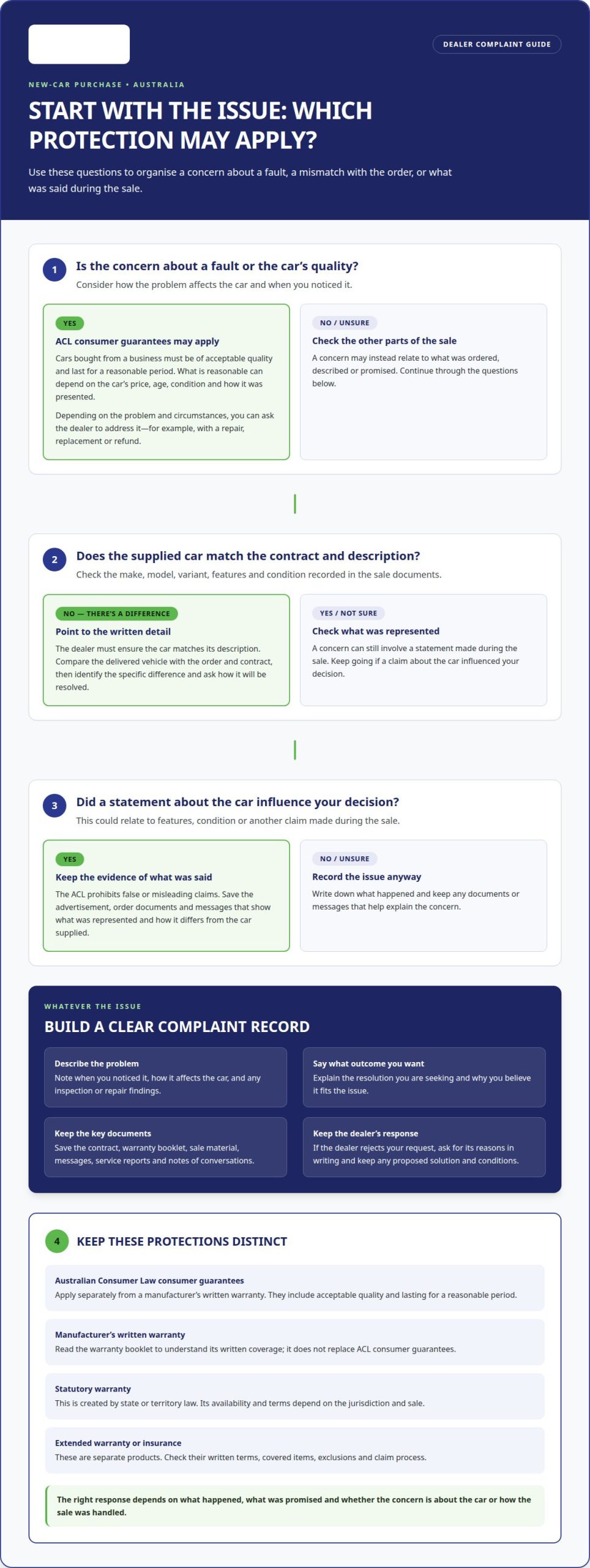
Australian Consumer Law consumer guarantees apply to cars sold by dealers, including guarantees that a car is of acceptable quality and lasts for a reasonable period. The right response depends on what happened, what was promised and whether the issue concerns the car or how the sale was handled.
This article explains how consumer guarantees and warranties may apply, what to include in a complaint and what evidence to keep. You’ll also learn how to pursue a resolution if the dealer doesn’t address the issue, including when to approach your state consumer authority. A clear, business-like approach helps you explain the problem and the outcome you’re seeking.
Key Takeaways
- Work out whether your concern relates to a statutory warranty, an Australian Consumer Law consumer guarantee or the dealer’s conduct, as different protections may apply.
- Put your complaint to the dealer principal in a courteous, firm and business-like way, explaining the issue and the resolution you want.
- Keep useful records, including the sale documents, messages, service reports and notes of conversations, to support your account.
- If direct discussions don’t resolve the dispute, the next step may be your state or territory consumer authority, with a tribunal available in some cases.
- Check which protections apply in your state, as statutory warranty rules and complaint pathways can differ across Australia.
1. Statutory warranties for dealer sales
For a new car bought from an Australian dealer, distinguish three protections: any statutory warranty that applies under state or territory law, the manufacturer’s written warranty, and consumer guarantees under the Australian Consumer Law (ACL). These protections are not interchangeable. The sale contract and warranty documents identify the vehicle, the parties and any written coverage. ACL consumer guarantees apply separately from a manufacturer’s warranty.
The phrase “statutory warranty” can refer to legal protection created by state or territory law. Its availability and terms depend on the jurisdiction and sale. Don’t assume a manufacturer’s warranty is the same thing, or that a statutory warranty covers every fault for the same period. For a new car, read the purchase documents alongside the manufacturer’s warranty booklet, then identify which protection relates to the problem.
The ACL provides consumer guarantees when goods are bought from a business. For cars, these include acceptable quality and lasting for a reasonable period. What counts as reasonable depends on factors such as the car’s price, age, condition and how it was presented. A serious fault soon after delivery may raise different questions from ordinary wear after extensive use. A written warranty does not replace these consumer guarantees.
Check the contract before signing, especially the make, model, variant, agreed specifications and any promises recorded by the dealer. If a salesperson promises a particular accessory or delivery condition, ask for it to be included in the written agreement. Keep a copy of the signed contract and warranty booklet. Those documents help clarify what was agreed if the delivered vehicle differs from the order.
An extended warranty is a separate product, not another name for the ACL or the manufacturer’s warranty. Before accepting one, read its term, covered components, exclusions, claim process and any servicing conditions. For example, a plan may cover listed mechanical failures but exclude particular parts or circumstances. The wording determines its scope, so compare it with the manufacturer’s existing cover before deciding whether it suits your needs.
Insurance is different again. A policy responds to the events and losses set out in its terms; it doesn’t automatically resolve a dispute about a dealer’s promise or replace consumer guarantees. Before buying insurance alongside a new car, identify the covered risks, excess, exclusions and claim steps in the policy documents. Keep those records separate from the sale contract and warranty paperwork.
- Match the fault to the relevant protection: statutory warranty, manufacturer’s warranty, ACL guarantee or insurance policy.
- Use the contract and written terms to identify what the dealer agreed to provide.
- Keep copies of the contract, warranty booklet and any extended warranty or insurance documents.
2. Dealer obligations under the Australian Consumer Law
If a dealer sells you a faulty car, Australian Consumer Law (ACL) consumer guarantees may apply. You can ask the dealer to address the fault, such as by arranging a repair, replacement or refund. The appropriate remedy depends on the problem and your circumstances; a dealer’s written warranty doesn’t replace ACL rights.
Under the ACL, cars sold by dealers must be of acceptable quality and last for a reasonable period. “Reasonable” isn’t a fixed number of years. The car’s price, condition, age and representations made during the sale help determine what a buyer could reasonably expect. A fault affecting a new car’s basic operation may raise different concerns from a cosmetic issue.
Quality also involves more than whether a car starts on delivery. Consider whether it is safe, fit for its ordinary purpose and free from defects a buyer would not reasonably expect. For example, repeated problems with a major system could raise questions about acceptable quality. A single minor issue may call for a different response, depending on its effect and the circumstances.
The dealer must also ensure the car matches its description. Compare the vehicle supplied with the model, variant, features and condition described in the sales material and contract. If an ordered new car arrives without an agreed feature, point to the written description and ask the dealer how it will resolve the difference.
The ACL also prohibits false or misleading claims. A dealer’s statements about a car’s features, history or condition can matter if they influenced your decision. Keep the advertisement, order documents and messages showing what was represented. For instance, if a quoted specification differs from the delivered vehicle, those records help identify the discrepancy.
Start by documenting the fault and telling the dealer what happened. Include when you noticed it, how it affects the car and any inspection or repair findings. Then state the outcome you’re seeking. You might ask the dealer to assess and repair the fault, or explain why you believe replacement or a refund is appropriate.
The dealer’s response should address the actual issue, rather than simply pointing to an expired or limited warranty. ACL consumer guarantees apply separately from written warranty terms. Keep all replies and proposed solutions, including any conditions attached to a repair. If the dealer rejects your request, ask for its reasons in writing. That gives you a clear record for the next complaint step.
- Describe the fault and its effect on the car.
- Refer to the contract or statement that appears inconsistent.
- Set out the remedy you’re requesting and keep the dealer’s response.
In most Australian states, a dealer must guarantee title and can face penalties for misrepresenting a new car.
3. Raising a complaint with the dealer principal
Raise the issue with the dealer principal in a courteous, firm and business-like manner. The principal is a senior contact at the dealership who can review concerns that remain unresolved after discussions with sales or service staff. Explain what happened, when it happened and what outcome you’re seeking.
Prepare a short account before contacting the dealership. For example, note when you ordered the car, when it was delivered and when the concern arose. Separate facts from opinion: “The agreed accessory wasn’t fitted at delivery” is clearer than “The dealership handled everything badly”. Attach relevant contract pages or messages.
Address your complaint to the dealer principal by name if you know it. If you don’t, ask the dealership to forward your message to that role. Email creates a written record, while a phone call can help explain a complicated issue. After a call, send a brief email recording the main points discussed and any next steps.
Be specific about the resolution you want. Depending on the issue, you might ask the dealership to correct an order error, investigate a service concern or respond to a complaint about staff conduct. If you’re reporting a fault, describe what happens, when it occurs and how it affects the car. Avoid combining unrelated issues in one unclear request.
Keep the tone professional, even if the conversation becomes difficult. A firm complaint doesn’t need threats or personal criticism. Refer to events and documents you can describe, then give the principal a fair opportunity to respond. If the first response doesn’t address your concern, explain what remains unresolved and why.
Before sending your complaint, check that it includes the essentials:
- Your name, contact details and car identification information.
- A clear timeline of the events and the people you dealt with.
- Copies of relevant documents, plus the outcome you’re requesting.
Keep copies of every email, letter and attachment in one folder. After a dealership meeting, write down who attended and what was agreed. If the principal proposes a repair or another action, ask for the arrangement in writing, including what work will be done and how the dealership will update you.
Set a reasonable response date based on the issue’s urgency, but don’t invent a legal deadline. If the dealership misses the date, follow up in writing and refer to your original message. A clear record helps you explain the complaint later if direct discussions don’t resolve it.
Stay focused on the outcome. For example, if your complaint concerns a feature listed in the order but missing from the delivered car, attach the order and ask the principal how the discrepancy will be resolved. A precise request makes the next conversation easier to manage.
4. Steps to resolve a dispute with a dealer
If discussions with the dealer principal haven’t resolved the issue, keep your complaint and the dealer’s response together. Next, contact your state or territory consumer authority, then consider a tribunal if the available complaint steps don’t settle the dispute.
Start by sending the dealer a concise written follow-up. Identify the car, describe the unresolved issue, state your requested outcome and attach relevant records. If the dealer refuses, ask for its reasons in writing. This gives the consumer authority a clear account of what you raised and how the business responded.
In Western Australia, consumers are advised to first try resolving a car-related issue by talking to the dealer and explaining the problem and desired outcome. If that fails, consumers can lodge a complaint with Consumer Protection. In other states and territories, contact the relevant consumer affairs or fair trading authority for that jurisdiction.
Some Australian states allow a buyer to request a tribunal hearing when other complaint-resolution steps fail. Tribunal names, application fees and monetary limits differ by jurisdiction and the type or value of the claim. Check the rules for the tribunal where the car sale occurred before applying, and keep your contract, complaint correspondence and supporting documents ready.
To cancel a car purchase, first check whether you and the dealer have both signed the contract and whether your state provides a cooling-off period. Some Australian states have a cooling-off period; Western Australia has none, and a WA buyer can withdraw before both parties sign. In Western Australia, a dealer may charge no more than five per cent of the total purchase price as pre-estimated damages when a buyer cancels a contract.
A car-sale cancellation and a finance agreement are separate matters, so don’t assume ending one automatically ends the other. Read the finance contract and contact the finance provider promptly about its cancellation terms and any steps it requires. Keep a written record of that contact and any response.
If you believe a dealer misled you, used high-pressure sales tactics or breached the contract, preserve the specific advertisement, messages, contract terms and notes of conversations. Set out which statement or term concerns you, what happened and what resolution you requested. The law against false or misleading claims applies to car auctions in Western Australia; for a dealer sale, describe the claim and circumstances to the relevant consumer authority.
You can report suspected dealer misconduct to the Australian Competition and Consumer Commission (ACCC) or your state or territory regulator. Explain the conduct, identify the business and provide relevant records. Reporting suspected conduct is distinct from seeking a personal remedy, so continue pursuing your individual complaint through the dealer and the appropriate consumer dispute pathway.
In some Australian states and territories, you can request a tribunal hearing if other complaint-resolution steps have failed. Application fees and monetary limits vary by jurisdiction and the type or value of the claim, so check the tribunal’s rules for where the car was sold before applying.
5. How to complain to a car dealer and evidence to keep
Make a written complaint to the dealer principal in a courteous, firm and business-like tone. State what happened, when it happened and what outcome you’re seeking. For example, explain that a feature listed on your new-car order wasn’t present at delivery, then request a clear response about resolving the discrepancy.
Keep the message focused. Identify the car and relevant order or contract, describe the effect on you, and explain why the dealer’s response hasn’t resolved the issue. Avoid broad accusations. A specific statement, such as “the agreed delivery condition differs from the signed order”, gives the dealer a concrete matter to investigate.
Build a record as you go. Save the signed contract, order documents, warranty paperwork, advertisements, emails and text messages. Keep service or inspection reports if they relate to the complaint. For a phone call, record the date, who you spoke with, the key points and any action they agreed to take.
- Keep dated photographs or videos if they clearly show the issue.
- Save receipts and invoices connected with the complaint.
- Record each contact, including the dealership staff member and response.
- Keep copies of your complaint and any proposed resolution.
Send copies of relevant evidence rather than handing over your original documents. Label attachments clearly, such as “signed order” or “delivery photograph”. If the dealer offers a repair or another response, ask for the agreed action in writing. Keep the reply with your original complaint so the timeline remains easy to follow.
If a meeting or phone call doesn’t settle the issue, follow up by email. Summarise what was discussed, identify what remains unresolved and repeat the outcome you’re seeking. This gives the dealer a chance to correct any misunderstanding and creates a clear record if you later approach your state or territory consumer authority.
Organise your documents in date order before escalating. A short timeline can connect the order, delivery, first report of the issue and the dealership’s replies. Keep the wording factual: distinguish what you observed from what someone told you. For example, identify a salesperson’s statement as a statement, and retain the message or document that records it.
In Western Australia, consumers can contact the Consumer Protection Contact Centre about a dealer issue on 1300 30 40 54, according to Consumer Protection WA. Have your complaint timeline and relevant documents ready so you can explain the issue and the outcome you’ve requested.
Get help buying my new car or call 1300 303 181.
Private Fleet
Private Fleet can help when you’re ready to move on from a difficult dealer experience and buy a new car. Its independent new-car buying service takes your preferred vehicle to a national network of authorised dealerships through a tender process, so dealers can compete for your business. Private Fleet handles negotiation and paperwork, and provides regular delivery updates. Trade-in assistance and car finance can also support parts of your purchase.
This service is for sourcing and buying a new car, not resolving a complaint or repairing a vehicle. If you’d like help with your next purchase, contact Private Fleet or call 1300 303 181.
Take your next step with confidence
A difficult dealer experience doesn’t have to shape your next purchase. As you consider what to do if you have a bad experience with a car dealer, focus on what you want from your next car and the details that will help guide your decision.
For assistance with a new-car purchase, share your preferred make or model, postcode and buying timeframe. You can also call 1300 303 181 to discuss your plans.
Take the next step at your own pace, with a clear idea of what you want.
Frequently Asked Questions
What are my consumer rights if I have a bad experience with a car dealer in Australia?
Your rights depend on whether the problem concerns the car, a promise made during the sale or the dealer’s conduct. Australian Consumer Law may provide consumer guarantees, while written contract terms and any applicable statutory or manufacturer warranty may also be relevant. For example, if the delivered vehicle differs from the agreed order, use the order documents to identify the difference and explain the outcome you’re seeking.
How do Australian Consumer Law protections apply to new and used cars bought from a dealer?
Australian Consumer Law consumer guarantees can apply to both new and used cars bought from a dealer. The standard a buyer can reasonably expect depends on the vehicle’s age, condition, price and description. For example, ordinary wear in an older used car may be assessed differently from a significant fault in a new car. A dealer’s written warranty doesn’t replace applicable consumer guarantees.
Can I take a car dealer to a state or territory civil and administrative tribunal, and what are the fees and limits?
In some Australian states, you can request a tribunal hearing if other complaint-resolution steps do not work.