
The best car broker is one that gets authorised dealers to compete for your business, clearly explains the drive-away price and sets out any trade-in arrangements. A broker does not replace checking the new car’s manufacturer warranty and capped-price servicing. Compare the terms for your exact model and variant before deciding.
A broker should make a high-value purchase easier without obscuring the details. A useful comparison shows what each offer includes, how the trade-in affects the changeover and which costs sit outside the vehicle price.
This guide explains how brokers source offers for new cars, what to look for in trade-in support and purchase-cost breakdowns, and how to assess reported savings without treating them as a promise. It also compares using a broker with buying directly from a dealer, so you can choose the process that suits your shortlist and priorities.
Key Takeaways
- Read reported savings as individual experiences, not a promise. Compare each claim with like-for-like vehicle specifications and written offers.
- Assess a trade-in on its own as well as within the changeover figure, so you can see how it affects the overall deal.
- Understand how a broker’s dealer network and tender process can bring competing offers together, while recognising that dealer participation can vary.
- Compare the complete purchase cost, including drive-away inclusions and any extras, rather than relying on a headline vehicle price.
- Choose the buying approach that best fits your shortlist and priorities; Private Fleet can assist with new-car sourcing and trade-ins.
Customer testimonials and reported savings
No single review score proves which car broker is best for every buyer. Look for detailed accounts and watch for pressure, unclear inclusions or savings claims without a like-for-like comparison. Testimonials offer context, but each describes an individual purchase, not a typical result.
Customer reviews and testimonials
Read reviews for details about the process, not just general praise or criticism. One customer described arranging a car, trade-in and extras without leaving the office during a four-day process. Another said they visited three dealers while comparing a car price. These examples show what those buyers valued, including convenience and help managing the purchase.
The buyer also noted that it had nine months of registration remaining, rather than 12. That example concerns a used vehicle, not a new-car offer. For a new-car purchase, look for reviews that identify the model, variant, quote inclusions and ordering communication.
A rating alone cannot explain every customer’s experience. Compare the review platform, dates and level of detail. Give more weight to accounts describing a purchase like yours, such as a similar vehicle, trade-in or dealer interaction. This helps you judge whether the reviewer’s experience matches your priorities.
Reported savings
Reported savings vary between buyers and depend on the purchase. Each account needs context before it can inform your comparison.
Check whether each figure compares the same model, variant, condition and inclusions. A lower headline price may leave out registration, delivery or accessories. Compare written offers, note what each includes and assess the total payable. Keep any trade-in allowance separate from the new-car price so the figures do not obscure one another.
Use this review check:
- Match the details: compare the same vehicle specification and condition.
- Check the baseline: identify whether savings are measured against an initial quote or another offer.
- Read the full account: look for clear details about the purchase and its terms.
- Watch for pressure: be cautious if the offer’s inclusions or comparison basis aren’t clear.
These steps help you assess testimonials objectively. A customer story can show how one purchase unfolded, but written offers for your own vehicle and terms are what let you make a like-for-like comparison.
Trade-ins and selling an existing car
A car broker can coordinate a trade-in, vehicle delivery and finance with the supplying dealer. Compare the complete changeover amount, not just the allowance for your current car.
Trade-in valuations
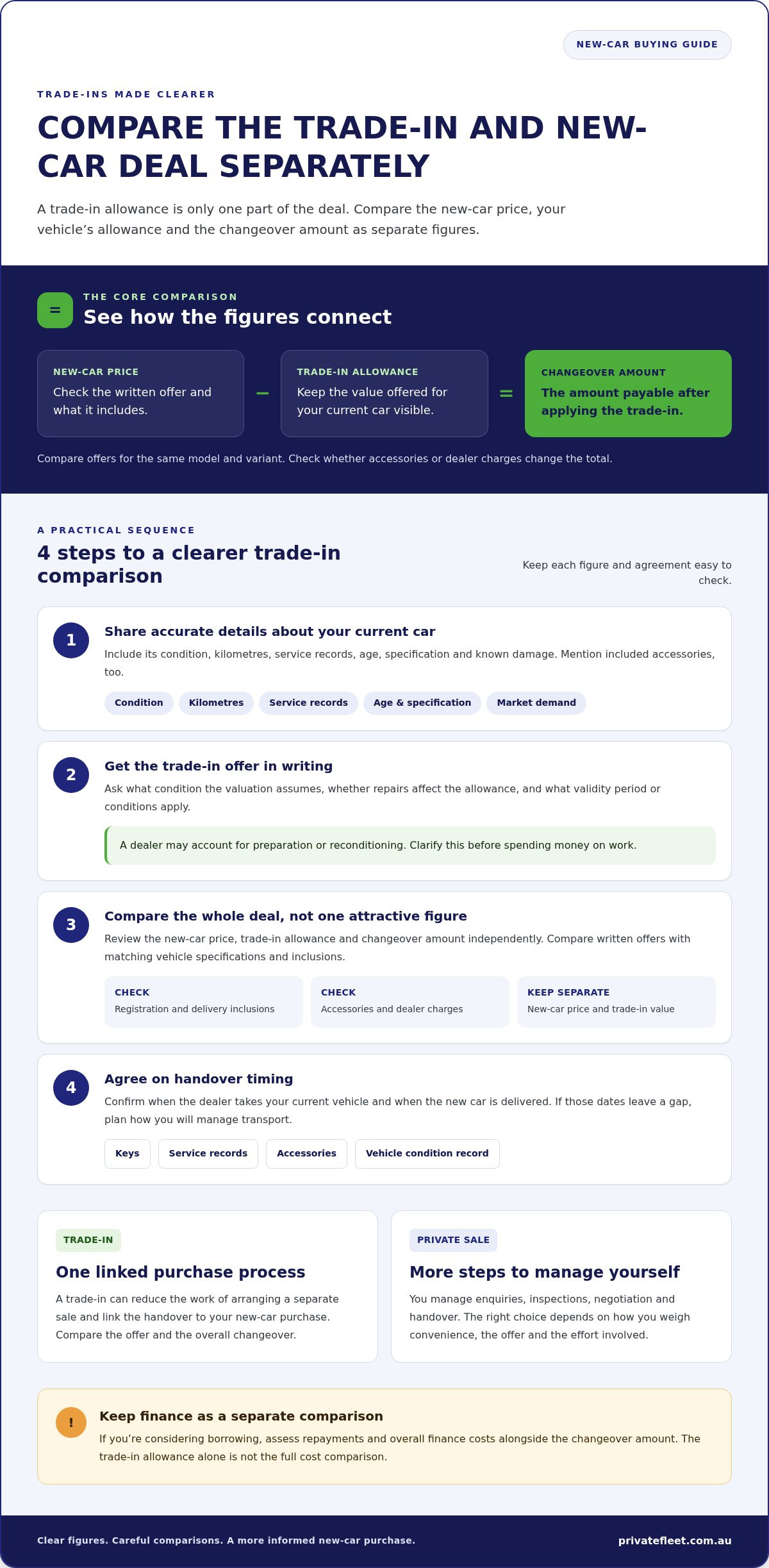
A trade-in valuation estimates what a dealer will allow for your existing vehicle towards a new purchase. Its condition, kilometres, service records, age, specification and market demand all influence the figure. Provide accurate details, including known damage and included accessories, so the valuation reflects the car being handed over. Ask for the allowance in writing and keep it separate from the new-car price.
Compare the figures together. A competitive trade-in allowance can look attractive while the new-car offer is less competitive, or the reverse. Review the changeover cost, the amount payable after applying the trade-in. Compare written offers for the same model and variant, then check whether accessories or dealer charges change the total.
Trade-ins and vehicle reconditioning
Dealers assess a trade-in’s condition and may account for preparation or reconditioning in their offer. A vehicle with worn tyres, visible paint damage or incomplete service records may be valued differently from a similar car in tidy condition. Ask what condition the valuation assumes and whether identified repairs affect the allowance before spending on work.
Before handover, record the vehicle’s condition and gather its keys, service records and accessories. Confirm the agreed handover timing alongside delivery of the new car. If the trade-in is accepted before the replacement arrives, plan how you will manage transport during the gap.
Use these steps to keep the trade-in and new-car figures clear:
- Share the registration details, kilometres, service history and condition accurately.
- Request a written trade-in figure and check its validity period and conditions.
- Compare the new-car price, trade-in allowance and changeover amount as separate figures.
- Confirm when the dealer takes the old vehicle and when the new one is delivered.
Selling privately is another option, but you will manage enquiries, inspections, negotiation and handover yourself. A trade-in can reduce that work and link the sale to your new-car purchase. The right choice depends on how you weigh convenience, the offer and the effort of arranging a separate sale.
Finance is a separate part of the purchase. If you’re considering borrowing, assess repayments and overall finance costs alongside the changeover amount. Do not treat the trade-in allowance as the full cost comparison. A broker can bring the vehicle, trade-in and finance arrangements into one buying process.
For help coordinating a new-car purchase and trade-in, share your vehicle and buying details through the enquiry page.
Car sourcing and broking in Sydney
For a new-car purchase, an independent broker can approach authorised dealers and coordinate offers. The right service depends on whether you want a new vehicle, a preloved car or fleet support.
Some brokers focus on new cars, others on used vehicles or fleet buying. Choose a service whose stated scope matches the vehicle you want and the support you need. No-obligation consultations and money-back guarantees are not universal terms, so read the engagement conditions to understand any commitment and what a guarantee covers.
The Australian Competition and Consumer Commission has reported a vehicle-broking business’s account that some dealers refused to quote and Audi had barred its dealer network from working with brokers. Dealer participation can therefore affect which offers a broker can obtain. A great deal depends on the actual vehicle and terms, not simply the broker’s label.
Used-car sourcing nationwide
Sourcing a used car is different from ordering a new vehicle. Before comparing options, define acceptable kilometres, age and condition, along with any location requirements. Understand whether the service involves locating vehicles, arranging inspections or reviewing vehicle-history information.
Make your criteria practical. For example, someone seeking a used SUV for regional travel might specify service records, seating needs and an acceptable distance from home. These details narrow the search, make vehicles easier to compare and clarify what matters before deciding whether to proceed.
Used-car sourcing exclusions
Clarify what falls outside the agreed search. Exclusions may relate to private sellers, auctions, particular vehicle conditions or inspection arrangements. “Used-car sourcing” can mean different levels of assistance, so get the included tasks and exclusions in writing before authorising a search.
Record the vehicle requirements and agreed tasks. Identify who handles seller contact, viewing arrangements, condition information and purchase paperwork. A clear scope helps prevent gaps between what you expect and what Private Fleet undertakes, especially if a suitable vehicle is outside your immediate area.
For a new car, focus on the exact Australian model and variant. Compare offers for the same specification, then consider delivery arrangements and included items. Ask how the broker handles a dealer that declines to quote and whether another dealer can be approached. These details help you assess the sourcing process before committing.
Whether you’re buying new, used or for a fleet, choose a broker whose stated scope matches your needs. A clear brief and written service terms make it easier to judge the support and decide whether it fits your purchase.
How the broker sources and negotiates deals
A broker starts with your brief, approaches dealers for offers and helps coordinate the purchase through to delivery. Your chosen model, variant, postcode and buying timeframe shape the request. Set out essential features and acceptable alternatives clearly so dealers can respond to the vehicle you want.
A broker’s title alone does not establish which licensing or consumer protections apply. Before engaging one, read the written agreement and identify the broker’s role, responsibilities, payment terms and complaint process. Keep copies of the agreement, quotes and correspondence. These records help you track what was agreed if questions arise during the purchase.
Before choosing a broker, get these practical details in writing:
- Scope: Does the service cover sourcing, dealer discussions, ordering or delivery coordination?
- Costs: What charges apply, when are they payable, and what work do they cover?
- Dealer contact: How are dealer responses and non-responses handled?
- Your approval: Do you review and approve the final vehicle, offer and purchase documents?
These questions clarify who handles each stage. Establish whether the broker obtains offers only or also coordinates order details with the supplying dealer. Ask who will communicate order changes and how you will receive delivery updates. Clear responsibilities help you stay informed about the broker’s role and the dealer’s.
Once you provide a shortlist, the broker can send a consistent brief to participating dealers. Include the exact model and variant, preferred colour, essential options and acceptable alternatives. For example, distinguish a required SUV grade from a similar variant with different equipment. Precise details make dealer responses more useful and keep the comparison focused on your needs.
Negotiation should address the offer’s actual terms. Compare the requested specification, included accessories, delivery arrangements and conditions attached to each quote. If a dealer proposes a different variant, make that difference clear before comparing offers. Ask how long each offer remains open and what could change before you accept.
Dealer participation can affect the process. The Australian Competition and Consumer Commission has reported a vehicle-broking business’s account that some dealers refused to quote and Audi had barred its dealer network from working with brokers. Ask how declined requests are handled and whether other participating dealers can be approached.
Before accepting an offer, read the dealer’s purchase documents and compare them with the agreed vehicle and terms. Confirm who will contact you about order changes, delivery updates and handover arrangements. This final review helps you understand what has been arranged and which steps remain with the supplying dealer.
All-inclusive purchase costs
A useful comparison shows the full amount payable for the new car, not just its headline price. Compare identical models and variants, then identify what each dealer includes. A clear breakdown shows whether offers cover the same vehicle, delivery arrangements and selected extras.
The amount quoted depends on the vehicle and purchase details, including the model, variant, location, dealer inclusions and selected extras. For example, compare written offers for the same SUV and check whether registration, dealer delivery and accessories appear in each total. Different inclusions can make a lower headline figure misleading.
Use this checklist to organise each offer:
- Vehicle: Record the exact make, model, variant, powertrain and colour requested.
- Included items: List registration, delivery, accessories and any dealer-added products.
- Conditions: Note quote validity, ordering terms and any conditions attached to the offer.
- Trade-in: Keep the allowance for your current car separate from the new-car price.
- Finance: If borrowing, compare repayments and interest separately from the vehicle’s purchase amount.
Pay particular attention to dealer delivery and accessories. One offer might include a selected accessory while another lists it as an optional extra. Compare the same equipment and ask for each item to be described clearly. This shows what you are paying for instead of assuming both dealers have priced an identical package.
Registration and delivery details can also affect the amount due at handover. Check what the written quote includes and whether separate charges remain. If a dealer changes the vehicle specification or adds an item, request an updated breakdown before agreeing. This keeps the comparison aligned with the car you want.
Keep finance calculations separate. A financed purchase may include interest and other costs under its terms, so compare the borrowing arrangement separately from the vehicle quote. Show a trade-in as its own line too. Combining figures can obscure whether the changeover amount reflects a stronger new-car offer or a different allowance for your existing vehicle.
A consistent comparison sheet helps you assess dealer offers without confusing inclusions or trade-in values. Treat claims of “thousands” in savings as claims that need context, not a measure of your likely outcome. Your comparison should identify the exact vehicle, total payable, included items and any separate finance or trade-in figures.
Private Fleet: New Cars
Private Fleet helps private buyers source and purchase new cars through its independent car buying service. Its tender process invites multiple dealers in a national network of authorised dealerships to compete for your business, giving you offers to compare for your preferred model and variant.
Turn to Private Fleet when you want help coordinating a new-car purchase or trade-in. Car finance is also available if you are considering how to fund the vehicle. Private Fleet does not hold its own vehicle inventory; cars are sourced through participating dealerships.
To get started, share your preferred make and model, postcode and buying timeframe. These details help shape the request to dealers and make the next steps relevant to your plans.
Make your next car decision with clarity
The best car broker for you is one whose process fits your priorities, from choosing a variant to coordinating the purchase. Before taking the next step, note your preferred make and model, essential features, postcode and intended buying timeframe. A focused brief makes it easier to discuss the new car you want.
Private Fleet’s New Car Buying Service uses a dealer tender process to source offers for new cars. Trade-In Assistance can bring your existing vehicle into the purchase, and car finance is available. Share your shortlist and timeframe to get started.
Get help buying my new car
A considered choice starts with a vehicle that suits your everyday life. When you’re ready, take the next step with your priorities clear and the buying process in view.
Frequently Asked Questions
Does my new car come with the normal warranty and capped-price servicing?
A new car’s warranty and capped-price servicing depend on its manufacturer and exact model. Check the Australian warranty booklet and servicing schedule for the vehicle you’re ordering, including exclusions and service conditions. Ask the dealer for the applicable documents before signing. Keep them with your purchase records so you can refer to the correct terms when servicing is due.
How can a car broker get me a better price?
A broker can save you from contacting and coordinating with dealers yourself. Consider whether that convenience suits your situation, particularly if you have limited time for calls, emails and purchase paperwork. Before engaging a broker, clarify which tasks they handle and which remain yours. Then weigh the service against the time and involvement you want to put into buying a car.
How much does the service cost?
The service price depends on the case and is provided after a quote request. Before you proceed, read the written terms and identify the work covered, any payment conditions and when payment is due. Keep the quote and agreement together, then compare them with your budget for the vehicle purchase. This helps you understand the service commitment separately from the amount payable to the dealer.
What fees and commission do car brokers charge?
Ask the broker to explain in writing whether you pay a fee and whether the broker receives commission or another payment connected with the transaction. Clarify who pays it, what it relates to and whether it changes the amount you owe. Keep the explanation with your agreement so you understand the financial relationship before accepting an offer.
How can I compare car broker customer reviews and ratings?
Compare ratings alongside review counts, dates and the substance of customers’ accounts. Trustpilot lists Private Fleet with a 4.3 rating and 572 reviews. Look for specific descriptions of communication, responsiveness and how the buying process was managed. A review score is only one reference point; consider whether the experiences described reflect the kind of support you value during a new-car purchase.
How much can a car broker save compared with buying directly from a dealer?
There is no single saving that applies to every buyer. To assess your own result, compare the final amount payable through each route and account for any broker charge, optional products and relevant finance costs. Keep the vehicle specification consistent and separate any trade-in value from the new-car transaction. This shows the net difference between the alternatives without relying on another buyer’s outcome.
Who are the best-rated car brokers in Sydney, Australia?
Private Fleet is listed on Trustpilot with a rating of 4.3 from 572 reviews. The article cautions that a rating alone doesn’t prove which broker is best for every buyer.
Which Sydney car brokers specialise in new cars, used cars, or fleet vehicles?
Private Fleet helps buyers source new cars and arrange trade-ins through its New Car Buying Service and Trade-In Assistance. If you’re buying a new car, share your shortlist and timeframe with Private Fleet to get started.