
What if the strongest new-car offer isn’t the best overall deal once your current car is included? Finding the best car buying service australia has to offer is only part of the decision: you also need to weigh how you’ll sell or trade in your existing vehicle, and how the handover fits with your new car’s timing.
It’s understandable to feel torn between a private sale, a dealer trade-in and trade-in assistance. A private sale may take more time and organisation, while a trade-in can make the changeover simpler. The useful comparison is the whole purchase picture, not just the new-car price or the amount offered for your old one.
This guide explains how to compare those options, what to include when weighing offers, and what information to prepare before you take the next step. Private Fleet is an independent Australian car-buying service that sources new vehicles through a national network of authorised dealerships. Its tender process invites multiple dealers to compete for your business, while trade-in assistance can form part of your new-car purchase planning. You’ll see how to assess the process with practical criteria, without assuming one approach suits every buyer.
Key Takeaways
- Compare the new-car offer and your current car’s sale plan together, including effort and timing.
- Trade-in assistance can support your changeover without meaning the buying service owns or sells used-car stock.
- Assess a trade-in, private sale and assisted purchase against consistent criteria, not isolated offers.
- Prepare your preferred vehicle, budget, shortlist, current-car details and buying timeframe before you begin.
- When choosing the best car buying service australia can offer, look for a clear process that helps you compare dealer offers while keeping your vehicle choice in your hands.
Buying a new car while selling your old one: what should you weigh together?
Treat your new-car purchase and your current-car plan as connected decisions. Your choice of vehicle affects the budget and timing of the changeover; the way you sell your existing car can affect how much coordination you’ll need before the new one arrives.
A car buying service helps a buyer source and purchase a vehicle through dealerships; it does not need to own or stock the cars it helps customers find. Trade-in assistance is support with including your current vehicle in the new-car buying process. It doesn’t, by itself, guarantee a particular valuation or that a sale will go ahead. The aim is to make the options easier to consider together, while the final offer and arrangements depend on the transaction.
How does a trade-in fit into buying a new car?
With a trade-in, your existing car is offered as part of the changeover to a new vehicle. A dealer may assess it and make an offer, which you can compare with the new-car purchase details. Dealerships sell vehicles to buyers, as outlined in Understanding Car Dealership Operations, but the amount and terms offered for a particular car are not guaranteed.
Consider convenience alongside value. A trade-in may reduce the number of separate arrangements you manage, but compare the new-car price, trade-in offer and timing as one overall picture. Ask yourself whether the vehicle handover and new-car arrangements are clear, and whether the proposed timing works for your plans.
When should you consider selling privately instead?
A private sale is a separate route: you manage the listing, enquiries, viewings, negotiation and sale arrangements yourself. This gives you direct involvement in setting the asking price and handling discussions, but it also calls for time and coordination. You may need to manage buyer enquiries while arranging the new-car order and changeover.
Compare the routes against your own priorities rather than assuming one is best for everyone. Your current car’s condition, kilometres, records and accessories can help you describe it accurately and assess an offer. Consider how much time you can set aside, how flexible your buying timeframe is, and whether you’d rather coordinate one changeover or manage a separate sale.
What should you weigh before choosing a route?
Start with the full transaction, not one headline figure. A private-sale asking price and a trade-in offer may reflect different processes, so compare the amount you expect to receive with the effort and timing involved. Then check how each option fits your preferred new car, budget and handover plans.
If you’re comparing the best car buying service australia can offer, look at whether the process helps you consider the new-car purchase and current-car plan together, explains each step clearly and keeps your vehicle choice central. The most suitable path depends on your circumstances and how much effort you’re comfortable taking on.
How a car buying service and dealer tender work alongside your trade-in
Private Fleet is an independent vehicle sourcing and car buying service. It works with a national network of authorised dealerships to source the new vehicle you’ve chosen. Its tender process invites multiple dealers to compete for your business. The tender concerns the new-car purchase; it isn’t a process for selling your existing vehicle.
A dealer tender gives participating authorised dealers the opportunity to respond to a buyer’s new-car brief, helping the buyer compare offers without guaranteeing a particular price or result. Trade-in assistance is a separate part of the decision: it can help you consider a pathway for your current car alongside the new-car purchase, but it doesn’t mean Private Fleet holds or sells used-car inventory.
What happens during a dealer tender?
Your brief sets the basis for dealer responses. Include the make, model and variant you want, along with relevant preferences and your postcode. Clear details make it easier to compare like with like. For example, offers for different variants or price bases may not be directly comparable, so look closely at what each response covers.
Multiple dealers are invited to compete, but participation and outcomes aren’t guaranteed. Dealer responses can give you options to consider; they don’t remove the need to review the vehicle, offer details and purchase arrangements before deciding.
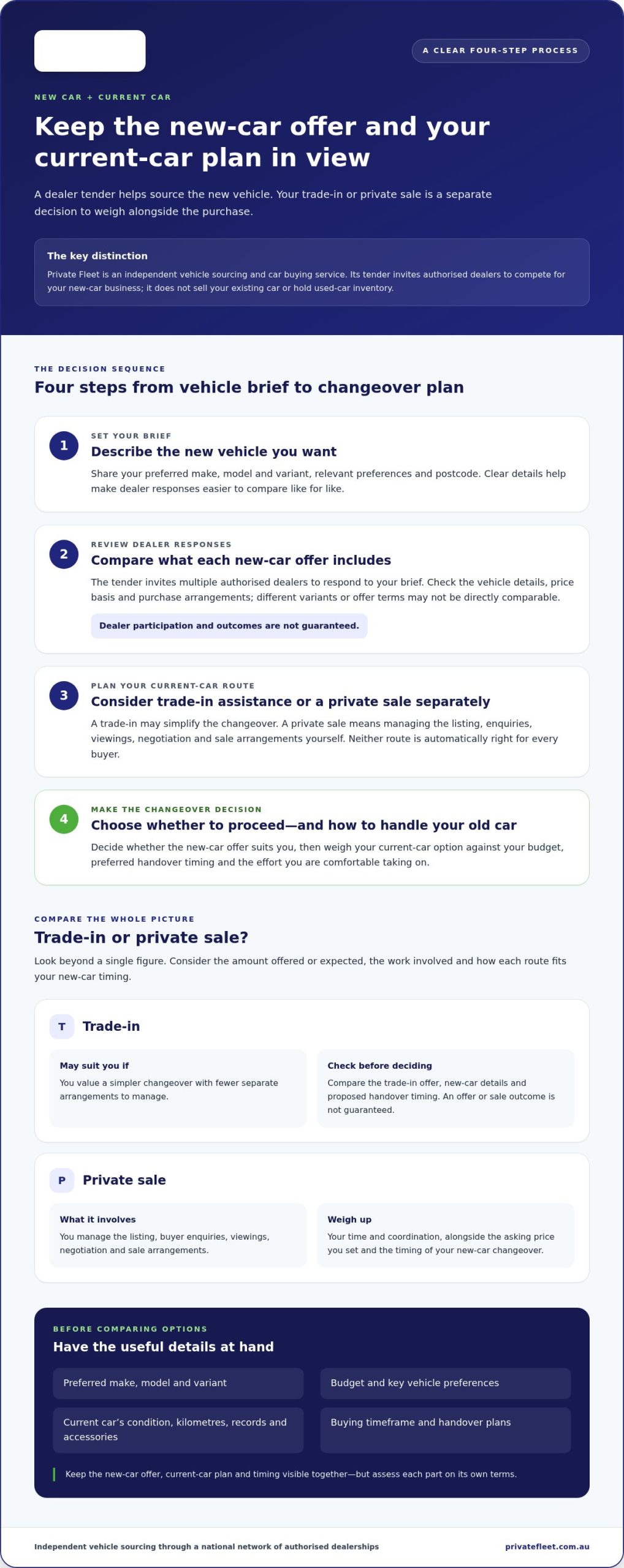
A straightforward sequence helps keep the two decisions distinct:
- Share your preferred new vehicle and key requirements.
- Review the dealer responses and compare the details of any purchase offer.
- Consider your current-car pathway separately, including trade-in assistance or a private sale.
- Decide whether to proceed with the new-car offer and how you want to handle your existing vehicle.
This separation matters. A new-car tender helps source the vehicle; it doesn’t automatically sell your old one or require you to accept a trade-in. Keeping both decisions visible lets you consider how each affects your budget, preferred handover and the effort you’re willing to take on.
What does the buyer still decide?
You choose whether a vehicle and offer suit you, and whether to proceed. You also decide what to do with your current car. Compare the new-car offer on its own terms, then weigh any trade-in pathway separately rather than treating an estimated trade-in amount as a confirmed sale outcome.
For a fuller explanation of the stages, see how the car-buying process works. If you’re comparing the best car buying service australia can offer, a useful measure is whether the process makes dealer responses easier to assess while leaving the vehicle choice and final decision with you.
To discuss a new-car purchase alongside your current-car plans, you can share your preferred make or model, postcode and buying timeframe.
Trade-in or private sale: compare the whole new-car buying picture
Compare the new-car offer and the plan for your current car as one changeover, but keep their terms distinct. A trade-in figure on its own doesn’t show the full value or convenience of a deal. Consider the new-car specification and price, what you might receive for your old car, the time involved and how each route fits your preferred handover.
The comparison can shift with your car’s condition, your priorities and the offers available to you. This framework helps you weigh the routes without assuming a private sale or trade-in will always produce a better financial result.
| Sale route | Owner effort | Timing considerations | Points to compare |
|---|---|---|---|
| Trade-in with the new-car purchase | Usually involves discussing and presenting the car for assessment as part of the purchase process. | Coordinate the vehicle handover with the new-car arrangements; timing depends on the agreed terms. | Trade-in proposal, new-car price and specification, included items, and the overall transaction. |
| Private sale | You manage the listing, enquiries, viewings, negotiation and sale arrangements. | You’ll need to coordinate the separate sale with your new-car order and changeover plans. | Expected sale proceeds, time and effort, and how flexibly you can manage the handover. |
| New-car purchase with trade-in assistance | Assistance can help you consider a trade-in pathway alongside the new-car purchase; you remain involved in the decision. | Consider how the proposed trade-in process fits with the new vehicle’s purchase and handover. | New-car offer and terms, any trade-in proposal, and what each step requires from you. |
Which details make new-car offers comparable?
Compare like-for-like new-car specifications and offer terms before deciding which quote best fits your needs. Match the make, model, variant and powertrain, then check that the included features are equivalent. Note whether the amount is a drive-away price or another price basis, what it includes, and any location conditions or offer expiry. Verify current specifications and offers with Australian manufacturer or authorised-dealer sources; don’t rely on an old advertisement as a current quote.
How should you assess the old car’s role in the deal?
Record the car’s age, kilometres, condition and available ownership records so you can describe it consistently when considering a sale or trade-in proposal. Then assess the proposal alongside the full new-car offer, not as a standalone figure. A route that suits one buyer’s timing or willingness to manage enquiries may not suit another’s. The best car buying service australia buyers choose should make it easier to compare the new-car terms without presenting the trade-in as a guaranteed outcome.
For a tailored comparison, share your preferred make or model, postcode and buying timeframe.
A practical checklist before you sell your old car and order a new one
A little preparation makes it easier to brief a buying service, compare new-car offers and plan the changeover. Before you start, gather the details that shape your vehicle choice, budget and preferred timing. A clear shortlist also helps keep comparisons focused on cars that suit how you’ll actually drive.
- Preferred vehicle: Note your preferred make, model and variant, plus any must-have features or alternatives you’d consider.
- Budget: Set a comfortable purchase budget and note whether you’re comparing drive-away offers. If finance is relevant, include interest and fees in your ownership comparison.
- Shortlist: Compare vehicles with similar specifications, and record what matters most to you in each option. Browse new-car options as you narrow the list.
- Current car: Write down its details, condition and kilometres, and collect any useful ownership or servicing records.
- Buying timeframe: Note when you hope to order and any timing constraints for selling or handing over your current car.
Also note your estimated annual kilometres, typical trips and intended ownership period. A car mainly used for local travel may suit different priorities from one used regularly for regional or long-distance drives. These details can help you compare powertrains and running needs alongside the purchase offer.
What information helps describe your current car?
Prepare the make, model, variant, year and odometer reading, then describe the car’s condition clearly. Mention relevant wear or damage rather than relying on a broad description. Gather service history and ownership records if you have them; the documents available will vary between owners. Finally, decide what matters most in the sale process, such as convenience, timing or having direct control over enquiries and negotiations.
Accurate details give you a more useful starting point for discussing the car. They also help you keep the old-car decision separate from the new vehicle’s specifications and offer terms.
How can you choose a new car that suits your next stage?
Check current Australian manufacturer information for the exact model and variant on your shortlist. Consider how the car feels in your everyday routine: seat adjustment, ease of entry and exit, visibility, cabin noise and whether the controls feel intuitive. These are personal preferences, not assumptions tied to age. Also compare the safety features and equipment listed for each variant, rather than relying on a model name alone.
Use your shortlist to focus on the features you’ll value throughout your intended ownership period. To assess the best car buying service australia can offer for your plans, consider how clearly it helps you communicate those priorities and compare suitable new-car options.
How Private Fleet can help with your new-car purchase and trade-in decision
Private Fleet has supported Australian new-car buyers since 1999. Its role is to help you move from a vehicle brief towards a purchase decision, while trade-in assistance can help you consider how your current car fits into the changeover. You choose whether to proceed with an offer and how to handle your existing vehicle.
What support can buyers expect through the process?
Keeping your priorities clear can make the process easier to manage. Consider which parts of the purchase you’d like support with, what you still need to decide and what information would help you compare the options. Customers receive regular updates on delivery times, so you can stay informed as your plans take shape without relying on an assumed delivery date.
Finance and car protection products are available as additional considerations, but the focus remains on choosing and arranging a new car that suits your requirements. You can weigh those extras separately rather than letting them distract from the vehicle and purchase terms.
What should you include in an enquiry?
A concise brief is a useful starting point. Share your preferred make or model, postcode, shortlist and buying timeframe, then add your budget and estimated annual kilometres. These details help frame the kind of vehicle and purchase you have in mind.
For the current car, include its key details and the outcome you’d prefer, such as a simpler changeover or more control over the sale. You don’t need to have every decision finalised. Explaining what matters most gives the discussion a practical focus and helps you work out the next step.
- New-car priorities: Your preferred vehicle and any shortlist alternatives.
- Purchase context: Postcode, timeframe, budget and typical driving needs.
- Changeover preference: Current-car details and what you value in its sale or trade-in.
Make your next car changeover a considered one
Your next step is to turn your priorities into a clear brief. Decide what you want from the new car, what matters most in handling your current one, and how the timing needs to work for you. That gives you a practical basis for comparing the whole changeover, rather than being guided by one offer in isolation.
The best car buying service australia buyers choose should make the new-car purchase easier to assess while keeping the buyer’s preferences and decisions central. You don’t need every detail settled before you begin. A preferred make or model, postcode, buying timeframe and a few notes about your current car are a useful starting point.
With the right information in hand, you can take the next step with greater clarity and decide what suits your circumstances. Share your plans and get support with your new-car purchase.
Get help buying my new car
A well-planned changeover starts with choices that fit you. Move forward at your own pace and choose the path that feels right.
Frequently Asked Questions
Can a car buying service help me trade in my old car and buy a new one?
Yes. A buying service can support a new-car purchase while trade-in assistance helps you assess your current-car options. To keep the decision clear, request a written breakdown showing the new-car offer, any trade-in figure, conditions attached to each and whether either is subject to further assessment. This makes it easier to spot assumptions, compare the figures and decide whether the arrangement suits your budget and preferred handover.
Is trading in my old car easier than selling it privately?
Neither route is automatically easier; the workload depends on your schedule and the steps involved. For a trade-in, clarify what inspection or handover steps are required and when the offer is final. For a private sale, allow time to respond to enquiries and arrange a practical handover. Consider whether you can manage those tasks while still needing transport, then choose the approach that best fits your circumstances.
How much is my old car worth when I buy a new one?
An estimate can help with early budgeting, but it isn’t necessarily a confirmed offer. Treat online estimates as a preliminary guide and ask what assumptions they use, how long a proposal remains valid and whether the amount may change after an inspection. Before relying on a figure in your budget, compare the confirmed amount and its conditions with the complete new-car transaction.
What information should I prepare before asking for trade-in assistance?
Beyond the basic vehicle details, note any accessories included, modifications, known damage, spare keys and items you plan to keep. Clear photos can help you describe the car consistently, and available paperwork may help answer follow-up questions. Keep copies of written proposals and note which details remain subject to assessment. This preparation supports a clearer discussion, but it doesn’t lock in an offer.
Should I sell my car before ordering a new one?
There isn’t one sequence that suits every buyer. Before committing to a sale, map out how you’ll travel if your current car is handed over before the new one is ready. Build flexibility into your plan, and avoid making arrangements that depend on an estimated delivery date becoming a firm date. Clarify the expected order of payment, collection and handover so you can plan around the changeover.
Can I use a car buying service if I already know which new car I want?
Yes. If you’ve settled on a vehicle, the focus can shift to checking whether the offer matches what you expect to receive. Review its price basis, included accessories, delivery or collection arrangements and any conditions that apply. If something in the quote differs from your requirements, raise that before proceeding. This helps you assess the purchase details without reopening a vehicle choice you’ve already made.