
The lowest-looking repayment can hide a less attractive car deal or a higher total loan cost. If you plan to buy a new car with finance broker support, compare the vehicle offer and the finance on their own merits, then check how they fit together.
It’s easy to feel pulled between choosing the right model, comparing drive-away offers and making sense of loan terms. The roles are different: a finance broker focuses on arranging a loan, while a car-buying service helps source the vehicle. Private Fleet is an independent Australian vehicle sourcing and car buying service, working with a national network of authorised dealerships. Its tender process invites multiple dealers to compete for your business, while finance support can be considered alongside your vehicle choice.
This guide explains what to compare beyond the weekly or monthly repayment, including the drive-away offer, comparison rate, fees and total amount payable. You’ll also see how to keep control of your make, model and variant while moving from a shortlist towards a supported purchase, with finance as one part of the decision rather than the whole focus.
Key Takeaways
- To buy a new car with finance broker support, treat the vehicle choice and loan decision as separate comparisons that work together.
- Compare quotes for the same model and variant, using a consistent drive-away basis and clearly accounting for any trade-in.
- Look beyond the repayment: review the loan terms and total amount payable before deciding what fits your budget.
- Shortlist vehicles around how you’ll use them, including comfort, ease of entry and exit, visibility and controls you find intuitive.
- Private Fleet’s independent sourcing service uses a tender process in which multiple authorised dealers are invited to compete for your business.
Buying a new car with a finance broker: what support can cover
Finance guidance can help you understand the funding side of a new-car purchase, but it doesn’t decide which car is right for you. Keep the model and variant choice grounded in how you’ll use the vehicle, and treat the finance agreement as a separate commitment to assess. This keeps the purchase centred on your needs rather than letting a loan option dictate the shortlist.
If you plan to buy a new car with finance broker support, you can use that guidance while retaining control of the vehicle choice. Make sure you understand what each document covers: the dealer’s written offer describes the vehicle and purchase terms, any trade-in assessment relates to your current car, and the finance paperwork sets out the borrowing arrangement.
What does a finance broker do when you buy a new car?
In plain English, a finance broker helps you consider ways to fund a vehicle and understand the terms attached to the options presented. Services and arrangements can vary, so focus on the specific written information for your application rather than assuming every broker works in the same way. For general background on car funding terminology, see this Car finance overview.
Before you proceed, read the agreement carefully and make sure its obligations are clear. Consider whether the payment schedule fits your budget, what conditions apply and what you’ll need to do at the end of the term. If a detail is unclear, seek an explanation before signing rather than relying on a brief verbal summary.
How is a finance broker different from a car buying broker?
A finance broker concentrates on the funding arrangement. A car buying broker or sourcing service concentrates on the vehicle and the purchase process, including helping you assess dealer offers. One role addresses how you may pay; the other helps you consider what to buy and on what terms. Using guidance in either area doesn’t remove your right to choose the make, model and variant.
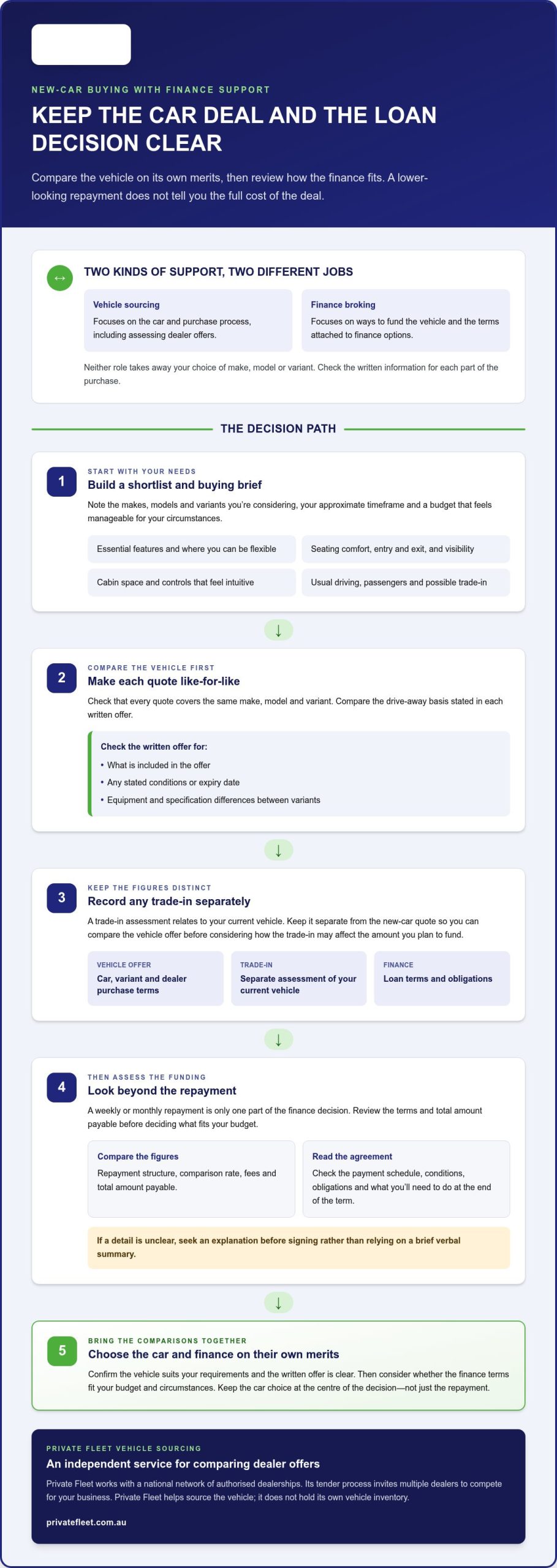
Keep the main purchase components distinct as you review them:
- Vehicle offer: the car, variant and dealer purchase terms.
- Trade-in assessment: the separate value offered for your current vehicle.
- Finance agreement: the loan terms and obligations you’d accept.
This separation helps you see what you’re deciding at each stage, without losing sight of the car itself. The car-buying process guide explains how the purchase stages connect, from setting your requirements through to progressing with a vehicle purchase.
How finance and new-car sourcing fit together from shortlist to purchase
Keep the vehicle decision moving in clear stages: define what you need, compare suitable new-car offers, then assess finance against the purchase you’re considering. A finance discussion can help you think through funding, but it doesn’t confirm that a model, variant or drive-away offer suits your requirements. Check those vehicle details on their own merits before deciding how to proceed.
Prepare a shortlist and buying brief before discussing finance
Write down the makes, models and variants you’re considering, how you expect to use the car and your approximate buying timeframe. Set a budget that feels manageable for your circumstances. A short brief gives you a practical reference point when you discuss the vehicle and funding, without assuming a particular lifestyle or that you’ve settled on every detail.
- Note the features you consider essential and where you could be flexible.
- Compare seating comfort, ease of entry and exit, visibility, cabin space and controls that feel intuitive to you.
- Describe your usual driving, such as commuting, longer journeys or carrying passengers.
- Include your intended timeframe and whether you may trade in your current vehicle.
These notes help keep the choice centred on how the car will work for you. They can also make it easier to spot when a different variant changes the features or purchase terms you’re comparing.
Compare the vehicle offer before weighing the finance
Check that each quote is for the same make, model and variant, and compare the drive-away basis stated in the written offer. Review what is included, along with any conditions or expiry date shown. If quotes cover different variants, identify the equipment and specification differences so you’re not treating unlike vehicles as a direct price comparison.
Record a trade-in assessment separately from the new-car quote. That makes the vehicle offer easier to compare before you consider how the trade-in could affect the amount you plan to fund. Private Fleet’s new-car sourcing service can support buyers considering dealer offers for their shortlist.
Once the vehicle offer is clear, move through these steps:
- Refine your shortlist. Match the make, model and variant to your needs and budget.
- Review the vehicle terms. Record the drive-away basis and any written conditions.
- Account for your trade-in. Keep its assessment distinct while working out the amount you may need to fund.
- Assess the finance. Read the repayment structure, agreement terms and total payable before making a decision.
The new-car buying process guide describes the stages involved in progressing from requirements to purchase. If you’re ready to apply this approach, you can share your preferred make or model, postcode and buying timeframe for help with your new-car purchase.
Compare a new-car quote and finance offer without confusing the numbers
Put the vehicle quote, any trade-in assessment and the finance offer side by side, but keep each figure in its own place. That way, you can compare the car deal on a consistent basis before assessing what borrowing would cost over the agreement. A repayment amount on its own doesn’t show the amount financed, how often you pay or the total payable.
Use current written quotes and finance documents. Check vehicle availability, specifications and offer details against Australian manufacturer or authorised-dealer sources, and compare the same model and variant. A different trim level or drive-away basis can make two apparently similar quotes difficult to assess fairly.
Which vehicle and trade-in details belong in the comparison?
Record the make, model and exact variant, then note the drive-away basis shown on each quote. Keep the new-car price separate from the trade-in assessment. Only combine them later to understand how the trade-in may affect the amount you need to fund. If the quote states conditions or an expiry date, include those details as written.
| Vehicle offer | Trade-in | Loan terms | Buyer questions |
|---|---|---|---|
| Make, model, variant and drive-away basis | Assessment recorded separately | Amount financed and repayment frequency | Are the vehicles and quote basis like-for-like? |
| Included items and written conditions | Any stated conditions in the assessment | Term and total amount payable | Does the quote show an expiry date? |
| Source and date of the written quote | How it affects the planned contribution | Fees, optional products or final payment stated | What needs clarification in the documents? |
This format helps prevent a strong trade-in figure from disguising a different new-car quote, or a lower repayment from overshadowing a longer loan term. For a wider view of how vehicle offers can be sourced, Private Fleet’s new-car buying service works with a national network of authorised dealerships.
Which finance details should buyers read closely?
Read the written finance offer and agreement rather than relying on a headline repayment. Compare the amount to be financed, repayment frequency, agreement term and total amount payable. Note any fees, optional products, final payment or other conditions that the documents state. If a comparison rate is shown, consider it alongside the other loan details, not as a substitute for reading the agreement.
Before you buy a new car with finance broker support, make sure you understand how the repayment schedule fits your budget and what the contract says about the full commitment. If a figure or condition is unclear, have it explained before you decide. The written agreement and lender disclosures set out the terms that apply to your finance; the vehicle quote separately sets out what you’re buying and on what basis.
Choose finance and a new car around your needs, not just a repayment
A suitable new-car purchase starts with how you’ll use the vehicle and what you can comfortably commit to, then checks whether the finance agreement fits those plans. The lowest-looking repayment may not reflect your preferred ownership period or the car that best meets your needs. Use this checklist to assess both decisions without letting one figure make them for you.
Match the vehicle shortlist to everyday use
Think about your regular trips, likely annual kilometres and who’ll usually travel with you. A daily commute, frequent longer journeys, downsizing or carrying passengers may each point to different priorities. If you’re considering an electric or plug-in hybrid vehicle, include access to charging in your assessment, along with how often you take longer trips.
Compare shortlisted variants in person where possible. Sit in the driver’s seat and consider adjustment, ease of entry and exit, visibility, cabin noise and ride comfort. Check whether the controls feel intuitive to you, including key functions operated through a touchscreen. Review safety features for the exact Australian variant using manufacturer information. Relevant Australian car reviews can help you identify questions to explore further, but check current specifications with the manufacturer or an authorised dealer.
Check the finance structure against your purchase plans
Consider how long you intend to keep the car and whether the agreement’s term and repayment pattern suit your plans. Read the documented total payable, not just the repayment amount, and note any final payment or other end-of-term obligations stated in the agreement. Compare written options on the same basis so you can see how their terms differ without assuming one will be approved or deliver a particular outcome.
Buyer checklist
- Ownership plans: Does the finance term make sense for how long you expect to keep the car?
- Budget: Can you manage the repayments alongside your other regular commitments?
- Driving: Have you considered annual kilometres, everyday journeys and longer trips?
- People and space: Does the cabin comfortably suit the passengers and belongings you usually carry?
- Charging: If considering a plug-in vehicle, is charging access practical for your routine?
- Agreement: Have you read the repayment schedule, total payable and any stated final payment or conditions?
To buy a new car with finance broker support, keep your shortlist in your hands and use finance guidance to assess how you’ll fund the vehicle you actually want. You don’t need to settle on a car just because a repayment appears manageable. First make sure it suits your driving, comfort and ownership needs; then decide whether the written finance terms fit your budget and plans.
Buy your new car with coordinated sourcing and finance support
A smoother purchase starts with a clear brief and a few decisions in the right order. Identify the car that fits your needs, consider the written purchase offer, then review how you intend to fund it. Private Fleet can support new-car sourcing, trade-in assistance and car finance as parts of the purchase, while you remain in control of your shortlist and final choice.
These elements can be considered together without blending them into one unclear figure. As you move forward, keep track of which details relate to the vehicle, which relate to your current car and which belong to the finance agreement. That makes it easier to understand what you’re agreeing to at each stage.
What Private Fleet contributes to the new-car purchase
Vehicle sourcing helps you progress from a shortlist towards a suitable new-car offer. Trade-in assistance can help you consider your existing vehicle as part of the purchase, and finance support can help you examine how you may fund the new car. Each is a different consideration, so take the time to review the relevant terms and documents as they arise.
The guide to the car-buying process describes how the stages fit together. Use it to understand what to prepare and what decisions may come next, while giving yourself room to assess the vehicle and finance details before committing.
What to prepare before asking for help
You don’t need every detail settled before getting started. A concise brief can make the next steps more focused. Share what you know, and note where you’d like help narrowing down your options.
- Preferred make or model: include a first choice or a shortlist of alternatives.
- Postcode and timeframe: say where the purchase will be based and when you plan to buy.
- Budget and intended use: outline your budget, typical driving and approximate annual kilometres.
- Trade-in: mention whether you have a current vehicle to trade in.
- Charging access: if you’re considering a plug-in vehicle, describe your access to regular charging.
With these details ready, you can focus the purchase discussion on the car you want and the decisions that matter to you. Share your preferred make or model, postcode, shortlist, budget and intended buying timeframe to take the next step.
Take your shortlist into the next stage
Before you commit, make a short decision brief for yourself: what must the car do, what can you be flexible about, and what would make you pause? Keep it beside the written vehicle offer and finance documents as you review them. This gives you a steady reference point if new options arise or the numbers feel difficult to compare.
If you’re ready to buy a new car with finance broker support, share your preferred make or model, postcode and buying timeframe. You can also include your shortlist, budget, approximate annual kilometres and charging access if you’re considering a plug-in vehicle. A clear starting point helps keep the next conversation focused on the car you want and the purchase decisions ahead.
Get help buying my new car with Private Fleet
Take the process one decision at a time. With your priorities clear, you can move towards a new car purchase with greater confidence and keep the final choice in your hands.
Frequently Asked Questions
Can a finance broker guarantee approval for a new-car loan?
No. A broker can help you consider finance options and prepare an application, but can’t guarantee a lender will approve it. A lender makes its own decision after assessing the application and supporting information. Before relying on finance to complete a purchase, understand what stage the application has reached and avoid treating an initial discussion as confirmation that funds will be available.
Is finance pre-approval the same as a final car loan approval?
No. Pre-approval is an earlier indication, not necessarily a final loan offer. The lender may still need to review details such as the specific vehicle, final loan amount or updated application information before confirming the finance. Read any pre-approval terms carefully, including its validity period and conditions, and wait for the lender’s final written decision before assuming the purchase can proceed on that basis.
How much deposit do I need to buy a new car with finance?
There isn’t one deposit amount that applies to every buyer or loan. The amount depends on the finance arrangement and your circumstances. A deposit or trade-in contribution may reduce the amount you need to borrow, but consider how much cash you’ll want to retain for other expenses. Ask for written loan details based on the contribution you actually plan to make, rather than relying on a generic estimate.
Can I compare a car deal before my finance is finalised?
Yes. You can compare written vehicle quotes while finance is being considered. For example, shortlist two variants and check their specifications, drive-away terms and any stated conditions before deciding which car best suits you. Keep in mind that a quote doesn’t confirm your loan or reserve a vehicle. Before making a commitment, understand the purchase terms and how they relate to the status of your finance application.
What happens if my finance is delayed after I choose a new car?
Tell the dealer promptly and ask what the delay means for the written offer, any agreed purchase terms and the vehicle’s availability. Don’t assume the quote will stay open or that you can change or cancel an agreement without consequences. Check the documents you’ve received, and speak with the lender or broker about what information is outstanding and the next step in the application.
Can I repay a car loan early without extra charges?
That depends on the loan agreement. Before signing, look for terms covering early repayment, payout calculations and any applicable charges, and ask the lender to explain how a payout figure is worked out. If you already have a loan, request a written payout figure before making plans. The remaining repayments shown in a schedule may not, by themselves, tell you the amount needed to close the loan early.
Does using a finance broker mean I will get the lowest rate?
No. Using a broker doesn’t guarantee the lowest available rate or a particular loan outcome. The options presented depend on the broker’s service and the lender’s assessment, while rates and terms can vary with the loan and borrower. Compare written offers using more than the advertised rate: check the comparison rate if provided, relevant fees, repayment structure and total payable to judge the overall cost.