
Car broker fees in Australia can be charged directly to the buyer, paid by a dealer, or covered through another arrangement, so there’s no single standard fee. Focus on who pays the broker, what work is included and whether any costs are separate. Judge the value by the complete deal and service, not the fee alone.
Look beyond the headline price. Finding a suitable new car, comparing offers and coordinating the purchase take time, while a fee can reduce the savings from a better deal. Before deciding, ask how the broker is paid and what happens if you don’t proceed with a vehicle they find.
This guide explains common fee structures, what a broker’s service may include and how to weigh cost against convenience and the final drive-away offer. It also sets out practical questions to help you compare using a broker with buying directly from a dealership.
Key Takeaways
- Compare the broker’s fee with the full drive-away offer and the work they handle, not just the advertised car price.
- Find out whether the broker is paid by you, a dealer or another party, and how any payments affect the deal.
- Understand whether the fee is flat, percentage-based or linked to a discount, and what happens if you don’t proceed.
- Clarify which services are included, such as sourcing, inspections and vehicle-history checks, and which may cost extra.
- Private Fleet’s tender process invites multiple authorised dealerships to compete for your new-car purchase, offering an alternative to managing comparisons yourself.
How do car brokers get paid?
Car brokers may charge the buyer, receive a dealer-paid commission, or combine payment arrangements. Car loan brokers in Australia are regulated under the National Consumer Credit Protection Act 2009, according to the Australian Government Federal Register of Legislation.
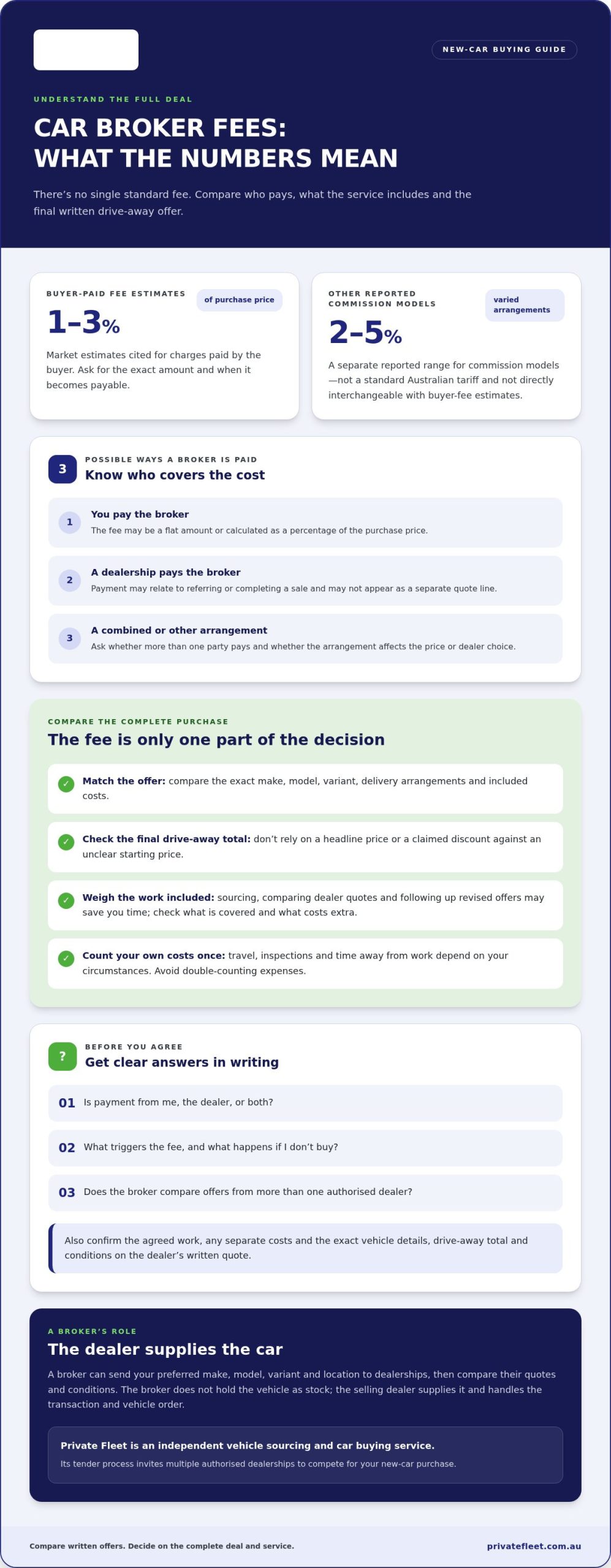
For a new-car purchase, a buyer-paid fee might be a fixed amount or calculated as a percentage of the price. Market estimates describe buyer charges of 1%-3% of the purchase price, while other reported commission models range from 2%-5%. These figures describe different fee approaches, not a standard Australian tariff. Ask for the amount in writing and whether it becomes payable only after you buy the car.
A broker may instead be paid by a dealership for referring or completing a sale. The amount can depend on the vehicle and the agreement. Since this payment may not appear as a separate line on your quote, ask who pays the broker and whether that arrangement affects the price or choice of dealer.
To source offers, a broker can send your preferred make, model, variant and location to dealerships in its network. Dealers respond with quotes, which the broker can compare on drive-away price, delivery arrangements and any conditions attached to an offer. Fleet or volume pricing may be available through particular dealer channels, but eligibility and the offer depend on the vehicle and the dealership. A broker doesn’t hold the car as stock; the selling dealer supplies it.
Negotiating generally involves comparing dealer quotes, asking dealerships to improve their offers and clarifying what each includes. A broker may use established dealership relationships to manage those discussions and follow up on revised quotes. The manufacturer may set recommended prices or run a campaign, but the selling dealer handles the transaction and vehicle order. Compare final written offers, not just claimed discounts from a list price.
Buying directly puts you in charge of discussions with the dealer. A broker can handle sourcing and negotiations on your behalf. Either way, the dealer’s written quote should identify the exact variant, drive-away total, included items and any conditions. Before agreeing, ask:
- Is payment from me, the dealer, or both?
- What triggers the fee, and what if I don’t buy?
- Does the broker compare more than one authorised dealer?
The answers show whether the broker’s commission is a separate cost, part of the dealer arrangement or payable only after a completed purchase. They also help you compare the broker’s role with handling the same dealer conversations yourself.
The regulation mentioned applies to car loan brokers under the National Consumer Credit Protection Act 2009; it does not establish that brokers arranging a car purchase must be licensed. Practical safeguards include getting the fee and payment conditions in writing, asking who pays the broker, and checking the dealer’s written offer.
When Is a Broker Worth the Cost?
A broker may suit you if the service’s value outweighs its fee and the effort of buying independently. Compare the complete purchase costs, time involved and final vehicle offer before deciding.
Broker Costs and Potential Savings
Compare the broker’s total charge with the difference between their offer and your best equivalent direct quote. What matters is your total cost, not a claimed discount against an unclear starting price. Match the make, model, variant, delivery arrangements and included costs before drawing conclusions.
Consider the work the broker takes on, too. If you’re short on time, you may value someone coordinating quotes and dealer follow-ups. If you’re confident negotiating, you may prefer doing those tasks yourself. Your priorities determine whether the service adds practical value.
Broker Fees Versus DIY Buying Costs
Buying independently can involve travel, inspections and time away from work, in addition to the dealer’s vehicle price. These costs depend on your circumstances; a nearby purchase may involve fewer collection expenses.
Compare only the costs that apply to you, then weigh them against the broker’s charge. Avoid counting the same expense twice.
Broker Support Versus Self-Negotiation
Negotiating yourself avoids a buyer-paid broker fee, but you’ll need to request and compare dealer offers. A broker may be worthwhile if coordinating multiple dealerships would take time you’d rather spend elsewhere. Ask yourself: can you gather comparable quotes and follow up on revised offers comfortably?
Comparison sites can help you find advertised prices, but listings may not show the full drive-away terms. Ask a dealership for a written quote covering the exact variant, delivery and included costs, then compare it with other offers. That way, you won’t mistake a headline price for the complete purchase cost.
Keep finance separate from the vehicle comparison. If you’re considering dealership finance, compare its written interest rate, fees and repayment terms with other available loan offers. A broker’s help sourcing a vehicle doesn’t make a finance offer automatically suitable. Decide based on the full cost and terms, not convenience alone.
Flat-fee car broker pricing
A flat fee is usually separate from the vehicle’s purchase price, but the broker’s scope of work and the car’s price or type can affect the arrangement.
How Flat-Fee Pricing Works
A flat-fee arrangement sets one stated charge for the broker’s agreed work, rather than calculating payment as a percentage of the car’s price. This can make the service cost easier to factor into your budget. Ask for the fee upfront, what it covers and when you’re expected to pay.
One broker might source a specific new model, while another may also coordinate dealer quotes and purchase steps. Compare the written scope, not just the headline fee, so you know exactly what you’re paying for.
Check what happens if you change your mind or the variant is unavailable. Ask whether the same fee applies if you switch models, or whether a new search incurs another charge. These terms matter if your shortlist includes, for example, both a hatchback and an SUV.
Fees by Car Price or Type
Whether the fee changes with a car’s price or type depends on the broker’s charging model. A genuinely flat fee stays fixed under its stated terms, while a percentage-based charge rises with the purchase price. Ask for the exact fee structure before comparing a brokered price with a direct dealer quote.
The work involved can vary by vehicle type, even when the fee is flat. A common new-car variant available through several dealerships may take less searching than a limited-specification model or one requiring interstate sourcing. Ask how the broker defines the agreed search and whether changing the make, model or variant affects the charge.
Fleet or wholesale pricing doesn’t automatically mean a lower price for every private buyer. A dealer may provide a fleet-channel quote under particular conditions, while access and the final drive-away amount depend on the arrangement and vehicle. Compare the written quote with other dealer offers for the same variant, including on-road costs and delivery terms.
Lenders and brokers’ vehicle-sourcing fees are separate. If finance is also being arranged, ask whether there’s a separate charge and how it appears in the loan paperwork. Keep the car price, broker fee and finance costs distinct, then compare the total you’d pay under each option.
Broker fees and how brokers earn money
A vehicle broker may earn money through a buyer-paid fee, a dealer payment or both. The arrangement matters because the payment method can shape what the broker is incentivised to prioritise during your purchase.
Buyer-paid charges can be calculated in different ways. These are separate pricing approaches, not one standard fee. Ask which formula applies and how the broker calculates the amount against your written dealer quote.
A discount-based fee needs a clear starting point. The example shows why you should ask whether the discount is measured against the dealer’s first quote, an advertised price or another agreed benchmark.
Dealer-paid commission creates a different incentive. A dealership may pay a broker after a vehicle purchase, while the buyer sees a drive-away quote with no separate commission line. Ask whether the broker receives payment from the selling dealer and whether the process compares offers from multiple dealerships. This helps you understand how the broker is paid rather than assuming the quote tells the whole story.
Finance is a separate transaction from sourcing the vehicle. Finance brokers and dealership finance may receive compensation as part of arranging a loan. In Australia, a car finance broker’s fee must be disclosed on the finance contract. Read the amount, interest rate and total repayment together, since a smaller visible fee can sit alongside higher interest.
Customers can generally pay a car finance broker’s fee directly rather than adding it to the loan. Adding it increases the amount borrowed and may also increase interest over the loan term. Compare the written finance offer with another lender’s terms, keeping the vehicle purchase price separate from borrowing costs.
Get the payment terms in writing before agreeing to a broker arrangement. Clarify what happens if the broker doesn’t find the requested vehicle or you decide not to buy. Agree the fee terms in writing, including what happens if the broker cannot find a suitable car and whether any sourcing fee is separate from a success fee. Clear terms make the financial commitment easier to assess before a dealer order proceeds.
Services included in broker fees
Check the agreement for the exact work covered, extra charges, cancellation terms and refund conditions. It should also explain what happens if the broker can’t find your requested vehicle or the first option doesn’t suit.
For a new-car purchase, sourcing may involve finding your preferred make, model, variant and colour through dealerships. Ask whether the broker compares several offers or contacts only one dealer. A flat fee may feel expensive if it covers a narrow search, while a broader service might include quote comparisons and purchase coordination. The written scope clarifies the difference.
Quote comparisons are useful only when each offer covers the same vehicle and buying conditions. Ask whether the broker checks the drive-away total, delivery arrangements and any conditions attached to dealer offers. For example, don’t compare a quote for one trim level with a different variant just because they share a model name. Confirm that revised offers are provided in writing.
Some brokers also coordinate ordering and communication with the selling dealer. Clarify whether that includes passing on your chosen specifications, relaying order information and following up on delivery updates. Don’t assume these tasks are included just because a broker sourced the vehicle. A clear agreement should state which steps the broker handles and which remain yours.
Inspections and vehicle-history checks are another important distinction. Market guidance says a comprehensive broker fee should include a pre-purchase inspection and PPSR check. Ask whether each is included or charged separately, and whether the charge changes if the first vehicle is unsuitable. For a new-car purchase, clarify which checks apply rather than assuming every service suits every vehicle.
Before signing, use this checklist to make the agreement practical:
- Confirm the exact vehicle search, including make, model and variant.
- Check how many dealer offers the broker will compare.
- Ask whether inspection and PPSR costs sit inside the fee.
- Clarify what happens if you reject the first option or stop the purchase.
- Identify any separate charges for changing your shortlist or restarting the search.
These details help you compare service scope, not just broker fees. A low fee may exclude useful tasks, while a higher fee may cover work you don’t need. Match the agreement to your priorities, such as getting comparable drive-away quotes or spending less time contacting dealerships. If a task or cost is unclear, ask for it to be written into the agreement before proceeding.
A defined scope also helps you decide whether broker support suits your new-car purchase. Compare the agreement with the steps you’d otherwise handle yourself, from finding offers to coordinating with the selling dealer.
Private Fleet: New Cars
Private Fleet helps private buyers source and purchase new cars through an independent New Car Buying Service. Its tender process invites multiple dealers in a national network of authorised dealerships to compete for your business, giving you offers to compare without contacting each dealer yourself. Private Fleet doesn’t hold its own vehicle inventory; the selling dealership supplies the car.
This service can suit buyers with a preferred make or model who want help comparing dealer offers, or those narrowing down a new-car shortlist. Trade-In Assistance can help if you’re replacing an existing vehicle, and Car Finance is available if you’re considering finance alongside the purchase.
Share your preferred make and model, postcode and buying timeframe to discuss your requirements. Contact Private Fleet about buying your new car.
Make your next car comparison count
Before choosing a broker or contacting a dealer, decide which vehicle, variant and timeframe fit your plans. Use the same requirements to compare offers, and separate the drive-away price from any broker or finance charges. This makes differences between quotes easier to understand and helps you focus on the deal that meets your needs.
Understanding car broker fees in Australia can help you decide whether broker support suits your purchase. To take the next step, note your preferred make and model, postcode and timeframe so your enquiry reflects the car you actually want to buy.
If you’d like help with the next step, get in touch with Private Fleet.
With a clear shortlist and comparable offers, you can move towards your new-car decision with confidence.
Frequently Asked Questions
Does Using a Broker Actually Save Money?
A broker can help, but compare the complete purchase outcome rather than a claimed discount alone. Match the vehicle, variant, delivery arrangements and included items across offers, then account for the broker’s charge. For example, a lower quote may not be comparable if it excludes a cost included in another offer. A broker may also save time coordinating the purchase, which matters if you’re managing other commitments.
How much do car brokers charge?
Fees vary by broker and service arrangement. Before agreeing, ask for the fee in writing and clarify what work it covers, when payment is due and what happens if you don’t proceed. A flat charge and a percentage-based charge work differently, so check how the amount is calculated. Compare the service scope as well as the fee, especially if your vehicle shortlist might change.
Is a car broker better than a dealership?
They serve different purposes, so the better fit depends on the help you need. A broker can source and compare vehicle offers, while the dealership sells the car and handles its order. If you know the exact vehicle and enjoy speaking directly with sales staff, dealing with a dealership may suit you. If you want help coordinating comparisons, a broker may be useful.
Is a car broker cheaper than negotiating myself?
Not always. Negotiating yourself avoids a buyer-paid broker charge, but you’ll need to spend time requesting offers and following up. Compare your best direct quote with the broker’s complete offer, including any fee and matching vehicle specifications. If you’re comfortable negotiating and can get comparable written offers, buying directly may cost less. Otherwise, broker support may offer practical value.
Are broker fees hidden?
A buyer-paid charge may be clearly stated in the broker’s agreement, while a dealer-paid payment may not appear as a separate line on your vehicle quote. Ask how the broker is paid and review the written terms before proceeding. Check the dealer’s quote and any separate finance documents, too, since vehicle and borrowing charges may be recorded separately.
Can you get the same deal yourself?
You may be able to get the same vehicle offer directly by contacting dealerships and requesting written quotes. Compare the exact variant, delivery terms, included items and any conditions. If an offer depends on a particular purchasing channel or eligibility, find out whether you can access it before treating it as equivalent. A like-for-like comparison helps show whether broker support adds value for you.
Car broker or car buyer’s agent: is there a difference?
These titles can describe similar buyer-side support, but they don’t define the work. One representative might source a vehicle, while another may also coordinate dealer quotes or purchase steps. Read the service agreement to understand the representative’s role, payment terms and responsibilities. If you mainly need offer comparisons, for example, make sure that task is included in the agreed service.
Do you ever take commission?
Private Fleet describes its service as an independent, tender-based car-buying service, but that description doesn’t establish whether it receives dealer commission. It would be inaccurate to claim either that it does or that it doesn’t based on those details alone. Before deciding, ask how Private Fleet is paid for your purchase and whether any dealer payment applies to the transaction.