
Could combining car buying support and finance make a new-car purchase simpler, without limiting your choice? A car finance and purchasing package in Australia can bring sourcing, trade-in assistance and finance options into one process, but the vehicle purchase and loan remain separate decisions. Start by choosing the car that suits your needs, then assess whether the finance works for your budget.
It’s easy to focus on a headline repayment or drive-away quote and miss how the full offer compares. This guide explains how to weigh up the make, model and variant, drive-away pricing, trade-in value, loan costs and repayment terms on a like-for-like basis. You’ll also learn what to check for fees and pressure to commit before you’re ready.
Private Fleet is an independent vehicle sourcing and car buying service that works with a national network of authorised dealerships. Its tender process invites multiple dealers to compete for your business; Private Fleet sources vehicles rather than holding its own inventory. Read on to compare your options with confidence and see how buying support, optional trade-in assistance and finance can help reduce the effort of arranging a new car purchase.
Key Takeaways
- Use this car finance and purchasing package australia guide to keep the car choice at the centre of your decision, with finance assessed as a separate part of the purchase.
- Compare quotes for the same make, model, variant, drive-away inclusions and offer period so you can see what each deal actually covers.
- Look beyond the repayment amount: review the loan term, interest rate, fees and total amount payable before deciding whether the finance suits your budget.
- Check that your preferred car feels right for everyday use, including seat comfort, ease of entry and exit, visibility, cabin noise and control layout.
- Understand how dealer tendering and optional trade-in assistance can help organise the buying process, while leaving you free to compare offers before proceeding.
What does a car finance and purchasing package in Australia include?
A car finance and purchasing package in Australia is coordinated support for finding and buying a new vehicle, with finance as one possible component. Buying assistance helps you clarify what to look for and assess purchase offers; a lender’s product provides funds under its own terms. The package describes how these parts may fit into a buying journey, not a single vehicle or loan product.
This distinction helps keep your priorities in order. You choose the make, model and variant that suit your needs, then decide whether borrowing fits your budget. The car’s price, any trade-in value and proposed finance each need to be understood on their own terms before you commit.
What can the buying support cover?
Buying support can help turn a broad idea into a focused brief. You might start with the type of car you need, then narrow your shortlist by size, variant, features and budget. Comparing offers for the same specification makes it easier to spot differences in price basis, inclusions and timing, rather than weighing up offers for vehicles that aren’t equivalent.
Trade-in assistance can also help you consider how an existing vehicle fits into the purchase. Keep its proposed value distinct from the new-car quote, so you can see how each figure affects your decision. If you’re weighing up a few options, you can use the new-car buying service to support the sourcing and purchase process.
Where does car finance fit?
Finance is one way some buyers fund a vehicle purchase. A lender sets out the borrowing terms, which may include the interest rate, repayment schedule, loan term, fees and conditions. Review the actual offer rather than judging it only by a headline repayment. Approval and the terms offered depend on the lender’s assessment, so finance support shouldn’t be taken as a promise of approval, a particular rate or savings.
For a general introduction to how vehicle lending can be arranged, see Understanding Car Finance. Then consider the finance details alongside the car you want, without letting the loan dictate the shortlist. You can choose to explore finance, use another way to pay, or take more time before deciding.
Car protection products may also be presented as an additional consideration. Keep them secondary to selecting the right new car and understanding its purchase offer. The useful measure of any package is whether it makes the choices easier to assess, while leaving you clear about what you’re considering and free to decide what suits your circumstances.
How the new-car purchase and finance process can fit together
A considered sequence gives you a clear way to move from an idea to a purchase decision: define what the car needs to do, prepare a shortlist, gather offers, review the details and then decide whether to proceed. Keeping these steps in order helps you avoid letting a loan repayment or a time-limited offer rush your vehicle choice.
Start with the car and purchase requirements
Write down your preferred make, model and variant, your budget in A$, and your intended buying timeframe. Note how you expect to use the car and how long you plan to keep it. Practical preferences matter too: think about seat comfort, ease of entry and exit, visibility, cabin noise and whether the controls feel intuitive for your regular drives.
Use those priorities to create a shortlist, separating essential features from preferences. Then check current Australian specifications and availability using manufacturer or authorised dealer information. If a model or variant has changed, confirming the details early helps you avoid comparing an outdated specification with a current offer.
Compare offers before making a finance decision
Once your shortlist is ready, sourcing support can help you gather purchase offers that respond to your requirements. Private Fleet’s buying process provides a structured way to move from your brief to reviewing vehicle options. Compare offers for the same variant and note the price basis, inclusions and any stated offer period. A lower headline figure may not represent the same package if important details differ.
Keep the vehicle information to hand while considering finance. Review the lender’s actual terms, including repayment frequency, loan term, fees and total amount payable where disclosed. This lets you consider the loan against the purchase you’re actually weighing up, rather than making a decision based only on an advertised repayment. Take time to understand the terms before accepting an offer.
If you have a car to trade, you can bring that into the process when considering the new-car purchase. You’re not required to trade in a vehicle. Keeping its valuation separate from the new-car quote helps you understand each figure and decide whether the arrangement works for you.
A practical order is to settle your vehicle priorities, review suitable offers, consider any trade-in, assess finance if needed, and then make your decision. If you’re still refining your shortlist, the car-buying process can help clarify the steps involved. Share your preferred make or model, postcode and timeframe if you’d like support with your next-car plans.
Compare car finance and drive-away offers on a like-for-like basis
A package is useful only when you can understand and compare each part. Keep the vehicle quote, trade-in and finance terms visible as separate figures, then compare offers for the same make, model, variant, price basis, inclusions and offer period. If one quote covers a different variant or uses a different price basis, the figures may not be directly comparable.
Use a simple comparison like this to capture what each offer actually says. Fill it in from current written quotes and finance documents rather than relying on a headline repayment.
| What to compare | Offer A | Offer B | Check |
|---|---|---|---|
| Vehicle quote | Record quote details | Record quote details | Same make, model, variant and price basis? |
| Drive-away inclusions | List included costs | List included costs | Are inclusions and exclusions clearly stated? |
| Trade-in treatment | Record value separately | Record value separately | Is the trade-in distinct from the new-car price? |
| Finance terms | Record loan details | Record loan details | Are the rate, term, fees and total payable clear? |
What should you compare in finance terms?
Look beyond the repayment amount. Compare the interest rate, loan term, repayment frequency and total amount payable where disclosed. Check applicable fees, any security requirements and conditions in the actual offer documents. A smaller repayment may reflect a longer term or other loan structure, so it doesn’t by itself show the total commitment.
Fixed and variable arrangements can differ in how repayments are set or may change, but neither is automatically the right choice for every buyer. Consider the specific terms and how they fit your budget and plans. Don’t assume two offers are equivalent because their repayment amounts look similar.
What should you compare in the vehicle offer?
Confirm the exact variant and identify the drive-away price basis, included costs, exclusions and offer expiry. Vehicle pricing and offers can change, so use current Australian manufacturer or authorised dealer information when checking details. If an item isn’t clear in the quote, treat it as unresolved rather than assuming it’s included.
Keep any trade-in value separate from the new-car quote. This makes it easier to compare the purchase price independently and understand how the trade affects the overall amount you may need to fund. Don’t compare a quote that includes a trade-in adjustment with one that doesn’t as if they were the same offer.
A car finance and purchasing package Australia buyers are weighing up should make these components easy to inspect side by side. If the vehicle offer and finance terms can’t be compared clearly, pause before accepting. First align the vehicle details, then review the loan on its own terms and decide whether the combined arrangement suits you.
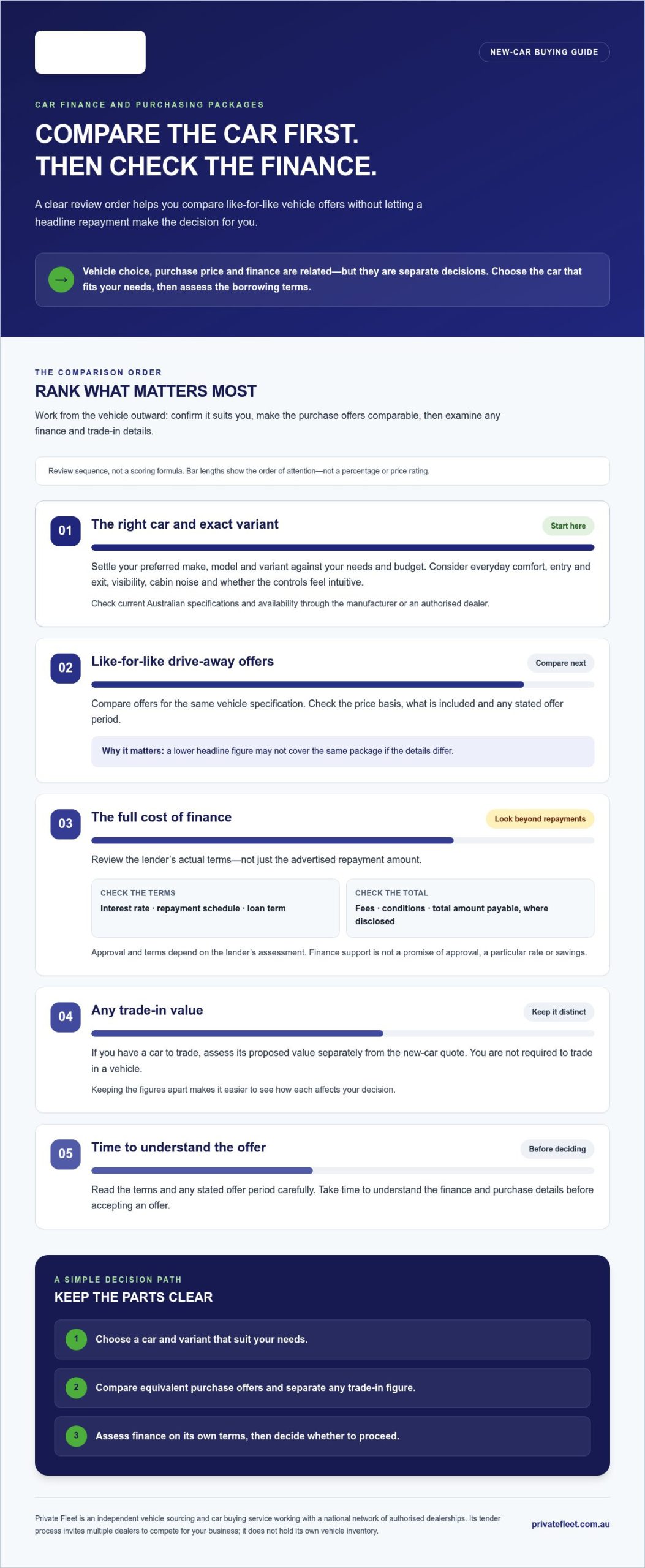
Use this checklist before choosing a new-car finance package
A useful checklist helps you look past the headline repayment and check whether the car, purchase offer and finance terms suit your circumstances. For a car finance and purchasing package australia buyers are considering, review each part separately and take time to read the current documents before deciding.
Check the vehicle and dealer quote
Start with the exact vehicle, not just the badge or model name. Australian specifications and availability can vary by variant and change over time, so compare current manufacturer or authorised dealer information with the written quote. Then check how the car will fit your everyday driving, passengers and intended ownership period.
- Vehicle details: Record the make, model, variant and relevant specifications. Make sure every quote refers to the same vehicle.
- Everyday fit: Consider expected kilometres, regular routes, longer trips and passenger needs. If practical, assess seat comfort, ease of entry and exit, visibility, cabin noise and whether the control layout feels clear.
- Quote basis: Check whether each figure is a drive-away price and what costs or other items it includes. Note any exclusions, the location basis and the offer expiry.
- Timing: Record when the offer expires and any stated ordering or delivery details. Avoid treating an estimate as a confirmed date.
Check the finance and trade-in details
Review the lender’s current offer documents rather than relying on a verbal summary or repayment figure alone. Check how often repayments are due, the loan term, applicable fees and total amount payable where disclosed. ASIC’s Moneysmart information can also help you understand finance terms in an Australian context.
- Repayment schedule: Confirm the amount and frequency, and consider whether repayments fit your budget over the full term.
- Loan conditions: Read the stated interest rate, fees, any security requirements and other conditions in the offer documents.
- Total commitment: Check the total amount payable where shown. A repayment figure on its own doesn’t reveal the full cost of the loan.
- Trade-in: Keep the trade-in valuation separate from the new-car quote and finance calculation. This makes it easier to see how the proposed value affects the amount you may need to fund.
- Decision time: Make sure you understand the purchase and finance documents before accepting. If a detail is unclear, pause and have it explained before proceeding.
Use the checklist to identify gaps, not to force a decision. A package should leave you able to understand the car’s quoted price, any trade-in treatment and the loan terms as distinct parts of the choice. You can also share your shortlist, postcode and preferred buying timeframe to discuss your new-car priorities.
How Private Fleet combines new-car sourcing with finance support
Private Fleet can help turn your new-car requirements into a clearer buying brief, then support you as you consider vehicle offers and related options. You don’t need a fully settled shortlist to begin. A preferred model is useful, but a description of what you need from the car can also help shape the search.
What buyers can expect from the sourcing process
Think about what would make an offer worth considering before reviewing options. You might set a maximum budget, identify features you won’t compromise on, and note where you’re flexible, such as colour or a second-choice model. This gives you a practical way to assess whether a vehicle suits your priorities, rather than comparing offers on price alone.
Private Fleet’s new-car buying service supports buyers with sourcing and purchase arrangements. As you review an offer, note any questions you want answered and keep the relevant vehicle details together. The car-buying process page explains the steps involved in working through a new-car purchase.
Trade-in assistance and finance can be considered if they suit your plans. They’re options around the vehicle purchase, not reasons to compromise on the car itself. For a comprehensive car finance and purchasing package australia, keep your preferred vehicle and priorities as the starting point, then assess any finance terms against the purchase you’re considering.
Make the next step straightforward
A concise enquiry can give the discussion a useful starting point. Include the details you already know, and note where you’d like help narrowing down your choices.
- Vehicle: Your preferred make or model, or a shortlist.
- Location and timing: Your postcode and intended buying timeframe.
- Budget and use: Your budget and approximate annual kilometres.
- Other considerations: Any trade-in, passenger or travel needs, and charging access if relevant.
These details help keep the conversation centred on your requirements while leaving room to compare suitable options at your own pace.
Get help buying my new car
Make your next car decision with confidence
Before taking the next step, consider what you want this car to do for you over the years you expect to own it. A shortlist can help you focus on the features and terms that genuinely matter, rather than getting pulled towards options that look appealing but don’t fit your plans. Leave room to compare, ask for clear explanations and take the time you need to reach a decision.
A car finance and purchasing package australia buyers consider should make the path to a new car easier to understand, while leaving the choice in your hands. If you’re ready to explore your options, share your preferred make or model, postcode and buying timeframe. You can also include your budget, shortlist, expected annual kilometres and charging access if relevant. That gives the conversation a practical starting point, shaped around the car you’re looking for.
Get help buying my new car
Your next car decision can start with a clear brief and a considered comparison. Take the next step when you’re ready.
Frequently Asked Questions
What is a car finance and purchasing package in Australia?
A car finance and purchasing package in Australia coordinates support for finding and buying a new car with a possible loan arrangement. It isn’t necessarily one product: vehicle sourcing helps you compare purchase options, while a lender’s agreement sets the borrowing terms. For example, you might use buying support to source a preferred variant, then decide separately whether to finance it. Read each agreement so you know which organisation handles each part.
Can I compare car finance with the dealer’s drive-away price?
Yes. Compare the same Australian make, model and variant, and check whether each drive-away figure uses the same price basis and inclusions. Keep the vehicle price separate from the loan repayment and total payable. Before deciding, review the current finance offer documents for the rate, term, fees, repayment frequency and any offer expiry. Similar repayments don’t necessarily mean the offers cost the same or work alike.
Does a car finance package guarantee loan approval?
No. A package or buying service can’t guarantee that a lender will approve your application or offer particular terms. The lender assesses your application against its own criteria, including information about your financial position and the loan requested. Treat an estimate or preliminary discussion as distinct from a formal decision. Before relying on finance to fund a purchase, review the lender’s written offer and its conditions.
Can I use a car buying service if I have a trade-in?
Yes. You can discuss sourcing a new car and trade-in assistance as related parts of your purchase, without treating a trade-in as essential. Give accurate details about your current vehicle, including its model, variant, kilometres and condition. Keep any proposed trade-in value visible as a separate figure from the new-car quote. That way, you can assess the vehicle purchase and trade-in contribution independently.
Should I choose finance before choosing a new car?
Set a realistic budget first, then shortlist cars that fit your needs. Once you have a clearer idea of the vehicle and its quoted price, you can assess whether a finance offer suits your circumstances. This helps you avoid choosing a car based only on an advertised repayment, which may not show the loan’s full term or total payable. Keep flexibility in your shortlist until you’ve reviewed the purchase and finance details.
Can I choose a new-car buying service without taking finance?
Yes. Vehicle sourcing and borrowing are separate decisions, so using support to find and arrange a new-car purchase doesn’t make taking finance compulsory. You can consider the vehicle offer on its own and decide how you want to pay. If you do review a loan, compare its written terms independently with the purchase details. Proceed only with the parts of the arrangement that suit your plans.
What information should I have ready before discussing a new-car purchase?
Have your preferred make or model, postcode and intended buying timeframe ready. A budget and shortlist can help clarify which vehicles to consider, while your approximate annual kilometres gives useful context about how you’ll use the car. If you have a trade-in, note its make, model, variant and kilometres. You don’t need every detail settled; a few priorities can provide a practical starting point for the conversation.