
The most comprehensive-sounding protection pack may not be the one that suits your new car. Car protection packs for new vehicles can bundle different treatments, so a polished name alone won’t tell you what’s covered or how useful it’ll be for your driving and parking habits.
It’s reasonable to want to protect your new vehicle, but paint, interior and window treatments serve different purposes. A coating, for example, isn’t the same as a physical film, and a bundled pack may include items you value more than others. The useful comparison is in the written inclusions, exclusions and conditions.
This guide explains the main options in plain English and what to look for in the terms, including warranty wording and ongoing care requirements. You’ll be better placed to decide whether a pack fits your priorities, and to weigh it alongside the vehicle, variant and overall new-car offer.
Key Takeaways
- Car protection packs for new vehicles can bundle different treatments, so compare the written coverage rather than relying on the package name.
- Learn how ceramic coating, paint protection film and window tint differ, and which questions to check for each option.
- Compare covered surfaces, exclusions, application steps, care instructions and claim processes before deciding.
- Prioritise the protection that fits how you park and use your car, and how long you plan to keep it.
- Keep protection in perspective: shortlist your vehicle first, then assess any pack as part of the broader new-car offer.
What are car protection packs for new vehicles, and what might they cover?
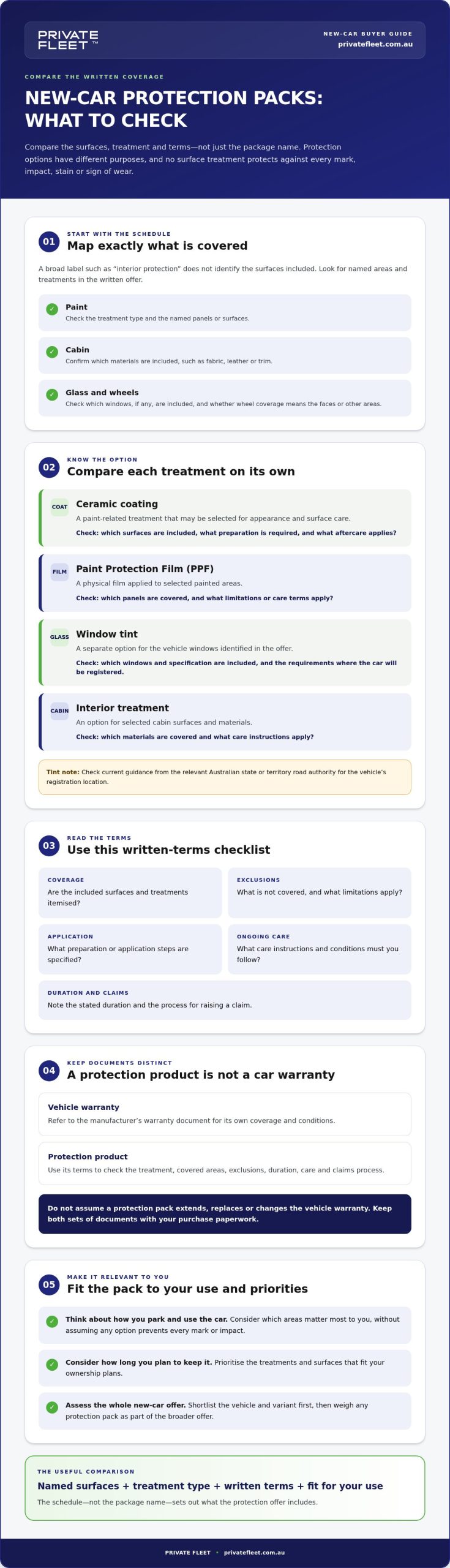
Car protection packs for new vehicles are bundled offers that may combine treatments for selected parts of a car. The exact scope depends on the written terms, not the pack’s name or sales description. One offer might focus on exterior paint, while another may include cabin surfaces, glass or wheels. Compare the itemised inclusions and exclusions before deciding whether the bundle suits your vehicle and how you’ll use it.
These products generally relate to appearance and surface care. They aren’t mechanical servicing, and they don’t automatically form part of the vehicle’s warranty. A new-car warranty and any protection product have separate documents and conditions, so read each on its own terms.
Which areas of a new vehicle might a protection pack cover?
Possible coverage areas include paint, cabin materials, glass and wheels. A bundle may combine options, but the schedule should spell out which surfaces are treated and what the treatment is intended to do. For example, a reference to “interior protection” doesn’t, by itself, identify whether fabric, leather, trim or all cabin materials are included.
For paint, Paint Protection Film (PPF) is a physical film applied to selected painted areas. Other offers may describe a surface treatment such as a coating. The names alone don’t establish how much of the car is covered or what kinds of damage are addressed.
- Paint: Check the named panels and treatment type.
- Cabin: Look for the materials and surfaces listed.
- Glass: Confirm which windows, if any, are included.
- Wheels: Check whether the offer covers wheel faces, other areas, or neither.
No surface treatment should be treated as protection from every mark, impact, stain or sign of wear. The written schedule defines the scope.
Is a protection pack the same as a new-car warranty?
No. A vehicle warranty and a surface-protection product serve different purposes. The warranty document sets out its own coverage and conditions; a protection product document describes the particular treatment and any associated terms. A protection pack shouldn’t be assumed to extend, replace or change the vehicle warranty.
Read both documents separately. For the protection offer, note the covered areas, exclusions, duration, care instructions and process for raising a claim. For the vehicle warranty, refer to the manufacturer’s warranty documentation. Keep the terms with your purchase paperwork so you can refer to the right document later.
Keeping the offer schedule and related paperwork together gives you a clear record of what was proposed and what you accepted. It can also help you distinguish the protection terms from the vehicle documents if you need to refer to them during ownership.
Ceramic coating, paint protection film and tint: what does each option do?
Compare these options by the area named in the offer and the job you want it to do. A protection schedule should make it possible to distinguish paint treatments from glass and cabin options, then assess each component on its own terms. Use the table to identify what to look for before deciding whether a bundle fits your priorities.
| Option | Area addressed | General purpose | Questions to check in writing |
|---|---|---|---|
| Ceramic coating | The surfaces specified in the offer | A paint-related treatment that may be selected for appearance and surface care | Which surfaces are included? What preparation and aftercare are required? |
| Paint protection film (PPF) | The panels named in the offer | A physical layer intended to cover selected painted areas | Which panels are covered, and what limitations or care terms apply? |
| Window tint | The glass identified in the offer | A separate option for selected vehicle windows | Which windows and specification are included? What requirements apply where the car is registered? |
| Interior treatment | Cabin materials listed in the schedule | An option for selected interior surfaces | Which materials are included, and what care instructions apply? |
How do ceramic coating and paint protection film differ?
For a useful comparison, focus on the role each option is meant to play, its specified coverage and the work involved before application. A coating offer should describe the preparation and surfaces treated; a film offer should identify the panels it covers. If the vehicle is often parked in tight spaces or used on regular highway trips, consider which areas matter most to you, without assuming either option prevents every mark or impact.
Detailing practices and terminology can vary. The International Detailing Association (IDA) provides broader industry context, while the written offer remains the source for the specific work and conditions included. Whichever option you consider, follow its care instructions and continue to take care when driving and washing the vehicle.
What can interior protection and window tint add?
An interior treatment may suit buyers who want to focus on particular cabin materials, but the offer should identify those materials rather than rely on a broad label. Tint is a glass option, so assess it separately from paint or upholstery treatments. If tint is included, check current guidance from the relevant Australian state or territory road authority for requirements where the vehicle will be registered.
With car protection packs for new vehicles, compare each component’s stated purpose and coverage before considering the bundle as a whole. If you’re weighing protection alongside a vehicle shortlist, you can discuss your new-car options with Private Fleet and share your preferred make or model, postcode and buying timeframe.
How to compare new-vehicle protection packs without relying on the sales label
Put the offer documents side by side and compare what each one actually includes. Package names and headline claims can sound similar while covering different surfaces, treatments or conditions. For car protection packs for new vehicles, an itemised schedule is more useful than a broad label because it lets you judge what you’re paying for and what remains outside the offer.
Compare each protection offer separately from the vehicle’s drive-away price and other purchase terms. If a pack is optional, make sure its price and inclusions are clearly identified in the written offer. That keeps your comparison focused on the car and the overall purchase, rather than letting a bundle name obscure the details.
What should the written inclusions and exclusions spell out?
Look for specific surfaces and application areas, not just general phrases such as “interior” or “full protection”. The document should make it clear which panels, cabin materials, glass or wheel areas are included. It should also identify exclusions and any conditions that affect the offer, such as requirements for vehicle preparation or ongoing care.
Check whether the application steps are explained. For example, does the description say what preparation is carried out before a treatment is applied, and which party supplies and applies each component? A clear scope helps you compare like with like and understand what work is covered.
- Coverage: Match every named surface or panel against your priorities.
- Exclusions: Note damage, areas or circumstances the terms leave out.
- Preparation and application: Identify the stated steps and who is responsible for them.
- Aftercare: Record the cleaning instructions and any required maintenance.
- Documents: Check what written confirmation you’ll receive after the work.
If wording is unclear, ask the party making that offer to explain it in writing before you agree. A verbal summary can be helpful, but written details give you a clear record of the agreed scope.
How should you assess claims, warranties and aftercare?
Separate descriptions of what a product is intended to do from any warranty or guarantee terms. A performance claim isn’t the same as a promise about how long the treatment will last or what remedy is available if there’s a problem. Read the actual documents rather than relying on a headline or a stated term alone.
Check the duration, exclusions, maintenance requirements, claim process and whether the terms can transfer if you sell the car. Confirm who handles a claim and what records you’ll need to keep. A long stated term doesn’t, by itself, guarantee a particular real-world result; its value depends on the conditions attached and whether you can meet them.
Finally, compare the total cost shown in your actual written offers against the specific inclusions and conditions. If one offer costs more, identify what additional coverage or work accounts for the difference. If that distinction isn’t clear, you don’t yet have a fair comparison.
Which car protection pack suits your vehicle, driving and ownership plans?
The right choice depends on how you’ll use and keep the car, not how many items a bundle contains. Start with the surfaces most exposed in your routine, then compare the written coverage with your intended ownership period and the overall vehicle offer. You may find that one selected treatment meets your needs better than a pack containing several options you’re unlikely to use.
Which priorities might change your protection choice?
Think about where the car will spend its time and the journeys it will make. Frequent outdoor parking may make you consider paint or cabin exposure differently from a car kept under cover. Regular highway travel may lead you to prioritise different painted areas than mostly urban driving. If passengers regularly use the cabin, you may also focus on the specific materials and surfaces the interior treatment covers.
- Parking: Consider whether the car will usually be garaged, sheltered or parked outdoors.
- Driving: Think about your typical routes and how often you travel on highways or unsealed roads.
- Cabin use: Identify the interior areas most likely to see regular use, such as seats or trim.
- Ownership period: Consider how long you plan to keep the car and whether you’re comfortable following any ongoing care conditions.
These are prompts, not predictions of damage. Two buyers with similar vehicles can have different priorities because their parking, travel and passenger needs differ. Keeping a car longer may make ongoing care instructions more relevant to your decision, but no protection option guarantees a higher resale value. Treat resale as uncertain, and choose based on the coverage and use that matter to you now.
When might a full pack be more than you need?
A bundle can be convenient, but convenience doesn’t make every component useful for every buyer. Check each item against a real priority. If you park under cover and rarely carry passengers, for instance, some options may matter less to you than a treatment for a particular exterior area. That doesn’t mean the option is poor; it may simply be a mismatch for your routine.
Compare a full pack with its individually listed components using the same criteria. Put the written coverage, exclusions, preparation, care requirements and terms side by side. Then compare the total amounts shown in your actual offers, without assuming a bundle is better value just because it includes more items. If a component has no clear purpose for your plans, weigh that before adding it.
Make the protection decision after narrowing down the vehicle and variant. Compare it alongside the full purchase offer, including the terms that matter to you, rather than letting an optional pack drive the car choice. A considered shortlist makes it easier to see whether protection fits your plans or adds complexity without addressing a priority.
Add protection to your new-car decision with a clear buying process
Protection is best considered after you’ve identified the car that suits your needs. That keeps optional products in perspective and makes it easier to compare the vehicle offer separately from any protection terms. A simple sequence helps:
- Shortlist the vehicle: Decide on your preferred make, model and variant, including the features and budget that matter most.
- Compare vehicle offers: Review the written vehicle terms and the drive-away price for each option.
- Assess protection: Consider only the products that address a genuine priority, and compare their written inclusions and conditions.
- Make your decision: Weigh the complete vehicle purchase and any optional protection before you commit.
This order matters. A pack may sound attractive, but it shouldn’t distract from choosing the right vehicle or understanding the full offer. Car protection packs for new vehicles are one part of the buying decision, not a substitute for comparing model, variant and purchase terms.
How can you keep protection secondary to the car purchase?
Set your vehicle priorities first. Think about the body style, seating, features and variant that fit your day-to-day driving, then compare complete written vehicle offers on a like-for-like basis. Keep any protection offer separate so its inclusions and cost are visible rather than blended into a headline figure.
Private Fleet is an independent vehicle sourcing and car buying service, not a vehicle retailer. It works with a national network of authorised dealerships and invites multiple dealers to compete for the buyer’s business through a tender process. Buyers can explore the new-car buying service, while the buying process explained outlines how the service works.
As you review the vehicle offer, keep the comparison consistent: check the make, model, variant and included vehicle terms, then assess optional protection on its own written details. If an offer combines several items, make sure you can identify what relates to the car purchase and what relates to protection. That way, you can decide whether each part fits your priorities without losing sight of the vehicle itself.
What information should you share when seeking buying help?
Start with your preferred make or model, postcode and buying timeframe. If you have a shortlist, include the variants you’re considering and any priorities that will help narrow the choice. You can also share questions about protection, such as which surfaces you’re weighing up or which written terms you’d like to understand. Keep those questions alongside your vehicle shortlist, so the car purchase remains the main decision.
Make your next new-car decision with confidence
Let the written terms guide your protection choice, while your preferred vehicle and the full purchase offer remain at the centre of the decision. Private Fleet has operated since 1999, and customers receive regular updates on delivery times as they progress through a new-car purchase.
If you’re weighing up car protection packs for new vehicles, bring your questions into the buying conversation rather than treating protection as a separate decision. Share your preferred make or model, postcode and buying timeframe, along with the vehicle options you’re considering. That gives the discussion a clear starting point.
A considered shortlist makes it easier to move forward at your own pace and choose the options that fit your plans.
Get help buying my new car
Frequently Asked Questions
Do car protection packs for new vehicles include paint protection?
They may include a paint-related treatment or film, but the pack name doesn’t tell you which. Before agreeing, check whether the offer names the product type and specifies the panels covered. For example, a paint offer might cover selected areas rather than the whole exterior. Also look for preparation steps, exclusions and care instructions, then decide whether that defined coverage addresses a concern you actually have.
Is ceramic coating the same as paint protection film?
No. Ceramic coating is applied as a treatment to a surface, while paint protection film is a physical layer fitted to specified areas. They serve different purposes, so one shouldn’t be assumed to provide the same type of protection as the other. If you’re choosing between them, focus on the outcome you want, the areas covered and the conditions attached. Neither is a guarantee against all damage.
Can a new-car protection pack affect the vehicle warranty?
A protection pack and a vehicle warranty have separate terms, so don’t assume one extends or replaces the other. Before purchase, read the manufacturer’s current warranty information alongside the protection offer. If the protection document mentions maintenance or care conditions, note what you’d need to do and keep any relevant records. For a question about how a particular term applies, seek clarification from the party responsible for that document.
Are dealer protection packs worth considering?
They may be worth considering if the stated inclusions fit your needs and the terms are clear. Treat the pack as an optional part of the new-car decision, not as a reason on its own to choose a dealer or vehicle. For a useful comparison, line up offers that cover similar areas and check the application and care conditions. Then decide whether each component suits your car and planned ownership period.
Do new-car protection packs include window tint and interior protection?
Some offers may include tint, cabin treatments or both, while others may cover different items. For example, a pack that mentions interior protection might apply only to particular materials, not every surface in the cabin. Check the written schedule for the named glass or materials, any limitations, and care instructions. If tint is included, review its stated specification for the windows covered rather than assuming all glass is treated.
Should I buy a protection pack before taking delivery of a new car?
There isn’t one timing rule for every offer. Before deciding, check when the treatment is intended to be applied, what preparation is involved and what paperwork you’ll receive. If you’re comparing vehicle orders, keep the protection decision separate from the delivery arrangements and ask the party making the offer to clarify any timing terms in writing. That helps you understand the process before you commit.
How do I compare two new-car protection pack offers?
Use the same comparison points for each offer: product type, surfaces covered, exclusions, application details, aftercare and any stated warranty conditions. Ask for the total amount for each option to be itemised in writing, especially if it appears within a broader vehicle quote. This makes it easier to identify differences that a matching-sounding package name can hide and to leave out components that don’t fit your priorities.