
Could a new-car offer be easier to assess when several dealers respond to the same clear brief? Dealer tender car buying replaces the back-and-forth with one dealership with a process where dealers compete to offer a vehicle that matches your requirements. It can make comparing options simpler, but only if the quotes cover the same car and terms.
When offers differ on features, delivery arrangements or inclusions, a lower figure may not be the better deal. It could be based on a different specification or leave out costs you expected. A broker can manage dealer sourcing and help organise the details, reducing the need to negotiate with each dealership yourself.
This guide explains how the process works, from preparing a vehicle brief to reviewing dealer offers and deciding whether to proceed. You’ll learn what to compare, including the model and specification, delivery terms, and any trade-in or finance arrangements. The aim is a fair, like-for-like comparison that helps you make an informed decision.
Key Takeaways
- Dealer tender car buying invites dealers to respond to a buyer’s defined vehicle brief, creating a structured alternative to contacting dealerships one by one.
- A clear brief gives dealers the same requirements to quote against, making competing offers easier to assess.
- Look beyond the headline price: check that each offer covers the same vehicle grade, options, delivery, inclusions and conditions.
- Consider how much time and control you want. Direct negotiation may suit confident buyers, while managed sourcing can reduce the admin.
- Private Fleet is an independent Australian car brokerage that uses dealer tenders to seek competitive offers on new cars.
What is dealer tender car buying, and how does it work?
Contacting several dealerships takes time, and comparing quotes can be difficult when they’re based on different vehicle details or purchase terms. Dealer tender car buying offers a more structured approach: dealers receive a defined vehicle brief and can respond with offers to supply a matching car.
A dealer tender is a process where dealers compete to supply a vehicle based on the same buyer-defined brief. It follows the basic idea of a procurement process, where suppliers respond to a set of requirements. A tender can generate competing offers, but it doesn’t guarantee the best final deal. Check what each offer includes and confirm the details with the selling dealer.
This differs from negotiating with one dealership, where you discuss its offer directly, and from contacting dealerships yourself, where you manage each conversation and comparison. With a tender, a broker may approach dealers using the same agreed brief and organise their responses. You can then assess the options without handling every enquiry yourself.
What information goes into a car-buying tender?
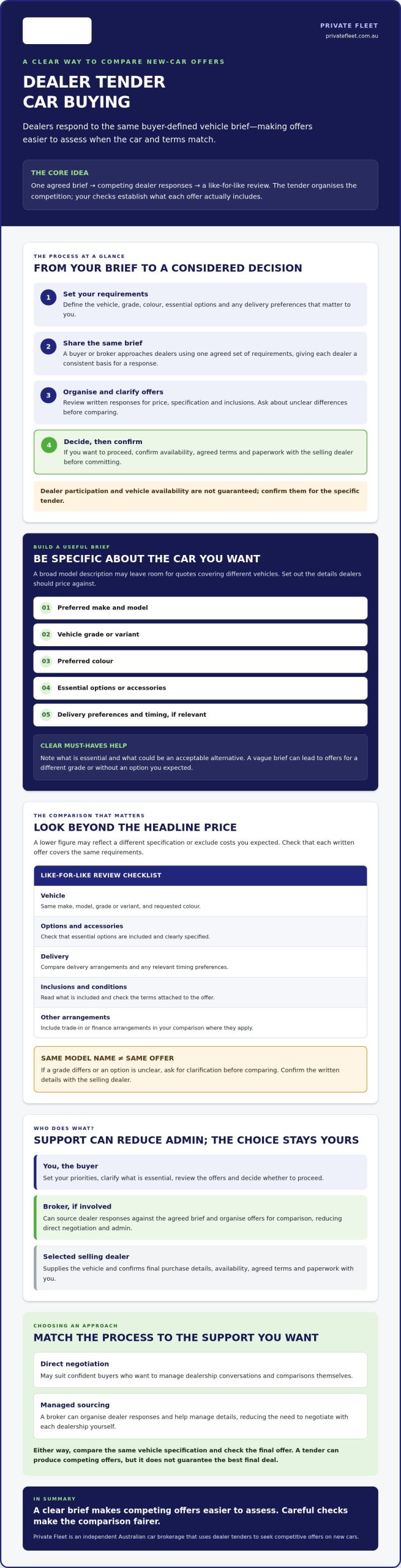
The brief should describe the car you want, not just a broad model category. It can include:
- Preferred make and model
- Vehicle grade or variant
- Preferred colour
- Essential options or accessories
- Delivery preferences and timing, if relevant to your plans
For example, specifying the same model and grade, a particular colour and the same essential option gives dealers a clearer basis for their quotes. If the brief is vague, an offer might cover a different grade or omit an option, making prices harder to compare. Include delivery preferences only if they matter to you, then check how each dealer has addressed them.
Who does what during the tender process?
You set your priorities, clarify what’s essential and decide whether to proceed. A broker can source dealer responses against the agreed brief and organise the offers for comparison. This can reduce direct negotiation and admin, while leaving the decision in your hands.
The selected selling dealer supplies the vehicle and confirms the final purchase details with you. Before committing, check that the written offer matches the agreed specification and sets out relevant terms, including delivery arrangements and inclusions. The tender organises competition; the final checks help you understand what you’re agreeing to.
How dealer tender car buying moves from brief to competing offers
A tender is useful only when offers are based on the same request. In dealer tender car buying, the buyer or broker shares one agreed vehicle brief with dealers, then organises their responses so differences are easier to spot. Comparable offers depend on dealers responding to the same vehicle specification.
The steps are straightforward, though the number and timing of responses can vary. Confirm dealer participation and availability for the specific tender rather than assuming they’re guaranteed.
Steps in a typical dealer tender
- Confirm what you want. Set out your preferred vehicle, grade, colour and essential options. Note must-haves, acceptable alternatives and any relevant delivery preferences or timing. A clear brief helps prevent quotes for vehicles that don’t meet your needs.
- Request dealer offers. The broker or buyer approaches dealers using the same agreed brief. This gives each dealer a consistent basis for responding, rather than asking each one to price a slightly different vehicle.
- Organise and clarify responses. Compare written offers for price, specification and inclusions. If a quote lists a different grade or leaves an option unclear, ask for clarification before comparing it with the others. Referring to the same model name doesn’t automatically make offers like-for-like.
What happens after an offer is selected?
Review the offer and decide whether you want to proceed. Choosing an offer doesn’t replace the need to confirm the final details: the selling dealer needs to confirm vehicle availability, agreed terms and purchase paperwork with you. Check that the written details match your requested specification and inclusions, and ask about anything unclear before committing.
If a broker is involved, ask who will handle dealer communication and what support continues after you choose an offer. Our guide to how a car broker works explains the broker’s role in more detail. For managed new-car sourcing, Private Fleet’s new car buying service uses a dealer tender process to seek competing offers.
How to compare dealer tender offers beyond the headline price
A lower quote can look appealing, but it may describe a different car or leave out items included in another offer. A fair comparison requires matching vehicle specifications and clearly stated terms. In dealer tender car buying, treat each response as a set of details to verify, not just a figure to rank.
Create a comparison table with one column per dealer and a row for each item below. Mark details as “included”, “excluded” or “to confirm” so gaps are visible rather than assumed.
Which details should buyers compare line by line?
- Vehicle: Match the make, model, grade and colour. Check that factory-fitted options are the same, not just that the model name matches.
- Delivery: Compare the stated delivery arrangements and timing. If an offer doesn’t explain these, ask the dealer to clarify rather than assuming the terms match.
- Inclusions and exclusions: Note what each quote includes, such as specified options or other listed items, and what it leaves out. Confirm unclear items in writing.
- Offer conditions: Record any conditions attached to the quote and ask how they affect the offer before deciding.
For example, one dealer might quote the requested grade but leave out an option in your brief, while another includes it. The first figure isn’t directly comparable until you clarify the specification and terms. Ask the dealer to confirm any changes in writing, then update your table.
Does dealer competition always produce the best offer?
No. Competition can create options, but it can’t guarantee the best overall outcome. Responses may vary because of vehicle availability, specification, timing or dealer terms. An offer that looks stronger on price may not suit you if it misses an essential requirement or has unclear conditions.
Read the complete offer, not just its headline figure. Check that the vehicle matches your brief, what’s included or excluded, and whether the delivery details work for you. Ask the dealer or your broker to clarify anything ambiguous before deciding. This keeps your comparison focused on what you’ll receive, rather than an assumption based on the lowest number.
Is dealer tender car buying right for your situation?
The right approach depends on how you prefer to manage a major purchase. Dealer tender car buying can reduce the effort of contacting dealerships and make responses easier to review. Approaching dealers yourself gives you direct control over each conversation. Neither method suits every buyer.
If you’re comfortable negotiating and want to speak directly with sales teams, handling enquiries yourself may feel straightforward. You can set the pace and ask questions as they arise, but you’ll also need to track each conversation and check that offers meet the same requirements. If you’re time-poor or would rather avoid repeated negotiations, managed sourcing may appeal, particularly when you know the vehicle and features you want.
Using a tender doesn’t mean handing over the final decision. You set your priorities, review the offers and choose whether to proceed. The key is understanding what the service handles and what remains your responsibility.
When might a tender suit a private buyer?
A tender may suit you if you have a clear vehicle brief but would prefer help approaching dealers and organising their responses. It can make comparisons more manageable, though its value depends on your preferences and the service terms. If you enjoy negotiating directly or want to manage every dealer conversation yourself, a tender may offer less benefit. For other practical buying strategies, see our guide to saving money when buying a new car.
What should you clarify before using a tender service?
Ask for a clear explanation before you decide. In particular, confirm:
- How the tender works, what the service covers and how it is funded, including any fees or commissions that may apply.
- Whether trade-in assistance, car finance or car protection products are optional, and what terms apply to each.
- Who contacts dealers, shares your requirements and answers questions about the offers.
- Which dealer will supply the car, and who will confirm the final vehicle details and purchase contract with you.
These questions help you understand the roles involved without giving up control of your choice. If a managed approach sounds useful, explore Private Fleet’s new car buying service and clarify how its tender process fits your requirements.
How Private Fleet supports dealer tender car buying
Private Fleet is an independent Australian car brokerage established in 1999. Its new-car buying service uses a dealer tender model, where dealers compete to supply a buyer’s new car based on their requirements. For someone who’d rather not approach dealerships individually, this offers a managed way to source a vehicle and review dealer responses.
A tender creates options to consider, not a guaranteed price or outcome. You decide whether an offer suits you, and the selling dealer confirms the final vehicle and purchase details. Understanding those roles helps keep the process clear while leaving the decision in your hands.
What support can form part of the buying service?
New-car sourcing and coordinating dealer offers are central to the tender approach. Other parts of the purchase may also be relevant, depending on your needs and the service arrangements:
- Trade-in assistance: Ask whether support with your current vehicle is available and how it fits alongside the new-car offer.
- Car finance: If you’re considering finance, clarify what assistance is available and the applicable terms.
- Car protection products: Ask what products may be available, what they cover and whether they’re optional.
These are possible service areas, not automatic inclusions. Confirm availability and terms directly with Private Fleet, and ask how the buying service is funded and whether any fees or commissions apply. Clear answers help you understand the arrangement before deciding whether to proceed.
What to prepare before asking about a dealer tender
Preparing a few details makes it easier to explain what you need and assess whether the process suits you. Gather your preferred make, model, grade and colour, along with essential features and any acceptable alternatives. Note delivery preferences or timing only if they matter to your plans.
Then consider whether a trade-in or finance discussion is relevant. Ask who will approach dealers, how responses will be organised, what responsibilities remain with you and which dealer will confirm the final vehicle contract. It’s also sensible to clarify any applicable fees before moving ahead.
If managed sourcing and less direct negotiation appeal to you, explore Private Fleet’s new-car buying service and ask how its dealer tender process could work for your requirements.
Choose a buying approach that fits your priorities
A dealer tender can make it easier to review competing offers, provided they’re based on the same vehicle specification and clearly stated terms. Dealer tender car buying isn’t a promise of the best possible outcome, but it gives you a structured way to compare options while keeping the final decision in your hands.
If you’d prefer support sourcing a new car and coordinating dealer offers, Private Fleet is an independent Australian car brokerage established in 1999. Its service can include vehicle sourcing, trade-in assistance and finance, subject to availability and terms. Before proceeding, ask how the service works, what’s covered and whether any fees or commissions apply.
Ready to explore a managed approach to your next purchase? Explore Private Fleet’s new-car buying service and ask how its dealer tender process can support your requirements.
Frequently Asked Questions
What is dealer tender car buying?
Dealer tender car buying is a way to seek competing offers from dealers using a buyer’s defined vehicle brief. The brief sets out the make, model, grade and other important requirements so dealers can respond on a consistent basis. A broker may coordinate enquiries and organise responses for comparison. The tender can make the process more structured, but it doesn’t guarantee the lowest price or remove the need to check each offer’s terms.
How does a dealer tender work when buying a new car?
A dealer tender starts with the buyer confirming the vehicle they want and any acceptable alternatives. The buyer or broker then shares the same agreed brief with dealers and gathers their responses. Review offers for differences in specification, price, inclusions and conditions. Before proceeding, the buyer decides whether an offer suits them, and the selling dealer confirms availability and final purchase details.
Can private buyers use a dealer tender to get competing offers?
Yes, private buyers can use a dealer tender to seek competing offers on a new car. A broker can help source dealer responses and organise them for comparison, while the buyer sets priorities and decides whether to proceed. Private Fleet is an independent Australian car brokerage that uses a dealer tender system for private buyers. Ask the service provider how its process works, which dealers may respond and what terms apply.
Does a dealer tender guarantee the lowest price on a new car?
No, a dealer tender doesn’t guarantee the lowest price or the best overall outcome. It invites competition, but offers can vary according to vehicle availability, specification, timing and dealer terms. A low figure may exclude an option or relate to a different grade, so check the full written offer. Compare like with like, clarify anything unclear with the dealer, then decide whether the offer meets your needs.
How do I compare offers from different car dealers?
Compare each offer against the same vehicle specification and purchase requirements. Check the make, model, grade, colour and factory-fitted options, then review delivery arrangements, timing, inclusions, exclusions and offer conditions. A simple table with one column per dealer can make differences easy to spot. If a quote leaves an item unclear, ask the dealer to confirm it in writing before treating the offer as comparable.
Is dealer tender car buying better than negotiating with a dealership myself?
It depends on how you prefer to manage the purchase. Negotiating directly may suit confident buyers who want control of each dealer conversation. A tender may appeal if you’d rather have help contacting dealers and organising responses, particularly when you have a clear vehicle brief but limited time. Neither approach guarantees a better result. Consider the effort involved, how much control you want and whether you can compare the terms confidently.
What information do I need to provide for a car-buying tender?
Provide enough detail for dealers to quote on the same vehicle. Include your preferred make, model, grade and colour, plus essential options and features. State any acceptable alternatives, and add delivery preferences or timing if they matter to your plans. A specific brief reduces the chance of receiving offers for different vehicles. You can also mention whether a trade-in or finance discussion is relevant, then confirm how those needs are handled.
What happens after I choose a dealer tender offer?
After choosing an offer, you decide whether to proceed and work with the selling dealer to finalise the purchase. Ask the dealer to confirm vehicle availability, the agreed specification, inclusions, delivery arrangements and final terms. Review the purchase paperwork carefully and raise any differences before committing. If a broker coordinated the tender, clarify whether they provide further assistance and which steps you’ll handle directly with the dealer.