
What if the advertised price isn’t the whole story? For discount vehicle acquisition in Australia, start by understanding what an offer means for your purchase, not just how it looks in an advertisement. The details can determine whether it suits your preferred vehicle, budget and plans.
It’s reasonable to want clarity before committing to a new car. Comparing offers means looking beyond the headline price: vehicle specifications, purchase conditions and included extras can all affect whether an offer suits you. A clear approach helps separate useful details from promotional wording.
This article explains how to assess drive-away offers, what can affect dealer pricing and why you might consider sales periods or new-model releases when planning a purchase. It also covers how to weigh incentives and extras, and how a buying service can organise the process. Use these practical criteria to compare offers and decide what to do next, whether you’ve chosen a car or are still narrowing down your options.
Key Takeaways
- Compare drive-away offers on the same vehicle, variant and terms so you can see what each quote actually covers.
- Private Fleet’s tender process invites authorised dealers across its national network to compete for your chosen new car.
- Sales periods and model updates can influence your timing, but the right moment depends on your priorities and purchase timeframe.
- Look beyond headline incentives: consider the practical value of included accessories, servicing, roadside assistance and finance terms.
- Private Fleet can assist with negotiation, paperwork and regular delivery updates as your purchase progresses.
What does drive-away price mean?
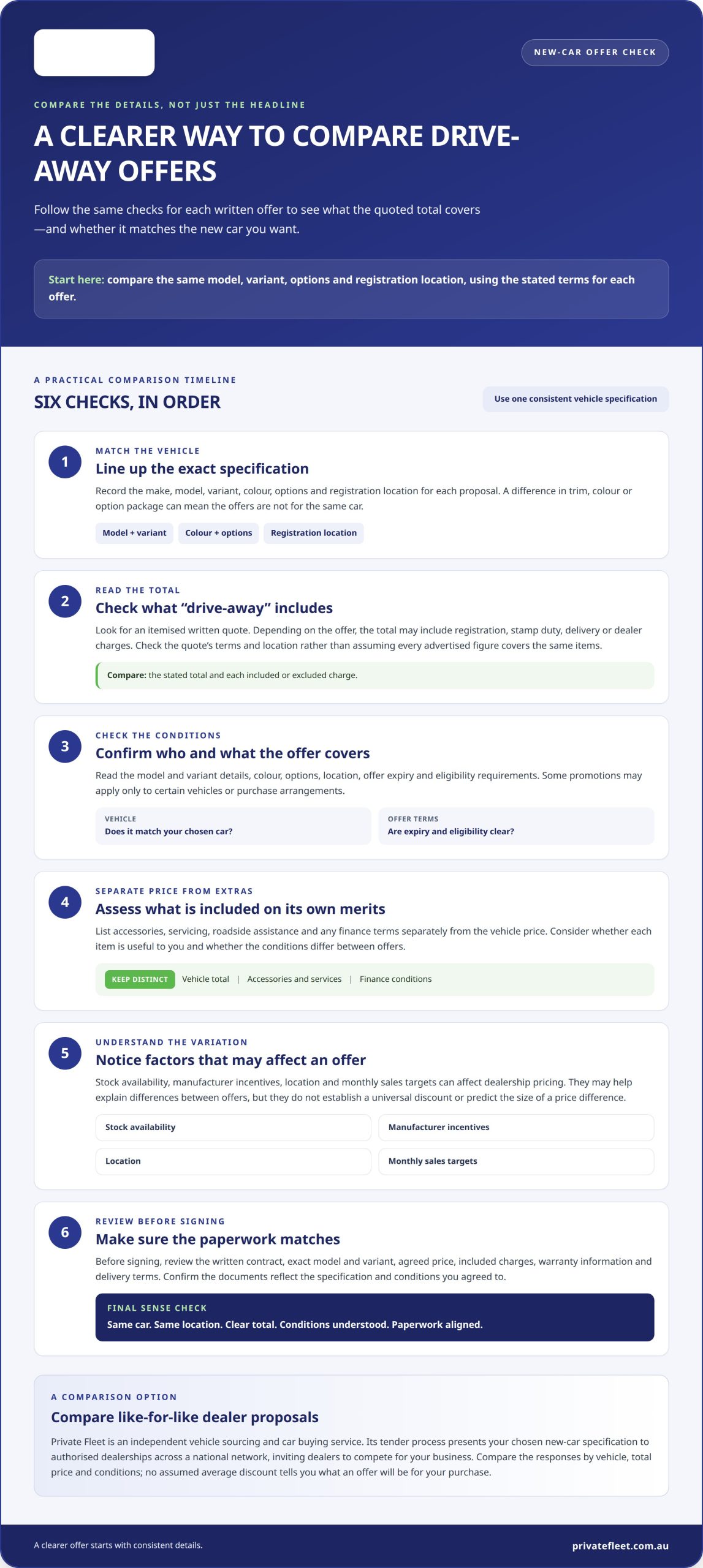
A drive-away quote gives the total price offered for a specified new vehicle, subject to its stated terms. Compare the same model, variant, options and registration location to see whether two offers cover equivalent purchases.
Indicative drive-away deals
An indicative drive-away deal is a starting point, not necessarily a final offer for every buyer. Read the conditions alongside the advertised figure. Check the model and variant, colour, options, location, offer expiry and eligibility requirements. A promotion may apply only to certain vehicles or purchase arrangements.
Look for an itemised quote showing which charges are included. Depending on the offer, these may include registration, stamp duty, delivery or dealer charges. Your location and the quote’s terms can affect the total, so compare offers using the same postcode and purchase details.
For a practical comparison, place two written offers for the same vehicle side by side. Note the total price, included accessories or services, and any conditions. If one offer assumes a particular colour or option package, record that difference rather than comparing its headline figure with the total for another vehicle.
An advertised reduction doesn’t establish an average discount or the price available to every buyer. It may be based on a reference price that differs from the basis of another offer. Focus on the written total for the car you intend to buy, and identify what each dealer has included or excluded.
Factors affecting dealership prices
Dealership prices can vary with stock availability, manufacturer incentives, location and monthly sales targets. These factors may affect the offer available for a particular vehicle, but they don’t establish a universal discount. Compare current offers for your chosen specification.
Vehicle availability can affect whether an offer is for a specific vehicle or one that must be ordered. Colour, trim and options determine how closely a listed vehicle matches your preferred specification. Check that the quoted price applies to the vehicle and terms you’re considering.
Compare current offers for the same model, variant, options and location. Separate the vehicle price from included accessories or servicing. This shows whether differences come from the quoted price, specification or additional items, without treating an advertised reduction as guaranteed savings.
A professional buying service can present your chosen specification to authorised dealers through a tender process, inviting them to compete for your business on the same requirements. Comparing the resulting offers by vehicle, total price and conditions gives you a clearer view of each proposal, without relying on an assumed average discount.
Australian dealerships may have flexibility in vehicle pricing, while stock availability, manufacturer incentives, location and monthly sales targets can affect the final purchase price. These factors help explain differences between offers, but they don’t predict the size of a difference or guarantee a lower price. Consider them when assessing a particular offer, and focus on whether the quoted amount applies to the vehicle and terms you want.
New vehicles from authorised Australian dealers
Authorised Australian dealerships sell new vehicles through showrooms and online listings. A listing can help identify a vehicle, but buyers need comparable written offers to assess the terms.
Comparing dealer offers
A professional buying service can take your chosen make, model, variant and options to authorised dealers through a tender process. Dealers are invited to compete for your business. Comparing responses against the same specification helps show whether differences relate to price, equipment or conditions.
Listings may not show every condition. Compare the stated specification, included items and purchase terms before deciding which proposal suits your needs.
Prearranged dealer pricing
Prearranged pricing sets out an offer for an agreed vehicle specification before you proceed. Written terms make it easier to understand what the offer covers. Check that the model, variant, options, location and purchase conditions match your intended transaction.
A change in trim, accessories or registration location can affect an offer. Keep these details consistent when comparing proposals.
A novated lease is a salary-packaging arrangement involving an employer and a leasing provider. Compare its terms with buying outright or using a car loan, including payment obligations, fees and employment conditions.
For a business purchase, tax deductions and GST credits depend on the vehicle’s business use, the business’s circumstances and applicable Australian tax rules. Treatment can vary, so don’t assume the full purchase price or GST amount is claimable.
Instant asset write-off and depreciation treatment also depend on current eligibility rules and the business’s circumstances. A vehicle purchase doesn’t automatically qualify for an immediate deduction; the applicable treatment depends on the asset and its use.
Comparing dealer quotes
A professional comparison aligns offers with your chosen vehicle, location and requested terms. It can identify differences in included accessories, servicing or finance conditions, helping you assess proposals on a consistent basis.
For a new vehicle, review the written contract, exact model and variant, agreed price, included charges, warranty information and delivery terms before signing. Confirm that the documents reflect the agreed specification.
Fleet discounts and business purchase offers may have eligibility conditions. Understand which vehicles and purchasers qualify, and whether an offer depends on business status or purchase volume.
How to time a new-car purchase around sales and model releases
Purchase timing can affect which new-car offers are available, but a sales event alone doesn’t determine whether an offer suits you. In Australia, dealerships may promote vehicles around end-of-financial-year sales, end-of-calendar-year clearances, manufacturer events, monthly sales targets and new-model releases.
These periods are useful opportunities to compare offers, not reasons to rush. If you need to replace a car soon, an available vehicle may suit you better than waiting for a particular promotion. With a flexible timeframe, you could consider another colour, trim or option package if it improves the overall offer.
Model updates can change the choice. When manufacturers introduce updated models, dealerships may discount existing new-car inventory. Compare the outgoing and updated versions carefully: equipment, specification and the exact vehicle offered matter more than the model name alone. A newer release isn’t automatically a better fit for every buyer.
Timing also matters for finance decisions. If a promotion includes a finance offer, consider its terms alongside the vehicle price and other costs. A lower advertised rate alone doesn’t show the total cost of borrowing. Compare the repayment structure, fees and conditions with other available ways to pay.
Some membership arrangements offer rewards, but benefits and eligibility depend on the programme’s terms. Check whether a reward applies to the exact new vehicle and purchase method, and whether it can be combined with another offer. Treat a reward as one part of the overall deal, not a substitute for comparing the vehicle and its written terms.
Online buying can reduce showroom visits, but the purchase still needs clear steps. Start by choosing the make, model, variant and options. Your location and preferred timing then help shape the offer. The written terms should set out the vehicle, price, inclusions, payment arrangements and ordering conditions. Before signing, make sure the documents match the agreed specification.
After the order is placed, the dealer coordinates the vehicle order and later advises on delivery arrangements. Timing depends on the specific vehicle and its supply circumstances, so an online transaction doesn’t itself establish a delivery date. The new-car buying process can help buyers understand the stages from choosing a vehicle through to purchase.
For a practical timing plan, set the latest date you need the vehicle, shortlist acceptable specifications and compare offers available during that period. This keeps sales events, model changes and potential rewards in perspective. The right time is when the car, terms and expected timing fit your needs, not necessarily a particular month.
How to assess incentives and extras
Compare each incentive or extra with the vehicle and terms you’re considering. Separate the advertised benefit from what the written offer actually includes.
List each part of the offer, such as servicing, warranty, roadside assistance, finance rates and accessories. Then note whether it applies to your chosen model, variant and purchase method. For example, an accessory package is useful only if it suits how you’ll use the car and is included in the agreed terms.
Next, review the conditions attached to each item. A servicing offer may specify what work is covered and when; roadside assistance may have eligibility or duration conditions. A finance incentive has its own repayment terms and fees. Assess each benefit separately, rather than treating it as a substitute for comparing the complete vehicle price.
Check accessories for practical value, too. Compare the named items, installation and any stated warranty coverage. A front and rear camera, for example, may suit your needs better than an accessory you wouldn’t use. If an offer includes several extras, assess each one separately rather than assigning the package an assumed cash value.
A professional buying service can assess dealer offers against your requested car and terms. It can identify stated inclusions, differences in conditions and details to clarify before you proceed. This gives you a clearer basis for comparing the vehicle specification and complete offer, without assuming an accessory or promotion represents a saving.
For electric vehicles, possible Australian government incentives depend on the relevant jurisdiction, vehicle and buyer eligibility. They aren’t a universal discount on every EV purchase, so treat an incentive as applicable only when its current conditions fit you and the vehicle.
Use this short comparison when reviewing an offer:
- Identify the item: record the exact accessory, service, warranty or finance benefit.
- Read its conditions: note eligibility, duration, exclusions and any offer expiry stated in writing.
- Match the vehicle: confirm the benefit applies to the selected model, variant and purchase arrangement.
- Assess usefulness: consider whether the inclusion suits your driving and ownership plans.
- Compare the total: weigh the complete drive-away offer alongside the separate value of included items.
For example, compare two offers for the same vehicle. One may include accessories, while another includes servicing or roadside assistance. The better fit depends on the conditions and what you’ll use, not simply the number of listed extras. Keep finance terms separate from other benefits, and read the written offer before agreeing to its conditions.
How Private Fleet can help with a new-car purchase
For discount vehicle acquisition in Australia, Private Fleet sources new cars through a national network of authorised dealers. Its tender process invites dealers to compete for your business based on the vehicle you choose. As an independent car buying service, Private Fleet sources the specified new car rather than selling from its own vehicle stock.
Start by sharing the details that matter to your decision. A clear brief helps keep offers focused on your preferred vehicle rather than loosely similar alternatives. Include your preferred make and model, variant, options, postcode and buying timeframe. If you’re still deciding, provide a shortlist and explain your priorities. These details help shape the tender.
- Your preferred car: specify the make, model, variant and options, or provide a shortlist.
- Your location: share your postcode so the purchase can be considered in context.
- Your timing: outline when you’re looking to buy, without assuming a delivery date.
- Your priorities: describe the features, inclusions or purchase terms that matter most.
Private Fleet assists with negotiation and paperwork, helping you compare offers against the car and terms you requested. This can make discount vehicle acquisition in Australia easier to assess, without promising a particular price or outcome.
If you’re replacing a car, Private Fleet’s trade-in assistance can help coordinate that part of the transaction alongside the new-car purchase. Considering both together gives you a clearer view of the overall arrangement. Car finance is also available if you’re considering borrowing to fund the purchase. The vehicle remains the focus, with finance treated as a set of terms to weigh.
As the purchase progresses, Private Fleet provides delivery updates so you can follow its progress. An update is not a promised delivery date. The team also assists with purchase paperwork, helping organise the steps from an agreed offer through to delivery arrangements.
Private Fleet’s new-car buying service may suit buyers who want support with dealer tendering, negotiation and paperwork. It may be less useful if you already have a dealer arrangement and prefer to manage the purchase yourself. Your preferred level of assistance can guide whether this approach to discount vehicle acquisition in Australia fits your plans.
To discuss your preferred vehicle, postcode and buying timeframe, contact Private Fleet or call 1300 303 181.
Frequently Asked Questions
Need help buying your new car?
Private Fleet can help with discount vehicle acquisition in Australia by sourcing a new car through authorised dealerships. Share your preferred make and model, postcode, buying timeframe and any must-have features so the purchase can be considered around your needs. The service can also assist with trade-ins and finance. To discuss your purchase, get help buying your new car from Private Fleet or call 1300 303 181.
How can Australian businesses get discounts when acquiring vehicles?
Australian businesses can explore applicable fleet pricing by sharing their vehicle requirements and purchasing needs. Eligibility and terms depend on the arrangement and the business’s purchase volume. Private Fleet’s published fleet-discount eligibility for companies applies to yearly purchase volumes exceeding 5,000 new vehicles. For smaller business purchases, compare the exact vehicle specification and written offer terms rather than assuming large-fleet conditions apply.
What are current fleet vehicle discounts from Australian manufacturers and dealers?
There isn’t one fleet discount that applies across all Australian manufacturers, dealers and new vehicles. Offers can differ by make, model, variant, buyer eligibility and the terms attached. Compare current written offers for the same specification, noting conditions, inclusions and expiry. Don’t rely on a general discount figure to estimate the offer available for a particular vehicle.
What are typical Australian vehicle acquisition costs, including stamp duty, registration and dealer fees?
Vehicle acquisition costs can include the vehicle price, stamp duty, registration charges and any dealer charges stated in the offer. Stamp duty and registration costs depend on the relevant state or territory and vehicle details, so there isn’t one national total. Request an itemised drive-away figure showing included charges and exclusions. This helps you understand the amount payable beyond the headline price.
How can a professional buying service negotiate a discounted vehicle price with Australian dealerships?
Private Fleet supports discount vehicle acquisition in Australia by coordinating dealer offers for your chosen new car. Its tender process presents your requirements to authorised dealers, compares their proposals and assists with the purchase process and paperwork. Compare offers for the model, variant, options and terms you want. To get started, share your preferred vehicle and buying timeframe with Private Fleet.