
The 2026 EOFY car offers in Australia typically ran from around late May until 30 June, so those promotions have now expired. For anyone planning a new-car purchase, the useful lesson from end-of-financial-year car deals in Australia in 2026 is to assess an offer against the vehicle and your buying priorities, rather than treating the campaign label as proof of value. A headline discount alone can’t tell you whether the car, variant or purchase terms suit your plans.
A car buying service can bring dealer proposals together for clear comparison and manage the purchase process before you sign. This article explains how to assess promotions for different powertrains, understand eligibility and expiry terms, and review written offers. It also covers how to compare finance with the car price, what purchase assistance can involve, and what information helps source your preferred new car. Use this framework to assess future offers and decide whether their terms fit your shortlist and timeframe, without rushing because a campaign is ending.
Key Takeaways
- Check whether an EOFY promotion is still current, and note its expiry date, eligible models and any delivery conditions.
- Compare the complete drive-away offer across powertrains rather than assuming an EV or PHEV has the strongest deal.
- Read the written offer for exclusions, eligibility rules and deposit terms before committing.
- Assess finance by comparing the total payable, fees and conditions alongside the car’s purchase terms.
- See how a car buying service can tender your chosen new car to authorised dealers and assist with negotiation and paperwork.
Check EOFY offer expiry dates and eligibility before comparing deals
A car buying service compares the written offer for your chosen vehicle with dealer discounts and manufacturer finance promotions. It checks the conditions that apply before treating an advertised benefit as part of the deal.
Offer expiry timing
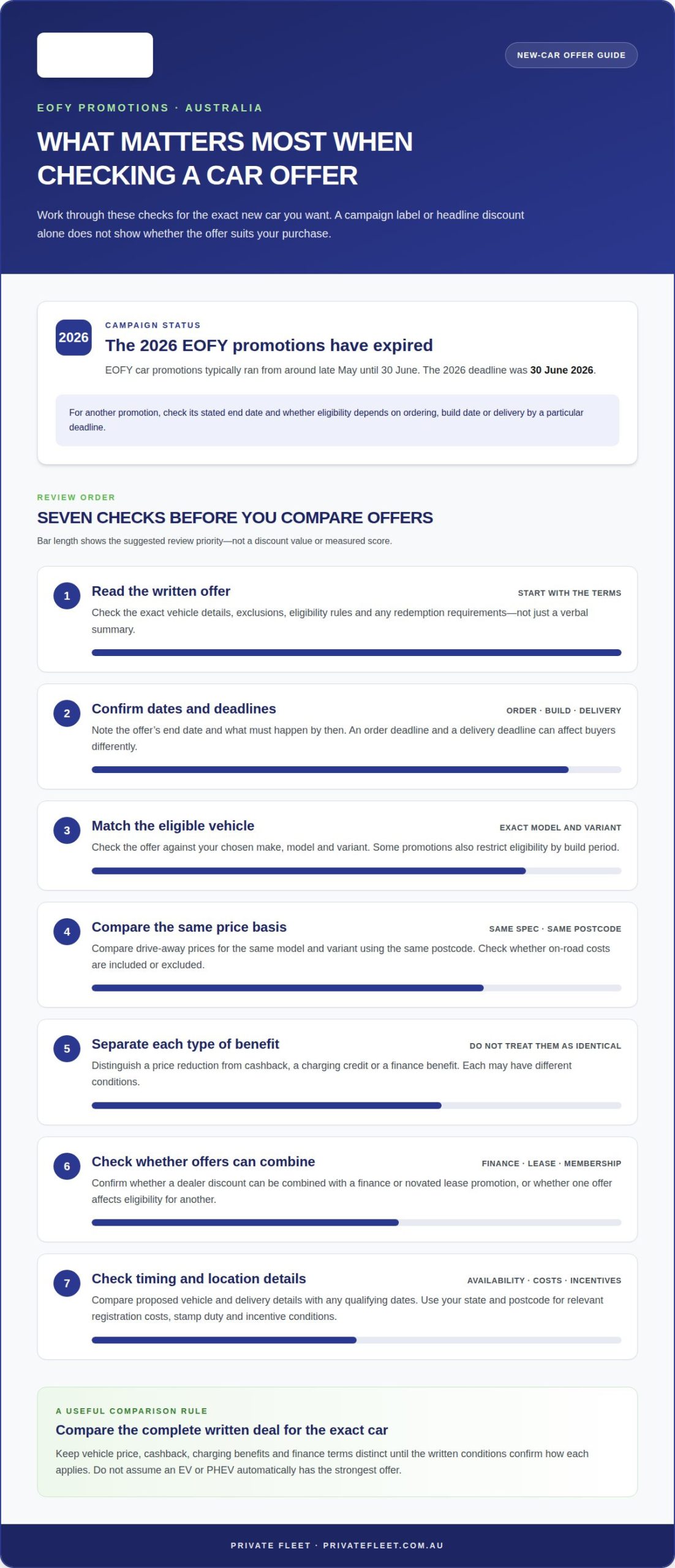
EOFY car promotions typically start around the end of May and run until 30 June. The 2026 EOFY deadline was 30 June 2026, so those promotions have expired. For another offer, the service notes its stated end date and whether eligibility depends on ordering or delivery by then. These dates matter because an order deadline and a delivery deadline can affect different buyers.
Check the promotion’s terms, not just its advertised campaign dates. The written offer should specify which deadline applies and what must happen by then. This helps you establish whether the offer is still available or its qualifying period has passed.
Model and build date eligibility
Eligibility may be limited to particular models, variants or build periods. Match the promotion’s wording to your preferred vehicle rather than assuming every version of a model qualifies. Check whether the relevant date is the order date, build date or delivery date, then note which requirement applies.
A build-date restriction can matter when otherwise similar vehicles were produced at different times. Compare the vehicle details in the dealer’s written proposal with the promotion’s eligibility terms. This helps establish whether the specific car qualifies.
Cashback promotions for electric vehicles and plug-in hybrids require careful checks of eligible models and dates. Confirm that the benefit applies to your chosen variant and whether it can be combined with another offer. Distinguish cashback from a reduction in the vehicle’s price, as each has its own terms.
A Toyota bZ4X charging offer for Toyota Go members should be assessed as a charging benefit, not automatically as a purchase-price discount. The service checks the membership condition, eligible vehicle and offer period against the written terms. It also notes any redemption requirement, so the buyer can understand what the charging promotion provides and what steps apply.
To compare dealer discounts with manufacturer finance offers, put the terms alongside the same vehicle specification. Check whether the finance promotion affects eligibility for a dealer discount or requires a particular model or variant. This lets you assess both proposals without assuming a finance offer is an unconditional extra benefit.
Compare EOFY offers across EVs, PHEVs and other new cars
No single model can be named as having Australia’s biggest 2026 EOFY discount without comparing eligible offers. Compare the same vehicle specification and price basis before judging value.
Driveaway prices and model discounts
Compare drive-away prices for the same model and variant, using the same postcode. Separate price reductions from cashback, charging credits and other benefits, which may have different conditions. A headline discount alone won’t show whether the complete offer suits your purchase.
Promotions may apply to electric vehicles, plug-in hybrids and other new cars, but eligible models and terms vary. Don’t assume an EV or PHEV has the biggest discount. Nor can you rank brands without comparing equivalent written offers.
For a Chery hybrid or PHEV, compare the exact variant and promotion terms. Apply the same approach to a Toyota bZ4X offer, including any novated lease promotion. A discount and lease benefit can only be assessed together once their conditions show whether they can be combined.
Stock, delivery and incentives
Stock and delivery timing can affect whether an offer suits your plans. A car buying service can check your requested model and variant with authorised dealers, then compare the vehicle and delivery details in their proposals. An advertised vehicle’s availability or delivery date shouldn’t be assumed.
When an offer depends on delivery, timing matters as much as the order process. Compare the dealer’s proposed timing with the promotion’s qualifying dates. This helps you see whether the vehicle and offer conditions align before committing.
State-specific registration costs, stamp duty and electric vehicle incentives can affect the comparison. Use your state and postcode to assess relevant on-road costs, and include an incentive only if the vehicle and buyer meet its conditions. Rules and eligibility differ across jurisdictions, so don’t assume a national promotion applies everywhere.
Compare finance and novated lease offers separately. Check whether the vehicle discount remains available with that arrangement or whether one promotion replaces another. The written terms determine whether benefits can be combined. Don’t assume a lease or finance offer automatically adds to the advertised discount.
For EOFY offers across powertrains, compare the complete written deal for the exact car, including its price basis, eligibility and timing. This helps distinguish a vehicle discount from a separate finance or charging benefit.
How to check the terms of a new-car deal
Start with the written offer for the exact new car, not a verbal summary. Match its make, model, variant, colour and included options against your chosen specification. A deal for one variant may not apply to another, even when both share the same model name. The label “end of financial year car deals Australia 2026” refers to a campaign, not one set of terms.
Next, check how the advertised price is calculated. Confirm whether it is drive-away or excludes on-road costs, and whether accessories or delivery charges are listed separately. Ask for each amount to be itemised in the written offer. This makes it easier to compare dealers quoting the same vehicle on the same basis.
Review eligibility and exclusions before counting a promotion as part of the deal. The written terms should identify the eligible vehicle and any order or delivery conditions. Look for restrictions involving a particular variant, buyer type, finance arrangement or trade-in. An “exclusive” promotion may have narrower conditions than the main advertised offer.
- Price: Match the vehicle specification and confirm which costs the written figure includes.
- Promotion: Check the eligible model, expiry date and any purchase or delivery requirement.
- Deposit: Read the proposed amount, payment timing and written terms for cancellation or refund.
- Exclusions: Identify options, accessories or other costs that sit outside the offer.
Clarify deposit terms before paying. The agreement should state the amount, when it is due and how it is treated if circumstances change. Terms can differ, so read the paperwork for that vehicle and resolve unclear wording before signing or paying.
Make sure verbal promises appear in writing. If a dealer says an accessory is included, the offer should name it and state whether its cost is included. If cashback or a charging benefit is discussed, the documents should specify its conditions and how it is provided.
Finally, compare the complete written offers side by side. Match the vehicle, price basis, deposit terms, exclusions and promotion conditions. A lower headline figure may leave out an item included in another offer. For end of financial year car deals Australia 2026, this check helps distinguish a promotion’s headline from the terms that apply to your chosen car.
Compare car finance with the new-car offer
Choose the new car and compare written purchase offers first. Then assess finance separately, as a promotional rate may depend on buying a particular model or meeting specific conditions. Compare the total payable, not just the advertised repayment, before deciding whether the finance suits your budget.
Use the same vehicle, deposit, trade-in value and loan term for each finance comparison. Include any upfront payment, scheduled repayments, fees and final amount payable. If the contract includes a residual or balloon payment, include it too. Otherwise, a smaller regular repayment could make an offer appear cheaper than its full cost.
Ask how a finance promotion affects the vehicle offer. A manufacturer or dealer may make a discount conditional on using its finance, while a different price may apply without it. Compare both written options for the same model and variant to see whether the finance benefit changes the purchase price, adds conditions or replaces another promotion.
- Total payable: Add the upfront contribution, repayments, fees and any final payment.
- Conditions: Check the eligible model, required finance provider and offer expiry.
- Flexibility: Read the terms covering repayment timing and changes to the loan.
- Vehicle offer: Confirm whether the advertised discount remains available with that finance option.
Fees can change the overall comparison. Review finance documents for establishment, account and other listed charges, and note when they apply. Don’t compare one offer’s repayment with another lender’s total payable. Match the loan amount, term and fees to make the figures useful.
Separate finance from features of vehicle ownership. A vehicle warranty applies to the car, while a finance offer sets out how the purchase is paid for. Don’t treat an advertised warranty or servicing benefit as a reduction in loan cost. Compare each item on its own written terms, including what it includes and excludes.
A practical approach is to compare the drive-away price first, then calculate the total cost under each finance option. If the promotional price requires a particular finance arrangement, compare it with the price available without that arrangement. This keeps the car purchase central and makes the effect of fees, conditions and repayments easier to assess across brands.
How a car buying service handles dealer negotiation and paperwork
An independent car buying service can coordinate dealer offers around your exact new-car requirements. It takes comparison and negotiation work off your hands while keeping your chosen vehicle specification central.
Start with your preferred make, model, variant, colour and options. Your postcode and buying timeframe help shape the request. For example, a buyer seeking a specific SUV variant can have that requirement presented consistently to authorised dealers instead of receiving offers for different vehicles.
Next, the service tenders your requirements across its dealer network. Multiple authorised dealerships can compete for your business, each responding to the same vehicle brief. The service gathers dealer proposals for the car you want, rather than holding its own vehicle inventory, and helps identify which offer matches your priorities.
Written offers are compared on a like-for-like basis. Check that each response names the requested model and variant and explains how the vehicle is priced. The comparison can also distinguish included options from separately priced items, making dealer proposals easier to assess than headline figures alone.
Negotiation follows the comparison. The service can take the buyer’s requirements back to dealers and seek improved terms, while clarifying differences between offers. The aim is a clear proposal for the specified vehicle, not a promise that every dealer will respond identically or that a particular outcome is assured.
Paperwork assistance helps progress the selected proposal. Documents should reflect the agreed vehicle, price and any included items. The service can coordinate the process and explain what the paperwork covers. You review the documents and decide whether to sign.
- Vehicle brief: Your preferred model, variant, options, postcode and timeframe.
- Dealer tender: The same requirements sent to multiple authorised dealerships.
- Offer comparison: Written proposals reviewed for specification and price details.
- Negotiation and paperwork: Assistance clarifying terms and progressing the selected offer.
This approach suits buyers who want professional assistance comparing a particular new car, without managing each dealer conversation themselves. The new-car buying process can bring tendering, negotiation and purchase paperwork into a more organised sequence.
How Private Fleet can help with your EOFY new-car purchase
Private Fleet is an independent car buying agency that helps Australian private buyers compare and purchase new cars. Its tender process sends your exact vehicle requirements to a national network of authorised dealerships, inviting multiple dealers to compete for your business. Private Fleet sources cars through dealers rather than holding its own inventory.
The EOFY offers available in 2026 expired on 30 June 2026. If you’re planning a future purchase, the team can compare current written offers and their conditions against your preferred model and variant. That means checking whether a promotion applies to the vehicle you want, rather than assuming an advertised deal covers every version.
To begin, share your preferred make and model, variant, postcode and buying timeframe. A clear brief helps the team seek comparable dealer proposals. It can then review the written pricing, included items, offer conditions and delivery information, and assist with negotiation and purchase paperwork. The new-car buying service is suited to buyers who want support coordinating those steps.
If you have a vehicle to trade in, Private Fleet can provide trade-in assistance as part of the purchase process. Keeping the new-car offer and trade-in details clear helps you assess each part of the transaction. Finance assistance is also available, with the car’s specification and purchase offer remaining central. You can consider finance alongside the vehicle proposal to understand its effect on the overall purchase.
After an order is placed, Private Fleet provides regular updates on delivery times. These updates help you stay informed as the purchase progresses, without promising a particular delivery date. You remain involved in decisions about the vehicle and review the paperwork before signing.
Private Fleet may suit you if you want a representative to coordinate dealer tenders, compare proposals and help progress the paperwork. It can also help when you’re considering a new-car purchase alongside a trade-in or finance option. Share your preferred vehicle, postcode and timing so the team understands what you’re looking for.
Get help buying my new car with Private Fleet, or call 1300 303 181.
Frequently Asked Questions
How can a car buying service help you get a good deal on a car?
A car buying service can turn your shortlist into comparable dealer proposals and explain differences that matter to your decision. Provide your preferred model, variant, essential options and buying timeframe. If a dealer proposes a close alternative, compare changes to its equipment or timing before deciding. The service supports comparison and negotiation while you remain in control of the vehicle choice and final agreement.
When do the 2026 EOFY car deals end?
The 2026 EOFY offers typically ran until 30 June 2026, and that date has passed. Promotions tied to the 2026 EOFY period have expired. Treat an old advertisement as historical, not as a current offer. For a new-car purchase now, compare current written pricing and promotion terms rather than relying on a headline from the expired EOFY campaign.
Should I wait until after EOFY to buy a new car?
Don’t wait solely for EOFY. Decide based on whether the model and specification suit your needs, when you need the car and the written offer available. A promotion outside EOFY may still fit your plans, while another campaign may have different eligible vehicles and terms. If your timing is flexible, weigh the available purchase against the value of waiting and whether delivery timing suits you.
When do EOFY car deals in Australia start and end in 2026?
EOFY car promotions in Australia typically started around the end of May and ran until 30 June 2026. Individual offers could set their own qualifying conditions, so the campaign period didn’t establish eligibility by itself. For example, an offer might specify a qualifying model or require an order or delivery by a stated date. The 2026 EOFY period has ended.
Which Australian car brands offer EOFY deals in 2026?
EOFY promotions weren’t uniform across Australian brands; eligibility could depend on the model, variant or buyer. A brand-wide list doesn’t show whether a specific car qualified. Compare the written terms for each vehicle on your shortlist. Toyota bZ4X and Chery models are examples that need model-specific offer terms; the brand name alone doesn’t establish that every vehicle qualified or that an offer applied throughout the campaign.
What are the best EOFY 2026 new-car discounts and drive-away prices in Australia?
The best offer depends on the exact new car, variant and conditions, so one discount or drive-away figure can’t rank every deal. Compare written prices for vehicles that meet the same needs, then weigh included benefits and finance requirements separately. A lower headline amount may not suit you if it applies to a different specification or requires finance you don’t want.
What fees and on-road costs are included in Australian EOFY drive-away car prices?
A drive-away quote should show the total and identify the costs it includes. Ask for an itemised breakdown of registration, compulsory third-party insurance, stamp duty and dealer delivery, with exclusions clearly shown. State and vehicle details can affect on-road costs. Compare quotes using the same postcode and exact variant, and check whether accessories or optional products are excluded.
How can a car buying service negotiate a good EOFY car deal in Australia in 2026?
A service can negotiate more effectively when your requirements are specific and alternatives are clear. Set your preferred model and variant, essential options, postcode and buying timeframe, then compare proposals on equivalent terms. Identify the conditions that matter most, such as eligible vehicles or delivery timing. This gives negotiations a practical focus, while written offers help you assess whether a revised proposal suits your needs.