
What if buying a new car didn’t mean juggling calls, quotes and negotiations on your own? Choosing the right make, model and variant is only part of the decision. You also need to compare drive-away offers, check what’s included and keep trade-in, finance and purchase details in view. Expert assistance for buying a new car can bring those moving parts into a clearer process while leaving the final choice in your hands.
In this article, you’ll learn what a car-buying service can help with, what to prepare and how to assess whether the support suits your needs. We’ll cover how to build a practical shortlist around your budget and driving habits, compare dealer offers on a like-for-like basis, and understand where an independent service such as Private Fleet fits. Its tender process invites multiple authorised dealers to compete for your business. That creates an opportunity to compare offers, but it doesn’t guarantee the lowest price. The process can make it easier to review your options, whether you’re replacing a family car, choosing a comfortable daily driver or planning your next vehicle for years ahead.
Key Takeaways
- Expert assistance for buying a new car can help source vehicles, compare offers and support the purchase process without acting as a retailer with its own stock.
- Choose between buying directly, using an online quote service or engaging a sourcing service based on how much research, quote coordination and follow-up you want to manage.
- Compare offers for the exact make, model, variant and powertrain, then check drive-away pricing, inclusions and terms before deciding.
- Prepare a clear brief with your budget, preferred vehicle, postcode and buying timeframe so the assistance can be tailored to your needs.
- Private Fleet’s tender process invites multiple authorised dealerships to compete for your business. Dealer competition is a process, not a guarantee of the lowest price.
What does expert assistance for buying a new car actually include?
Expert assistance for buying a new car can help source suitable vehicles, compare dealer offers and coordinate parts of the purchase. The support varies by service. Some providers collect or refer quote requests; others may help refine a shortlist or coordinate discussions with dealerships. Before you proceed, check exactly what’s included, what you’ll manage yourself and what terms or fees may apply.
Clarify whether you’re dealing with a buyer-side sourcing service or a retailer selling vehicles from its own stock. A sourcing service helps buyers find vehicles supplied by dealerships. The dealer provides the offer and purchase terms, which you’ll need to confirm with them. Inviting multiple dealers to compete can give you offers to compare, but it doesn’t guarantee a particular price, saving or outcome.
To understand the service in practical terms, ask what happens after you share your requirements. Who contacts dealerships? How will offers be presented? Who follows up on ordering or delivery details? Read the service terms so you know which steps the provider coordinates and what remains your responsibility.
Which parts of a new-car purchase can an expert help with?
Depending on the service, support may include narrowing your shortlist, sourcing a preferred vehicle and gathering dealer offers. Check that quotes specify the same make, model, variant and powertrain, with options and drive-away inclusions clearly stated. Trade-in assistance and finance may also be available as part of the purchase process. If you’re considering finance, start by understanding car finance options and compare the relevant terms. An adviser can help coordinate these steps, but you decide which offer, if any, to accept.
Ask how the process works, including what you’ll need to discuss directly with the dealer. Private Fleet is an independent Australian car buying service that works with a national network of authorised dealerships. Its tender process invites multiple dealers to compete for a buyer’s business. See how the new-car buying process works for more detail.
Who may benefit from expert new-car buying assistance?
This support may suit buyers comparing models or variants, people short on time, or anyone who would rather not coordinate quotes or negotiate directly. It can also help if you’re confident choosing a car but want assistance organising dealer offers. Buyers with different levels of experience can use support selectively, asking for help with specific tasks while staying involved in decisions and checking the final terms themselves.
Before choosing a service, consider which parts of the purchase feel difficult and which you’d prefer to handle personally. That gives you a practical way to judge whether the assistance matches your needs, rather than relying on a broad promise alone.
How to choose the right kind of new-car buying assistance
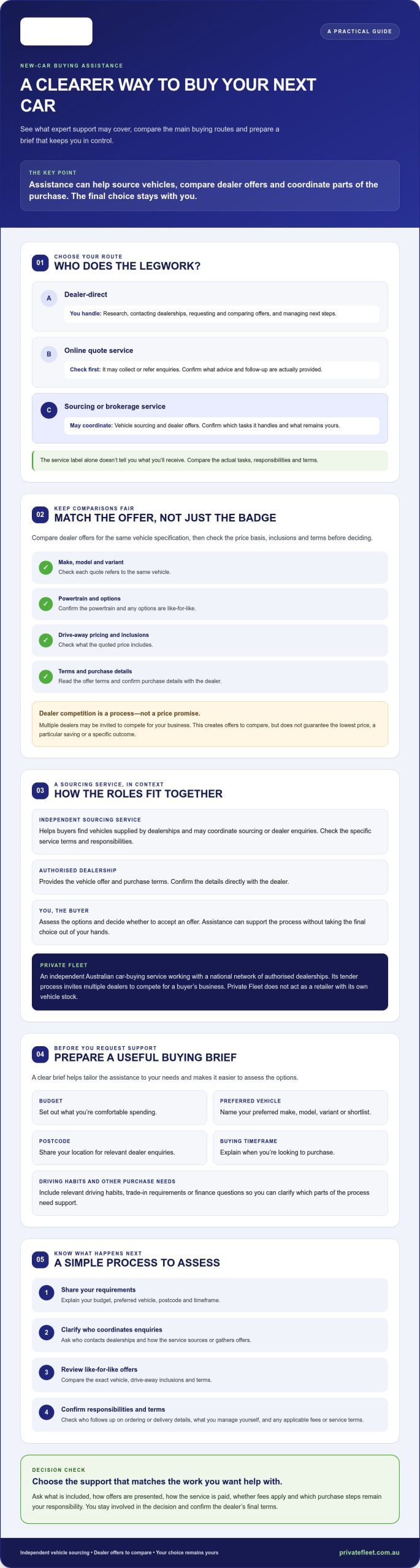
The right approach depends on how much of the legwork you want to do. Buying directly gives you control over dealer conversations. An online quote service may help gather offers, while a sourcing or brokerage service may coordinate dealer enquiries and support you as you progress a purchase. The label alone doesn’t explain what you’ll receive, so compare the actual tasks, responsibilities and terms.
| Buying route | Buyer effort | Quote coordination | Advice and follow-up |
|---|---|---|---|
| Dealer-direct | You research and contact dealerships. | You request and compare offers. | You manage discussions and next steps. |
| Online quote service | You provide vehicle requirements and assess responses. | The service may collect or refer enquiries, depending on its model. | Check what advice and follow-up are provided. |
| Sourcing or brokerage service | You explain your needs and assess the options. | The service may coordinate sourcing and dealer offers. | Confirm which tasks it handles and what remains yours. |
Before sharing your details, ask how the service is paid, whether you pay anything and whether fees apply. Don’t assume assistance is free or that a service handles every part of the purchase. Check whether it explains its role and how it works with dealerships, what information it needs, how offers are presented, and who confirms vehicle availability, final terms and delivery arrangements.
What should you check before choosing a car buying service?
Look for a clear explanation of the process, including how the service works with dealerships and whether it holds vehicle inventory or sources cars through dealers. Ask for the scope and terms in writing. Expert assistance for buying a new car should support your decision and make clear who provides the offer and who you’ll contract with. You remain free to review the details and decide whether to proceed.
If finance is relevant, compare the terms and applicable costs directly with the provider. Consider the overall cost and conditions, not just the repayment amount, and ask questions if anything is unclear.
When is dealer-direct buying still a reasonable option?
If you have time, feel comfortable contacting dealerships and can compare like-for-like offers, buying directly may suit you. A sourcing service may be more useful if you’d prefer coordinated dealer enquiries or help progressing an offer. Neither route is automatically best. Choose based on the support you want and how much of the process you’re happy to manage.
Private Fleet’s independent new-car buying service uses a tender process that invites multiple authorised dealerships to compete for a buyer’s business. This can help organise offers for comparison, but doesn’t guarantee a particular price or outcome. To discuss your preferred make or model, postcode and timeframe, contact Private Fleet about buying a new car.
How to compare new-car offers with expert help
Expert assistance for buying a new car can make several dealer responses easier to assess, but the comparison is only useful if each offer covers the same vehicle and terms. Use a consistent process: confirm your requirements, request comparable quotes, check the details with the dealer, then decide whether an offer suits you.
- Confirm the brief: Settle on the make, model, variant, powertrain and essential options you want quoted.
- Request like-for-like offers: Ask for written quotes based on that same specification.
- Check the terms: Confirm the price basis, inclusions, conditions and quote validity directly with the dealer.
- Decide: Weigh the confirmed offer against your needs and budget. You’re not obliged to choose an offer simply because it was sourced for you.
Which details make dealer quotes genuinely comparable?
Check that the vehicle description matches exactly. A different variant, powertrain, accessory package or paint option can change what you’re comparing. Confirm whether each figure is a drive-away price and what it includes. If a quote lists delivery or dealer charges separately, ask the dealer to explain how they affect the total.
Record the details in a simple comparison table. Treat estimates as estimates, not confirmed offers, and check that each quote is still valid before relying on it.
| Quote detail | What to record or confirm |
|---|---|
| Vehicle | Make, model, variant, powertrain and model year if stated |
| Options | Included accessories, paint and any requested extras |
| Price basis | Whether it’s drive-away and which charges or inclusions are specified |
| Conditions | Any conditions, quote date and stated validity or expiry |
| Confirmation | Dealer confirmation of current details and offer terms |
Hypothetical example: If one quote includes an accessory package and another doesn’t, don’t compare the totals as though they’re identical. Ask for revised quotes or account for the difference before assessing them.
How should you assess trade-in and finance alongside the car?
First compare the new-car offers on their own. Then consider any trade-in assessment separately and note how it changes the overall amount you’d pay. This helps you see whether a difference comes from the vehicle offer or the trade-in figure, rather than treating them as one unexplained total.
Review finance separately as well. Check the relevant terms and applicable costs, not just the repayment amount, and compare options against your own circumstances. A trade-in or finance offer doesn’t automatically make a vehicle quote better. Keep the car, its specification and the confirmed purchase terms at the centre of your decision.
What to prepare before asking for new-car buying help
A short, practical brief helps an adviser focus on cars that fit your needs instead of sending you into a broad search. You don’t need every detail decided before you ask for expert assistance for buying a new car. Start with what matters most, then note any preferences you’re still weighing up.
- Budget: Give your comfortable spending limit and clarify whether you’re thinking in drive-away terms.
- Preferred make or model: Share a firm choice, a shortlist or the type of vehicle you’re considering.
- Postcode and buying timeframe: These help frame the enquiry and the timing you have in mind. Don’t assume a delivery date can be guaranteed.
- Driving pattern: Estimate your typical daily or annual kilometres and describe regular trips, including longer journeys.
- People and practical needs: Note usual passenger numbers, child-seat or luggage needs, and any other regular use the car must suit.
- Ownership plans: Say roughly how long you expect to keep the vehicle, if you know.
- Questions and priorities: List anything you want clarified, such as variant differences, servicing, warranty or a feature you value.
How to build a shortlist around everyday needs
Begin with how you’ll use the car, then narrow options by size, seating and budget. If possible, sit in shortlisted vehicles and check entry and exit, seat adjustment, visibility, ride comfort and cabin noise for yourself. Consider whether the controls feel intuitive and whether parking assistance and safety features match your preferences. Confirm features against current Australian specifications for the exact model year and variant, as equipment can differ.
Your shortlist doesn’t need to be extensive. One preferred model and a realistic alternative can be enough to start a useful conversation. Note which features are essential and which are simply nice to have, so offers can be based on the specification you actually want.
What to tell an adviser about timing, trade-ins and finance
Share your preferred buying timeframe and any flexibility, while treating delivery timing as something to confirm with the dealer. If you’re considering a trade-in, mention it, but assess its value separately from the new-car quote so the figures stay clear. Raise finance if it’s relevant to your plans; choosing and sourcing a suitable car comes first. You can ask what support is available and decide whether to use it.
Once your brief is ready, review how the new-car buying process works, then share your preferred make or model, postcode and timeframe to start a conversation.
How Private Fleet supports your new-car purchase from enquiry to offer
Private Fleet is an independent Australian vehicle sourcing and car buying service, not a retailer with its own vehicle stock. It works with a national network of authorised dealerships. Through its tender process, multiple dealers are invited to compete for your business, giving you offers to review without promising a particular price or saving.
The service can help organise vehicle sourcing and dealer offers, while you remain in control of the decision. Review the available terms and choose whether to proceed with an offer. Ask about the service’s scope and applicable terms so you know what support is available at each stage.
What happens after you share your new-car requirements?
Start by sharing your preferred make or model, postcode and buying timeframe. A clear brief helps frame the sourcing request, so include your shortlist or key requirements if you have them. Suitable vehicles can then be sourced and dealer offers invited through the tender process. You can review the offers and check details with the dealership before making a decision. The process and timing can depend on your requirements, so confirm the specifics rather than assuming a delivery date.
For an overview of the stages, read how the new-car buying process works. You can also learn more about Private Fleet’s new-car buying service.
How to take the next step with confidence
Before proceeding, make sure an offer matches your preferred model, exact variant and powertrain. Check what the quote includes, any stated conditions and how long it remains valid, then confirm current availability and terms with the authorised dealer. If you’re considering a trade-in, keep its assessment distinct from the new-car offer so you can understand each part of the proposal.
To start a conversation, share your budget, shortlist, annual kilometres and buying timeframe. If you’re considering an electric vehicle, mention whether you have access to charging at home or elsewhere. These details help make your enquiry more useful without requiring you to have every decision settled.
Make your next car purchase feel more manageable
Expert assistance for buying a new car can help turn a broad search into a practical shortlist, organise dealer offers and clarify what to check before choosing. The key is to compare like-for-like quotes, understand the service’s role and terms, and keep the final decision in your hands.
Private Fleet is an independent Australian vehicle sourcing and car buying service. Its tender process invites multiple dealers from a national network of authorised dealerships to compete for your business. That gives you an opportunity to review offers, not a promise of a particular price or saving.
If you’re ready to explore support, share your preferred make or model, postcode and buying timeframe. A shortlist, budget and details about your driving needs can also help start a focused conversation. You don’t need every decision made before taking the next step.
To get started, contact Private Fleet about buying your new car.
With clear requirements and comparable offers, you can move forward at your pace and choose the new car that best fits your needs.
Frequently Asked Questions
What can an expert do to help me buy a new car?
An expert can help refine your shortlist, source a suitable new car and coordinate dealer offers for you to assess. Expert assistance for buying a new car may also make it easier to keep track of quote details and purchase steps. The support varies by service, so check its role, terms and any applicable fees. You remain responsible for reviewing the offer and deciding whether to proceed.
Is using a car buying service worth it if I already have a shortlist?
It may be useful if you want help sourcing your preferred model or coordinating dealer offers, even if you’ve already chosen a vehicle. Share your preferred make, model and variant, then ask what tasks the service will handle and what remains your responsibility. If you’re comfortable contacting dealers and comparing written offers yourself, buying direct may suit you better. The right choice depends on the support you want.
Can an expert help compare new-car dealer offers?
Yes, a car buying service may help organise dealer offers so you can compare them. Check that each quote covers the same make, model, variant, powertrain and options, and confirm whether the price is drive-away. Review inclusions, conditions and quote validity with the dealer. An organised comparison can clarify differences, but it doesn’t guarantee a particular price or mean you need to accept an offer.
Does Private Fleet own or sell its own new-car inventory?
No. Private Fleet is an independent Australian vehicle sourcing and car buying service, not a stock-holding retailer. It works with a national network of authorised dealerships to source new cars for buyers. The dealer supplies the vehicle and provides the offer and purchase terms. Check those details with the dealership before proceeding, including the exact vehicle specification and any conditions attached to the quote.
How does a dealer tender work when buying a new car?
A dealer tender invites multiple dealerships to compete for a buyer’s business based on their requirements. Private Fleet uses this process with its network of authorised dealerships. The buyer can then review the available offers and decide whether one suits their needs. Dealer participation may help create options to compare, but it doesn’t promise that every dealer will respond or guarantee a specific price, saving or outcome.
What information should I have ready before asking for car buying assistance?
Start with your budget, preferred make or model, postcode and buying timeframe. A shortlist is helpful, but you can also describe the type of car you need, typical kilometres, regular journeys, passenger requirements and how long you expect to keep it. Note any questions or must-have features. You don’t need every detail settled; a clear outline helps focus the conversation and identify what still needs deciding.
Can a car buying service help with a trade-in or finance?
Some services, including Private Fleet, can provide trade-in assistance and finance support as part of the broader purchase process. Ask what help is available, what terms apply and whether any fees are payable. Compare the new-car offer separately from a trade-in assessment, then review finance terms and applicable costs on their own. These are optional considerations, not a substitute for choosing the right vehicle and checking its purchase terms.