
The biggest first-time new car buyer mistake in Australia is treating the advertised price as the final price. Focus on the drive-away figure and compare like-for-like offers before negotiating. A low headline price matters less if the total cost or the car itself doesn’t suit your needs.
Buying a new car is a major decision, and it’s easy to feel rushed or agree to extras before checking the details. A clear shortlist and a calm, planned approach to negotiation can help you stay in control.
This guide explains how to choose a car for Australian roads, weather and driving habits, what to check on a test drive and at delivery, and how to recognise sales tactics that can derail your decision. You’ll also learn to compare insurance, registration, fuel and servicing costs, assess the full offer and negotiate with confidence.
Key Takeaways
- Match the car’s size, capability and features to your regular routes, local conditions and likely future needs.
- Use a test drive to assess comfort, visibility, controls and how the car feels on roads similar to your usual journeys.
- Compare the advertised vehicle with the one being offered, and take time to review every term before signing.
- Look beyond the purchase price by allowing for ongoing costs such as insurance, registration, fuel, tyres and servicing.
- Prepare to negotiate by comparing like-for-like offers and focusing on the full drive-away price.
1. Choosing a vehicle for Australian weather and terrain
Start with the roads and conditions you regularly face, not the vehicle’s appearance. Wet weather, humidity, mud, salt, dust and grit can affect how you use a car and how its interior wears. A coastal commute, for example, brings different demands from regular regional driving on unsealed roads.
City drivers may value a compact vehicle and lower fuel use in traffic and tight parking. Regional drivers may need greater ground clearance or load capacity for their routes and gear. Check the exact Australian variant’s specifications before assuming it suits a particular road, load or towing task.
Compare vehicles by the features that matter in everyday use, not by badge alone. Safety ratings, fuel use and warranty terms can differ between models and variants. Check whether a model has a recent five-star ANCAP safety rating, then compare its fuel requirements and the warranty’s coverage and duration.
- Consider seat height, entry and exit, visibility, boot space and passenger comfort.
- Match fuel type and fuel use to your usual journeys and driving pattern.
- Check the exact variant’s towing capacity before planning to tow.
- Consider roof rails, a tow package or interior protection only if they suit your needs.
A test drive can reveal practical details that specifications don’t. Try the seat adjustments, check whether the controls are easy to use, and assess visibility when parking. If you’re downsizing, compare how easily you can get in and out and load everyday items.
New cars come with the latest features and warranties, but they depreciate quickly. Used cars may cost less and offer value, but their condition and history need careful assessment. If you’re comparing both, weigh the purchase price against the vehicle’s age, service records and the features you need.
In Australia, consumer guarantees under the Australian Consumer Law apply to new and second-hand cars bought from a licensed dealer, according to the ACCC. A manufacturer’s warranty is separate, so read its coverage and duration alongside your consumer rights.
Before paying a deposit, read the written terms for the vehicle, price, deposit and delivery. A dealership contract is binding once you’ve negotiated the terms and signed it. Ask for agreed changes in writing before signing, and check what the contract says about delivery and delays.
Dealer add-ons can increase the total purchase cost, so assess each product’s price, coverage and exclusions before agreeing. ASIC says dealerships can receive commissions of up to 75% of the premium for some add-on insurance products. Extended warranties and paint protection are separate products; compare their terms with your existing cover and the vehicle’s warranty.
For a used vehicle, arrange an independent mechanical inspection and review its service records before purchase. Choose a mechanic who isn’t recommended by the seller, so the assessment is independent. For a new car, compare authorised dealership offers and written terms, then choose a dealer that clearly identifies the vehicle, variant, price and delivery arrangements.
2. Test-driving and inspecting a car
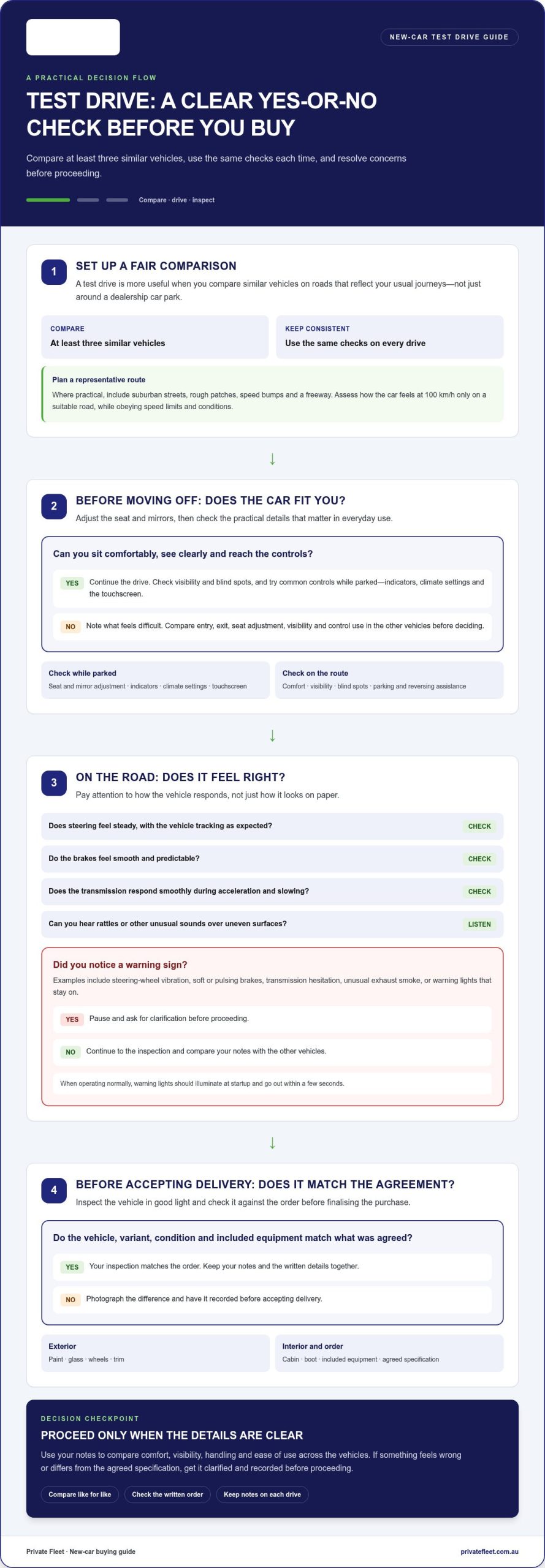
A test drive shows how a vehicle behaves beyond its specification sheet. Compare at least three similar vehicles before deciding, so differences in comfort, visibility and handling are easier to notice. Drive each car on roads that reflect your usual journeys, rather than judging it only in a dealership car park.
Plan a route that includes suburban streets, rough patches, speed bumps and a freeway where practical. On a suitable road, assess whether the car feels stable and confident at 100 km/h, while obeying speed limits and conditions. Listen for unusual noises, notice how the car responds to steering inputs, and check whether braking feels smooth and predictable.
Use the same checks for each test drive. Adjust the seat and mirrors before moving off, then assess entry, exit, visibility and blind spots. While parked, try common controls, including the indicators, climate settings and touchscreen. A camera and brief notes can help you remember which vehicle felt easiest to use.
- Check whether the seat supports you comfortably throughout the drive.
- Notice whether the steering feels steady and the vehicle tracks as expected.
- Try parking and reversing to assess visibility and assistance features.
- Listen for rattles or other unusual sounds over uneven road surfaces.
- Check how smoothly the transmission responds during acceleration and slowing.
Warning signs deserve attention, even in a new vehicle. Steering-wheel vibration, soft or pulsing brakes, transmission hesitation, unusual exhaust smoke or warning lights that stay on need clarification before proceeding. Warning lights should illuminate at startup and go out within a few seconds when the vehicle is operating normally.
Inspect the car in good light before finalising the purchase. Check the paint, glass, wheels and trim for damage, then compare the cabin, boot and included equipment with the order. If anything differs from the agreed specification, photograph it and have the discrepancy recorded before accepting delivery.
For a used car, an independent mechanical inspection can identify problems that a short drive may not reveal. A professional mechanic can assess key systems and provide a written report. Choose an independent mechanic rather than one recommended by the seller, and use the findings to decide whether to proceed or revisit the terms.
For a new-car shortlist, a structured car-buying discussion can help you compare your preferred models and variants. Take your notes from each test drive, including what felt comfortable and what didn’t. That makes the next comparison more focused.
3. Avoiding bait-and-switch sales tactics
A showroom visit should leave you comparing the vehicle and offer you came to assess. Check that the advertised make, model, variant and included features match what the salesperson presents. A different trim level, optional equipment or substitute vehicle can change the deal. If anything differs, ask for the change and its effect on the written offer.
Keep the original advertisement, email or message, and note when you saw it. At the dealership, compare it with the written quote line by line. Check the vehicle’s identity, variant, colour, included accessories, delivery arrangements and price basis. If an item is missing or different, ask for an updated quote before deciding whether to proceed. Clear paperwork helps you distinguish a changed offer from the one that first caught your attention.
Pressure can make small differences seem unimportant. A salesperson might say an offer or vehicle is available only briefly, or urge you to decide before comparing alternatives. Take a break. Review your shortlist, calculate the complete purchase cost and decide whether the vehicle still meets your needs. A rushed choice can leave you with a variant, accessory package or insurance option you didn’t intend to buy.
Use a prepared response: “I’m comparing the written offer with my shortlist. Please give me the details so I can review them.” Then ask when the offer expires, which exact vehicle it covers and what conditions apply. An expiry date alone doesn’t show whether the offer suits you. Compare its conditions and specifications with a written quote for the same model and variant.
Protect your choice by separating the car purchase from extras. Ask for each add-on to be itemised, including its price, coverage and exclusions. This makes it easier to decide whether an accessory, paint protection or insurance product meets a real need. Don’t let a discussion about add-ons distract you from confirming the vehicle and purchase terms.
Before signing, read the complete contract and compare it with the final written offer. Check that agreed changes appear in the paperwork, and pause if figures or vehicle details differ. If you feel uncomfortable, leave and review the documents away from the showroom. You can return with specific questions instead of making a high-value decision under pressure.
- Keep a copy of the advertisement and every written quote.
- Match the advertised vehicle to the exact model and variant offered.
- Ask for changes, conditions and add-ons to be documented.
- Take time to compare the offer before making your decision.
4. Verifying online listings and on-road costs
An online price is a starting point, not always the amount you’ll pay to drive away. Check whether the listing names the exact model, variant, transmission and included equipment. Then ask for a written, itemised quote showing the vehicle price and every on-road charge. Compare quotes using the same postcode and vehicle specification.
Ask whether the advertised figure includes registration, stamp duty and compulsory third-party insurance. These costs vary between Australian states and territories, so the same vehicle may have different on-road charges depending on where it will be registered. The jurisdiction and vehicle details affect the calculation. Compare itemised quotes using your registration location, rather than assuming one state’s figures apply everywhere.
Also check the listing’s conditions. Confirm the offer dates, eligible buyer requirements, delivery location and whether accessories or other options are included. If an online listing shows a particular colour or feature, make sure the quote describes that configuration. Save a copy of the listing to compare with the dealer’s written offer.
For a used vehicle advertised online, check its history before paying a deposit. A PPSR search can show whether it has finance owing, has been written off and re-registered, or has been reported stolen. Take particular care with private-sale listings: confirm the vehicle’s identity and compare its records with the seller’s claims.
Budget beyond the purchase price. Add insurance, registration, fuel or electricity, servicing, tyre wear and likely repairs where relevant. Ask the dealer about scheduled servicing costs and warranty inclusions, then compare those figures across shortlisted models. A vehicle with a lower purchase price may still cost more to run if its fuel use, tyres or insurance cost more.
Use the same ownership period and expected kilometres when comparing options. For example, a driver covering regular regional distances should consider fuel use and servicing alongside the drive-away price. Someone mainly making short urban trips may put more weight on parking, insurance and tyre costs. These comparisons make your budget reflect actual use, rather than a headline figure.
- Record the drive-away price and what it includes.
- Compare insurance, registration, energy, tyres and servicing.
- Check the exact variant and any offer conditions in writing.
- Use your registration location when comparing on-road charges.
Finally, review the contract against the online listing and quote before signing. Check that the vehicle, agreed price, included options and delivery details match. If an amount is unclear, ask for its description in writing so you can see how it affects the total cost.
5. Negotiating the purchase price
Negotiate using evidence, not the assumption that every new car has the same margin. Research the current market value of your preferred model and variant before approaching a dealer. The sticker price may not be final, so ask for a written drive-away quote and use comparable offers to guide the discussion.
Like-for-like comparisons matter. Match the model year, variant, powertrain, paint and factory options across quotes. Check that each offer uses the same registration location and price basis, then compare the total payable amount. If one quote includes accessories and another doesn’t, separate those items before deciding which offer represents better value.
Make a clear request. For example, ask whether the dealer can improve the written drive-away offer for the exact vehicle you’ve selected. Give the salesperson time to respond, then ask for any revised terms in writing. If the price stays the same, consider whether an included accessory or another change would make the overall offer more suitable. Don’t treat an unrecorded verbal assurance as part of the deal.
Keep the vehicle price separate from trade-in and finance discussions. A strong trade-in figure can be offset by a higher new-car price, so compare the purchase amount and trade-in value as separate line items. If you’re considering finance, compare interest rates and loan terms from at least two sources. That lets you assess the loan separately instead of accepting a monthly repayment as proof of value.
Set your priorities before negotiating. Decide which variant and features you want, what drive-away amount fits your budget and which extras you’d decline. A clear limit helps you respond calmly if the conversation shifts towards a different vehicle or optional products. Pause and reassess rather than changing your choice under pressure.
Use this practical sequence to keep the discussion focused:
- Collect written quotes for the same model and variant.
- Compare drive-away totals and itemised inclusions.
- Make one clear request based on the competing offer or researched market value.
- Review any revised quote, trade-in figure and finance terms separately.
- Check the contract matches the final agreed terms before signing.
Negotiation is about securing terms that suit your needs, not pursuing a headline discount at any cost. If an offer depends on finance, accessories or a delivery condition, include those details in your comparison. A transparent written agreement makes it easier to judge the complete deal and decide whether to proceed.
Private Fleet: New Cars
Private Fleet’s New Car Buying Service can help when you want support comparing new-car offers and managing the purchase process. As an independent car broker, Private Fleet uses a national network of accredited dealers. Its tender process invites dealers to compete for your business, helping you compare offers for your preferred make, model and variant without negotiating directly. Private Fleet manages the purchase process and offers trade-in assistance and finance.
You can also use Trade-In Assistance when replacing your current car, and consider Car Finance if you need finance for the purchase. Share your shortlist, postcode and buying timeframe to make the next steps relevant to your plans. Learn more about how the new-car buying process works, or contact Private Fleet about buying your new car.
Make your next step a considered one
A new car should suit the life you expect to lead, not just the needs that brought you into a showroom today. Avoiding first-time new car buyer mistakes in Australia starts with clarifying your priorities before you commit: write down the features you won’t compromise on, the costs you can comfortably manage and the questions that still need answers. Keep that note beside your shortlist and use it to guide each conversation.
Before moving ahead, decide what would make you pause, such as a change to the agreed vehicle, unclear charges or terms you haven’t had time to review. Giving yourself permission to stop and reconsider is a practical part of buying well. A sound choice is one you can still explain to yourself after the pressure of the purchase has passed.
If you’d value support turning your shortlist into a clear next step, contact Private Fleet with your preferred make or model, postcode and buying timeframe. A focused starting point can make it easier to discuss what matters to you and move ahead at your own pace.
You’re ready to make a considered choice. Take the next step with confidence.
Frequently Asked Questions
What is the biggest mistake first-time car buyers make?
A common major mistake is choosing a car around today’s needs without considering how they may change. Think about your likely ownership period and practical changes, such as a longer commute, different passenger needs or a move to a home without off-street parking. You don’t need to predict everything, but considering plausible changes can help you avoid paying for a vehicle that quickly feels unsuitable.
What mistakes do first-time new car buyers make in Australia?
Common first-time new car buyer mistakes in Australia include overlooking how a vehicle fits everyday routines. For example, a large SUV may be less convenient if your regular parking space is narrow, while a low-slung car may not suit someone who finds getting in and out uncomfortable. Consider your usual parking, passengers and cargo before settling on a body style. This practical check can narrow your shortlist for the right reasons.
What is the drive-away price and what fees are included in Australia?
A drive-away price is intended to represent the amount payable to take the vehicle on the road, but the label alone doesn’t explain every inclusion. Ask whether optional dealer accessories, delivery charges or other extras are included or added separately. This matters if an offer appears to include equipment that another quote treats as optional. Read the written terms alongside the figure so you understand what you’re agreeing to purchase.
How do car loan interest rates, comparison rates and fees affect the total cost?
The interest rate helps determine borrowing costs, while fees and the loan structure affect the total repayable. Compare offers using the same loan amount and term, and include any establishment or ongoing fees. Check whether a final balloon payment applies, since it changes the payment pattern and the amount left at the end. Ask each lender for the total repayable in writing rather than relying on a repayment estimate alone.
Is dealer finance or a bank or credit union car loan better for a new car buyer?
The more suitable option is the one whose complete terms fit your budget and preferences. Dealer finance lets you discuss the vehicle and borrowing together; a bank or credit union offer gives you an alternative to assess. Compare the same borrowing amount, term, fees, repayment flexibility and any final payment. Also consider how you prefer to arrange paperwork and repayments. Convenience is useful, but it shouldn’t replace comparing the total loan commitment.
How can buyers negotiate a new car price in Australia and compare dealer quotes?
Make your request specific and easy to assess: state the vehicle configuration you want and the amount or terms you’re asking the dealer to review. If an offer depends on a particular finance arrangement or buying extras, include that condition in your comparison. Ask for the complete revised offer in writing. This helps you judge whether the change improves the deal you want, rather than a headline figure that relies on conditions you wouldn’t choose.
What insurance and running costs should first-time new car buyers budget for in Australia?
Before committing, get an insurance quote for the exact vehicle and review the cover, excess and listed drivers. Premiums can differ depending on the vehicle, where it’s kept and how it’s used, so a quote for a different model may not be a useful guide. For energy costs, estimate your regular kilometres and use the vehicle’s stated consumption as a starting point. Keep your assumptions consistent when comparing cars.
What should buyers inspect or confirm before accepting delivery of a new car?
Before completing handover, make sure you receive the documents and items needed to manage the vehicle after delivery. Confirm the owner’s manual, service schedule, warranty information, all supplied keys and any accessories named in your order. Ask the delivery representative to explain unfamiliar dashboard alerts and how to adjust key settings. Record any outstanding item in writing, with an agreed follow-up plan, rather than relying on a verbal reminder.