
Could a private buyer benefit from fleet pricing without running a fleet? Fleet pricing for everyday car buyers isn’t one standard discount: some manufacturer programmes are limited to eligible businesses or ABN holders, while dealer competition can give private buyers another way to compare offers. That distinction matters when a quote sounds attractive but its eligibility, inclusions or final drive-away price aren’t clear.
It’s understandable to expect fleet pricing to be reserved for companies with multiple vehicles, and to worry that chasing a better offer means extra calls and complicated negotiations. In practice, eligibility depends on the brand and programme, and a competing quote is only useful when it covers the same new-car make, model, variant and pricing terms.
This guide explains what fleet pricing can mean for private buyers, how to assess competing dealer quotes fairly, and which details to compare before deciding. You’ll also learn how Private Fleet’s independent vehicle sourcing service uses a tender process to invite authorised dealerships to compete for your business, helping manage the search and purchase process without requiring you to negotiate with each dealer yourself.
Key Takeaways
- Fleet pricing for everyday car buyers can mean different things, so treat it as an offer to assess rather than a guaranteed discount.
- Compare quotes for the same make, model and variant, and check the pricing basis, inclusions, conditions and trade-in treatment.
- Use your shortlist and practical needs, from cabin comfort to visibility and controls, to judge whether an offer suits you.
- A dealer tender invites multiple authorised dealerships to compete for your business, while an independent sourcing service can manage the process.
- Look beyond the headline price before choosing; the details of each offer can change how well it fits your priorities.
What does fleet pricing mean for everyday car buyers?
Private buyers can seek competitive new-car offers, but shouldn’t assume a fleet discount is guaranteed. The phrase fleet pricing for everyday car buyers can describe a dealer or manufacturer offer associated with fleet purchasing, but it isn’t one universal price or a standard discount available on every car.
A fleet vehicle is generally part of a group of vehicles used by an organisation or business. The Fleet vehicle overview provides background on the term. In a private purchase, however, a quote labelled “fleet” is still an offer with its own vehicle, price basis, inclusions and conditions. The label alone doesn’t tell you whether it suits your needs.
Can a private individual get fleet pricing on a new car?
Yes, a private buyer can explore dealer offers and ask for a written quote without assuming they need an employer, fleet membership or business registration. But not every competitive offer is formal fleet pricing, and access and terms can vary with the vehicle and the dealer’s offer. Focus on the actual quote, not just the name attached to it.
Fleet pricing, drive-away offers and discounts: what is the difference?
Fleet pricing describes a pricing approach associated with fleet or business purchasing. Drive-away pricing presents a price intended to cover the vehicle and specified costs for taking it on the road. Read the quote to see exactly what’s included, as the price basis and conditions matter.
A discount is a reduction from a stated price, but the reference price and any conditions should be clear. A finance offer relates to borrowing or repayment terms, not necessarily a lower vehicle purchase price. A trade-in valuation is the amount offered for your current car; consider it separately from the new-car price so the figures don’t obscure each other.
These offers aren’t interchangeable. An advertised drive-away offer may apply to a particular variant or set of conditions, while a dealer quote may be prepared for your chosen vehicle and circumstances. A finance promotion can look appealing through its repayments without establishing that the car itself is cheaper.
What should you compare in a new-car quote?
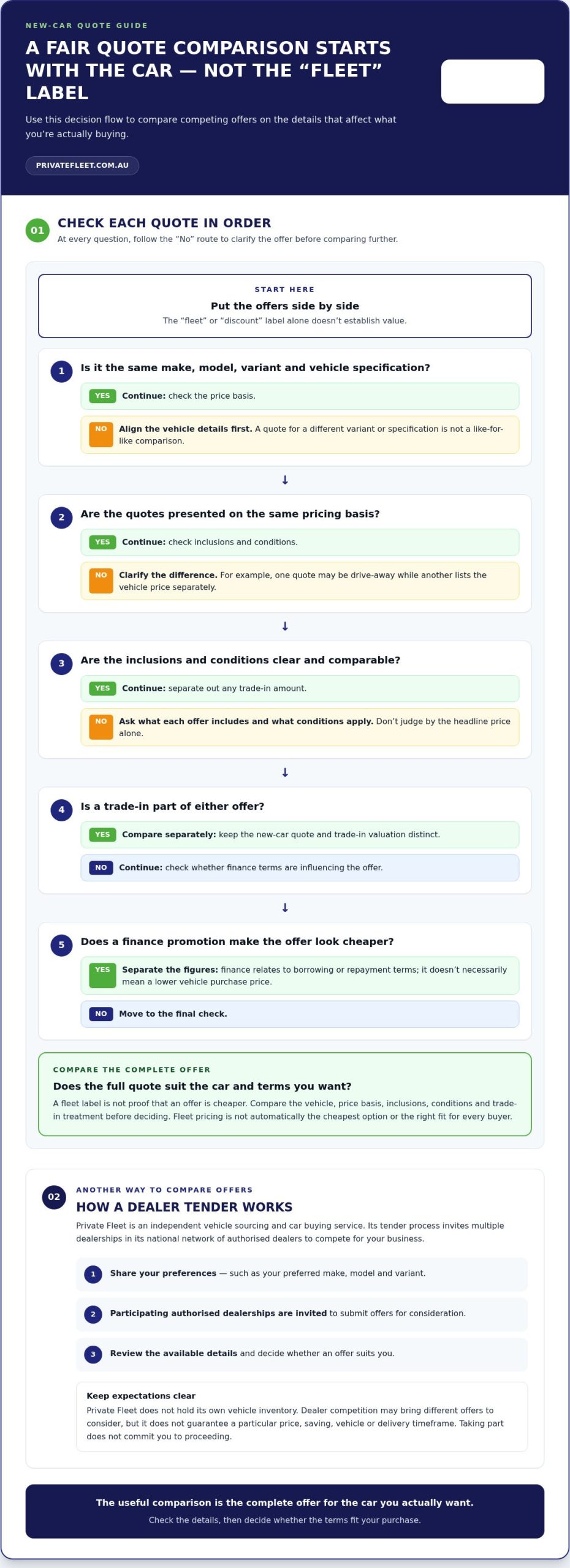
Start with like-for-like details: the same make, model, variant and vehicle specification. Then compare the quote basis, inclusions and conditions, including any trade-in treatment. If one offer is drive-away and another lists a vehicle price separately, clarify the difference before judging them side by side.
That’s the practical test: compare the complete offer for the car you actually want, rather than relying on “fleet” or “discount” as proof of value. A clearly stated quote makes it easier to see what you’d pay and decide whether the terms fit your purchase.
How dealer competition can bring private buyers more new-car options
A private buyer doesn’t need to approach dealerships one by one to explore competing offers. Through a dealer tender, Private Fleet gathers your preferences and invites multiple dealerships in its national network of authorised dealers to compete for your business. You can then review the offers available for your requirements and decide whether to proceed.
This creates a structured way to explore fleet pricing for everyday car buyers, even when a buyer isn’t using a manufacturer’s formal fleet programme. Competition may bring different offers to consider, but it doesn’t guarantee a particular price, saving, vehicle or delivery timeframe. Each offer still needs to be assessed on its own terms.
What happens in a dealer tender?
The process starts with your preferred make and model, along with the variant and other requirements that shape the request. Multiple participating dealers are invited to submit offers for consideration. You can review the available details and decide whether an offer suits you; taking part doesn’t commit you to proceeding. J.D. Power also discusses how individuals may benefit from fleet discounts, though programme terms vary and its guidance shouldn’t be treated as Australian-specific advice.
What does a car buying service handle for the buyer?
Private Fleet is an independent vehicle sourcing and car buying service. It manages the sourcing request and supports the purchase process through authorised dealerships; it doesn’t hold its own vehicle inventory. This can reduce the need to coordinate separate enquiries and negotiate directly with each dealer, while keeping the decision in your hands.
Trade-in assistance may also be part of the process, but it’s useful to keep the new-car offer clear in your comparison. Consider the vehicle quote and trade-in value separately so you can understand each part of the transaction. For a step-by-step overview, read how the new-car buying process works.
If you’d like help bringing your shortlist to participating dealers, share your preferred make or model, postcode and buying timeframe. That gives the sourcing process a clear starting point without committing you to an offer.
Is fleet pricing always cheaper? Compare the whole new-car offer
No. Fleet pricing isn’t automatically cheaper or the right fit for every buyer. A label can’t tell you whether a quote covers the vehicle you want, includes the same items as another offer or comes with conditions that suit your purchase. The value is in the complete, comparable offer.
Before comparing figures, match the model year, variant, factory options and accessories. Even two quotes for the same model name may describe different specifications. Make sure the price basis is clear too: compare drive-away with drive-away, or identify which charges are outside a separately stated vehicle price.
Which details should match across new-car quotes?
Use a consistent checklist. Record the exact vehicle and quote terms, then compare the details side by side. J.D. Power discusses how individuals may benefit from fleet discounts; its guidance provides general context, while Australian offers and their conditions need to be assessed on their own terms.
| Comparison detail | What to check |
|---|---|
| Vehicle and variant | Same model year, variant, specification, factory options and accessories. |
| Quote basis | Whether the price is drive-away or another clearly stated basis. |
| Inclusions | What the quoted amount covers, and which items are separate. |
| Conditions | Eligibility or other terms, plus an offer expiry date if shown. |
| Trade-in treatment | Whether a trade-in is included and how its valuation is presented. |
Don’t fill gaps with assumptions. If an expiry date or inclusion isn’t stated, treat it as unclear in your comparison rather than as a confirmed part of the offer.
How should you assess a trade-in alongside the new-car offer?
Keep the new-car quote and trade-in valuation visible as separate figures. The changeover amount can help you understand the overall transaction, but it’s meaningful only when the new-car prices use comparable terms and the trade-in figures are clearly stated. Otherwise, a stronger-looking trade-in can distract from differences in the new-car quote.
Private Fleet’s new-car buying service sources vehicles through a national network of authorised dealerships. Its sourcing role can help bring offers together for review; it doesn’t make fleet pricing a guaranteed saving. For help comparing a shortlist, get help buying my new car and share your preferred model, postcode and buying timeframe.
How to assess fleet pricing offers before choosing a new car
Use a clear sequence: shortlist a car, define what matters to you, compare equivalent offers, review the terms, then decide. This keeps the focus on whether the vehicle and purchase suit your needs, not just whether a quote carries a fleet label. A simple written checklist also makes it easier to compare fleet pricing for everyday car buyers without getting lost in different offer descriptions.
Start with the car and variant that suit your needs
Separate must-haves from preferences before requesting or reviewing offers. Your shortlist might include a particular body style or safety feature as essential, while colour or an optional accessory may be flexible. Check the exact model year and variant against current Australian manufacturer information so the quotes relate to a vehicle that matches your requirements.
Consider the everyday experience as well as the specification. If relevant, assess seat comfort and adjustment, ease of entry and exit, visibility, ride comfort and cabin noise. Try the controls to see whether the touchscreen and physical buttons feel intuitive, and consider whether parking assistance suits where you drive and park. These details can matter throughout your ownership, not only on the day you compare prices.
Review the quote terms before making a decision
For each offer, note the quote date, price basis, inclusions, conditions and any stated expiry. Check that the vehicle and specification match your shortlist. If an offer includes finance, review its terms separately from the vehicle price so you can assess the car purchase on a consistent basis.
Then weigh the quote against your intended ownership period and purchase priorities. If you have a car to trade in, keep its valuation distinct while considering the overall changeover. Convenience also counts: a process that reduces separate dealer enquiries may be valuable if it makes the purchase easier to manage.
- Shortlist: Identify the model and exact variant you’re considering.
- Set priorities: Record must-have features and preferences.
- Compare: Match vehicle specifications and price basis across offers.
- Review: Read the quote date, inclusions, conditions and expiry where stated.
- Decide: Choose the offer that best fits your needs and purchase plans.
Private Fleet’s new-car buying service sources vehicles through a national network of authorised dealerships, helping bring offers into a managed buying process.
How Private Fleet helps everyday buyers pursue fleet pricing
Once you know which car and quote terms matter, an independent buying service can help bring your request to participating dealers without you coordinating every enquiry yourself. Private Fleet sources new cars through a national network of authorised dealerships and uses a tender process to invite multiple dealers to compete for a buyer’s business. It’s an option for exploring fleet pricing for everyday car buyers, without assuming a particular price or outcome.
Private Fleet is independent and doesn’t hold vehicle inventory. The dealerships provide the offers for consideration, and you remain in control of whether to proceed. This approach can make the sourcing and purchase process easier to manage while keeping the focus on the vehicle and terms that suit you.
What information helps start a new-car request?
A clear request helps shape the search. If you’ve settled on a car, note the make, model and preferred variant. Still deciding? Share a shortlist and the features that matter most, so your options can be considered against your needs.
- Preferred car: Make, model and variant, or a shortlist if you’re comparing.
- Location: Your postcode, which helps identify relevant dealership offers.
- Timing: When you intend to buy, so the request reflects your timeframe.
- Requirements: Essential features, preferred specification and any trade-in needs.
You don’t need to have every detail settled before making an enquiry. A considered shortlist and a clear sense of what’s essential can provide a useful starting point. If you have a trade-in, mention it as a separate part of your purchase planning.
What happens after you ask for help buying a new car?
Your preferences inform the sourcing request, which is put to participating dealerships through the tender process. Offers can then be reviewed against the vehicle and requirements you supplied. This supports the search and purchase process, while leaving the final decision with you. For a step-by-step explanation, read how the car buying process works.
Share your preferred make or model, postcode and buying timeframe to give your request a practical starting point. Add your shortlist, essential features and trade-in requirements if they’re relevant.
Get help buying my new car
Make your next new-car comparison with confidence
Fleet pricing for everyday car buyers is best treated as one possible route to an offer, not a guaranteed discount. The clearest comparison starts with the same vehicle and variant, then checks the quote basis, inclusions and conditions. That way, you can judge the full offer against the car and purchase terms that suit you.
If managing separate dealer enquiries feels like extra work, Private Fleet is an independent Australian car buying and vehicle sourcing service for private buyers nationally. Its tender process invites multiple authorised dealerships to compete for your business. You can review the offers and choose how to proceed. Trade-in assistance is available as part of the broader buying process, while keeping the new-car quote clear helps you assess each part of the transaction.
Share your preferred make or model, postcode and buying timeframe to give your enquiry a practical starting point. A shortlist and any trade-in requirements can also help shape your request.
Get help buying my new car
With a clear shortlist and like-for-like comparisons, you can take the next step at your own pace and choose with greater confidence.
Frequently Asked Questions
Can an everyday private buyer get fleet pricing on a new car?
Yes, private buyers can seek competitive dealer offers on a new car, but access and terms depend on the vehicle and offer. The phrase fleet pricing for everyday car buyers doesn’t mean every quote is a formal fleet discount. Compare written offers for the same model and variant, and check what each includes. You don’t need to assume a discount is available before making an enquiry.
Is fleet pricing always cheaper than a dealer’s advertised offer?
No. A fleet label alone doesn’t establish that an offer is better value than an advertised dealer offer. Compare equivalent vehicles, including the model year and variant, then check the price basis, inclusions and conditions. An advertised offer may apply to a particular specification or have stated terms. Look at the complete quote and how it fits your purchase, rather than judging by a discount label.
How do I compare fleet pricing with a drive-away quote?
Start by matching the model year, variant, factory options and accessories, where applicable. Then compare the price basis: a drive-away quote should be assessed against another drive-away quote, while a differently stated price needs its inclusions clarified. Review conditions and any stated expiry date too. If key details differ or are unclear, note that before deciding whether the offers can be compared fairly.
Do I need to work for a company to access fleet pricing?
Not necessarily. This article is about private buyers exploring dealer offers for a new car, not eligibility for a particular manufacturer or business fleet programme. The terms attached to an offer can vary, so don’t assume employment is universally required or that every private buyer qualifies for formal fleet pricing. Focus on the offers available for your preferred vehicle and compare their written terms before choosing.
Can a car buying service help me compare new-car dealer offers?
Yes. Private Fleet is an independent Australian vehicle sourcing and car buying service that works with a national network of authorised dealerships. Its tender process invites multiple dealers to compete for a private buyer’s business, then supports the buyer in reviewing offers and the purchase process. Dealer participation doesn’t guarantee a particular price, saving, vehicle or delivery timeframe, so assess each offer against your requirements.
Can I include my trade-in when comparing a new-car offer?
Yes, but record the trade-in valuation separately from the new-car quote first. This helps you compare the vehicle offers without a trade-in figure obscuring differences in price basis or inclusions. Once both amounts are clear and comparable, consider the resulting changeover amount. If an offer combines figures without showing how they’re calculated, it’s harder to see what you’re paying for the new car and receiving for your current one.
What should I have ready before asking for help buying a new car?
Have your preferred make and model ready, or a shortlist if you’re still comparing. Include your postcode and intended buying timeframe, as these help shape the request. It’s also useful to note your preferred variant, essential features and any trade-in requirements. You don’t need to have every choice finalised; explaining what matters most gives the sourcing process a practical starting point and helps keep the offers relevant.