
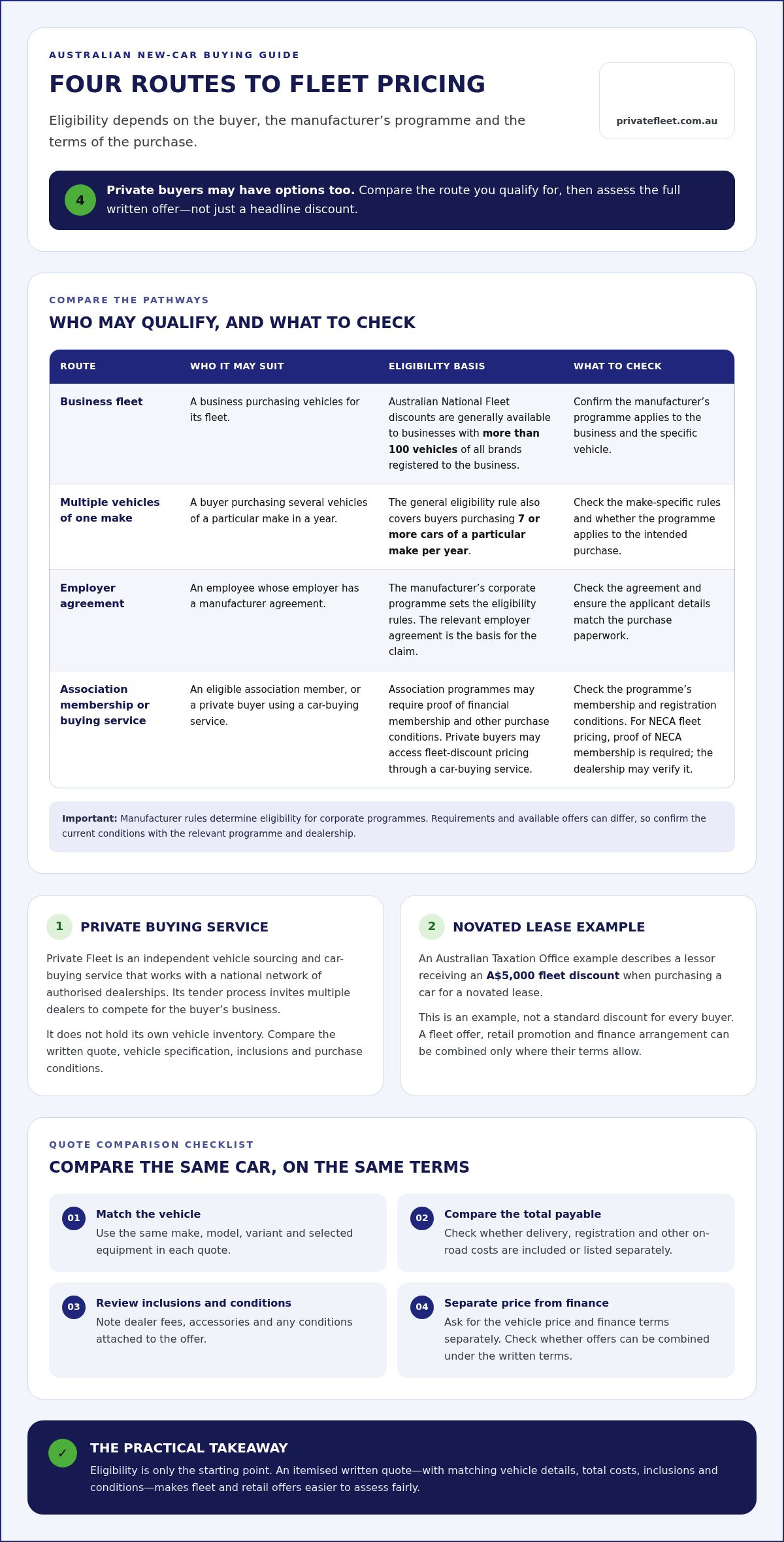
Fleet discounts aren’t one-size-fits-all. To get fleet discounts on a new car in Australia, you generally need to qualify through a manufacturer program, an employer agreement or an eligible association. Australian National Fleet discounts are generally available to businesses with more than 100 vehicles of all brands registered to the business, and the general eligibility rule also covers buyers purchasing 7 or more cars of a particular make per year.
Fleet pricing is often associated with large companies, but private buyers can also access fleet-discount pricing through a car-buying service. Employer agreements and association membership may provide other eligibility routes. The right approach depends on how you’re buying, so first identify whether a manufacturer program applies to you or whether a buying service is a better fit.
This guide explains how corporate programs and fleet discount types fit into a private new-car purchase. It also shows how to assess an offer alongside retail and drive-away pricing, so you can compare the full terms rather than relying on a headline figure. You’ll leave with a clearer way to decide what to ask, what to compare and how to move towards a well-informed purchase.
Key Takeaways
- Fleet pricing has several pathways: some businesses qualify through the size of their fleet, while eligible buyers may also access programs through an employer or association.
- For Australian National Fleet discounts, the general eligibility rule includes buying 7 or more cars of a particular make per year; manufacturers determine eligibility for their corporate programs.
- Compare the full drive-away price and included terms, not just the advertised discount, to understand the offer’s practical value.
- An Australian Taxation Office example shows a lessor receiving a A$5,000 fleet discount when purchasing a car for a novated lease.
- When comparing quotes, keep the make, model, variant and purchase conditions consistent so you can assess each offer on an equal basis.
Deeper discounting
Fleet pricing can reflect purchasing arrangements that differ from a standard individual transaction. The value depends on the vehicle, the program and the full purchase terms.
Savings Against Retail Pricing
Compare the fleet offer with a retail drive-away quote for the same vehicle and conditions. The Australian Competition and Consumer Commission (ACCC) notes that larger fleet buyers may have greater bargaining power and the option of buying in the wholesale market. That leverage comes from purchasing scale, so a large fleet’s terms shouldn’t be treated as a direct benchmark for an individual buyer.
Compare the vehicle specification and inclusions before judging the price. Check that each quote covers the same model, variant and equipment, then compare the total payable. This helps distinguish a genuine price difference from variations in delivery arrangements, accessories or other inclusions.
For example, one quote may show a lower vehicle price but exclude an accessory included in another offer. Compare the written terms and calculate the difference between offers with matching inclusions. That gives you a useful comparison for your chosen car, rather than relying on a general fleet-saving claim.
Combining Discounts and Offers
Fleet pricing can be combined with manufacturer promotions or finance arrangements only where the relevant program terms allow it. A novated lease is a distinct purchase structure, and the Australian Taxation Office gives an example of a lessor receiving an A$5,000 fleet discount when purchasing a car for a novated lease.
A lessor’s purchase is one example, not a rule for every buyer. Retail promotions and finance deals may not be combined with a fleet offer. Compare the written conditions and ask for the vehicle price and finance terms to be shown separately.
A novated lease may bundle the car’s cost and eligible running expenses into regular salary deductions. The vehicle discount is only one part of assessing the arrangement. Check which expenses are included, the finance structure and the total commitment. A lower purchase price does not automatically mean a lower overall cost.
For a clear comparison, keep the vehicle, variant and purchase conditions consistent. Record the drive-away amount, included equipment, manufacturer promotions, finance terms and lease expenses separately. This shows whether a discount improves the overall offer or simply changes how the purchase is presented.
Factory or national fleet discounts
Factory and national fleet discounts are program-based offers, with funding shared by the vehicle manufacturer and dealer. The manufacturer sets the eligibility rules for its corporate vehicle programs.
Comparing Fleet Quote Costs
For a factory or national fleet quote, compare the final amount payable and how the offer is structured. Check whether the vehicle price includes delivery, registration and other on-road costs, or whether they are listed separately. Note dealer fees and accessories too, so you compare the total for the car and purchase arrangement you want.
Ask for the program applied to the quote and a breakdown showing the vehicle price separately from other charges. If you have quotes from different dealerships, check that they use the same manufacturer program and vehicle specification. Different terms or inclusions can make similar headline prices difficult to compare.
Use a short review before assessing the offer:
- Confirm the manufacturer program and applicant details shown.
- Check the vehicle’s make, model, variant and selected equipment.
- Identify delivery charges, registration and other on-road costs.
- Note dealer fees, accessories and any conditions attached to the offer.
An itemised quote makes it easier to see how the dealer and manufacturer have applied the program, without confusing a separate charge with the vehicle price.
Documents for Discount Eligibility
There is no single document pack for every Australian fleet discount. The manufacturer’s eligibility rules determine what evidence is needed, based on whether the applicant relies on an employer agreement, business status or association membership. Prepare evidence that supports the relevant eligibility route and matches the applicant’s details.
For an employee, the relevant information is the employer’s manufacturer agreement. An association applicant may need proof of financial membership and must meet the program’s purchase and registration conditions. NECA fleet pricing requires proof of NECA membership, and the dealership may verify the claim.
Before applying, organise the details that connect the buyer, program and vehicle. Check that the applicant’s name matches across membership or employer records and the purchase paperwork. A business applicant should use the details associated with its fleet program. These checks help the dealership assess the application against the manufacturer’s conditions.
Keep the eligibility evidence with the written quote and program terms. This gives you a clear record of the basis for the offer and helps resolve any differences between the application details and purchase documents before proceeding.
General fleet discounts
Access to general fleet pricing depends on the buyer’s eligibility and the manufacturer’s program. Businesses, employees and eligible association members may have different ways to qualify.
Fleet Pricing Eligibility
For Australian National Fleet discounts, the general rule includes buying 7 or more cars of a particular make per year. Separately, access is generally available to businesses with more than 100 vehicles of all brands registered to the business name. These are distinct eligibility measures, not a single threshold that applies to every program.
Employees may qualify when their employer has an agreement with the manufacturer. Association members may also qualify if they’re financial members and purchase and register the vehicle for their exclusive use. The relevant program’s conditions determine which route applies.
Some luxury vehicle manufacturers offer corporate programs that may include service discounts. Assess any service benefit separately from the vehicle purchase price, as a program can cover more than one type of benefit.
There is no fixed list of Australian brands and dealers offering fleet discounts. Manufacturer programs set participation and eligibility, and authorised dealerships handle purchases under the relevant arrangements. Check the specific make and program rather than assuming every dealer or model has identical terms.
Requesting a Fleet Quote
To request a fleet quote from an Australian dealer, identify the manufacturer program and explain how you qualify. Provide the relevant business, employer or association details, then specify the model, variant and purchase conditions you want.
Ask for a written quote that itemises the vehicle price, drive-away total, delivery details and program conditions. When comparing dealers, give each the same vehicle specification and purchase requirements. This keeps differences in equipment and terms from distorting the comparison.
Popular models and electric vehicles may be considered under fleet programs, but eligibility alone doesn’t guarantee that a particular vehicle has the same offer or purchase conditions. The manufacturer’s program, selected model and dealer’s terms all matter. If a vehicle is in short supply, check that the quote and purchase arrangements clearly state what is being offered and any relevant conditions.
Keep the eligibility evidence and written offer together before accepting a quote. Check that the buyer details match the program applicant and the vehicle specification matches your shortlist. This helps prevent comparing an eligible fleet offer with a different retail configuration.
If you’re weighing fleet terms against a private purchase, you can share your preferred new-car shortlist for help comparing the options.
Who qualifies for fleet pricing in Australia?
To get fleet discounts on a new car, first identify the eligibility route that suits your circumstances. Australian programs may assess a business, an employee covered by an employer agreement or an eligible association member. Conditions differ, so both the buyer’s status and the vehicle’s intended use matter.
For Australian National Fleet discounts, the general eligibility rule includes buying 7 or more cars of a particular make per year. Access is also generally available to businesses with more than 100 vehicles of all brands registered to the business name. These are separate measures, not one threshold shared by every program.
An employee may qualify if their employer has an agreement with the manufacturer. Working for a business does not by itself establish eligibility; the employer’s arrangement is what matters. Find out which manufacturer program applies before preparing a shortlist or requesting a fleet quote.
Association membership can provide another route. To qualify through an Australian association, a member must be financially up to date and purchase and register the vehicle for their exclusive use. Membership alone may not meet the program conditions, so ensure the purchase and registration match the member’s eligibility.
NECA shows how eligibility evidence can be assessed: its fleet pricing requires proof of NECA membership, and the dealership may verify the claim. Keep the evidence consistent with the applicant’s details. The manufacturer sets corporate program eligibility, while the dealer may check the information during the purchase.
Use these steps to identify your likely pathway:
- Identify the buyer: establish whether the applicant is a business, employee or association member.
- Name the program: identify the manufacturer and fleet arrangement involved.
- Match the conditions: review the applicable vehicle threshold, employer agreement or membership requirements.
- Prepare supporting details: gather the employer or membership evidence relevant to the pathway.
- Align the purchase: ensure the applicant, vehicle use and registration meet the program terms.
A private buyer without a business fleet, employer agreement or qualifying association membership should not assume a standard national fleet program applies. They may still have another eligibility route, such as an employer arrangement or qualifying association. The manufacturer’s program determines which option fits the buyer’s situation.
For example, a sole trader can distinguish business eligibility from an employee’s access through an employer. A private buyer can first establish whether an association pathway applies. These checks help someone looking to get fleet discounts on a new car focus on the right program before comparing purchase offers.
How much can you save with fleet pricing compared with retail or drive-away prices?
There is no single fleet saving for every Australian new car. The difference depends on the vehicle, manufacturer’s program, dealer terms and retail offer. To measure the value, compare the fleet quote’s drive-away total with a retail drive-away quote for the same vehicle and purchase conditions.
The recommended retail price is not the same as the amount payable on the road. A drive-away quote combines the vehicle price with applicable on-road costs, while a fleet quote may show its components differently. Compare the final amount payable, not a discount percentage or headline figure on its own.
Use a like-for-like comparison. For example, compare the same Toyota model and variant, with matching factory options and accessories, at the same time and in the same location. A quote for a different trim, delivery arrangement or offer period cannot reliably show the value of fleet pricing against retail.
Set out both offers side by side and record:
- The make, model, variant and included equipment.
- The final drive-away total and itemised on-road costs.
- Delivery charges, dealer fees and accessories.
- Any manufacturer offer and its conditions.
- The quote date, location and purchase requirements.
Subtract the fleet drive-away total from the comparable retail drive-away total. The result is the difference between those two offers, not a universal saving available to every buyer. Keep any trade-in valuation and finance costs separate so they don’t obscure the vehicle price comparison.
For instance, a retail quote might include an accessory pack while a fleet quote excludes it. The lower total may reflect different inclusions rather than a better price for the same car. Ask for the equipment and charges to be shown clearly, then compare what each offer includes.
Manufacturer promotions can also change the retail baseline. If a dealer presents a promotional price alongside a fleet quote, compare both final drive-away totals and check whether the promotion can be used under the fleet program. Don’t combine separate discounts unless the written terms allow it.
A clear comparison gives you a practical answer for your chosen vehicle, location and purchase timing. It also makes discussion of the offer more focused: raise specific differences in the quote, inclusions or conditions instead of relying on an assumed fleet discount percentage.
If an Association discount is available, the member must provide the Association with the dealership details and request that it send a completed Letter of Introduction directly to the dealership. Your written quotes remain the basis for comparing the final amount payable.
Other considerations may affect the overall cost of a purchase. A novated lease may allow GST savings on the purchase price of an eligible vehicle and on many running costs. The BYD Atto 2 Premium is described as the 2026 Drive Car of the Year winner for Best EV Under $40K; that recognition does not establish a particular fleet discount or drive-away price.
Private Fleet: New Cars
Private Fleet’s New Car Buying Service can help private buyers compare new-car offers when fleet eligibility doesn’t fit their circumstances, or when comparing dealer quotes feels time-consuming. As an independent vehicle sourcing and car buying service, Private Fleet works with a national network of authorised dealerships. Its tender process invites multiple dealers to compete for your business, giving you a structured way to assess available offers for your preferred vehicle.
Share your preferred make and model, postcode and buying timeframe to focus the search. If you’re replacing a vehicle, Private Fleet’s Trade-In Assistance can support that part of the purchase. Car Finance is also available if you need finance options.
Make your next car purchase more deliberate
If you want to get fleet discounts on a new car, start with a clear buying brief rather than rushing into a decision. Set out the model or shortlist, the features you value most and your preferred purchase timeframe. This gives you a practical basis for assessing offers against what you want from the car.
Look beyond the headline price. A car that suits your everyday driving, comfort needs and ownership plans may be a better fit than a cheaper offer that misses your priorities. Assess the full proposal and decide which details matter before committing.
For individual help with your new-car purchase, share your preferences and buying timeframe with Private Fleet. The team can help you consider the next steps for your purchase.
Get help buying my new car
A considered shortlist puts you in control of the decision. Take the next step with confidence.
Frequently Asked Questions
Can individuals or sole traders get fleet discounts on new cars?
Yes. Private individuals can use a new-car buying service to access fleet-discount pricing, while sole traders may qualify through a manufacturer’s business program. Eligibility depends on the program and the buyer’s circumstances, so sole traders should not assume business status alone is enough. An individual could also pursue a qualifying association or employer pathway, while a sole trader can compare business eligibility with a private purchase option.
Which Australian car brands and dealers offer fleet discounts?
There is no fixed list of Australian brands and dealers offering fleet discounts. Manufacturer programs set participation and eligibility, and authorised dealerships handle purchases under the relevant arrangements.