
A salesperson’s urgency doesn’t make a car deal urgent for you. The ACCC says it’s illegal for a business to pressure you into entering a contract. Knowing how to deal with high pressure car salesmen starts with slowing the conversation down and keeping control of the decision.
It’s understandable to feel rushed when a new car, trade-in and finance are discussed at once. Learn how to check contract terms, separate the vehicle price from other costs, set clear limits and recognise when it’s time to walk away.
This guide also explains what to do if the pressure continues, so you can compare the offer calmly and decide whether it suits your needs.
Key Takeaways
- Recognise urgency and pressure as reasons to pause, take time to consider the offer and keep the decision on your terms.
- Read the full contract before signing, and make sure the written terms match what you agreed.
- Set your budget and non-negotiables in advance so you can make a clear offer and walk away if it doesn’t suit you.
- Compare the vehicle price, trade-in, finance and optional extras separately to see what each part adds to the overall deal.
- If contract language feels unclear, get help understanding it before you commit.
1. Are High-Pressure Sales Tactics Illegal?
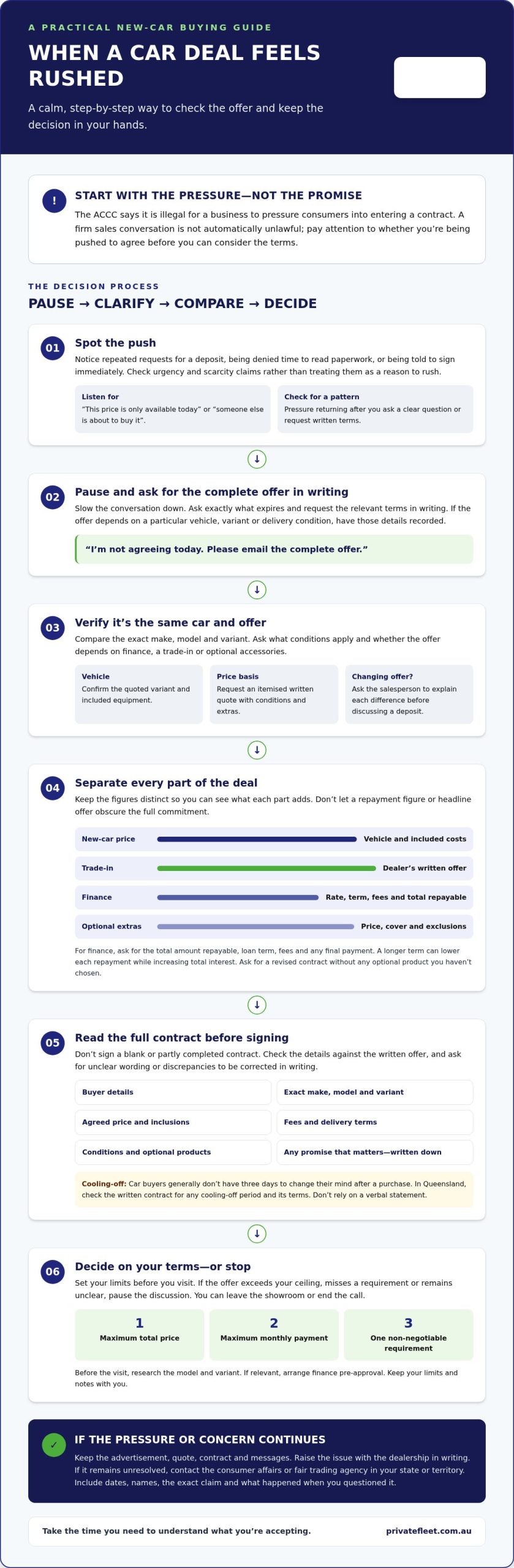
Yes. The ACCC says it’s illegal for businesses to pressure consumers into entering a contract. Not every firm sales conversation is unlawful. Focus on whether you’re being pushed to agree before you can consider the terms. A new-car purchase should proceed at a pace that gives you time to understand what you’re accepting.
Pressure can take several forms during a dealership visit. A salesperson might repeatedly ask for a deposit, deny you time to read paperwork, or insist that you sign immediately. Look for a pattern, not just one persuasive comment. If you feel rushed, pause the discussion and ask for the offer in writing.
Check urgency and scarcity claims carefully. “This price is only available today” or “someone else is about to buy it” can make a considered decision feel like a race. Ask exactly what expires and request the relevant terms in writing. If the offer depends on a particular vehicle, variant or delivery condition, have those details recorded.
A bait-and-switch concern arises when an advertised car or offer changes during the discussion. For example, you enquire about one new-car variant, then learn that the quoted price applies only to a different model or requires extra products. Compare the exact make, model, variant and price basis. Ask the salesperson to explain each difference before discussing a deposit.
Promotional wording can also obscure important conditions. An advertised price might depend on finance, a trade-in or optional accessories. Ask whether the offer applies to your chosen vehicle and circumstances. Request an itemised written quote showing the vehicle, included costs, conditions and extras. That gives you something specific to compare, rather than just a headline figure.
Notice if pressure returns after you ask a clear question. If the answer changes, the salesperson dismisses your request for written terms, or new conditions keep appearing, stop and review the details. You can say, “I’m not agreeing today. Please email the complete offer.” A calm pause helps distinguish a genuine deadline from a sales push.
Before visiting a dealership, research the model and variant, set a maximum total price and note one non-negotiable requirement. Arrange finance pre-approval if relevant, then take your notes and compare written offers. These steps give you a reference point if a salesperson introduces urgency or shifts the discussion to repayments.
If you suspect misleading or high-pressure conduct, keep the advertisement, quote, contract and messages, then raise the issue with the dealership in writing. If it remains unresolved, contact the consumer affairs or fair trading agency in your state or territory. Include dates, names, the exact claim and what happened when you questioned it.
For example, save a screenshot of an advertised variant before visiting. If the dealer later offers a different variant, compare the equipment and written price rather than treating the offers as identical. A clear record helps you explain the difference and decide whether to continue negotiating or leave.
2. Checking contract terms and payment commitments
Start with the full written offer, not the repayment figure. Read every line before signing, and don’t sign a blank or partly completed contract. Check the buyer’s details, exact make, model and variant, agreed price, inclusions, fees, delivery terms and conditions. If a promise matters, ask for it in writing and keep a copy. Photograph the completed pages for your records.
Compare like with like. Check the carmaker’s drive-away pricing calculator, then compare written quotes for the same variant and location. Confirm what each quote includes, such as registration, stamp duty, dealer delivery and accessories. For an independent vehicle valuation, compare an estimate with the dealer’s written trade-in offer, keeping both figures separate from the new-car price.
Ask the salesperson: “Is this the complete drive-away price, including all fees?” Then clarify whether the quote depends on finance, a trade-in, accessories or another condition. Ask what’s included, what’s optional and whether the offer has an expiry condition. These answers help you compare the actual commitment, not just a headline figure.
For finance, check whether the quoted annual interest rate is fixed or variable and whether it matches the written quote. Ask for the total amount repayable, loan term, fees and any final payment. A longer term can reduce each repayment while increasing total interest. Compare the borrowing cost across offers, not just the weekly or monthly amount.
Review every optional product separately. Ask its price, what it covers, key exclusions and whether it’s optional. Remove anything you haven’t chosen before signing. For example, if paint protection appears in the paperwork, ask for a revised contract without it unless you’ve decided to buy it.
Ask whether the contract includes a cooling-off period and how its terms work. Car buyers generally don’t have three days to change their mind after a purchase. In Queensland, check the written contract for any cooling-off period before agreeing. Don’t rely on a verbal statement; keep the relevant clause with your contract copy.
Before committing, ask the salesperson to explain any unclear wording and correct discrepancies in writing. If the repayment, rate or vehicle details differ from the quote, pause until the documents match. Buyers comparing several written offers can discuss their new-car quote and shortlist before deciding.
3. Setting limits and walking away from a deal
Set a calm, clear boundary: “I’m not deciding today. Please give me the offer in writing.” If the salesperson keeps pushing, repeat your limit rather than debating it. You can pause the discussion, leave the showroom or end a phone call. A clear response keeps the decision in your hands.
Before visiting, write down three limits: your maximum total price, maximum monthly payment and one non-negotiable requirement. For example, your requirement might be a particular safety feature or vehicle size. Keep your written limits with your notes. If the offer exceeds your total-price ceiling or misses your requirement, don’t let a lower repayment distract you.
Make a firm offer based on what you’re prepared to pay for the car. State the figure and vehicle variant clearly, then ask for the dealer’s response in writing. If the dealer won’t accept it, thank them and walk away. You don’t need to raise your offer just because the salesperson says another buyer is interested.
If a salesperson shifts the subject to monthly repayments, bring the conversation back to your limit. You might say, “I’m comparing the total vehicle price first. Please respond to that offer.” This helps prevent a comfortable-looking repayment from obscuring the full commitment. Keep finance, trade-in and optional products separate until you’re ready to assess them.
When the pressure continues, follow a simple exit plan. Collect your notes, phone and keys, then say, “I’m leaving to consider the offer.” If you’re with someone, agree beforehand that either person can call a pause. You can leave without signing, paying a deposit or explaining your decision in detail.
Walking away from a deal doesn’t mean abandoning your car search. Record the model, variant, quoted price, conditions and salesperson’s response while the details are fresh. Later, compare the written offer with quotes for the same vehicle. If the dealer follows up, reply when you’re ready and restate your original limit.
For example, imagine you’ve set a maximum total price and the salesperson offers a lower monthly repayment by extending the finance term. Don’t treat that as meeting your price limit. Ask for the full price and borrowing commitment, then decide whether the complete offer fits your budget. If it doesn’t, decline and keep comparing.
Use the same approach when buying with a partner or family member. Agree on who speaks, which requirements can’t change and what phrase means “stop for today”. A prepared line such as “We’ll review the written offer at home” gives you a practical exit when urgency makes it harder to think clearly.
4. Getting help to understand a contract
If a new-car contract uses unfamiliar terms, pause and identify the specific clause causing concern. Mark the sentence, write your question beside it and ask the dealer to explain its practical effect. For example, clarify what happens if the vehicle’s delivery timing changes or a listed condition isn’t met. Don’t rely on a summary that leaves the clause unexplained.
Ask the salesperson to show how the written terms match your understanding of the deal. If you were told an accessory was included, find its description in the paperwork. If a delivery condition or payment obligation seems different, ask for a plain-English explanation and corrected documents. A specific question about a particular line is easier to resolve than a general request to “explain the contract”.
Consider asking someone you trust to read the terms with you. Give them the complete document and explain what you believe you’re agreeing to. They can flag missing details, inconsistent wording or a commitment you overlooked. For example, they may notice an optional product in the contract that you thought you’d declined.
For a clause with legal consequences, seek independent advice from a qualified legal adviser before agreeing. Provide the contract, relevant quote and any written messages, then point to the wording you don’t understand. Ask what the clause requires you to do, what could happen if circumstances change and whether another document affects its meaning. This helps focus the discussion on the decision you need to make.
Keep a record of explanations. Note the date, the person you spoke with and the clause discussed. If the salesperson makes a promise verbally, ask for it in writing. Contracts may be on paper, agreed verbally in person or over the phone, or accepted by clicking “I agree” online. Keep a copy of the version you reviewed.
In Queensland, consumers with a problem are advised to speak with the business first. Describe the issue clearly, identify the relevant contract wording and state what resolution you’re seeking. If the response doesn’t address your concern, keep it with your supporting documents. This creates a clear record of what you raised and how the business replied.
Take the same care with finance documents. Ask the finance representative to explain terms such as the interest rate, loan duration, fees and any final payment in plain language. Compare the explanation with the written agreement. If the figures or obligations differ, ask which document governs the commitment and resolve the discrepancy before accepting.
A contract you understand should make the car, payment obligations and conditions clear. If questions remain, tell the dealer you need time to get advice. Understanding each document before accepting helps you make a deliberate decision rather than agreeing under pressure.
5. Separating vehicle price, trade-in, financing, and add-ons
Treat the offer as separate decisions, not one changeover figure. First, identify the exact new-car make, model and variant. Request the vehicle price before adding a trade-in, finance or accessories. This gives you a clear starting point for comparing like-for-like offers. If a quote bundles several items, ask for a breakdown of each component.
Next, compare vehicle quotes on the same basis. Check whether each includes the same accessories, delivery conditions and charges. A lower headline price may reflect fewer inclusions, while another quote may include equipment you don’t want. Note the differences beside each offer, then compare the version that best matches your intended purchase.
Assess a trade-in separately. Ask for its value in writing and keep that figure apart from the new-car price. For example, a dealer could present an attractive changeover amount while adjusting both the car price and trade-in allowance. Looking at the figures separately shows how the offer is structured. It also lets you compare trade-in proposals without losing sight of the new car’s cost.
Once you’ve assessed the vehicle and trade-in, consider finance separately. Compare the total borrowing commitment, not just the repayment mentioned in a sales discussion. Look at the rate, fees, loan term and any final payment together. A repayment that seems manageable can still involve a different overall commitment. Ask for an updated comparison if changing the deposit or term affects the figures.
Review each add-on on its own merits. Ask what it costs, what it covers and whether it’s optional. Examples include paint protection, window tint or a dash camera. Decide whether each item suits your needs rather than accepting a package just because it’s offered with the car. Request an updated offer that reflects only the products you choose.
A simple comparison sheet can keep the discussion clear. Use separate columns for vehicle price, trade-in allowance, finance terms and chosen extras. Add a notes column for quote conditions or differences in inclusions. This makes it easier to see which figures changed when a dealer updates an offer and compare the complete commitment without overlooking individual parts.
Before agreeing, check that the final paperwork matches the combination you selected. If an unwanted add-on remains or the trade-in figure has changed, ask for corrected documents. Keep a copy of the final itemised offer so you can compare it with your notes later.
Private Fleet: New Cars
Private Fleet helps Australian buyers source and purchase new cars through its independent New Car Buying Service. Its tender process invites multiple dealers in a national network of authorised dealerships to compete for your business, giving you a way to compare offers without managing every dealer conversation yourself. Private Fleet doesn’t hold its own vehicle inventory.
The service can suit buyers with a preferred make or model who want support comparing dealer offers, or help coordinating a trade-in with a new-car purchase. Private Fleet also offers Trade-In Assistance and Car Finance as part of the buying process.
Share your preferred make or model, postcode and buying timeframe to start a conversation about your next steps.
Take your next step with confidence
Your next move is simple: decide what matters most in your new car, then compare offers on those terms. If a salesperson introduces new conditions, take time to assess them rather than deciding under pressure. Knowing how to deal with high-pressure car salesmen is about keeping the choice and the pace in your hands.
If you’d like support with the buying process, Private Fleet can help you consider new-car options and trade-in arrangements. Share your preferred make or model, postcode and buying timeframe to begin a practical conversation about your plans.
Get help buying my new car
A considered decision is a strong start. Move forward when the offer and the car feel right for you.
Frequently Asked Questions
Are High-Pressure Sales Tactics Illegal?
Yes. The ACCC says it’s illegal for a business to pressure a consumer into entering a contract. If you’re unsure how to deal with high pressure car salesmen, make a brief record of the interaction while details are fresh. Note the date, words used and whether the salesperson gave you time to consider the offer. This account can help you explain the situation clearly if you later make a complaint.
Can you leave a dealership without buying a car?
Yes, you can end a dealership visit without buying a car. If you haven’t made an agreement, tell staff you’re leaving and return anything you borrowed, such as a demonstration vehicle key. If you’ve already accepted terms, don’t assume that leaving cancels them. Check what you agreed to, including any verbal commitment or online acceptance, before taking further steps.
What consumer rights apply to car dealership sales in Australia
Australian protections include the right not to be pressured into entering a contract, as the ACCC explains. If you believe a dealer’s conduct was misleading, gather the advertisement, quote, messages and contract, then describe the specific claim and its effect. Consumer affairs agencies in your state or territory handle consumer complaints. A factual account with relevant records makes the issue easier to assess.
How to negotiate a car price and avoid add-ons or unnecessary fees
Make your offer for the exact new-car variant, then let the dealer respond without revealing your maximum budget. Ask what price the dealer is prepared to offer for that configuration. If the answer includes conditions, such as finance or accessories, request the offer on its own terms. This helps you judge whether the proposal suits your needs rather than negotiating around a bundled package.
What risks should you check in a car sales contract before signing
Look for terms that could affect what you receive or owe, especially conditions tied to an advertised offer. Check that the contract names the correct variant and records agreed inclusions, deposit arrangements and any conditions affecting delivery. Watch for wording that differs from your understanding. If a clause is unclear, ask for a plain-language explanation and take time to consider it before accepting.