
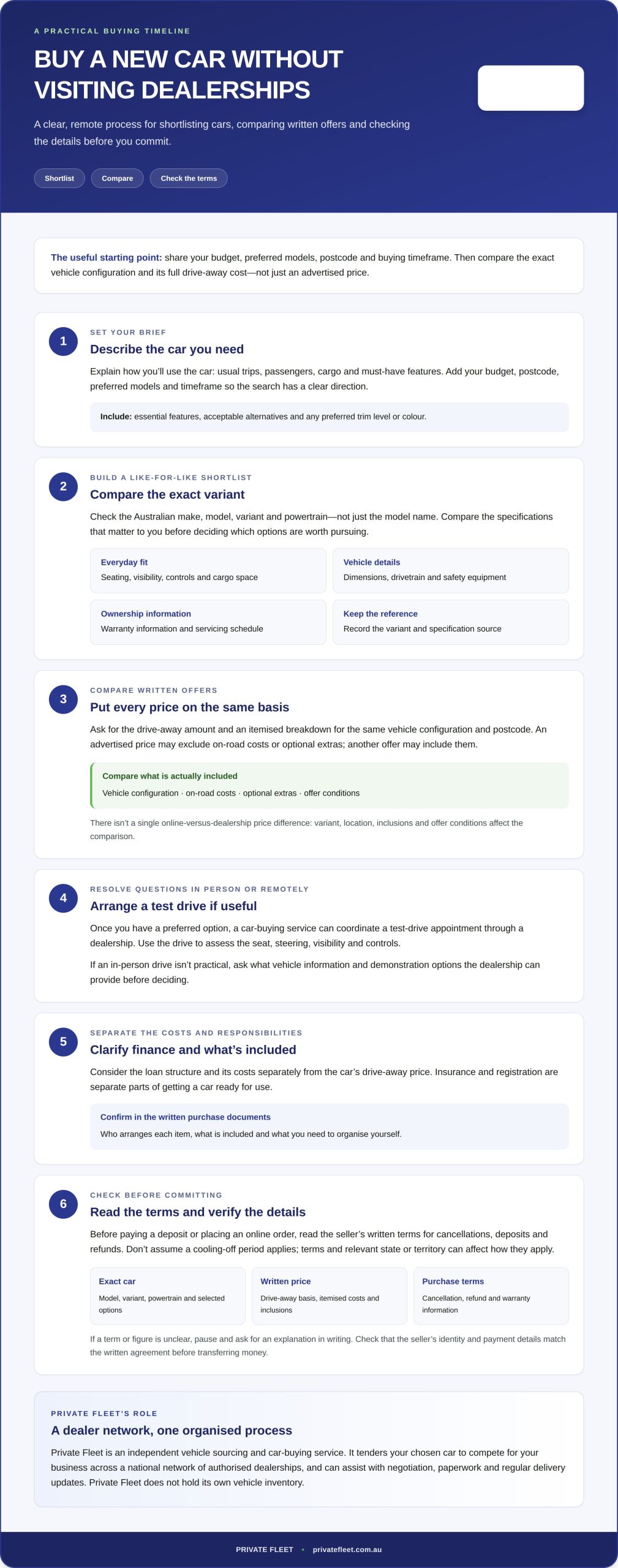
Buying a new car without visiting dealerships is possible: share your budget, preferred models, postcode and timeframe with a car-buying service, then have it narrow the options and compare dealer offers remotely. Knowing how to buy a car without visiting dealerships also means comparing the full drive-away cost, not just the advertised vehicle price.
Build a useful shortlist by explaining how you’ll use the car, including your usual trips, passenger and cargo needs, and must-have features. Clear preferences give your representative a practical brief for matching models and variants, while a defined budget and timeframe keep the search focused.
This article explains what information to provide, how to compare dealer offers, and which costs to discuss before deciding. It also covers how finance, negotiation and trade-in assistance can fit into a remote new-car purchase, so you understand the process before taking the next step.
Key Takeaways
- Compare new-car models and variants by the features that matter for your driving, not just by headline price.
- Share your shortlist, budget, postcode and finance needs so a car-buying service can help assess suitable options and arrange a test drive.
- Compare drive-away offers on the same basis, including on-road costs and any optional extras.
- Understand how negotiation, trade-in assistance and finance can fit into one remote purchase process.
- With Private Fleet, your chosen car is tendered to authorised dealers in its national network, with negotiation, paperwork and delivery updates handled along the way.
How to compare new cars online before choosing one
Start by matching Australian models to the way you’ll use the car. A car-buying service can compare specifications, prices and offers, then help build a shortlist around your budget and preferred features. Online research makes side-by-side comparisons easier, while an in-person visit can help you assess comfort, visibility and controls. Decide which features are essential and which are preferences before comparing variants.
Compare the exact variant, not just the model name. Review its dimensions, powertrain, safety equipment, seating, cargo space, warranty information and servicing schedule. Two variants of the same SUV may have different equipment or drivetrains. Record the variant and specification source for each option, so you compare like with like rather than relying on the model name alone.
For prices, compare the same vehicle configuration and postcode. An advertised price may exclude on-road costs or optional extras, while another offer may include them. Request a drive-away price and itemised breakdown before comparing. There’s no single online-versus-dealership price difference: the variant, location, inclusions and offer conditions all affect the comparison.
Australian dealership websites and online car marketplaces publish vehicle listings and information. Some allow parts of a purchase to be completed online, while others require dealership steps. Check what each listing covers. For a new-car comparison, focus on the exact variant, price basis and written purchase terms rather than assuming every online listing offers the same process.
Before paying a deposit or placing an online order, read the seller’s written terms for cancellations, deposits and refunds. The agreement and relevant state or territory can affect how those terms apply. Don’t assume a cooling-off period applies. If a term is unclear, get an explanation in writing before committing.
For warranty and consumer-protection questions, review the written warranty and purchase contract for the specific new car. These documents explain the warranty terms and the parties to the transaction. Applicable consumer rights depend on the circumstances and jurisdiction. Keep your contract and related records, and use relevant Australian government consumer information when you need guidance.
A practical way to decide how to buy a car without visiting dealerships is to set your budget and must-have features, compare matching models, then review the written costs and terms. After choosing a preferred car, arrange a test drive if useful and consider finance before signing. A car-buying service can help research your shortlist and coordinate purchase discussions remotely.
Keep a short comparison record for each option:
- Vehicle: exact model, variant, powertrain and selected options.
- Price: drive-away amount, itemised on-road costs and inclusions.
- Terms: written cancellation, deposit, refund and warranty information.
If two listings show different totals for the same SUV, compare the included costs and extras. For buyers deciding how to buy a car without visiting dealerships, a written breakdown makes the difference easier to assess. If figures or terms remain unclear, pause before committing and ask for an explanation of the specific item.
How a car-buying service checks your shortlist and arranges a test drive
A service can check each shortlisted car against the exact Australian make, model, variant and powertrain. It compares specifications with your needs, such as seat adjustment, visibility, boot space, safety equipment and controls. It can also identify differences between variants that share a model name, helping you focus on cars that suit your driving and priorities.
Give the service your preferred models, postcode, budget and buying timeframe. Include must-have features and acceptable alternatives, such as a particular trim level or colour. For finance, explain whether you plan to borrow, your preferred repayment approach and any lender pre-approval. These details help keep the shortlist within budget and make purchase discussions more relevant.
For example, a buyer choosing between two SUVs might prioritise comfortable entry, rear-seat space and parking assistance. The service can compare those requirements with each shortlisted variant’s specifications, then highlight questions to resolve at a test drive. A clear buying process also helps keep model selection, dealer discussions and the next step organised.
Once you have a preferred option, the service can coordinate a test-drive appointment through a dealership. This lets you assess the seat, steering, visibility and controls in person. If an in-person drive isn’t practical, ask what vehicle information and demonstration options the dealership can provide before deciding.
Finance can be discussed alongside the vehicle purchase, so you can consider the loan structure and its costs separately from the car’s drive-away price. Insurance and registration are separate parts of getting a car ready for use. Confirm who arranges each, what is included and what you need to organise yourself in the written purchase documents.
Risks in an online purchase include paying under unclear terms, misunderstanding which variant is being ordered, or relying on an unverified seller. A service can help keep the exact vehicle, agreed price, payment instructions and purchase paperwork clear. Before transferring money, make sure the seller’s identity and payment details match the written agreement.
Keep the decision grounded in written details. Your shortlist should identify the exact variant, included equipment, drive-away price basis and agreed options. The service can coordinate questions with the dealership and arrange a test drive, while you review the answers and decide whether the car meets your needs.
Once your preferred model and finance requirements are clear, the buying service can move from comparison to dealer discussions. Your requirements guide the vehicle choice, a test drive lets you assess how it suits you, and documented terms clarify the purchase before you proceed.
Compare drive-away prices and on-road costs
Compare offers for the same make, model, variant and postcode, then focus on the final amount payable. A drive-away quote should make clear which costs are included and which are separate. Ask for the price basis in writing, so you can distinguish the vehicle price from additional charges, selected accessories or delivery arrangements.
Read each quote line by line. One offer may bundle items into a total, while another lists them separately. You can’t tell whether the offers match unless you know what each includes. Ask for a breakdown when an item is unclear, and keep optional extras separate from costs required for the vehicle purchase.
Check the conditions attached to each offer. A displayed price may apply only to a specific variant, configuration or offer period. Confirm the vehicle description, any required options and the offer’s expiry date. If the quote includes accessories, note whether they’re fitted, supplied separately or optional. This helps show whether an apparent price difference reflects the vehicle or added items.
Delivery fees and wait times vary between online purchases. The delivery charge and timing depend on the specific offer and the vehicle’s order and delivery arrangements. Ask for the charge and estimated timing to be set out in writing, including any stated conditions, before choosing between offers.
Compare totals on a consistent basis. If one quote includes delivery and another lists it separately, account for that difference before judging the offers. Likewise, if an accessory appears in only one proposal, compare the vehicle price without treating that extra as compulsory. A clear breakdown helps you decide whether the complete package suits your needs.
Keep a separate record of every proposal. Include the quoted vehicle, price basis, included items, additional charges, delivery terms and offer expiry. If a dealer revises a quote, retain the updated version and note what changed. This is especially useful when discussing offers remotely, as it keeps figures and conditions together without relying on memory.
For example, two offers for the same SUV may show different totals because one includes a delivery charge or optional accessory. Ask which items account for the difference, then compare the vehicle and delivery terms on the same basis. If the dealer can’t clearly explain an amount in writing, don’t treat the totals as directly comparable yet.
- Vehicle: exact model, variant and configuration.
- Price basis: vehicle amount, drive-away total and itemised costs.
- Extras: included accessories and optional items.
- Delivery: any stated charge, estimated timing and conditions.
- Offer terms: expiry date and requirements that affect the quoted amount.
How a car-buying service handles negotiation, trade-ins and finance
Once you’ve chosen a new car, a service can negotiate with dealers for your exact make, model, variant, colour and preferred options. This gives dealers a clear brief and keeps discussions focused on the vehicle you want. Your representative can discuss the drive-away offer, dealer delivery charges and optional extras, then explain the terms so you can assess the complete proposal.
A tender process invites multiple authorised dealers to compete for your business. The service shares your vehicle requirements and gathers offers for comparison. If a proposal includes accessories or conditions, consider those separately from the vehicle price. This helps you see whether offers differ because of the car’s configuration, added items or purchase terms, rather than comparing headline figures alone.
Trade-in assistance can be arranged alongside the new-car purchase. The service can help obtain a dealer valuation and show how the trade-in amount fits into the overall transaction. Keep the new-car price and trade-in value separate. Consider whether a change in one amount affects the other or alters the extras included in the deal.
To support a valuation, provide a clear description of your current vehicle, its condition and relevant ownership details. The dealer assesses the vehicle and makes an offer. You can then weigh that figure against the new-car terms and decide whether the combined arrangement works for you. This lets you consider replacing your car as part of the purchase without losing sight of each component.
Finance is a separate decision from choosing the car. Share your budget, whether you plan to borrow and any pre-approval details. If you’ve already spoken with a lender, explain the amount you’re considering and your repayment preferences. This context helps the service coordinate finance discussions around the selected vehicle, while keeping the purchase price distinct from the loan arrangement.
For buyers working out how to buy a car without visiting dealerships, finance pre-approval can help establish a borrowing limit before accepting the final offer. A service can help coordinate discussions, but review the lender’s written terms before deciding. Compare the interest rate, fees, loan term, repayment amount and total payable. A lower repayment can reflect a longer loan term.
Ask for the proposed figures to be presented clearly before proceeding. The vehicle offer, trade-in valuation and finance terms should each be understandable on their own. If a package combines them, request a breakdown showing how each part contributes to the transaction. This makes it easier to judge the whole arrangement against your budget and preferred way to pay.
Remote coordination can keep the process moving without requiring you to handle every dealer conversation. The service can share your chosen vehicle details, discuss the offer and help manage trade-in and finance steps. If you’re considering how to buy a car without visiting dealerships, this support lets you review important decisions from home while retaining control over whether to accept a proposal.
How Private Fleet can help you buy a new car without visiting dealerships
Private Fleet helps Australian buyers compare and arrange a new-car purchase remotely. As an independent car-buying agency, it works with a national network of authorised dealerships rather than its own vehicle inventory. Once you’ve chosen a make, model and variant, Private Fleet tenders your exact requirements to multiple dealers, inviting them to compete for your business.
Start with a clear brief: your preferred car, budget, postcode and buying timeframe. Include the variant, powertrain, colour and features you want, plus acceptable alternatives. If you’re still weighing up options, explain how you’ll use the car and what matters most, such as easy entry, visibility, passenger space or simple controls. This gives the team a practical basis for refining your shortlist.
Private Fleet coordinates dealer offers for your specified vehicle and helps compare the details. You can review the drive-away price, included options and relevant conditions without seeking quotes from dealerships yourself. The team handles negotiation on your behalf, while you control the decision and can ask for any part of an offer to be clarified before proceeding.
If you want to experience the car before deciding, tell the team. They can coordinate a test drive through a dealership, so you can assess the driving position, seat comfort, visibility and controls in person. The dealership remains part of the vehicle and test-drive process, while your buying discussions can be managed remotely.
After you select an offer, Private Fleet assists with the purchase paperwork and keeps you updated on delivery. Timing depends on the vehicle and order arrangements, so regular updates help you follow progress without managing separate dealer conversations. You can also discuss trade-in assistance if you’re exchanging your current car, or finance if you need to borrow.
The service suits buyers who know the car they want and prefer support with dealer comparisons, negotiation and purchase coordination. It can also help if you have a shortlist but want assistance comparing variants or arranging the next step. Private Fleet’s new-car buying service keeps the focus on sourcing the exact new vehicle you choose through its dealer network.
To get started, have your preferred make or model, postcode and buying timeframe ready. You can also share your budget, shortlist and any trade-in or finance requirements, so the team understands the purchase you’re planning.
For help with your new-car purchase, contact Private Fleet or call 1300 303 181.
Frequently Asked Questions
How can a car-buying service help me decide on the car to buy?
A car-buying service can turn your priorities into a shortlist of suitable new cars and variants. For example, if you’re choosing between a sedan and an SUV, explain your passenger, boot-space and access needs. The service can help weigh those against your budget and preferred features, then seek dealer offers for your chosen option. You make the final decision with the vehicle and purchase terms clear.
How long will it take to research a car purchase?
Set aside a few days to research a car purchase. The time needed depends on how settled your shortlist is, how many variants you’re comparing and whether you want a test drive. A practical approach is to define your priorities first, review matching options, then allow time to consider written offers and purchase terms before committing.
Can a car-buying service arrange a test drive or an independent inspection without me visiting a dealership?
A car-buying service can coordinate a test-drive appointment with a dealership, but you’ll generally need to be present to drive and assess the car yourself. An independent inspection is a separate arrangement, not the same as a test drive or dealer preparation. For a new car, agree with the dealership and inspector on access, timing and inspection scope before the vehicle handover.
What Australian rules apply to cooling-off periods, deposits and refunds when buying a car online?
Review the seller’s written terms for cancellations, deposits and refunds before committing. The agreement and relevant state or territory can affect how those terms apply, so don’t assume a cooling-off period applies.