
A factory order doesn’t automatically mean a lower price. To understand how to get the best price on a factory order car, compare drive-away quotes for the same make, model, variant and options, then account for applicable manufacturer deals and order-related costs. The car is still arranged through a dealership, so focus on the full quote rather than the “factory order” label.
A car built to your preferences should come with a clear, competitive price. Options, delivery arrangements and current offers all affect the total, so compare quotes for the same configuration.
This article explains how a car-buying service can tender your exact specification across a national network of authorised dealerships, check applicable manufacturer deals and assess order costs. You’ll also learn what to provide for a suitable quote, including your preferred make and model, postcode and buying timeframe. That gives you a clearer basis for comparing the offer and deciding whether factory ordering suits your plans.
Key Takeaways
- Compare complete drive-away quotes for the same vehicle, variant and options so you can assess the total cost clearly.
- Consider whether a factory order’s specification and timing suit your needs before deciding how to buy.
- Check which manufacturer offers apply to your chosen vehicle and confirm the exact configuration in the order.
- Before placing an order, understand the reservation fee, deposit terms and conditions for changing or cancelling it.
- Private Fleet can tender your preferred new car to authorised dealers, negotiate on your behalf and assist with paperwork, trade-ins and finance.
How Does a Car-Buying Service Negotiate the Price?
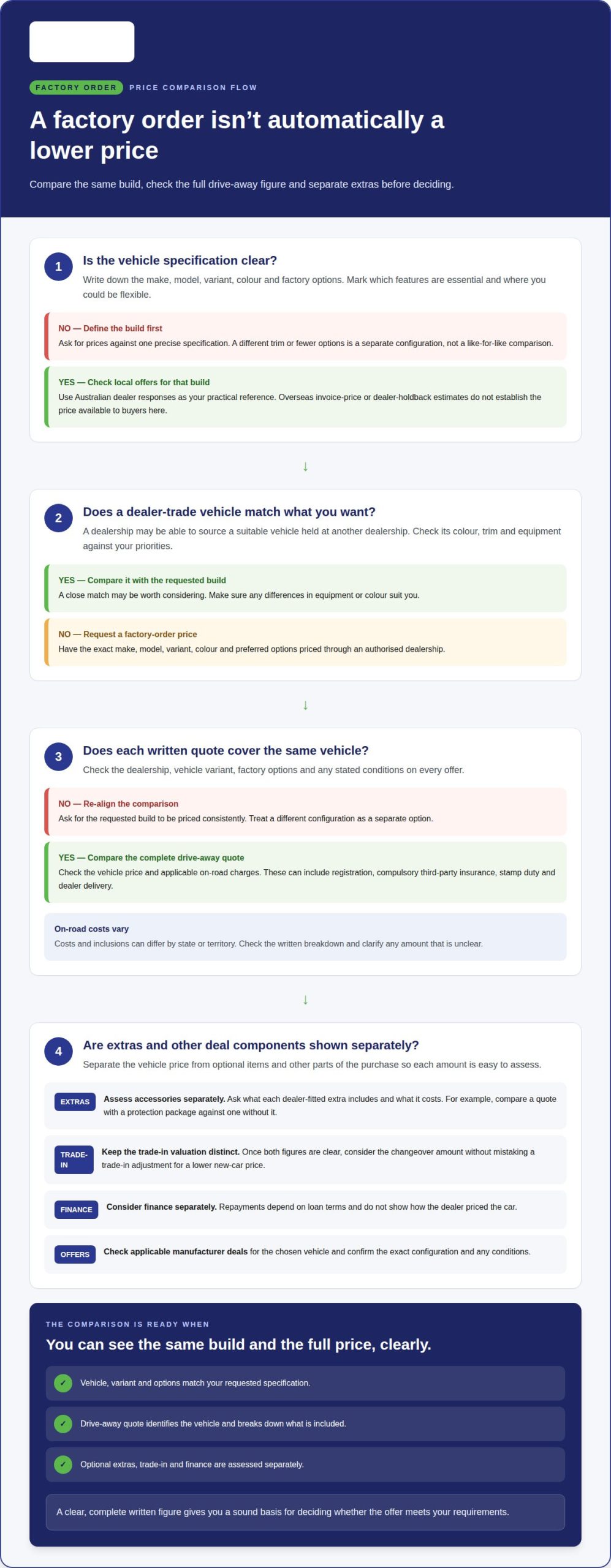
A car-buying service negotiates with dealerships on your behalf and compares the complete purchase cost. To get the best price on a factory order car, start with a precise specification and assess the total price, not just the monthly repayment.
-
Set a Target Vehicle Price
Give the service your preferred make, model, variant and factory options. It can invite dealers to tender for that specific build and use their responses to negotiate. Compare prices for the vehicle you want, not a different trim or one with fewer options.
Say which features are essential and where you’re flexible. That keeps dealer responses relevant while helping identify whether an alternative configuration changes the price. Keep negotiations focused on the vehicle and agreed specification, rather than letting a repayment figure define what the car should cost.
To get the best price on a factory order car, first ask for the agreed vehicle price to be clear, then consider finance separately. Repayments depend on loan terms, so they don’t show how the dealer priced the car.
-
Compare the Full Drive-Away Quote
Have the service assess each dealer’s full written quote, including the factory-order vehicle and applicable on-road charges. In Australia, these can include registration, compulsory third-party insurance, stamp duty and dealer delivery. Costs and inclusions vary by state or territory, so check the written breakdown.
The service can clarify which amounts relate to the vehicle, which are on-road costs and which are optional. This makes the amount payable easier to understand, without mistaking a repayment or headline vehicle price for the whole deal. Compare finance separately so its terms don’t obscure the price negotiated with the dealer.
Before deciding, check that the quote identifies your requested vehicle and states what’s included. If a cost or option is unclear, the service can seek clarification from the dealer and compare the revised terms. A complete written figure gives you a sound basis for deciding whether the offer meets your requirements.
Comparing Drive-Away Prices for a Factory Order
Use Australian dealer offers as your guide to local pricing, rather than overseas invoice-price or dealer-holdback estimates. Keep the vehicle specification consistent when comparing alternatives.
- Ask a car-buying service to seek local offers for your preferred make, model and variant. Australian pricing can vary by state or territory, location and vehicle specification. Overseas invoice-price estimates don’t establish an Australian dealer’s costs or the price available to buyers here. Use current local dealer responses as your practical reference.
- Record what each local offer covers: the dealership, vehicle variant, factory options and any stated conditions. If an offer is for a different build, treat it as a separate option, not a direct comparison. This helps the service identify whether a price difference reflects the vehicle or its configuration.
- Ask whether a dealership can source a suitable vehicle through a dealer trade. A vehicle at another dealership might match your preferred build or differ in colour, trim or equipment. Compare those details with your priorities. A close match may be worth considering, while unwanted accessories or missing features could make a factory order more suitable.
- If no suitable alternative is found, have the service arrange a factory-order request through an authorised dealership. Provide the exact make, model, variant, colour and preferred options. A clear specification helps dealers price the same requested build and reduces confusion between a factory order and an available vehicle with different equipment.
- Assess accessories separately from the factory configuration. Ask the service to identify each dealer-fitted extra, explain what it includes and show its cost separately. For example, compare a quote with a protection package against one without it. Decide whether the package suits your needs instead of treating it as an essential part of the vehicle price.
- Negotiate a trade-in separately while the new-car order is being priced. Yes, keeping the trade-in valuation distinct makes the new-car offer easier to assess. Once both figures are clear, consider the changeover amount. This keeps a trade-in adjustment from being mistaken for a lower price on the factory-ordered vehicle, and supports a clearer purchase decision.
To get the best price on a factory order car, focus on local offers, a precise build and separately assessed extras.
Benefits and Drawbacks of Factory Ordering
Australian factory-order delivery timing varies with the model, specification, production scheduling and transport, so no exact arrival period can be stated here. A dealer’s estimate may change: the NSW Government notes that unexpected stock or manufacturing issues can delay delivery. Before signing, focus on the written build, price, delivery terms and what happens if circumstances change.
- List the features that make a factory order worthwhile for you. A chosen colour, trim or option package may suit your needs better than an available vehicle with a different configuration. Write down your must-haves first, such as a particular seat trim or driver-assistance option, then note which preferences you could change.
This makes the trade-off clear. If a dealership can source a vehicle with your essential features, compare it with the requested build. A close match may suit you, while a difference in equipment or colour could matter more than getting the vehicle sooner.
- Ask the dealership to explain what its delivery estimate covers. It may refer to expected production, arrival at the dealership or readiness for handover, which are separate stages. Clarify how you’ll receive updates and what the dealer will tell you if the estimate changes.
Plan for uncertainty rather than treating a projected handover date as fixed. For example, avoid arranging travel or making a firm commitment about your current transport based only on an estimate. Unexpected stock or manufacturing issues can affect the schedule, as the NSW Government notes.
- Read the contract’s delivery and vehicle-description terms before signing. Check the make, model, variant, colour, interior and options against the agreed build. Look for terms covering substitutions, specification or price changes, and revised delivery estimates. Make sure agreed details appear in the written order, not only in a conversation.
Understand the contract’s process if the vehicle can’t be supplied as described or delivery timing changes significantly. Review the relevant clauses and ask for any unclear wording to be explained before you commit.
- Weigh the value of a tailored build against the flexibility you give up while waiting. A factory order can provide the combination you want, while an available vehicle may require compromises. Consider how the chosen features will serve your regular driving, comfort and intended ownership period.
Keep the signed specification and dealer updates together. If a change is proposed, compare it with the original order before agreeing. This record helps you assess whether the revised vehicle still meets your needs and whether the written terms reflect your decision.
Checking Applicable Offers and Confirming Vehicle Specifications
Offers can change with timing, model and eligibility, so compare them with your exact factory order. Check the offer’s terms and expiry date rather than assuming a particular time of year will bring a promotion.
-
Check Current Manufacturer Deals
Have the buying service check current manufacturer promotions with authorised dealerships and match each offer to your intended order. Confirm the eligible model, variant, purchase period, order or delivery conditions, and offer expiry date. A deal advertised for a particular vehicle or stock arrangement may not apply to a factory build.
Ask for eligible offers to be clearly shown in the dealer’s written pricing. Distinguish a manufacturer incentive from a dealer-negotiated price adjustment, and check whether conditions affect either amount. This helps you compare offers on the same basis without assuming an advertised promotion applies automatically.
-
Confirm the Vehicle Configuration
Give the service your preferred make, model, variant, exterior colour, interior trim and factory options. Include must-have equipment and acceptable alternatives. For example, if a particular colour is essential but a convenience package is optional, mark them separately so dealers price the right build.
Also provide your postcode and buying timeframe. Location can affect the relevant drive-away quote, while timing helps dealers assess the order request. Before accepting an offer, compare its written specification with your preferred configuration, including option names and package contents.
-
When Can a Car-Buying Service Check for Dealer Offers?
Ask the service to check offers when you’re ready to compare, and again if your purchase timing changes. Manufacturers may set their own campaign dates and conditions, so check the offer itself rather than relying on a particular date.
Where possible, compare quotes received during the same period, and record each offer’s expiry and eligibility. If one expires before you’re ready to order, have the service reassess the available terms instead of carrying an old promotion into a new quote.
Reservation Fees and Deposits
- Before paying a reservation fee, ask the dealership to state its purpose in writing. Confirm whether it holds a particular vehicle or records your factory-order request, and whether the amount will be applied to the purchase price. The payment’s label alone doesn’t explain what happens next.
Check who receives the money, how payment will be acknowledged and when it’s due. Keep the receipt with your order documents. If the fee will be credited towards the final price, ask for that to be stated in writing rather than relying on a verbal explanation.
- Read the deposit clause before transferring funds. Confirm the amount, payment deadline, recipient and whether the deposit is refundable. Check what the written terms say if you cancel, change the specification or the dealership can’t supply the ordered vehicle.
Look for any condition that could require further payment if you don’t proceed. The Australian Competition and Consumer Commission (ACCC) recorded one respondent’s report of a contract clause requiring payment of 10% of the contract price if they did not proceed. This is a reported contract clause, not a universal deposit rule.
- Match the payment terms to the specific vehicle order. Check that the contract identifies the make, model, variant, colour and options you agreed to, along with the total purchase price. If the deposit is intended to secure that exact build, confirm how the contract treats changes or substitutions.
Read the cancellation wording alongside the delivery terms. Identify any stated process, deadline or consequence if you withdraw, and how the dealership will communicate production or delivery changes. Keep any written explanation with your signed contract so you can refer to the agreed terms.
- Before authorising payment, compare the contract with the latest written quote and order specification. Make sure the reservation fee or deposit is recorded, its purpose is clear and the remaining payment arrangements are described. Query any difference between the quoted total and contract total before signing.
Keep the signed documents, payment receipt and dealership correspondence together. If a clause is unclear, ask for a plain-language explanation and written response before proceeding. This gives you a record of the agreed terms to refer to after an important purchase decision.
How Private Fleet Can Help With a Factory Order
Private Fleet can coordinate your factory-order purchase and dealer negotiations. Its national tender process invites dealers to price your exact vehicle specification. Private Fleet doesn’t hold its own vehicle inventory; the selected vehicle is sourced through a dealership.
Share your preferred make, model, variant, options, postcode and buying timeframe. These details define what dealers are pricing and make their offers easier to compare consistently. If you’re still choosing between configurations, a clear shortlist helps focus the tender on the features that matter most to you.
The service supports the purchase process, from seeking dealer offers through to negotiation and paperwork. That can be useful if you’d rather have someone coordinate dealer discussions than manage each conversation yourself. The new-car buying process also includes regular updates on delivery times.
- Factory-order pricing: Dealers receive your specified vehicle requirements, allowing their offers to be assessed against the same build. This helps distinguish differences in vehicle price, included options and other quoted costs.
- Order details: Negotiation and paperwork support help keep the agreed specification and purchase terms together as the order progresses. Review the final documents against the vehicle and terms you’ve agreed before signing.
- Trade-in assistance: If you’re replacing your current vehicle, trade-in support can help you consider that part of the purchase alongside the new-car offer. Keeping the trade-in figure distinct makes the new-car price easier to assess.
- Finance: Car finance is available as an additional consideration. Keep the vehicle’s drive-away price clear while reviewing finance terms, so repayments don’t obscure the cost of the car itself.
This approach suits buyers with a preferred vehicle or shortlist who want help coordinating dealer tenders, negotiations and paperwork. You remain involved in key decisions, including the specification and the terms you accept.
To discuss your preferred make and model, postcode and buying timeframe, get help buying your new car with Private Fleet, or call 1300 303 181.
Frequently Asked Questions
Why Order a Car From the Factory?
A factory order can suit you if available vehicles don’t match your preferred colour, trim or equipment. You choose the configuration before the dealership places the order, rather than selecting from vehicles already built. First, list your must-have features separately from preferences. Then weigh the closer match against the wait and reduced flexibility. If an available vehicle meets your needs, compare it with the ordered build before deciding.
What is a factory order car in Australia, and how does it differ from dealer stock?
A factory order is a new vehicle requested through a dealership to your chosen specification. Dealer stock is already built or allocated to the dealership, so its configuration is set. With a factory order, the requested build is central to the purchase; with stock, you decide whether an existing vehicle suits. In either case, confirm the exact vehicle details in the written order before committing.
How does a car-buying service assess the price of a factory-order car in Australia?
A service can assess a proposed price against current Australian dealer offers for the same vehicle and build. It considers the quote’s location, included on-road charges, options and any offer conditions. Overseas invoice-price or dealer-holdback assumptions aren’t a reliable substitute for local quotes. Record when each offer expires so an outdated figure isn’t mistaken for a current one.
How do manufacturer drive-away offers, finance deals and dealer discounts affect the total price?
Offers can change the price or terms, but eligibility and conditions matter. A drive-away promotion may include specified costs, while a finance offer depends on its lending terms. Compare the total vehicle price and finance costs separately, then consider the overall amount payable under the option you’re considering. Don’t treat a monthly repayment or headline discount as the full cost of the purchase.
How can a car-buying service compare written quotes for the same factory-order car across Australian dealers?
A service can line up quotes for the same make, model, variant, colour and options, then note differences in delivery charges, inclusions and expiry dates. For example, one quote may include an accessory package while another prices it separately. Separating those items makes comparisons clearer. Each quote should identify the dealership and vehicle being priced, not just give a broad model name.
What should buyers check about deposit and cancellation terms before a car-buying service places a new-car order?
Before proceeding, read the written terms for the deposit amount, payment recipient, refund conditions and any cancellation consequences. Check what applies if you change the specification, withdraw or the vehicle can’t be supplied as ordered. Don’t assume a deposit is refundable because it’s called a reservation payment. Keep the signed contract and payment receipt together, and make sure the agreed vehicle details appear in the order.
How can a car-buying service help compare extras or accessories on a factory-order car in Australia?
A service can separate factory options from dealership accessories and show how each affects the quoted total. For instance, compare a vehicle with an optional equipment package against the same build without it, then assess dealer-fitted accessories individually. This helps distinguish features you want from additions you may not need. Ask for each extra’s description and price to appear clearly in the written offer.