
A strong low offer is based on evidence, not guesswork. Knowing how to make a lowball offer on a car means comparing like-for-like new-car quotes, setting your maximum spend before negotiating and calmly explaining why your figure is reasonable.
It’s natural to want a sharp price without getting drawn into a tense back-and-forth. A clear offer gives the dealer something specific to respond to, while a firm walk-away limit keeps the decision on your terms.
This guide explains how to support your offer with comparable pricing, set a sensible limit and respond to inspection findings. You’ll also learn what to confirm in writing, including the agreed drive-away price and inclusions, so the final terms are clear before you commit.
Key Takeaways
- Compare current offers for the same new-car model, variant and location, and use dated evidence to support your counteroffer.
- Set your maximum spend using your budget and written drive-away quotes, then be prepared to walk away if the terms exceed it.
- Before signing, get the total price, inclusions, payment terms, conditions and deposit arrangements clearly recorded.
- Pause if you face pressure or unclear terms; take time to review the offer before deciding.
- Private Fleet can tender your chosen car across its national authorised-dealer network and manage the negotiation and paperwork.
Researching a new-car price before making an offer
To learn how to make a lowball offer on a car, compare current Australian offers for the same model, variant and location. A reasonable low offer is supported by dated evidence, not an arbitrary discount. Use written quotes to explain your counteroffer and keep each comparison tied to the exact vehicle you want.
-
Check condition and service history
Inspect the new car before accepting delivery. Record visible damage, missing equipment or any mismatch with the agreed specification. Check the vehicle identification and variant details on the paperwork against your order. Review the supplied documents and service schedule to understand the recommended maintenance plan. If you find a fault, raise it in writing and ask for a clear remedy before proceeding.
-
Use other enquiries as leverage
Compare written offers for the same new-car model and variant from dealerships serving your postcode. Keep each offer’s date, expiry, drive-away total, delivery assumptions and listed inclusions together. Multiple enquiries help show whether your counteroffer reflects a competing offer or simply a preferred figure. Present the strongest comparable evidence calmly, and don’t suggest another dealer has offered terms that aren’t in writing.
-
Gather comparable listings
Use current Australian new-car offers as your benchmark, matching the model, variant, paint or option packages, location and price basis. A headline price may omit charges or describe a different specification, so compare the complete drive-away total and note when each offer was issued. There’s no standard low offer that suits every dealer negotiation. Make your opening offer evidence-based, with room to consider a counteroffer without exceeding your planned limit.
-
Present evidence with your counteroffer
If you’re deciding how to make a lowball offer on a car, send a concise counteroffer that refers to the date and details of a comparable offer. State your proposed drive-away figure and explain any difference, such as a missing inclusion or delivery charge. Make your offer after gathering like-for-like evidence and before committing to terms. An unsupported figure can weaken your credibility or end the discussion.
For a new car, use dealer offers and documented delivery-inspection findings as evidence. Keep the quote, specification and written counteroffer together so you can check each change against the same terms.
Setting your budget and walk-away price
Set your walk-away price using your household budget and written drive-away quotes for the exact new-car variant. Negotiate politely: thank the dealer, explain your figure briefly and leave room for a clear response.
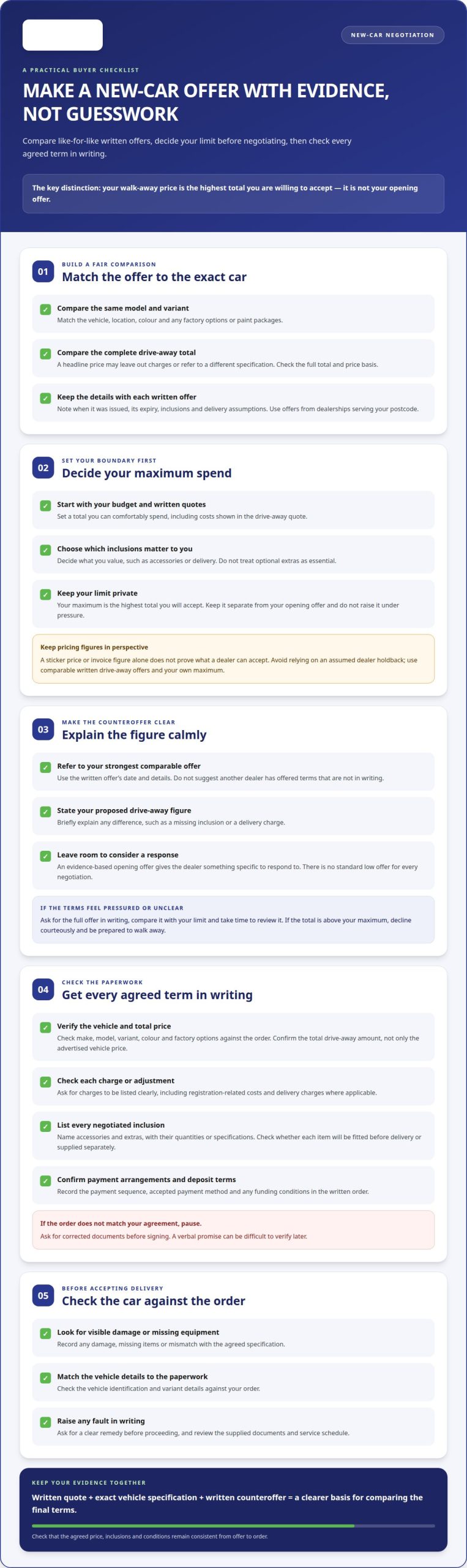
- Set your maximum before discussing a counteroffer. Start with the total amount you can comfortably spend on the vehicle, including the costs in the written drive-away quote. Decide which inclusions matter to you, such as accessories or delivery, and don’t treat optional extras as essential. Your walk-away price is the highest total you’re willing to accept, not your opening offer. Keep it private so a changing sales pitch doesn’t shift your limit.
- Use a firm written quote as your reference point. Compare quotes for the same model, variant and location, and check each quote’s date, expiry, inclusions and total drive-away amount. For example, if another written offer includes a different accessory package, separate that value from the vehicle price before comparing. A realistic limit comes from your finances and comparable new-car offers.
- Keep invoice, sticker and holdback figures in perspective. A sticker price is the advertised starting point, while an invoice figure may refer to the dealer’s vehicle cost. Neither figure alone proves what a particular dealer can accept for your chosen car. Avoid basing your offer on an assumed dealer holdback, which can vary and may not appear in your quote. Use written drive-away offers and your own maximum instead. This keeps the negotiation grounded in terms you can compare.
- Respond to pressure with a calm, specific answer. If a dealer says an offer is available only immediately, ask for the full terms in writing and compare them with your limit. You could say, “Thanks for explaining the offer. Based on my budget and this written quote, I’m comfortable proceeding at this drive-away figure.” This acknowledges the dealer without apologising for your position. If the price is still above your maximum, decline courteously and be ready to walk away rather than raise your limit under pressure.
Agreeing on payment, inclusions, conditions and deposits
Before signing, make sure the written order matches the offer you accepted. Check the vehicle, total drive-away price, inclusions, payment arrangements and deposit terms separately.
- Match the vehicle and total price to your agreement. Check the make, model, variant, colour and factory options against the order form. Confirm the total drive-away amount, not just the advertised vehicle price. Ask for every charge or adjustment to be listed clearly, including registration-related costs and delivery charges where applicable. If the paperwork shows a different amount from the negotiated figure, pause and ask for corrected documents before signing.
- Write down every inclusion you negotiated. List accessories, floor mats, window tint or other agreed extras by name, and check their quantities or specifications. If an item is described only as a “pack” or “accessory”, ask for its components to be listed in the order. Confirm whether each inclusion is fitted before delivery or supplied separately. Verbal promises can be difficult to verify later, so make sure the written agreement reflects the full package.
- Record the payment sequence and funding conditions. Confirm the amount due at each stage, the accepted payment method and when the balance must be paid. If finance is involved, note whether the purchase depends on finance approval and what happens if approval isn’t obtained. Don’t assume a monthly repayment figure represents the full vehicle price. Keep the drive-away total and any separate finance costs clear so you can assess the car purchase on its own terms.
- Read the deposit terms before transferring money. The order should show the deposit amount, when it is payable, how it will be credited against the balance and the conditions for cancellation or refund. Ask for unclear wording to be explained in writing. Don’t rely on an informal assurance about what happens if circumstances change. Keep the signed order and proof of payment together, and use the payment details in the agreed documents.
- Check conditions, changes and copies before signing. Review any conditions covering delivery, vehicle specification, trade-in arrangements or changes to the agreed price. Make sure blanks are completed or crossed out, and that both parties clearly record any amendments. Ask for a complete copy of the signed order and relevant attachments. If a revised document changes an inclusion, payment date or condition, compare it with the earlier version before accepting the change.
Recognising red flags and walking away
A new-car negotiation should leave you with clear terms and time to decide. A practical way to think about how to make a lowball offer on a car is to stay guided by evidence, stick to your budget and assess the written offer rather than the sales pressure around it.
- Pause when an offer depends on signing immediately. A claim that a price is available “right now” leaves little time to review the terms. Ask for the offer in writing, including its expiry, vehicle variant and drive-away total. If those details aren’t provided, don’t treat the verbal figure as a firm offer. Say you’ll review the written terms before deciding. A clear offer should still make sense after you leave the showroom.
- Compare every revised figure with the previous version. A low headline price can become less attractive if a later document adds accessories, delivery charges or other items you didn’t agree to. For example, if an updated order changes the total or removes an inclusion, ask what changed and why. Keep each version together, and don’t sign until the final amount and vehicle specification match your understanding. An unexplained change is a reason to pause and review.
- Separate the vehicle offer from extras you haven’t chosen. Ask for the car’s drive-away price separately from optional products or accessories. If declining an add-on appears to change the agreed price, request a written breakdown showing both figures. Don’t accept a package simply because it’s described as necessary to secure the vehicle. Decide whether each extra suits your needs and budget. If the terms aren’t clear, pause before agreeing.
- Keep your response calm when pressure shifts your limit. A salesperson may ask you to raise your offer, change variants or accept a new condition. Return to your maximum and the evidence behind your offer. When considering how to make a lowball offer on a car, state your position without criticising the dealer: “That figure is above my limit, so I’ll leave my offer there.” Don’t disclose a higher budget just to keep the conversation moving.
- Walk away if key terms remain unclear. If the final price, inclusions, delivery conditions or deposit wording differ from your understanding, don’t sign while waiting for answers. Take the paperwork away to review, or end the negotiation if the dealer won’t clarify it. Leaving an unclear offer lets you consider another proposal without committing. A deal should fit your budget and the terms you’re prepared to accept. Be prepared to walk away if the offer does not suit you.
How Private Fleet can help with a new-car offer
Private Fleet can help turn your preferred new car and price expectations into a clear, supported offer. Its independent car buying service tenders your chosen vehicle to dealers across Australia, inviting them to compete for your business. You don’t need to negotiate separately with each dealership.
Share the make, model, variant and any options you’re considering, along with your postcode and buying timeframe. These details help identify the specific vehicle you want and give the tender a clear brief. If you’re deciding between variants, explain what matters most, such as cabin comfort, visibility, technology or space. A precise brief keeps the focus on a car that suits your needs.
Private Fleet manages the negotiation and purchase paperwork with the dealerships involved. You have support to discuss the offer, compare its terms and understand what is included. You remain in control of whether an offer suits your budget and requirements. The process is built around your chosen new car, not a vehicle held in Private Fleet inventory.
Consider the whole purchase, not just the headline figure. Compare the exact model and variant, drive-away total, inclusions, payment arrangements and any conditions. If you have a trade-in, Private Fleet’s Trade-In Assistance can be considered alongside your new-car purchase. Car Finance is also available if you want finance support as part of your decision.
Once you proceed, Private Fleet provides regular updates on delivery times. This helps you stay informed as the order progresses without relying on an assumed delivery date. You can also see how the new-car buying process works, from sharing your requirements through to arranging the purchase.
Private Fleet may suit you if you want help presenting a considered offer, prefer not to manage separate dealer negotiations or need support coordinating the paperwork. It can also help if you have a shortlist but need to settle on the exact variant before comparing offers. You choose the vehicle and terms that work for you, while Private Fleet handles the negotiation on your behalf.
To discuss your preferred make and model, postcode and buying timeframe, contact Private Fleet or call 1300 303 181.
Frequently Asked Questions
How do you lock in the agreed price?
Make sure the signed order records the agreed vehicle, total price and every condition. Before paying the balance, compare the final invoice with that order, including the variant and agreed accessories. If a later document changes an item, ask for a corrected copy before proceeding. Keep the signed paperwork and payment records together so you can refer to the same terms throughout the purchase.
How do you read comparable ads properly?
Compare offers for the same model and variant, and check whether each figure is a drive-away price or an advertised starting price. Note the location, offer date, expiry and included accessories. An offer for a different variant or an expired promotion isn’t a reliable match. For example, a lower advertised figure may exclude an inclusion shown in another dealer’s written offer, so compare the complete terms.
When should you drop the price, and how?
Revise your offer only when new information changes the comparison, such as a competing written quote or a different vehicle specification. State the new figure and your reason in one calm message, then give the other party time to respond. Avoid making several small reductions without fresh evidence. That can blur your position and make it harder to track which price and inclusions you’re discussing.
How should you make an offer when you’re still choosing a new-car variant?
Choose the model and variant before making a firm offer so the price relates to a clearly defined vehicle. If you’re comparing two variants, treat them as separate options and assess each offer against its own specification and inclusions. This avoids mixing different equipment levels in one figure. Once you’ve chosen, state the exact variant and price basis in your offer instead of leaving the dealer to guess what you mean.
How do you research a car’s market value in Australia before making an offer?
For a new car, build your comparison from current Australian offers for the exact model and variant. Record the date, location, drive-away total and inclusions, then separate offers that use a different specification or price basis. Check whether a promotion has an expiry and whether its terms apply to your purchase. This gives you a practical reference for judging the offer without relying on an outdated advertised price.
What is a reasonable low offer when buying a new car?
There’s no standard reasonable low offer for a new car. Compare current written offers for the same model and variant, including the drive-away price, specification and inclusions, then make an offer based on that comparison.