
What if buying a new car took fewer separate conversations and less time spent keeping track of decisions? A coordinated process can help: saving time on the car purchasing process comes from bringing key tasks together, not rushing into a choice. Comparing written offers and keeping your requirements clear can make the next step easier to see.
It’s reasonable to want a clear picture of your options before committing to a major purchase. The right vehicle still needs to suit your preferences, budget and plans, and saving time on the car purchasing process shouldn’t mean overlooking important details. An organised purchase helps you focus on those decisions without managing every moving part yourself.
This article explains how to compare written dealership offers, how sourcing and paperwork fit together, and what can affect the time from choosing a vehicle to delivery. It also shows how a car buying service can coordinate the purchase, including trade-in assistance and finance. You’ll find practical ways to compare your options and decide what support suits your new-car purchase.
Key Takeaways
- See how a tender invites authorised dealerships to compete for your chosen new car, and what to compare in their written offers.
- Understand how coordinating vehicle sourcing, paperwork and finance can keep the purchase process organised.
- Learn how one point of coordination can reduce the time you spend managing dealer offers and negotiations yourself.
- Find out which purchase stages affect timing, and why vehicle availability can influence delivery.
- Discover how Private Fleet can assist with negotiation, paperwork, trade-ins and finance while providing regular delivery updates.
How Private Fleet compares written offers for your chosen new car
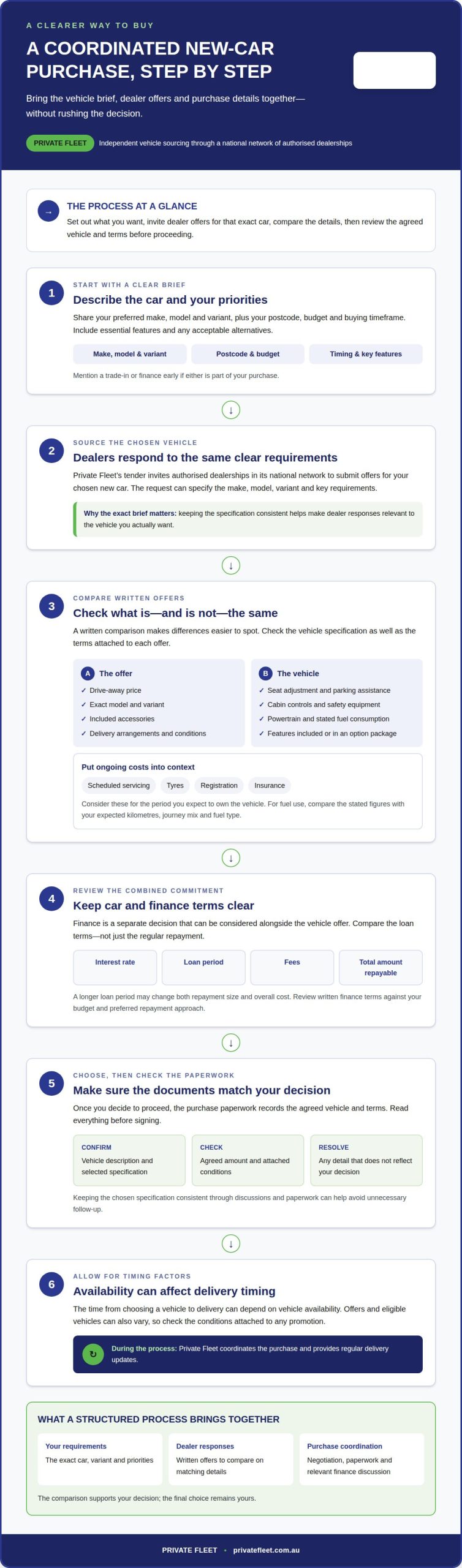
Private Fleet’s tender invites authorised dealerships in its national network to submit offers for the new car you’ve chosen. The request can specify the make, model, variant and key requirements, so responses relate to the vehicle you actually want. A written comparison helps separate differences in the offer from differences in the car. It also gives you a clear record to refer to while considering your options.
Start by comparing the core offer details: drive-away price, exact variant, included accessories, delivery arrangements and conditions. If one offer includes an accessory and another doesn’t, note the difference before comparing prices. The same applies when a quote refers to a different specification. Matching the details prevents you from treating offers as equivalent when they aren’t.
Variant names can hide meaningful differences in equipment. Compare features such as seat adjustment, parking assistance, cabin controls and safety equipment. Consider which matter for your regular driving and whether they’re included or part of an option package. For example, if easy parking is a priority, weigh the relevant assistance features against the variant’s overall offer.
Fuel use is another point to consider for the exact powertrain. Compare the stated consumption figures, then account for how your driving may differ from the conditions used to report them. A car used mostly for short urban trips may suit a different pattern from one used for regular regional travel. Your expected kilometres, journey mix and fuel type help put the figures into practical context.
Ownership costs extend beyond fuel. Consider scheduled servicing, tyres, registration and insurance over the period you expect to own the vehicle. Comparing the same cost categories for each option makes the overall picture easier to assess. It can also help distinguish variants that seem similarly priced but differ in features or ongoing requirements.
Consider finance alongside the vehicle offer, without letting it dominate the decision. If you’re comparing car loans, look at the interest rate, loan period, fees and total amount repayable, not just the regular repayment. A longer loan period, for example, may change both repayment size and overall cost. Reviewing written finance terms alongside the car offer helps you understand the combined commitment.
Where finance options are part of your decision, compare their terms against your budget and preferred repayment approach. A headline rate alone won’t show every condition that affects the loan. Keeping the vehicle specification and finance terms distinct makes each easier to assess. A well-organised new-car buying process brings those details into the same decision without assuming one offer or loan is right for every buyer.
A written comparison is a practical way to review the exact car, its features and the terms attached to each offer. You can identify differences, consider likely running costs and decide which option suits your priorities. Private Fleet’s tender provides a structured basis for your decision, while the final choice remains yours.
How a car buying service coordinates sourcing, paperwork and finance
Coordination starts with a clear brief for the new car. At the initial discussion, provide your preferred make, model and variant, postcode, budget and buying timeframe. Add essential features and acceptable alternatives, if you have them. If you’re considering finance or a trade-in, mention it early so these can be considered alongside the vehicle purchase.
For an initial request in Australia, provide your vehicle preference, postcode, budget and timing. If finance is relevant, share your preferred repayment approach and any existing pre-approval terms. Provide supporting documents when required for the finance application. Trade-in details also help Private Fleet coordinate that part of the purchase.
Once your request is clear, Private Fleet coordinates sourcing through its dealer network. A focused brief keeps the search aligned with what matters to you, whether that’s a particular variant, colour or feature. If you’re still deciding between models, state your preferred option and alternatives. This gives the sourcing process direction instead of treating every available vehicle as equally suitable.
When dealer responses arrive, Private Fleet brings the purchase details together and coordinates negotiation. You can review the offer and decide whether it meets your requirements. Keep the chosen specification clear throughout discussions, since changes to the model or variant can affect the offer and the paperwork that follows.
Once you decide to proceed, the purchase paperwork records the agreed vehicle and terms. Private Fleet coordinates the order documents, helping keep the selected specification consistent through the purchase. Read everything before signing, including the vehicle description, agreed amount and conditions. If a detail doesn’t reflect your decision, resolve it before the order progresses to avoid unnecessary follow-up.
Finance supports the vehicle purchase but remains a separate decision. If you have pre-approval, its terms can help frame your car budget. Private Fleet offers finance assistance and can coordinate the relevant discussion alongside sourcing and paperwork. Consider the repayment structure, loan period, fees and total amount repayable together, rather than relying on a single repayment figure.
Timing can affect the offers available. Dealerships may run end-of-financial-year promotions in June, but conditions and eligible vehicles vary. A coordinated purchase helps distinguish an offer for your preferred model from one for a different specification. For an electric vehicle, consider finance terms against the selected vehicle and your budget, without letting finance drive your car choice.
After an order is placed, regular delivery updates help you follow its progress. They show how sourcing, paperwork and delivery arrangements are moving forward. Timing depends on vehicle availability and other order factors, so updates don’t promise a delivery date. Having one coordinated process makes it easier to see what’s completed and what remains before handover.
How the tender process can save time when buying a new car
A tender can gather offers for your chosen new car without you managing separate dealership conversations. You provide the make, model, variant and buying timeframe; the service shares those details with authorised dealerships in its network. Dealers responding to a vehicle tender are typically given around 24 hours to submit offers. This structure can make saving time on car purchasing process follow-ups easier by bringing responses together.
In Australia, online car-buying options include dealer-run online sales and independent car buying agencies. They differ in how they source vehicles and handle negotiations. A tender-based agency invites dealerships to compete for your exact specification, while an online sales channel may focus on one seller’s offer. Compare how each approach handles the purchase, what the written offer includes and who coordinates the next steps.
A tender can reduce repeated work. Instead of contacting dealerships one by one, you can have offers assembled around the same vehicle request. A useful comparison brings together the drive-away price, variant, included features, accessories and written conditions. If one response covers a different trim or omits an accessory, you can spot the difference before comparing prices.
Negotiation is more focused when Private Fleet handles discussions with dealerships. Its tender invites dealers to compete for your business, and the team can clarify differences between offers for the same requested vehicle. The process doesn’t guarantee a particular price or result. Instead, it provides comparable information to help you decide whether an offer suits your budget and priorities.
Time savings often come from reducing repeated tasks: explaining your requirements, arranging conversations, following up and organising responses. For example, if you’re comparing two variants, Private Fleet can keep your required features consistent in dealer discussions. You can then focus on choosing the written offer that meets your needs, rather than reconciling separate conversations yourself.
Compare price and practicality together. A lower drive-away amount may relate to a different variant, while an included feature could matter more for your regular journeys. Base the comparison on your chosen specification, then weigh each offer against fuel use, servicing and other ownership costs. This helps you assess the whole purchase, not just any upfront saving.
The speed of the process still depends on your vehicle request and dealer responses. A specific variant or feature can narrow the relevant offers, while a broader shortlist may add options to consider. Including acceptable alternatives in your brief can keep the tender focused. This makes saving time on car purchasing process comparisons more practical, without turning the search into an open-ended exercise.
The tender’s practical benefit is less comparison administration and a clearer view of competing offers. With the same new-car requirements put to authorised dealerships, you can review written responses side by side and focus on your decision. You remain in control of whether an offer suits your needs.
How long does the new-car buying process take in Australia?
There’s no single timeframe for buying a new car in Australia. The process involves vehicle selection, offer review, order paperwork and delivery, but timing depends on the exact model, variant and availability. A vehicle already available through a dealership may follow a different path from one that needs to be ordered or sourced. Understanding these stages helps you see what may affect progress.
The first stage is settling on the right specification. A shortlist with one preferred model and acceptable alternatives gives sourcing a clear direction. Choosing between two variants, for example, affects which offers are relevant. Changes after offers arrive can mean revisiting comparisons and discussions, adding another step before you’re ready to decide.
Next, dealerships respond to the vehicle request and you review the offers. The time involved depends on how quickly responses arrive and whether their details match the car you requested. Once you select an offer, the purchase paperwork records the agreed vehicle and terms. Review those details carefully to prevent avoidable corrections before the order progresses.
Finance can add a stage if it’s part of your purchase. The process depends on the finance option, the information required and the time taken to complete the arrangements. Keeping your vehicle choice and budget clear helps maintain momentum. If you’re also arranging a trade-in, its valuation and the purchase paperwork may need to be coordinated.
After the order is placed, vehicle availability becomes a key factor in delivery timing. The exact variant, colour and configuration can affect what a dealership can supply and when. Order progress and preparation before handover can also matter. Treat a delivery estimate as an estimate, not a guaranteed date, and allow flexibility when planning around your new car.
Regular delivery updates help you follow the order’s progress. They can explain whether the vehicle is still being sourced, whether paperwork needs attention or whether delivery arrangements are moving forward. If an update changes the expected timing, you can plan around the latest information instead of relying on an early estimate.
Some stages can overlap. Finance arrangements and order paperwork may progress alongside sourcing, while delivery planning follows the vehicle’s availability. Clear decisions about the model, variant and essential features can reduce repeated discussions. Late changes, such as switching to a different configuration, may affect both the offer and the order timeline.
To keep the process moving, have your preferred vehicle, postcode, budget and buying timeframe ready from the outset. Respond promptly when a decision or document is needed to avoid pauses. For saving time on car purchasing process steps, keep those details consistent from your initial request through to the order.
Even with an organised process, delivery timing varies with the vehicle and order circumstances. Regular updates provide visibility but don’t promise a specific delivery date. Keeping your plans flexible is a sensible part of saving time on car purchasing process arrangements, particularly when your chosen specification affects availability.
How Private Fleet can help with your new-car purchase
Private Fleet is an independent car buying agency that coordinates new-car purchases through a national network of authorised dealerships. Its tender puts your chosen vehicle to multiple dealers, bringing their responses together while Private Fleet manages negotiation and purchase paperwork. This can help if contacting dealerships, following up and comparing offers would take time away from other priorities.
Start with a clear brief: preferred make and model, variant, postcode, budget and buying timeframe. Include essential features, acceptable alternatives and any preferences that affect your choice. For example, if you’re comparing two variants, identifying the features that matter most helps keep the request focused. Private Fleet can then tender the vehicle you want, rather than searching for unrelated options.
As dealership offers come in, Private Fleet can clarify what each covers and coordinate negotiation. You can review the written terms and decide which offer fits your needs. The tender doesn’t guarantee a particular price or outcome; it provides a structured way to seek offers for your chosen car and consider them together.
Purchase paperwork can involve several details. Private Fleet coordinates the paperwork, helping keep the selected vehicle and agreed terms aligned as the order progresses. You remain the decision-maker and can review the documents and raise questions about the car or conditions before moving ahead.
If you have a car to trade in, Private Fleet’s Trade-In Assistance can coordinate it alongside your new-car purchase. Keeping both parts connected makes it easier to understand how the trade-in fits into your overall decision. Finance assistance is also available, so your vehicle choice stays central while you consider how to fund it.
After an order is placed, regular delivery updates help you follow its progress. Timing depends on vehicle availability and other order factors, so updates provide information without promising a delivery date. This is useful if you’re planning around your current vehicle, a change in routine or a particular buying timeframe.
Private Fleet’s new-car buying service is suited to buyers who want help coordinating dealer offers, negotiation and paperwork, while keeping control of the final choice. It can also be useful when you want trade-in or finance support alongside the purchase, rather than managing each conversation separately.
To discuss your preferred make or model, postcode and buying timeframe, get help buying your new car with Private Fleet, or call 1300 303 181.
Frequently Asked Questions
Can a car buying service negotiate a better car price?
Private Fleet negotiates with dealerships on your behalf, but a lower price isn’t guaranteed. Its tender invites dealers to compete for your specified new car, giving you written offers to consider. The value is a more organised comparison and negotiation process. You can assess whether an offer matches your preferred variant and included features, rather than judging it by the headline price alone.
What should I compare when choosing between new-car offers?
Compare the same make, model and variant, then check each written offer for its drive-away price, included features, accessories and conditions. Confirm that the offers cover the same car and terms before deciding. This makes it easier to identify meaningful differences and choose the option that suits your needs.
How does a car buying service save money in Australia?
A service can help you compare offers and consider the overall cost of buying and owning a new car. Look beyond the purchase amount to fuel, servicing, insurance and finance charges. A tender makes competing dealer offers easier to compare, but doesn’t guarantee a particular price or saving. The benefit is clearer information to help you decide which option fits your budget.
What are the fastest ways to buy a car in Australia?
Keep the process focused: settle on your preferred model and variant, identify essential features, and decide which alternatives you’d consider. A clear brief helps avoid restarting comparisons when requirements change. Respond promptly to requests for decisions or paperwork to keep the purchase moving. Vehicle availability and order arrangements affect delivery timing, so an organised process can’t ensure a specific handover date.
How can a car buying service compare car prices and assess market value quickly in Australia?
A tender can seek written offers for the same make, model and variant, then compare their drive-away prices and included items. This like-for-like approach helps distinguish a genuine difference in the offer from one caused by a different specification or accessory. Two prices aren’t directly comparable, for example, if one includes an option the other excludes. The comparison clarifies available offers, rather than guaranteeing a market-wide valuation.
How can a car buying service help arrange car finance and pre-approval before choosing a car?
Private Fleet offers finance assistance as part of the purchase, helping you consider funding alongside your vehicle choice. For a useful discussion, have your budget and preferred repayment approach in mind. Pre-approval depends on the finance process and the relevant lender’s assessment, so don’t treat it as a confirmed car budget until the terms are clear. Keep the car purchase as the main decision.
What are the risks of rushing a car purchase, and how can I avoid scams or hidden costs?
Rushing can make it easier to miss differences between variants, optional extras, written conditions and finance charges. Before agreeing, read the offer and purchase documents together, and make sure they describe the same car and agreed terms. Private Fleet coordinates new-car purchases through authorised dealerships, helping keep those details together. Take time to understand each charge and condition before deciding.