
Set a comfortable total budget before comparing new cars, and assess each option by its drive-away price, model and variant. Finance pre-approval may help you understand your borrowing range, but it is not a final loan offer or a measure of whether a particular car suits your needs.
A clear spending limit makes it easier to compare new cars. Check that each drive-away quote covers the same model and variant, then consider whether the car’s features and likely running costs fit your budget. Finance terms can be a supporting consideration when deciding what you can afford.
This guide explains how to compare new-car prices and variants, keep your purchase within budget, and consider finance without losing sight of the car-buying decision. You’ll also learn why conditional approval does not guarantee final approval, so you can plan your next step with a clearer picture.
Key Takeaways
- Set your total new-car budget first, then compare models and variants that meet your needs.
- Compare each car’s drive-away price, included features, warranty and servicing requirements before choosing.
- If you plan to use finance, pre-approval can help you understand your budget; confirm the final terms before proceeding.
- Consider whether you’d prefer to negotiate directly with a dealer or have an independent buying service invite dealers to compete for your business.
- Private Fleet can source your chosen new car through a tender process involving its national network of authorised dealerships, with trade-in and finance assistance available as part of the purchase journey.
Set a realistic budget for your new car
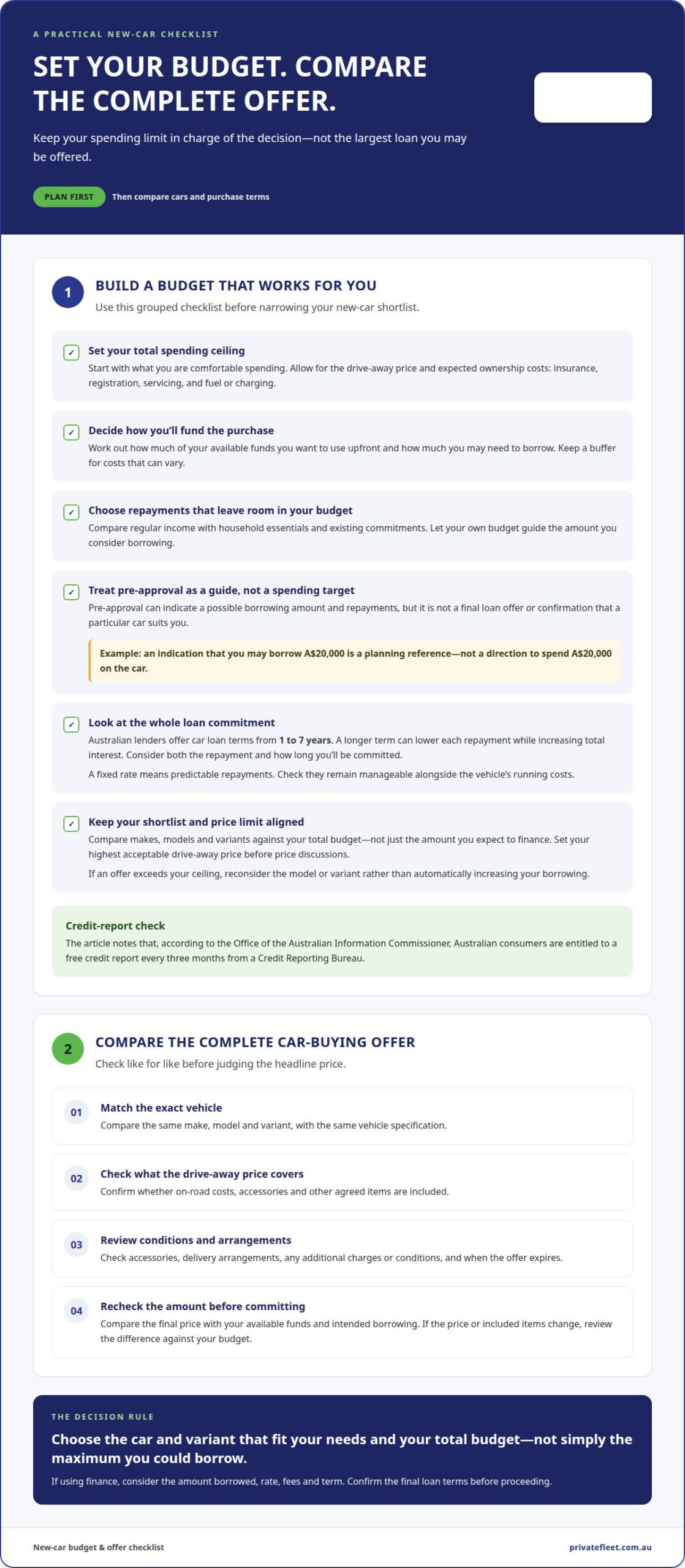
Start with the amount you can comfortably spend, not the largest loan a lender may indicate. Pre-approval can help you estimate your borrowing capacity, interest rate and repayments, then shape a practical shortlist. Use these steps to keep the new vehicle, loan term and ongoing costs within a budget that suits your income.
- Set your total spending limit before applying. Decide how much you’re prepared to spend on a new car. Include the drive-away price and expected ownership costs, such as insurance, registration, servicing and fuel or charging. These costs affect what you can comfortably afford, even if they are not part of the loan.
Then decide how much of your available funds you want to use upfront and how much you may need to borrow. Keep a buffer for costs that vary with the vehicle and your circumstances. This sets a firm ceiling before you compare models, rather than letting a lender’s indicative maximum define your spending limit.
- Work backwards from repayments that fit your income. Compare your regular income with essential household expenses and existing commitments. Choose a repayment amount that leaves room for those costs, rather than stretching your budget to qualify for a larger loan. Pre-approval can indicate possible repayments, but your own budget should guide the loan amount you consider.
For example, an indication that you may borrow A$20,000 is a planning reference, not an instruction to spend A$20,000 on the vehicle. The drive-away price and your contribution determine the amount you need to finance. Keep the distinction clear: borrowing capacity describes a potential loan, while affordability depends on your full budget.
- Use the loan term to test affordability, not hide the cost. Australian lenders offer car loan terms from 1 to 7 years. A longer term can reduce each repayment while increasing the total interest paid. Compare the repayment amount with the total interest and the time you’ll remain committed to the loan.
A fixed-rate loan gives you predictable repayments, which can help with household budgeting. Include the repayment in your regular spending plan and consider whether it remains manageable alongside vehicle running costs. Do not choose a term based only on a lower repayment; consider how the term affects the overall cost of borrowing.
- Check what shapes the pre-approval indication. Lenders use the details in your application to assess an indicative maximum borrowing amount. These may include your income, existing credit commitments and supporting documents. Provide accurate details about your payslips, credit cards and other loans so the estimate reflects your current finances.
Your credit history can also matter. According to the Office of the Australian Information Commissioner, Australian consumers are entitled to a free credit report every three months from a Credit Reporting Bureau. Reviewing your report can help you understand the credit information lenders may consider before you apply.
- Keep your shortlist inside your own ceiling. Use the pre-approved amount as one guide when deciding which makes, models and variants to research. Compare drive-away prices with your total budget, not just the amount you expect to finance. A higher-priced vehicle may require a larger upfront contribution or borrowing beyond the repayments you planned.
This is a practical benefit of car loan pre-approval in Australia: it can narrow your search before you spend time comparing vehicles outside your intended range. Treat the amount as a guide for research, then assess each option against your actual spending limit and ownership costs.
- Set a negotiation limit before speaking with a seller. Decide the highest drive-away price you’re willing to consider, based on your budget and planned loan amount. Ask for the best bottom-line drive-away price so you can compare the complete purchase cost, rather than focusing on a repayment figure alone.
A pre-approval amount can help you stick to that limit during price discussions. If an offer exceeds your ceiling, revisit the model or variant instead of automatically increasing your borrowing. Keeping your limit clear connects your finance planning with your vehicle choice and protects the budget you set before shopping.
Compare the complete car-buying offer
Compare the vehicle’s drive-away price first, then check what the purchase offer includes and whether its terms suit your needs.
-
Check what the drive-away price includes
Compare each offer for the same make, model and variant. Check whether the drive-away price includes on-road costs, accessories and any other agreed items. Confirm the offer’s expiry and any conditions before relying on it for your new-car purchase.
-
Compare like-for-like offers
Make sure each offer is for the same vehicle specification and includes the same items. Check for differences in accessories, delivery arrangements and any conditions attached to the offer. This helps you assess the complete purchase terms, not just the headline price.
- Match the final price to your budget. Compare the new vehicle’s drive-away price with your available funds and intended borrowing amount. A borrowing limit is not a target spending figure. If the agreed price, accessories or other purchase costs change the amount required, review the difference before committing to the purchase.
If you use finance, the amount borrowed, rate, fees and term affect your repayments and total interest. Consider only the amount needed for the purchase and check that the repayments fit your budget.
- Compare the full purchase cost. Look beyond the headline price. Check the drive-away price, included items and any additional charges or conditions. If you are considering finance, compare the interest rate, fees, repayment term and any balloon payment as supporting parts of the overall purchase decision.
For example, a lower advertised price may not represent the same offer if accessories or other purchase terms differ. Compare like with like by checking the same vehicle specification and included items for each offer.
- Check the offer conditions. Confirm how long the offer is valid, which vehicle it applies to and whether any conditions affect the price or included items. If you are considering finance, check that it suits your circumstances and review its terms separately from the vehicle offer.
Do not rely on an offer that has expired or assume its terms are guaranteed. Ask for clarification about any condition that could affect the final price or purchase.
- Compare how you’ll arrange the vehicle purchase. With a dealer, you can discuss the vehicle and purchase terms as part of the same buying process. Assess the car’s drive-away price separately from any finance offer, and compare the vehicle terms rather than judging by monthly repayments alone.
An independent car-buying service takes a different approach: it can invite dealers in its network to compete for your specified vehicle, while you arrange finance separately or consider an available finance option. This can help separate negotiating the vehicle price from choosing a lender. Either way, review the full purchase terms.
- Check the vehicle and purchase details together. Confirm that each offer covers the exact vehicle you’re buying, including its make, model and variant. Check which items are included and when the vehicle is expected to be available, without treating an estimate as a guaranteed delivery date.
Before signing, confirm the final drive-away price, included items and any conditions. If any detail differs from the offer you compared, pause and resolve it before committing. This final check keeps the vehicle decision and purchase terms aligned.
How Private Fleet can help with your new-car purchase
Private Fleet can help turn your new-car plans into a clear buying brief and manage the steps involved in pursuing the vehicle you want. Its independent service works with a national network of authorised dealerships. You choose the car and set your priorities; Private Fleet coordinates the buying process around your requirements.
This can be useful if you have a shortlist but want help narrowing down the right model or variant, arranging a test drive, or progressing the purchase. The service is not a vehicle showroom or a source of in-house stock. It connects your requirements with dealership offers and supports the steps from selection through to paperwork and updates.
Start with the car that suits your needs
Give Private Fleet a clear picture of what you want to drive. You might have a specific make, model and variant in mind, or a shortlist of options to compare. Mention the features that matter most, such as cabin space, ease of parking, comfort on longer trips or controls you prefer to use every day.
It also helps to share your preferred buying timeframe and postcode, along with any non-negotiable requirements. Those details give the team a useful starting point for discussing suitable options and shaping the vehicle request. If you haven’t settled on a variant, explain what you’ll use the car for, so the discussion can focus on choices relevant to your driving routine.
The process can include help arranging a test drive, giving you a chance to experience your shortlisted vehicle before settling on its exact specification. A drive can help you assess details that are difficult to judge from a list, including seating position, visibility and how the cabin feels in everyday use. You remain in control of the final vehicle choice.
Progress the purchase through a dealer tender
Once your requirements are clear, Private Fleet can put your chosen car to its dealer network through a tender process. Dealerships are invited to compete for your business. Keeping the request focused on the model and variant you want makes it easier to compare offers on a like-for-like basis, rather than comparing cars with different specifications.
As offers come together, consider the full vehicle purchase terms, not just one headline figure. Confirm that the variant and requested equipment match your brief, and consider how the offer fits your budget. Private Fleet supports negotiation and handles purchase paperwork, helping organise the steps from choosing a car to placing an order.
You can also discuss questions that arise as the purchase progresses, such as what information is needed to proceed or how the order process is moving. The new-car buying process provides more detail on how the steps fit together. Private Fleet also provides regular updates on delivery times, so you can stay informed as the order progresses without relying on assumptions about a specific date.
Consider a trade-in and keep finance secondary
If you have a vehicle to trade in, Private Fleet can provide trade-in assistance alongside your new-car purchase. Consider the trade-in separately as part of your overall plan, then work out how it affects the funds you expect to contribute towards the new vehicle. Keeping the figures distinct makes it easier to see what each part contributes.
Finance can be considered as part of the broader purchase. If you’re arranging a loan, compare its terms and costs with your priorities before deciding how to proceed.
Private Fleet supports your new-car purchase, while you make the decisions. You choose the vehicle, decide which offer suits your needs and determine how to proceed. The service can coordinate sourcing, negotiation and paperwork, with trade-in assistance available to support your plans.
If you’re ready to talk through your preferred make or model, postcode and buying timeframe, contact Private Fleet or call 1300 303 181.
Take your next step with a clear plan
Consider how your needs may change during the time you plan to keep your next car. A shortlist based on comfort, everyday use and the features you value can help you choose a vehicle that suits you beyond collection day.
Compare your shortlisted cars and consider which model and features best suit your priorities. When you’re ready, take the next step towards buying the new car that feels right for you.
When you’re ready to talk through your plans, call 1300 303 181. A thoughtful next step can bring your new-car plans into focus.
Frequently Asked Questions
What is car loan pre-approval in Australia?
It is a lender’s initial, conditional indication of the borrowing amount and terms it may offer. Use it to plan a vehicle shortlist, not as cash available to spend. For example, when comparing two variants, consider each drive-away price against your budget and likely loan amount. The lender’s written offer sets out its conditions and expiry, so read them carefully.
Do pre-approved loans affect your credit score?
It depends on whether the lender makes a soft or hard credit enquiry. A soft enquiry generally does not affect your score; a hard enquiry can temporarily affect your credit rating. Before starting an application, ask which type will be used and when. This helps you understand what may happen to your credit file as you explore finance.
Can I get pre-approval before choosing a car?
Yes. Applying before choosing a particular vehicle can help you understand a potential borrowing limit while comparing new-car options. Use that indication to decide which models and variants are worth researching, then provide the selected vehicle’s details during the lender’s later assessment. Keep notes on the cars you’re considering, including variant and drive-away price, to see which fits your plan.
How do car loans work?
A lender advances an agreed amount for the vehicle purchase, which you repay with interest under the loan contract. The agreement sets out the repayment schedule and any fees. Some loans may include a balloon payment, leaving a larger final amount due at the end of the term. Compare the total payable and final repayment structure, not just the regular instalment.
How long do pre-approvals last?
A car loan pre-approval offer is usually valid for 30-90 days. Find the expiry date in the lender’s written offer and use it to plan your purchase timing. If your vehicle search takes longer, ask the lender about re-approval before relying on the old offer. A fresh assessment may take account of your current financial details and the car you now intend to buy.
How much can I borrow for a car loan?
Car loans in Australia usually range from A$5,000 to A$100,000, while some lenders offer higher amounts. The figure available to you depends on the lender’s assessment and the purchase details. Work out the amount you need after accounting for your contribution, then consider whether the repayments and total loan cost suit your budget. An indicative maximum is not a recommended car-buying limit.
How do I apply?
Start by choosing a lender and completing its application with accurate financial details. Have relevant proof of income and identification ready, and list existing credit commitments consistently. Before submitting, check for errors and understand whether the lender will make a soft or hard credit enquiry. Keep a copy of the application and the lender’s response so you can refer to the conditions later.
What happens after a pre-approval?
Once you’ve chosen a vehicle, the lender assesses the purchase against its approval conditions. Before accepting the loan, read the contract’s interest rate, fees, repayment dates and any balloon amount. Check that the amount being financed matches the purchase arrangement and that you understand when repayments begin. Keep a copy of the signed agreement and payment schedule with your new-car paperwork.