
To maximise your trade-in value in Australia, focus on what you can control: present the car cleanly, gather its service records and repair receipts, and weigh the cost of minor fixes against their likely benefit. Then compare offers, taking into account your car’s condition and the timing of your new-car purchase.
It’s easy to focus on the car’s condition and overlook paperwork, or to accept the first valuation. Preparing in advance gives you a clearer basis for comparing offers and deciding what to do next.
This guide explains how maintenance records, cleaning, repairs, an honest account of the car’s condition, market demand and timing can affect a trade-in offer. You’ll also learn how to compare valuations and decide whether trading in or selling privately better suits your priorities.
Key Takeaways
- Gather service records, repair receipts and the owner’s manual to present a clearer picture of your car’s maintenance history.
- Weigh the cost of minor repairs against their potential benefit, and consider how seasonal demand may affect buyer interest in your vehicle type.
- Compare valuations from multiple dealerships or car-buying services so you can judge offers against the market.
- Describe your car’s condition honestly, including known issues and past accidents, and make its mileage, servicing and useful features easy to assess.
- When arranging a new-car purchase, Private Fleet’s Trade-In Assistance can help you consider the trade-in alongside the vehicle you’re buying.
Preparing service records and repair receipts
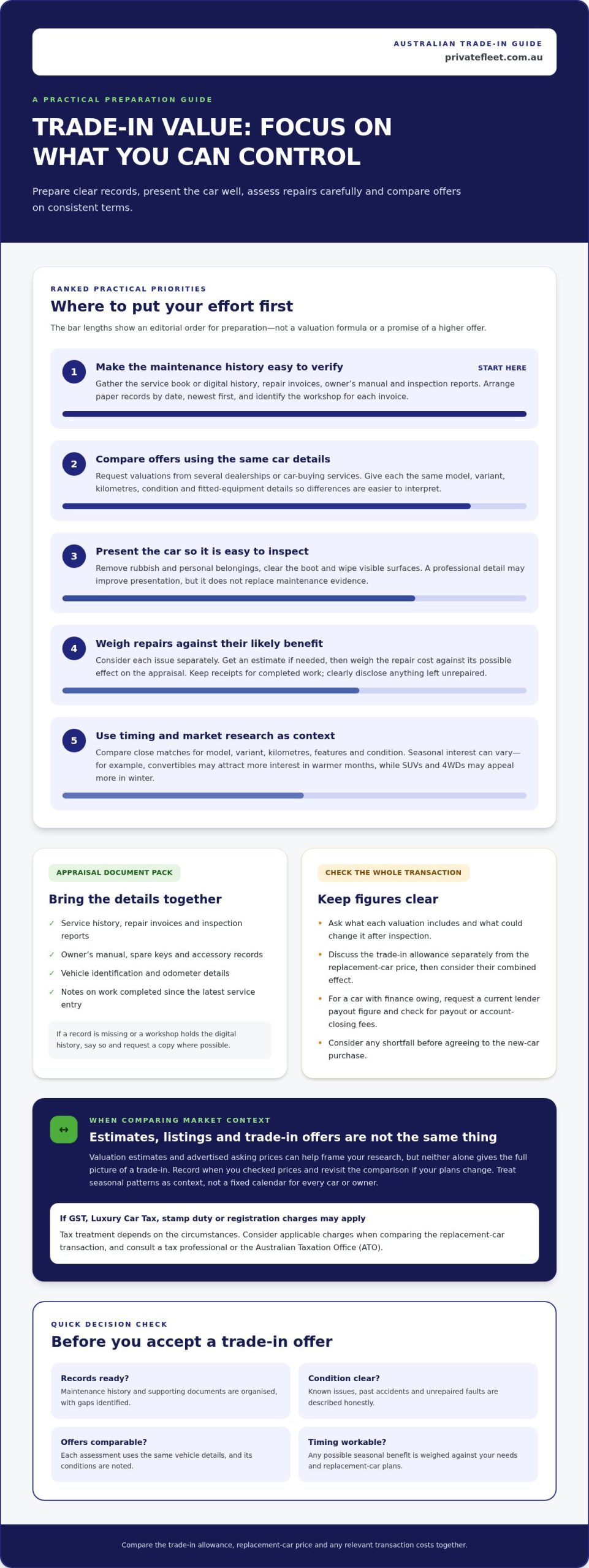
Before a new-car trade-in appraisal, gather documents that show the car’s maintenance history. Collect the owner’s manual, service book or digital service entries, along with invoices for repairs and replacement parts. Arrange paper records by date, with the most recent first. If different workshops serviced the car, label each invoice with the workshop name so the timeline is easy to follow.
Service records, repair receipts and the owner’s manual can help demonstrate the car’s maintenance history. If a workshop holds the digital service history, request a copy for your records. Match repair invoices to the work described, and keep inspection reports with related repairs. If a record is missing, say so rather than presenting an incomplete history as complete.
GST and Luxury Car Tax (LCT) may have implications in some vehicle trade-in circumstances. Consider them alongside any applicable stamp duty and registration charges when comparing the replacement-car transaction. Tax treatment depends on the circumstances, so consult a tax professional or the Australian Taxation Office (ATO).
A car with finance owing may still be traded in. A dealer may be able to contact the lender to arrange payment of the outstanding finance. Ask the lender for a current payout figure, then compare it with the proposed trade-in amount. Check whether payout or account-closing fees apply, and work out how you’ll cover any shortfall before agreeing to the new-car purchase.
Prepare a simple document pack for the appraisal. Include the service history, repair invoices, owner’s manual, spare keys and records for accessories fitted to the car. Keep the vehicle identification and odometer details with the pack, and note any work completed since the latest service entry. These details help match the paperwork to the specific car being assessed.
Clean the car before the appointment so its surfaces and interior are easy to inspect. Remove rubbish and personal belongings, clear the boot and wipe down visible surfaces. A professional detail may improve presentation, but it won’t replace maintenance evidence. Before paying for cosmetic work, weigh its cost against the possible effect on resale value.
Assess minor repairs one by one. Note the issue, get a repair estimate if needed, and consider whether the likely appraisal benefit justifies the cost. Keep receipts for completed work. If you leave an issue unrepaired, disclose it clearly during the appraisal. This gives the buyer an accurate account of the car’s condition and keeps the trade-in discussion grounded in its history.
Timing a trade-in around used-car market demand
Trade-in timing means choosing when to present your car based partly on buyer interest in its type. Seasonal patterns can inform your decision, alongside your plans for the replacement car.
Choosing when to trade in
Seasonal demand can make some vehicles more appealing at particular times of year, which may affect a dealership’s resale plans. For example, convertibles may attract more interest during warmer months, while SUVs and 4WDs may appeal more in winter. These patterns offer context, not a fixed calendar for every Australian owner or vehicle.
Consider how long you can comfortably wait and whether delaying your new-car purchase suits your circumstances. A seasonal window may matter less if your current car no longer meets your needs or your preferred replacement is available now. Weigh the possible benefit of waiting against practical factors such as travel plans, household needs and the timing of the new-car purchase.
Trading in as part of a new-car purchase may give you more leverage in negotiations. Keep the trade-in allowance and replacement-car price separate in the discussion, then consider their combined effect. This helps you assess the whole transaction rather than judging the deal by timing or the trade-in figure alone.
Researching used-car prices and value
Research used-car prices by reviewing comparable vehicles and valuation estimates to understand your car’s market value. Advertised prices and trade-in offers reflect different parts of the used-car market, so neither gives you the full picture on its own.
Use CarsGuide, Value My Car and Drive.com.au as starting points for estimates. Enter accurate details, including the car’s model, variant, kilometres and condition. A different variant or equipment level can make a comparison less useful, so focus on vehicles that closely match yours.
Review comparable listings and note their kilometres, features and stated condition. An advertised asking price isn’t necessarily the final sale price or a trade-in valuation. Treat listings as context, and use differences between vehicles to understand why an appraiser’s assessment may vary.
Record when you researched prices and revisit the comparison if your purchase plans change. Used-car trends and buyer demand can shift, so an earlier estimate may not reflect the market when you’re ready to trade. If you’re coordinating a new-car purchase, you can discuss your trade-in timing as part of planning the changeover.
Comparing valuations from dealerships and car-buying services
Request valuations from several dealerships or car-buying services to see how they assess your car. Give each the same description, including the model, variant, kilometres, condition and fitted equipment. Consistent information makes differences between offers easier to interpret and helps you spot when an assessment is based on a different assumption.
Ask each business to explain what its figure covers. A preliminary estimate based on the details you provide may change after an in-person inspection. Find out whether the amount depends on a condition assessment, whether accessories are included and what could change the offer. Note any conditions alongside the figure so you compare actual terms, not just headline amounts.
If a dealership offers a trade-in as part of a new-car purchase, ask for the replacement vehicle’s price and trade-in allowance to be shown separately. Compare the final amount payable, including any other transaction adjustments. A higher allowance alone doesn’t mean the overall deal is better if the new-car price also differs.
Use a simple comparison record for each valuation:
- Offer basis: Record the vehicle details and condition information supplied.
- Assessment: Note whether the figure is preliminary or follows an inspection.
- Conditions: Record any requirements tied to the vehicle or purchase.
- New-car transaction: Write down the replacement-car price separately.
Compare like with like. If an offer assumes different kilometres or excludes an accessory, ask for the assessment to reflect the same details as the other offers. If a valuation changes after inspection, ask what prompted the revision. A clear reason, such as a newly identified fault or a difference in variant, helps you understand the change rather than compare unexplained figures.
A private sale is another option. It may return more than a trade-in, but selling privately can take more time and involve extra work and risk. You’ll need to manage enquiries, arrange viewings and coordinate the handover yourself. Consider that workload alongside your new-car purchase, especially if handling two transactions at once would be difficult.
Compare the options by what matters to you: the total cost of the replacement car, the time involved and the convenience of the changeover. A private sale may suit someone willing to manage the process for a possible higher return. A trade-in may suit a buyer who values a more direct transaction alongside buying a new car.
Disclosing vehicle condition and past accidents
A clear account of your car’s condition helps an appraiser assess it accurately. Before the appointment, note visible damage, unusual noises, warning lights and repairs, then walk around the car with the appraiser. Point out a door scrape or cracked trim panel rather than leaving it to be discovered later. Honest details make it easier to compare the assessment with other offers.
Explain any past accident and the repairs that followed. If a bumper was replaced, describe what happened and show any repair paperwork you have. If you don’t have documents, share what you know without guessing about the repair method or hidden damage. Distinguishing a repaired panel from an unresolved issue helps the appraiser understand the car’s history and assess its current condition.
Separate cosmetic wear from problems that affect how the car operates. Identify chipped paint, worn seat fabric or a damaged wheel, then mention any dashboard warning or change in how the car drives. Don’t try to mask a warning light or cover damage before inspection. A professional detail or minor repairs may improve the offers you receive, but weigh each job against its cost and likely effect.
Make distinctive features easy to identify. List factory-fitted equipment and accessories, such as a sunroof, towbar, roof racks or upgraded infotainment, and clarify which were added later. Have relevant manuals, spare keys and accessory components ready. If roof racks are included, for example, show the appraiser their fittings and explain whether they’ll stay with the car. Clear details distinguish your vehicle from a standard version of the same model.
Maintenance also affects how the car presents at an appraisal. Clear personal belongings and rubbish from the cabin and storage areas, and make sure the exterior is clean enough to inspect. Check that accessories you plan to include are present and working, such as a cargo cover or floor mats. If a minor issue remains, identify it plainly rather than letting a tidy appearance suggest the car is fault-free.
Use a short condition summary to keep the appraisal focused. Note where damage is, what you know about its history and any work completed. Then walk around the car with the appraiser and add details as needed. A consistent account makes valuations easier to compare and means you don’t have to rely on memory at each inspection.
- Condition: Record visible wear, warning lights and operational concerns.
- Accident history: Describe what happened and share repair information you have.
- Features: Identify included equipment, accessories, keys and manuals.
- Presentation: Make the vehicle clean and accessible for inspection, without concealing faults.
Highlighting mileage, servicing and vehicle features
A car’s trade-in value in Australia is influenced by its make, model, age, kilometres, condition, maintenance history, features and buyer demand. An appraiser considers how these factors affect resale appeal and any preparation needed before the car is offered for sale.
Presenting mileage and vehicle features
Present mileage and features clearly by noting the odometer reading and equipment fitted to your car. Kilometres help indicate wear, while useful features can distinguish your variant from similar vehicles. Identify options by name, such as a reversing camera or roof racks, rather than assuming every version includes them.
Factors affecting trade-in value
Trade-in value reflects the car’s resale appeal, condition and likely preparation needs. Otherwise similar vehicles can receive different valuations because their kilometres, variant, maintenance or equipment differ. Compare like-for-like examples, then point out relevant details that support the assessment, such as a consistent service history or factory-fitted feature.
Give the appraiser a clear mileage figure and make the odometer easy to read. If the reading has changed since you requested an estimate, provide the updated figure before the appraisal. Kilometres alone don’t explain how a car has been used, so pair the reading with maintenance records and a straightforward account of its history. Avoid calling the car low-kilometre without context.
Service records are most useful when they show a clear maintenance timeline. Arrange dated entries in order and match invoices to the work recorded, such as scheduled servicing or replacement parts. If different workshops maintained the car, label each record with the workshop name. This helps the appraiser follow the history without searching through an unsorted bundle.
Gather documents that help identify the car and its equipment. Useful items include:
- The owner’s manual and available service book or digital service history.
- Receipts for maintenance, replacement parts and fitted accessories.
- Information identifying the model variant and factory-fitted options.
Make features easy to assess during the inspection. Demonstrate items such as parking sensors, climate controls or powered seats, and explain how included accessories fit. A feature’s value depends on buyer demand and whether it works as intended, so describe it accurately rather than assuming every extra will increase the offer.
When discussing a new-car purchase, present mileage, servicing and equipment consistently with each appraiser. Giving everyone the same useful details makes the resulting offers easier to compare.
Private Fleet: New Cars
Private Fleet helps Australian buyers source a new car and manage the purchase, including trade-in assistance. Its independent New Car Buying Service works with a national network of authorised dealerships. Through a tender process, multiple dealers compete for your business. Private Fleet supports you in comparing options and arranging the purchase, without holding its own vehicle inventory.
This can help if you want to consider your trade-in alongside the new car rather than handle the decisions separately. Share your preferred make or model, postcode and buying timeframe to shape the search. Car finance is also available if you’re considering finance as part of your purchase.
Make your next-car decision with confidence
Before committing to a changeover, decide what matters most: the car you want next, timing that suits your plans and the total amount you’re prepared to pay. This makes it easier to assess the trade-in as one part of buying a new car, rather than as a standalone figure. To maximise your car’s trade-in value in Australia, focus on a decision that works across the whole transaction and suits your needs.
Ready to move forward? Share your preferred make or model, postcode and buying timeframe. Private Fleet can help you consider your new-car purchase and trade-in together, giving you a clear plan for the next step.
A well-considered changeover is a practical start to your next motoring chapter. Choose the option that suits you, then move ahead with confidence.
Frequently Asked Questions
How can I get the highest trade-in value for my car in Australia?
To maximise your car’s trade-in value in Australia, make it easy to assess and describe its details accurately. Confirm the odometer reading, remove personal items, check included accessories and prepare a clear account of the car’s history. Give each appraiser the same information. A complete, consistent description helps avoid valuation differences caused by missing or misunderstood details.
Which Australian car dealers and online services offer trade-in valuations?
New-car dealerships can assess a trade-in as part of a vehicle purchase, while online valuation tools offer estimates to compare with offers. In Australia, CarsGuide, Value My Car and Drive.com.au are starting points for researching a car’s value. An online estimate isn’t the same as a direct appraisal: a dealership may consider the car’s condition and details during an inspection.
How do dealer trade-in offers compare with private-sale prices in Australia?
A private sale may return more than a trade-in, but the advertised price isn’t necessarily what you’ll receive. Consider the time spent preparing an advertisement, answering enquiries and arranging viewings, as well as completing the sale. A trade-in may suit buyers who value a direct changeover, while private selling may suit those willing to manage the process themselves.
How can I estimate my car’s market value using Australian valuation tools?
Australian valuation tools can help estimate your car’s market value as you work to maximise its trade-in value in Australia. Enter the correct model, variant, year and kilometres, then compare the estimate with similar advertised cars. A tool may not account for every feature or condition detail an appraiser considers. Treat the result as a reference point for discussion, not a promised trade-in amount or private-sale outcome.
Should I get multiple trade-in offers before buying a car in Australia?
Yes. Multiple offers help you see how different appraisers assess the same vehicle. Keep your description consistent, and record each offer’s date, inspection requirements and conditions. If an offer depends on buying a replacement car, compare the new-car price separately. This helps you assess the whole transaction rather than assuming the highest trade-in figure automatically makes the best deal.
What documents and vehicle details do I need for an Australian trade-in?
Prepare the car’s identifying details, current odometer reading, service history and documents for repairs or fitted accessories. Note how many keys and manuals you’ll hand over, and whether accessories such as roof racks are included. If the car has finance owing, contact the lender for its current payout figure. This gives you a clearer picture of what remains after the trade-in is applied.
How can I prepare and present my car to improve its trade-in offer?
Make the car accessible for assessment: clear personal belongings from the cabin and boot, ensure the odometer is readable, and have included accessories ready to inspect. A clean presentation helps the appraiser view the car, but don’t hide damage or warning lights. If you’re considering a repair, weigh its cost against the likely effect on the appraisal before booking the work.
Can I negotiate a trade-in value separately from the new car purchase price?
Yes. Ask for the new car’s price and trade-in allowance to be itemised separately, then discuss each figure on its own. Once both are clear, compare the final amount payable and any conditions attached to the offer. This helps you see whether changing one figure affects the other and compare purchase offers fairly.