
What if the biggest advertised discount isn’t the best deal for you? It’s easy to see why new car deals in Australia can be difficult to compare: one offer highlights cashback, another includes a fuel card, and the final price may depend on your location or how you pay. The headline is only part of the picture.
It’s sensible to look for a clear price, but an offer is only comparable when it applies to the same model and variant, on the same terms. Eligibility rules, expiry dates and delivery conditions can all affect whether it suits your plans.
This guide explains the main types of new-car offers and how to compare them using the drive-away price, included extras, purchase conditions and timing. You’ll also find out what details to gather before deciding, including your preferred model, postcode and buying timeframe. If you’d like help weighing up dealer offers, Private Fleet’s independent sourcing service uses a tender process that invites authorised dealerships to compete for your business.
Key Takeaways
- Compare new car deals australia buyers are considering by matching the model, variant and price basis, not just the headline offer.
- Check the current offer wording for eligible vehicles and buyers, purchase and delivery requirements, and expiry date.
- Use a like-for-like table to weigh price, offer details and conditions across vehicles that suit similar needs.
- Start with your shortlist and buying timeframe, then consider trade-in and finance details without losing sight of vehicle suitability.
- Private Fleet’s tender process invites multiple authorised dealerships to compete for your business, helping you compare dealer offers.
What counts as a new car deal in Australia, and what does the headline leave out?
A new-car deal is an offer whose terms suit both the vehicle and the buyer. A large headline benefit may catch your eye, but it only matters if it applies to the model and variant you want, fits your buying timeframe and offers value in a form you can use.
Promotions can change, and each has its own eligibility and expiry conditions. This section explains the main offer formats and how to read them, rather than presenting a live list of promotions that may no longer be current. For current wording, use the Australian manufacturer or authorised-dealer source for the offer.
Which types of new-car offers might you see?
Offers can affect the price, the way you pay or what comes with the vehicle. These formats aren’t interchangeable:
- Drive-away offer: An advertised price presented as a single figure for buying the vehicle. Check the written quote and what it includes for your registration location.
- Price reduction: A lower vehicle price or a stated discount. Compare the resulting price, not just the size of the advertised reduction.
- Finance promotion: A deposit contribution or another incentive connected to finance. Read the finance terms and consider the overall cost, not only the headline benefit.
- Included extra or ownership offer: An accessory, servicing benefit or other inclusion. Its practical value depends on whether you want it and on the conditions attached.
Any format may be limited to selected models, variants or build years. Hypothetical example: an offer could apply to one variant but exclude another in the same model range. Don’t assume the promotion carries across the range; match its wording to the exact vehicle you’re considering.
Why is the headline not the whole deal?
The conditions determine who can use an offer and when. A promotion might require a particular purchase date, delivery by a stated deadline, a specified finance arrangement or selection of an eligible vehicle. These details can change whether the advertised benefit works for your situation, especially if you need to order a particular variant or coordinate a trade-in.
Separate the advertised vehicle price from the promotion. A price reduction changes the amount charged for the car; a finance incentive depends on finance conditions; an included extra adds something to the offer. They can’t be compared fairly by headline value alone. The Australian Automotive Aftermarket Association offers broader context on one organisation in the automotive sector, but an individual promotion’s wording is what sets its terms.
A comparable new-car deal is an offer for the same vehicle specification, assessed on the same price basis and with its eligibility, timing and inclusions made clear. That simple test makes new car deals Australia-wide easier to assess without mistaking an attractive headline for a suitable offer.
How Australian new-car deals work: read the offer terms before comparing
Before weighing up a promotion, find its current wording on the Australian manufacturer’s website or an authorised dealer’s offer page. A short advertisement may not show every condition. Use the source details to check exactly which car qualifies, who can use the offer and what must happen before it expires. That gives you a reliable basis for comparing new car deals australia-wide, rather than relying on a headline or an old summary.
Check the vehicle, timing and eligibility
Read the conditions against the vehicle you intend to buy. Similar model names don’t guarantee that every variant or build year is included. The offer may also depend on whether you order, purchase or take delivery by a specified date, and may state buyer-category or transaction requirements.
- Match the vehicle: Record the exact model, variant and build year named in the offer. Note any exclusions or limits on eligible vehicles.
- Pin down the dates: Identify the offer’s start and expiry dates, then check whether the deadline applies to ordering, signing a purchase agreement or taking delivery.
- Check who qualifies: Look for stated buyer categories and transaction conditions, such as requirements tied to a particular purchase method.
- Save the source: Note the page or document and the date you checked it. If a key condition isn’t visible, don’t treat the promotion as fully comparable until you have the complete written terms.
Timing matters if you’re ordering a particular vehicle. An offer that requires delivery by a deadline may not suit a buyer whose chosen variant has a longer wait. Don’t assume that placing an order by the cut-off is enough; follow the wording about which event must occur within the offer period.
Understand what an offer includes
Separate the benefit from its conditions. A reduction to the vehicle’s cash price is different from a finance contribution, accessory or servicing inclusion. Consider whether an extra suits your needs, and don’t treat its advertised value as cash off the purchase price.
Finance promotions need their own review. Read the stated finance conditions alongside the benefit, including any requirements about the deposit, loan term, repayment structure or fees where these are specified. A headline contribution may be less useful if the finance arrangement doesn’t suit your budget or preferred way of buying. Compare the written terms, not just the promotional figure.
- Record any change to the vehicle price separately from other benefits.
- Describe finance-linked incentives with their qualifying finance conditions attached.
- List accessories or servicing inclusions separately, noting any stated limits or expiry dates.
Eligibility and expiry belong beside every offer comparison because they determine whether you can access the advertised benefit and by when. If a promotion has expired or its conditions are incomplete, leave it out of a current comparison rather than presenting it as available. Buyers who want help organising dealer offers can share their preferred make or model, postcode and buying timeframe with Private Fleet.
How to compare new car deals in Australia on a like-for-like basis
A useful comparison starts with the car you want, not the promotion. Decide what the vehicle needs to do, then compare offers for the same model and variant where possible. If you’re considering different makes, look at vehicles in a similar size and use category, such as family SUVs or small hatchbacks, while recognising that they may not have direct equivalents.
Match the vehicle before comparing the offer
Build your shortlist around your regular driving, preferred body style and must-have features. Then check that the offer applies to the exact model, variant and build year you’re considering. Similar names don’t always mean the same equipment or specification.
- Compare features that matter to your use, such as cabin space, safety equipment or towing capacity for the specific variant.
- If comfort is a priority, assess seat adjustment, ease of entry and exit, visibility, ride comfort and cabin noise in the vehicles you shortlist.
- Consider whether the controls feel clear and usable to you, including any touchscreen functions you expect to use regularly.
These checks help keep the comparison practical for your needs, including if you’re over 50. A vehicle’s headline offer can’t tell you whether it suits your driving or feels comfortable over a longer trip.
Compare the price basis and conditions
Label every price clearly. A drive-away quote, a manufacturer’s recommended retail price and an estimate are different price bases. Drive-away figures can also vary with the registration location, so compare quotes prepared for the same postcode and on the same basis. Don’t place an estimate beside a confirmed quote as if they were equivalent.
Use a table to keep the offer and its restrictions visible together. Fill it from current manufacturer or authorised-dealer information, and record the date you checked each source.
| Model | Variant | Price basis | Offer | Conditions | Expiry |
|---|---|---|---|---|---|
| Shortlist vehicle A | Exact variant and build year | Drive-away quote for your postcode | State the benefit and format | Record vehicle and buyer eligibility, plus purchase or delivery requirements | Enter the stated date, or mark not stated |
| Shortlist vehicle B | Exact variant and build year | Same basis and postcode | Separate price change from extras or finance offer | Record the specific conditions | Enter the stated date, or mark not stated |
If the vehicles differ, note the differences rather than treating them as direct substitutes. A higher-spec variant may include features the other vehicle doesn’t, while a finance contribution or accessory isn’t the same as a change to the cash price.
Compare like-for-like vehicles and terms, not headline numbers alone. This simple method makes comparing new-car offers across Australia easier and keeps your decision grounded in the details that matter. If you’d like support organising a shortlist and dealer offers, you can share your preferred make or model, postcode and buying timeframe.
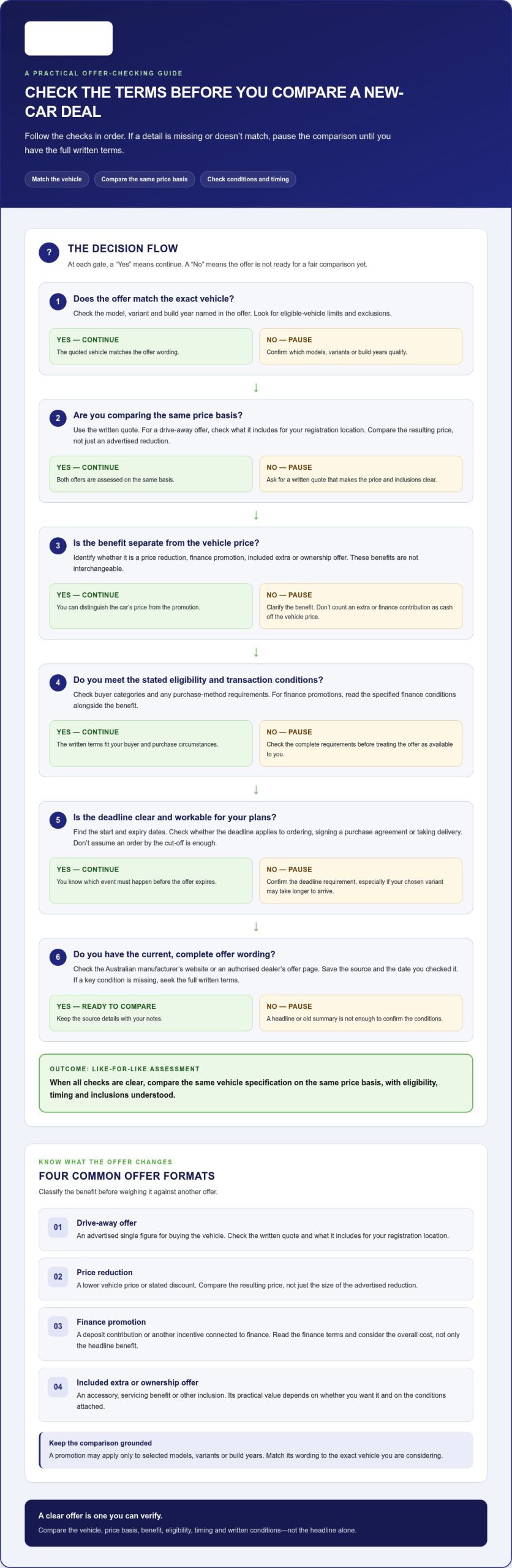
A practical checklist for deciding whether a new-car deal suits you
A good deal starts with a car that fits your life, not a promotion that pressures you to change plans. Work through this checklist in order: it keeps the vehicle decision central while helping you assess the offer, purchase timing and other costs clearly.
Work from your shortlist and intended ownership
Write down the vehicles you’re genuinely considering, the features you need and how long you expect to own the car. Think about regular trips and likely changes in use. If comfort matters, include seat adjustment, ease of entry and exit, visibility, cabin controls and ride comfort in your assessment.
- Set your needs: Note how you’ll use the car, who or what it needs to carry, and any essential features. Separate must-haves from preferences.
- Make a shortlist: Record each preferred make, model, variant and build year. Don’t let an attractive offer push you towards a vehicle that misses important requirements.
- Set a realistic timeframe: Decide when you’re ready to order or buy, and whether you can be flexible. If an offer depends on delivery by a deadline, check whether that timing fits your plans.
- Consider ownership: Think about your intended ownership period and the regular costs that matter to you, such as servicing, insurance and fuel or charging. Treat future resale value as uncertain, not guaranteed.
- Check the current offer: Use the manufacturer’s or authorised dealer’s current wording. Match the offer to your exact vehicle and note its conditions and expiry before relying on it.
- Keep trade-in separate: If you have a vehicle to trade, record its proposed value separately from the new car’s price and promotion. This makes it easier to see what each part contributes to the overall changeover.
- Review finance separately: If the offer is linked to finance, assess its stated terms alongside your preferred way to pay. Don’t confuse a finance incentive with a reduction in the vehicle’s cash price.
Delivery timing can affect whether an offer suits you, particularly when the promotion sets a delivery deadline. Private Fleet’s guide to the new-car buying process helps you understand the steps involved, so you can plan questions about timing without assuming a particular delivery date.
Make the final comparison useful
Before speaking with a seller, bring together your preferred vehicle, the offer conditions and your realistic purchase timeframe. Keep trade-in and finance notes in separate lines. That way, each part can be considered on its own merits rather than hidden within one headline figure.
Before you contact a seller, have your shortlist, exact variants, essential features, buying timeframe, current offer terms and separate trade-in or finance details ready. This practical approach helps you assess new-car offers in Australia against your actual needs.
How Private Fleet helps buyers compare new car deals across Australia
Private Fleet is an independent Australian vehicle sourcing and car buying service. It works with a national network of authorised dealerships, using a tender process that invites multiple dealers to compete for a buyer’s business. This gives buyers a way to seek and compare dealer offers without approaching each dealership themselves.
Private Fleet doesn’t hold its own vehicle inventory, and the tender process doesn’t guarantee a particular price or result. Each offer depends on the vehicle and terms available through the participating dealerships. The aim is to help you assess the options against your shortlist and purchase priorities, rather than assume every promotion will suit every buyer.
What the buying process involves
Start with the car you want. Your preferred make, model, variant and buying timeframe help shape the sourcing request. If you’re still comparing vehicles, include your shortlist and the features that matter most, such as cabin space, comfort or equipment. Clear priorities help keep the focus on the right car, not just the most prominent advertised incentive.
Private Fleet then invites multiple authorised dealerships to compete for your business through its tender process. Their offers can be reviewed in relation to the requested vehicle and your timing. The outcome depends on the terms put forward; no specific price, discount, stock or delivery date is promised.
Trade-in assistance and finance can support the purchase, but they’re separate considerations from choosing a suitable new car. Assess any trade-in figure separately from the new vehicle offer. If finance is relevant, consider its terms alongside your preferred way to pay, rather than treating a finance-linked incentive as a direct cash-price reduction. The new-car buying service is designed to assist with sourcing and comparing dealer offers.
What to share when seeking help
Give a clear picture of what you’re looking for. Include your preferred make or model, postcode and buying timeframe, along with your shortlist if you’re weighing up alternatives. You can also note the variant, essential features and any priorities that may affect the choice, such as comfort, regular long-distance driving or a trade-in.
This information helps keep the discussion practical and focused. Buyers comparing new car deals australia has to offer can use the same details to explain what matters and review offers against their real requirements. Private Fleet has operated since 1999, helping private buyers with vehicle sourcing through authorised dealerships.
To get started, share your preferred vehicle, postcode and timeframe, and include any shortlist or purchase priorities that will help guide the comparison.
Choose your next step with confidence
Let the car you want, rather than an offer deadline, guide your decision. A promotion can be a reason to take a closer look, but it shouldn’t push you towards a variant you don’t want, a purchase timeframe that doesn’t suit or terms you’re uncomfortable accepting. It’s reasonable to pause if the offer doesn’t fit your plans.
Before moving ahead, turn your comparison into a short decision brief: the vehicle you’re seeking, the conditions you’re prepared to accept and the priorities you won’t compromise on. For new car deals australia buyers, this makes the next move clearer: proceed with an offer that fits, or continue your search with your priorities intact.
Buying a new car is a significant decision. Take the time you need to make it on your terms, with a clear view of what matters to you.
Get help buying my new car with Private Fleet
With a considered shortlist and a realistic timeframe, you can move forward feeling prepared.
Frequently Asked Questions
Can I combine a manufacturer offer with a dealer offer?
Sometimes, but it depends on the terms of each offer and whether the dealer allows them to be combined. A manufacturer promotion may exclude other discounts or apply only to certain vehicles or purchase methods. Ask for the combined offer in writing, with each benefit and condition shown separately. If the offers can’t be combined, request a quote showing the option that applies to your chosen vehicle.
How long do new-car deals in Australia usually last?
There’s no standard duration for new car deals Australia-wide. Some promotions state a fixed expiry date, while others may be linked to a purchase or delivery deadline. Check the current manufacturer or authorised-dealer offer page, and note when you checked it. If you’re still deciding, revisit the source before committing, as an offer can change or end earlier than your planned purchase date.
Are new-car deals available to private buyers?
Many offers are open to private buyers, but eligibility depends on the specific promotion. Read the conditions for any limits on buyer type, purchase method or vehicle. For example, a promotion may be restricted to a particular customer category or finance arrangement. If you’re buying as an individual, make sure the written offer identifies you as eligible before treating its benefit as part of your decision.
What happens if a new-car offer expires before delivery?
It depends on the offer wording and any agreement you’ve made with the seller. Some promotions require only that you purchase or order by the deadline; others may require delivery by then. Check which date-trigger applies and whether your written paperwork records the offer. If delivery is delayed beyond the expiry, ask the selling dealer to explain in writing how the agreed terms apply to your order.
Can a trade-in be included when comparing new-car deals?
Yes, but compare the new car’s offer and the trade-in value as separate figures. For example, a higher trade-in allowance can make the changeover amount look more attractive without changing the new car’s price. Ask for an itemised quote showing the vehicle price, applicable offer, trade-in allowance and resulting changeover amount. This makes it easier to compare another quote, even if its trade-in figure differs.
Is an in-stock offer the same as an offer on a factory order?
Not necessarily. An in-stock promotion may apply only to specified vehicles already available for sale, while a factory-order offer may have different eligible variants, deadlines or delivery conditions. Check whether the written terms cover the exact vehicle you want and whether its availability affects the offer. If you’re ordering a particular specification, don’t assume an advertised in-stock incentive will transfer to that order.