
The advertised price is only one part of choosing a new car. A new car purchase checklist for first time buyers should cover your total ownership budget, the models and variants that suit your needs, the written offer and what to confirm at delivery. Compare the seller’s terms as carefully as the car itself.
It’s easy to focus on the car and overlook the costs that continue after you drive away. A clear plan helps you weigh fuel, insurance, registration and maintenance alongside the purchase price, so you compare options on more than their headline figures.
This guide covers budgeting, comparing models, test drives, offer details and delivery checks. You’ll also learn what to consider when buying through different channels and how to keep the process organised from shortlist to handover. Use each check to choose a car that suits how you’ll use it and what matters most to you.
Key Takeaways
- Build your budget around the full cost of ownership, including fuel, insurance, registration and maintenance, not just the purchase price.
- Compare models and variants against your everyday needs, then use a test drive to assess comfort, visibility, handling and controls.
- Check vehicle records, registration details and any outstanding payments before completing a purchase.
- Understand how dealer, auction and private-sale processes differ, including the checks and paperwork involved.
- Allow for state and territory differences in stamp duty, registration and compulsory third-party insurance when comparing drive-away costs.
Checking vehicle registration and outstanding payments
For a new car, compare its vehicle identification number (VIN) with the purchase agreement and delivery paperwork. The VIN is a unique 17-character identifier. Check the recorded build date and model year separately: a car built in 2022 could be a MY23 vehicle. Vehicles made from 2021 onwards may not have a compliance plate or label; their data is stored on the Register of Approved Vehicles.
Before accepting delivery, inspect the vehicle in good light for marks, paint inconsistencies and misaligned panels. Check the interior, controls and lights, and note any damage on the handover paperwork. Compare the VIN and vehicle description across the contract, registration record and warranty documents. Ask for discrepancies to be corrected before signing acceptance, and keep copies of the completed paperwork together.
For a used car, use the relevant state or territory government portal to check its registration status. These portals can show whether a vehicle is written off, stolen or unregistered. Before taking possession, check the vehicle’s registration status and whether any outstanding payments need attention. Responsibility for transferring registration varies: the seller handles it in some jurisdictions, while the buyer must complete it in others.
Use the 17-character VIN to run a PPSR search before paying for a used vehicle. If you’ve paid in full, make sure any pecuniary interest has been cleared. Confirm registration has been transferred into your name before driving away. Keep the transfer documents and search result with the receipt and sale agreement.
Compare a used car’s odometer reading with its age, service records and past inspection entries. Look for unexplained gaps or readings that don’t fit the recorded history. In NSW, interfering with a vehicle odometer is illegal under the Motor Dealers and Repairers Act. If the figures conflict, pause the purchase and seek an independent assessment rather than relying on the display alone.
Body style affects how a vehicle fits your routine. A sedan’s separate boot may suit luggage, while a hatchback’s rear opening can make bulky shopping easier to load. An SUV’s cabin layout may suit regular passenger or equipment needs. Consider what you carry, where you park and how often you travel before choosing a body style.
- New car: match the VIN, build details and documents before accepting delivery.
- Used car: check government registration records and PPSR results before payment.
- Odometer: compare the displayed reading with dated service history.
- Body style: choose based on passengers, cargo and your regular parking situation.
Budgeting for purchase and ongoing ownership costs
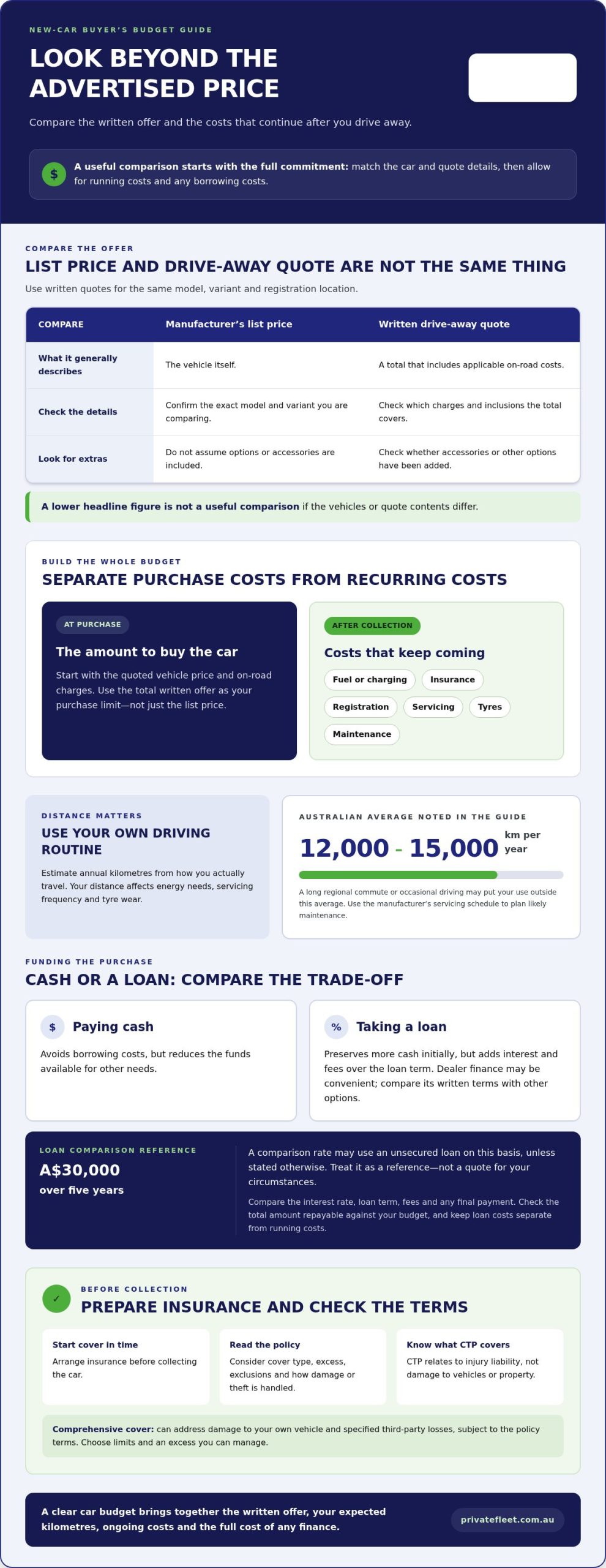
Set a purchase limit that leaves room for running costs. For a new car in Australia, budget for the quoted vehicle price and on-road charges, then allow for fuel or charging, insurance, registration, servicing, tyres and maintenance. Separate the one-off purchase amount from recurring expenses to see the full commitment.
A manufacturer’s list price generally describes the vehicle itself, while a drive-away quote gives a total that includes applicable on-road costs. Compare written quotes for the same model, variant and registration location. Check which charges and inclusions each total covers, and whether accessories or other options have been added. A lower headline figure is not a useful comparison if the vehicles or quote contents differ.
Estimate your annual kilometres using your own routine rather than relying only on an average. Australian drivers travel about 12,000-15,000 km per year on average, but a long regional commute or occasional driving may put your use outside that range. Your distance affects fuel or charging needs, servicing frequency and the pace of tyre wear. Use the manufacturer’s servicing schedule to map likely maintenance around your expected ownership.
Compare car loans by their total cost, not just the repayment amount. A comparison rate may use an unsecured A$30,000 loan over five years as its basis, unless stated otherwise. Treat that as a reference for comparing loan products, not a quote for your circumstances. Consider the interest rate, loan term, fees and any final payment, then check the total amount repayable against your budget.
Paying cash avoids borrowing costs but reduces the funds available for other needs. A loan preserves more cash initially but adds interest and fees over its term. Dealer finance may be convenient, but compare its written terms with other options before accepting. For any option, calculate the amount financed after your deposit and keep loan costs separate from running costs.
Arrange insurance to start before collecting the car. Consider the cover type, excess, exclusions and how the policy handles damage or theft. Comprehensive cover can address damage to your own vehicle as well as specified third-party losses, subject to policy terms. CTP relates to injury liability, not damage to vehicles or property. Choose cover with limits and an excess you can manage.
- Set your purchase ceiling: use the total written offer, not only the list price.
- Estimate annual running costs: account for distance, energy, servicing, tyres and insurance.
- Compare finance totals: include interest, fees, term and any final payment.
- Prepare insurance: understand the cover and excess before collection.
If you’re weighing up a shortlist or offers, you can share your preferred model and buying timeframe.
Choosing features and comparing models
Compare vehicles by how they fit your routines, not by body style alone. A hatchback may suit narrow parking spaces and frequent shopping, a sedan may better fit luggage needs, and an SUV can offer a different seating position and cabin layout. Think about who regularly travels with you, what you carry and whether you need room to grow. A new car purchase checklist for first time buyers helps keep those priorities visible as you compare models.
Separate essential equipment from features you might rarely use. Check the Australian specifications for each exact variant, since equipment can differ within the same model range. Consider whether the seat adjusts to your preferred driving position, the controls are easy to understand and the boot opening suits what you carry. Review safety features by variant rather than assuming every grade includes the same systems. A feature list is useful only if it matches your needs.
Use a test drive to assess how the vehicle feels in situations you encounter. Try a route with parking, turns and varied road surfaces. Check that you can see clearly, reach key controls and sit comfortably. If you regularly travel with passengers, ask them to assess their seating space and ease of entry. A new car purchase checklist for first time buyers should capture these observations while each model is fresh in your mind.
Choosing new or used depends on whether you prioritise selecting a current specification or considering a vehicle’s previous use. A new car gives you a defined model and variant from the manufacturer’s Australian range. A used vehicle calls for extra scrutiny of its condition, history and service record. An independent mechanic’s assessment can provide a useful view of its mechanical state before you decide.
Compare the same model year and variant across your shortlist. Record the powertrain, key equipment and warranty terms so a change in grade doesn’t distort the comparison. If one vehicle includes a feature you value and another doesn’t, note the difference when weighing the offers. This keeps your decision centred on what you’ll receive, not just a model name or headline description.
Assess a dealership by the clarity of its written terms and how it handles your questions. Check the dealer’s licence, confirm the seller’s identity and make sure the proposed vehicle and agreed inclusions are recorded accurately. Read the agreement before signing and keep a copy. Clear paperwork makes it easier to understand the commitment you’re making.
- Prioritise practical needs: compare space, access and seating for your regular passengers.
- Check exact variants: match equipment and powertrain details against Australian specifications.
- Record test-drive notes: compare visibility, control layout and comfort across models.
- Review the seller’s terms: check licence details and read the written agreement before signing.
Buying from a dealer, auction or private seller
For a new car, an authorised dealership is a common purchasing channel. A dealer can provide a written offer, explain the selected variant and document the agreed terms. Before signing, check that the contract records the exact model, specification, accessories, delivery arrangements and drive-away price.
Ask for an itemised quote and compare it with another offer for the same vehicle, variant and registration location. Confirm what the quoted total includes, including registration and other on-road charges. Read the purchase agreement carefully: the NSW vehicle-inspection checklist advises buyers not to sign until they’re sure the car is right for them.
Check the dealership’s motor dealer licence and make sure the seller’s details match the contract. Read the warranty terms, servicing schedule and delivery conditions in writing. Keep copies of the offer and signed agreement, then compare the paperwork with the vehicle at handover. These steps clarify what you’ve agreed to buy and which terms apply.
Auctions and private sales are more commonly relevant when considering used vehicles. An auction can move quickly, so review the terms, inspection access, payment requirements and collection conditions before bidding. A successful bid may require a deposit of about 10% of the vehicle’s value or A$500 to A$1,000. Factor that commitment into your available budget before you take part.
A private sale requires careful checks because it doesn’t provide the same protections as buying from a licensed motor dealer. A private car sale isn’t covered by Australian Consumer Law consumer guarantees or a statutory warranty. Before agreeing, check the vehicle’s registration and history, review its service logbook, and arrange an independent mechanical and body inspection. If the seller refuses an independent inspection, walk away.
For a used car from any seller, compare the VIN and registration details with the paperwork, then check for outstanding interests. A vehicle history report can help reveal relevant past events. Ask for signed transfer paperwork and keep a copy; transfer responsibilities vary by state and territory. Where a Roadworthy Certificate is required and the buyer handles the transfer, have the certificate before driving away.
- Dealer: compare written, like-for-like offers and check contract terms before signing.
- Auction: understand bidding, deposit and collection conditions before committing.
- Private seller: review records and use an independent inspection before purchase.
- Any used-car sale: match the VIN, check registration and complete the applicable transfer paperwork.
What are Australian car stamp duty, registration and compulsory third-party insurance costs by state?
There isn’t one Australia-wide amount for stamp duty, registration and compulsory third-party insurance (CTP). These charges depend on the state or territory where the car will be registered and the vehicle details used in each calculation. Request an itemised drive-away quote using your registration address to compare the costs that apply to you.
Stamp duty is a state or territory charge associated with a vehicle purchase. The amount can depend on the vehicle’s value and the jurisdiction’s calculation method. Registration charges also vary by jurisdiction and may depend on the vehicle and registration details. CTP arrangements differ too. Treat these as separate quote items rather than one unexplained on-road-cost figure.
Use the same vehicle, variant and registration postcode when comparing offers. A quote for one registration location may differ from a quote for another, even for the same car. Ask for stamp duty, registration and CTP to be shown separately, alongside the vehicle price and other on-road charges. This makes differences between written offers easier to identify.
Check the relevant state or territory transport authority’s current registration and duty information before accepting a quote. Apply the rules for the jurisdiction where you’ll register the vehicle, whether that is a state or territory. Don’t use another jurisdiction’s estimate as a substitute for the charges that apply to your registration address.
Use this comparison checklist:
- Confirm the location: provide the postcode where the new car will be registered.
- Identify the exact vehicle: compare the same model and variant in each quote.
- Separate the charges: record stamp duty, registration and CTP as distinct line items.
- Check the quote basis: note other on-road charges and inclusions in the total.
- Review before signing: compare the purchase agreement with the itemised offer.
For budgeting, keep the drive-away total separate from ongoing ownership costs. Registration and insurance are recurring considerations, while stamp duty relates to the purchase. Your registration location and the specific vehicle affect which charges apply and how they’re calculated, so compare quotes on the same basis.
A clear breakdown shows whether two offers differ because of location-based charges, inclusions or vehicle price. Keep the quote and purchase agreement together, then check that the agreed figures and vehicle details match before accepting the deal.
Private Fleet: New Cars
Private Fleet is an independent car buying service for people comparing new-car options. It works with a national network of authorised dealerships, inviting dealers to compete for your business through its tender process. This helps you compare offers and purchase terms without contacting each dealership yourself. Private Fleet doesn’t hold its own vehicle inventory.
Consider Private Fleet’s New Car Buying Service when you have a shortlist and want support comparing dealership offers. Trade-In Assistance can help if you’re replacing your current car, and Car Finance is available if you’re considering finance as part of the purchase. Share your preferred make or model, postcode and buying timeframe to define what you’re looking for.
Make your next car decision with confidence
Turn your shortlist into a clear buying plan. Decide which model and variant best fit your regular driving, then compare written offers against the same requirements. Keep your priorities in view as you review the details, so optional features or a persuasive sales conversation don’t distract from what matters to you.
A new car purchase checklist for first time buyers is most useful when it reflects your circumstances. Your preferred make or model, registration postcode and intended buying timeframe can help focus the next conversation. If you’re replacing a vehicle, include whether you’d like trade-in support as part of the purchase process.
Private Fleet’s independent buying service helps you compare offers from its authorised-dealership network through a tender process. Share your shortlist and priorities to discuss how this support fits your buying plans. When you’re ready, take the next step with your needs clearly in view.
Get help buying my new car
You’re well placed to choose a car that fits your life and make the purchase on terms you understand.
Frequently Asked Questions
What Do You Need To Know When Buying A New Car?
Know which model and variant suit your driving, what the written offer includes and what ongoing ownership involves. Before committing, check the exact specification, warranty terms, servicing schedule and delivery conditions. Ask how order changes are handled and keep agreed details in writing. If you’re comparing two vehicles, list your priorities first, such as passenger space, ease of parking or comfort on regular long-distance drives.
What Should You Do Before Getting a New Car?
Before placing an order, set your must-have features and preferred models, then arrange test drives. Check the driver’s seat, visibility, controls and passenger access in person. Ask for the selected variant’s Australian specifications and warranty information, and read the purchase agreement before signing. If you have a trade-in, consider comparing its value separately from the new-car offer so you can see each part of the deal clearly.
What is the step-by-step process for buying a new car in Australia?
Start by setting your needs and budget, then shortlist models and variants. Test-drive the strongest options, request written offers, and compare their specifications, inclusions and terms. Choose the offer that fits, read the contract carefully, and confirm ordering and delivery details in writing. Arrange insurance before collection. At handover, match the vehicle identification number to your paperwork and inspect the car for damage before accepting it.
What budget should a first-time car buyer allow for a new car, including on-road costs?
Base your budget on the quoted drive-away total and the costs of keeping the car, not the advertised list price alone. Include fuel or charging, insurance, registration, scheduled servicing and tyres. Your annual kilometres and usual routes affect fuel use and maintenance needs. If borrowing, add interest and fees to your comparison, and check the total repayable amount. Keep a separate allowance for unexpected household expenses rather than using every available dollar on the purchase.
What should you compare when choosing a new car, including safety ratings, fuel economy and features?
Compare the same model year and variant where possible, since equipment can differ across grades. Review the available safety rating for the exact vehicle, then check airbags, anti-lock brakes, electronic stability control and driver-assistance features. Compare fuel-consumption figures on the same basis, and consider how your routes may affect real-world use. During test drives, assess braking, handling, seat comfort, visibility and whether the controls feel straightforward.
What are the pros and cons of paying cash, using a car loan or dealer finance in Australia?
Paying cash avoids loan interest but uses funds that may be needed for other priorities. A car loan spreads payments over time, while interest and fees increase the total cost. Compare the full repayment amount, not only the monthly figure. Dealer finance can be convenient, but terms vary by offer. Compare its rate, fees, loan length and any final payment against other finance options before choosing.
What optional extras, dealer add-ons and fees should first-time buyers avoid or negotiate?
Don’t accept an add-on simply because it appears in a prepared quote. Ask the dealer which items are optional, what each one does and how much it costs separately. Consider whether accessories such as tinting or a dash camera suit your needs and whether you prefer them fitted before delivery. Check for duplicate charges, unclear administration items or terms you haven’t agreed to, then request a revised written offer before signing.
What warranties, consumer guarantees and roadside assistance come with a new car in Australia?
New-car manufacturer warranties commonly last five to seven years and may cover up to 100,000 km; check the exact warranty terms. Ask the dealer about aftercare, and contact your roadside-assistance provider or auto club to check your coverage.