
A broker’s payment arrangement matters, but it doesn’t tell the whole story about who they represent. Australian brokers may charge the buyer a flat fee, receive payment from a dealer on delivery, or use both arrangements. New car purchasing consultants can help coordinate a new-car purchase, so it’s reasonable to understand their role before you rely on their advice.
It’s natural to compare this support with buying directly from a dealership. The licensed dealer sells the vehicle, and the consumer guarantees and manufacturer warranty that apply to a dealer purchase remain relevant. Clear information about the broker’s role, payment and responsibilities helps you understand the arrangement.
This article compares dealer and consultant support, explains what assistance can cover, and outlines how sourcing, ordering and delivery fit together. It also looks at finance pre-approval, broker payment models and questions to consider about fees or potential conflicts. Use these points to decide which buying route suits your preferred car and circumstances.
Key Takeaways
- Compare new-car offers on the same model, variant and drive-away basis, while weighing the support included in each buying option.
- Understand how sourcing assistance can help narrow your shortlist and coordinate purchase details, with finance remaining a separate consideration.
- See how a new-car order moves from vehicle requirements and sourcing to dealer arrangements and delivery updates.
- Learn how Private Fleet’s tender process invites authorised dealerships to compete for your specified car, with support for negotiation and paperwork.
- Know which details, including your preferred vehicle, postcode and buying timeframe, help shape a more relevant buying process.
How can you compare a dealer with a new-car purchasing service?
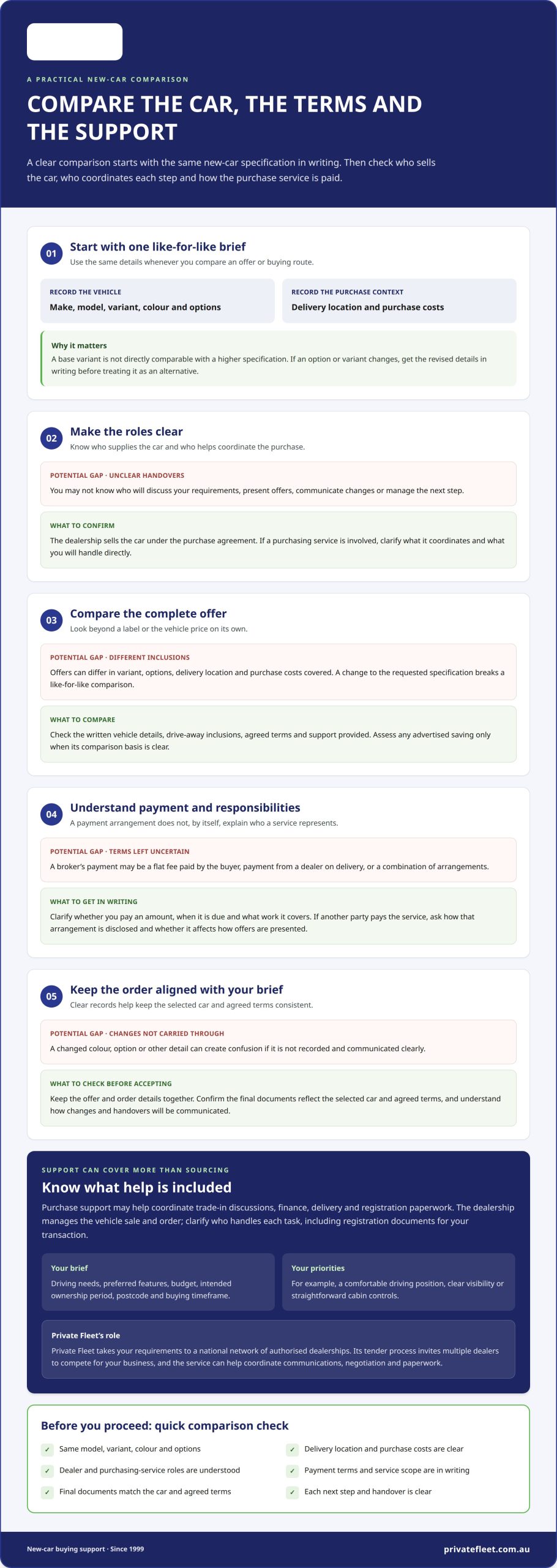
Compare the same vehicle specification and written purchase terms, then weigh the support each route provides. For a specific new car, such as a particular model and variant, check that each offer covers the same colour, options, delivery location and purchase costs. Confirm who handles each step and identify the dealership selling the car before proceeding.
Confirm the vehicle specification
Write down the model, variant, colour and options you want, along with the delivery location. Use this brief when comparing offers, and check that each one describes the same new car rather than a loosely similar version. Compare the written inclusions and purchase costs as well as the vehicle details.
If an offer changes a requested option or variant, it is no longer a like-for-like comparison. Get the revised details in writing before considering it as an alternative.
Check who handles each step
When arranging a specific new car, clarify who will discuss your requirements with dealerships, present offers and coordinate the purchase. Check how changes to your brief will be communicated and which dealership will sell the car. These details help you understand each party’s role before you proceed.
The dealership supplies and sells the car under the purchase agreement. If a purchasing service is involved, confirm what it will coordinate and what you will need to do directly.
Assess the offer and support
For your chosen vehicle, consider the written offer alongside the support provided with the purchase. Check that the vehicle specification and agreed terms are clear, and understand who will coordinate the next steps. For example, a buyer short on time may value having one point of coordination, while someone who prefers direct discussions may choose to deal with a dealership themselves.
Assess the actual offer and agreed support, not a general savings claim. Any advertised saving is useful only when its comparison basis is clear, including the vehicle specification and costs covered.
Clarify fees and payment terms
Before proceeding with your chosen car, ask for the purchasing service’s payment terms in writing. Clarify whether you will pay an amount, when it is due and what work it covers. If another party pays the service, ask how that arrangement is disclosed and whether it affects how offers are presented.
Written terms make the payment structure easier to assess before you proceed. Consider the service scope and the full purchase arrangement together, rather than looking at the vehicle price alone.
Compare the complete purchase terms
Focus on the written offer for your exact vehicle, including its variant, options and drive-away inclusions. Check what purchase costs are covered and whether the terms match your requirements. A label used to describe an offer does not establish what it covers.
For example, an offer for a base variant is not directly comparable with one for a higher specification. Match the details first, then assess the full terms.
Check the process and paperwork
When buying a particular new car, ask how your requirements will be recorded, how changes will be communicated and how the selected specification will be kept consistent throughout the purchase. A clear explanation should set out the handovers between you, the purchasing service and the dealership.
Keep the offer and order details together. Before accepting, confirm that the final documents reflect the selected car and agreed terms. This gives you a clear record if a question arises during the transaction.
What support can you get when buying a new car?
When buying a new car, support can help coordinate the purchase, including trade-in discussions, finance, delivery and registration paperwork. The dealership’s role in registration can vary across Australia, so clarify who handles the documents for your transaction.
Good support starts with your priorities, not a generic vehicle list. A useful brief covers your driving needs, preferred features, budget and intended ownership period. This keeps the search focused on a car that suits your everyday needs.
Compare new-car offers that fit your needs
Set out the make and model, preferred variant, essential features, colour preferences, postcode and buying timeframe. You can also explain your priorities, such as a comfortable driving position, clear visibility or straightforward cabin controls. Private Fleet can take your requirements to its national network of authorised dealerships, where its tender process invites multiple dealers to compete for your business.
For example, someone replacing a car for regular regional travel might prioritise seat comfort and a quiet cabin. A buyer choosing a smaller car for easier parking may focus on visibility and parking assistance. These details help separate essential requirements from preferences when comparing vehicles.
Support from offer to order
After you select an offer, purchase support can help keep the chosen specification and agreed terms aligned as the order progresses. If a detail changes, such as an option or colour, make sure the change is clear in the paperwork before the order moves ahead. That gives you a reference for the vehicle you expect to receive.
The new-car buying process shows how sourcing and purchase tasks connect. Private Fleet can help coordinate communications between you and the dealership, while the dealer manages the vehicle sale and order. Clear handovers help everyone understand the next step.
Trade-ins, delivery and registration
Trade-in assistance can help coordinate discussions about your current vehicle alongside the new-car purchase. Keep the trade-in value separate from the new-car offer so you can see how each part contributes to the overall arrangement. For example, compare the new car’s purchase terms separately from the proposed trade-in value.
Delivery coordination can include passing on dealership updates and arranging handover details. Clarify who prepares or submits registration paperwork, as this depends on the transaction and applicable state or territory arrangements. Establishing each party’s role helps avoid uncertainty as delivery approaches.
Finance options and pre-approvals
Finance can support your purchase, but consider it after establishing the car and its purchase terms. Support may include coordinating finance options or explaining where pre-approval fits. Pre-approval relates to a lender’s assessment before the final vehicle purchase; it does not replace agreeing on finance for the specific transaction.
To understand the commitment, compare proposed repayments, loan term, interest and fees with your budget. The final amount financed may reflect the purchase price and any agreed contribution, such as a trade-in. Keeping the vehicle choice clear helps you assess finance against the car you intend to buy.
How to make buying support useful
Provide a shortlist, buying timeframe and clear distinction between must-have features and flexible preferences. For instance, you might require a particular safety feature but be open to more than one colour. This keeps the comparison focused on what matters while allowing practical alternatives.
Before the order proceeds, make sure you understand who handles the offer, paperwork, trade-in discussions and delivery updates. Keep a simple record of agreed decisions so you can follow the purchase from selection to handover. It also makes it easier to ask about a specific term or vehicle detail.
How to compare and order a new SUV variant
When buying a new SUV, compare offers for the exact make, model, variant and colour you want. Private Fleet’s tender process invites multiple authorised dealerships in its national network to compete for your business. Availability and delivery timing depend on the vehicle and dealership.
Choose the SUV variant that suits you
Start with a clear description of the SUV you want. A useful brief includes the make, model, variant, preferred colour, essential options, postcode and buying timeframe. You can also list acceptable alternatives if your first choice is unavailable or has a longer wait.
For example, you might specify a particular SUV variant and colour but accept another colour with the same features. That flexibility can affect which dealership offers are suitable. Compare each offer against your requirements rather than treating similar models as equivalent.
Check that each offer is for the exact new car you want, including the required specification and delivery location. Compare the written price and inclusions on the same basis so you can assess the offers fairly.
Check the offer before ordering
Once you have a suitable vehicle and offer, check that the details carry through to the order. Private Fleet can coordinate communication with the dealership and help keep the agreed specification, options and purchase terms consistent. Resolve any difference in the vehicle description before proceeding.
Before placing an order, make sure the written documents identify the intended model and variant, along with agreed inclusions and relevant costs. A verbal description such as “the same model” may miss differences in equipment or specification. Clear paperwork gives you and the dealership a shared reference for the order.
Ask about delivery updates
Delivery timing can vary according to the exact vehicle, its availability through the dealership and the order’s progress. Sourcing a vehicle does not guarantee a particular delivery date. Treat any timeframe as an estimate, with updates reflecting information from the dealership.
Timing may also change if you adjust the specification or choose a different vehicle. For instance, changing the selected variant after placing the order can affect sourcing and ordering. Private Fleet provides regular delivery updates and can explain changes reported by the dealership, helping you track progress without treating an estimate as a confirmed handover date.
Confirm handover arrangements
Delivery arrangements depend on the dealership and your location. Collection or transport arrangements may differ between a capital city and a regional address. Establish where handover is planned, who coordinates it and how you will receive updates.
State and territory processes can also affect practical handover details, including the registration arrangements discussed in the previous section. Private Fleet can coordinate these steps with the dealership, while the purchase documents clarify which party handles each part.
Check the car at handover
Agree on practical handover details in advance, including the planned location and how you’ll receive timing updates. Someone travelling from a regional area, for example, may need clear notice before arranging a trip to collect a new SUV.
At handover, match the vehicle to the order documents and take time to understand its controls and included features. Private Fleet can coordinate the purchase, while the dealership manages the vehicle handover. This final step connects your original brief with the car you receive.
Private Fleet
Private Fleet is an independent new-car buying agency for Australian buyers who want help sourcing and purchasing a specific vehicle. It works with a national network of authorised dealerships rather than holding its own vehicle inventory. Its tender process invites multiple dealers to compete for the buyer’s business on the requested car.
This approach suits buyers who have settled on a preferred make, model or shortlist and want help coordinating dealer offers. Your brief can include the exact variant, colour, options, postcode and buying timeframe. Clear requirements keep the search focused, whether you’re replacing a family car, downsizing or choosing a vehicle for regular regional travel.
Dealer competition for your specified car
Private Fleet takes your vehicle requirements to its dealership network through a tender process. Multiple dealers are invited to compete for the opportunity to supply the specified car. The process centres on your chosen vehicle, rather than one held in Private Fleet’s inventory.
Offers can then be assessed against your requested specification and purchase details. Private Fleet assists with negotiation and paperwork, coordinating the process between you and the authorised dealership. The dealer remains the vehicle seller, while Private Fleet acts as your purchasing agency.
Coordinated support through the purchase
Once you decide how to proceed, Private Fleet helps manage the steps from the selected offer to the order. Clear paperwork for the vehicle specification and agreed terms helps reduce confusion as the purchase progresses. Provide your preferred make and model, postcode and timeframe to shape the sourcing brief.
Private Fleet’s new-car buying service is relevant for private buyers seeking this kind of sourcing and purchase support. It can also assist with trade-ins as part of the new-car buying process. That can help keep the trade-in and new-vehicle discussions connected, while making each part of the purchase easier to follow.
Delivery updates and related help
As the order progresses, customers receive regular delivery updates based on information from the dealership. Timing can vary with the vehicle and order. Updates help you track progress without relying on an assumed handover date.
Finance is an additional consideration alongside the vehicle purchase, not a substitute for choosing the right car. Keep your preferred specification and purchase terms in view while considering how to fund the vehicle. Support can also include optional after-market products such as window tint, front or rear cameras, and paint protection.
Private Fleet has operated since 1999, helping Australian buyers organise new-car purchases through its dealer network. It can be a practical next step when you want assistance sourcing a specified new car, coordinating negotiation and paperwork, or keeping delivery updates together. Share your preferred make or model, postcode and buying timeframe to give the process a clear starting point.
Get help buying your new car from Private Fleet, or call 1300 303 181.
Frequently Asked Questions
Are car brokers legitimate, and who do they work for?
Car brokers can arrange a new-car purchase, but their role and payment arrangements matter. A broker may represent the buyer, receive payment from a dealer, or use both methods. The licensed dealer sells the vehicle, and the consumer guarantees and manufacturer warranty that apply to a dealer purchase remain relevant. Before proceeding, identify the vehicle’s seller and the broker’s responsibilities in writing.
Do car brokers actually save you money?
A broker may seek competitive offers by approaching dealerships, but the result depends on the specific vehicle and offer. You cannot assume that every broker will secure a lower price than every direct negotiation. Compare like-for-like written offers, including the exact variant, options and drive-away inclusions. Consider whether help coordinating the purchase is useful to you, rather than judging value on price alone.
What do new car purchasing consultants do in Australia?
New car purchasing consultants can help define a vehicle brief, approach dealerships, coordinate offers and support purchase administration. For example, a buyer choosing between two variants can request offers with the same features and colour requirements. Depending on the service, support may also cover a trade-in or finance. The dealership remains responsible for selling the car and confirming its order and handover arrangements.
How much do car buying services and new car brokers charge in Australia?
There’s no single fee that applies to every Australian broker. Payment models may include a flat fee paid by the buyer, dealer payment on delivery, or both. Before proceeding, get the applicable amount and payment timing in writing. Check that the terms explain what the fee covers and disclose any dealer payment, so you understand the full arrangement.
How does using a new car purchasing consultant compare with negotiating directly with a dealer?
Direct negotiation gives you direct contact with the dealership. A consultant can handle dealer discussions and coordinate the purchase on your behalf. Consider how much time you want to spend communicating, whether you need help comparing offers, and how clearly each route explains its costs. If you’re balancing a specific variant with a trade-in, for instance, coordinated discussions may be useful.
What steps are involved in buying a new car through a consultant in Australia?
The process generally starts with your requirements, such as preferred model, variant, options and postcode. The consultant then approaches dealerships, compares relevant offers and helps progress your chosen purchase. Before accepting, review the written vehicle specification, inclusions and payment terms. The dealer handles the sale and order; delivery arrangements and updates follow the dealership’s process and can vary.
Are Australian car brokers required to hold a licence or meet specific consumer protection rules?
A broker’s title alone doesn’t establish which licensing or consumer protection requirements apply. The answer may depend on the activities involved, including whether the person arranges finance as well as vehicle sourcing, and on state or territory rules. Ask what role the broker performs, who sells the car and what written terms govern the service. For legal advice, consult an appropriate Australian legal or government source.
What fees, commissions or conflicts of interest should I check before hiring a car buying consultant?
Ask how the consultant is paid, whether a dealer may pay them and whether you also pay a service fee. Request the payment terms in writing, including when any amount is payable and what work it covers. Clarify whether the consultant represents your buying brief, who selects the dealership and who sells the vehicle. These details help you assess potential incentives before proceeding.