
A car broker sources new vehicles from dealerships, compares offers and negotiates with dealers on your behalf. New vehicle broker services in Australia can simplify the search and purchase, though a broker isn’t automatically the right fit for every buyer.
It’s reasonable to want a clear price and to understand exactly what you’re agreeing to before committing to a new car. A broker can manage much of the dealer communication while you stay in control of the model, variant and final decision. This guide explains what brokers do, how their buying services work and how to weigh convenience against potential drawbacks. You’ll also learn what to compare in a quote, how negotiation can shape an offer and when a broker may be useful. The aim is to help you approach your purchase with a clearer view of the process, without assuming all brokers work alike.
Key Takeaways
- A car broker sources offers from dealerships and negotiates on your behalf; buying directly keeps the dealer conversation in your hands.
- Compare the full drive-away offer, including the exact model and variant, inclusions, delivery details and any trade-in value.
- A clear brief about your preferred car, budget and timing helps focus the search and makes competing offers easier to assess.
- Broker support can reduce the time and effort of contacting dealers, but understand how the broker is paid and weigh that against the service provided.
- Private Fleet’s tender process invites authorised dealerships to compete for your business, with support for sourcing a new car and trade-in assistance.
Does a broker only find the cheapest car?
Australian buyers can use brokers that source cars through nationwide dealer networks. Assess a service by how clearly it explains the quote process and represents your interests. A buying service sources and negotiates a vehicle purchase, a leasing broker arranges a lease, and a dealership sells vehicles directly.
The lowest offer is useful only if it covers the right car and the complete purchase terms. Compare the exact model and variant, drive-away price, inclusions and delivery arrangements before choosing.
Dealer quote sourcing and comparison
A broker can approach several dealers for the same make, model and variant, then compare their written offers. One approach is requesting quotes from 10 dealers rather than sending an enquiry to 50, which can keep the comparison focused.
Buyers can also negotiate directly with dealers. Either way, compare the same vehicle specification and price basis, then check that each quote includes the same on-road costs and accessories.
Fleet buying power and pricing access
Brokers may use fleet channels to request pricing, while established dealer relationships can help them gather comparable offers. Neither means every model has fleet pricing or that a fleet offer will suit every buyer.
Ask how the broker compares dealer and fleet offers. For example, six or 10 quotes can help show whether an offer is competitive across the available channels, provided the vehicle and inclusions match.
Direct dealer connections
A broker can connect you with the dealer supplying your chosen vehicle, so the purchase proceeds through that dealership. Before accepting an offer, establish who handles the order, paperwork, payment arrangements and delivery updates.
When buying directly, you manage those conversations yourself. A broker may coordinate the initial search and negotiation, while the dealer remains the seller and supplies the vehicle.
Compare the complete offer, not just its headline figure. A lower quote may be for a different variant, omit an inclusion or use different delivery arrangements. Request the offer in writing, confirm the vehicle details and compare the total drive-away amount on the same basis.
A broker’s role can go beyond finding the cheapest car: they can reduce the work of contacting dealers and help you assess competing offers. You still choose the vehicle and decide whether the terms suit you. Give the broker a clear brief with your preferred make, model and variant, along with essential features, so the quotes address the same purchase.
Three-step new vehicle buying service
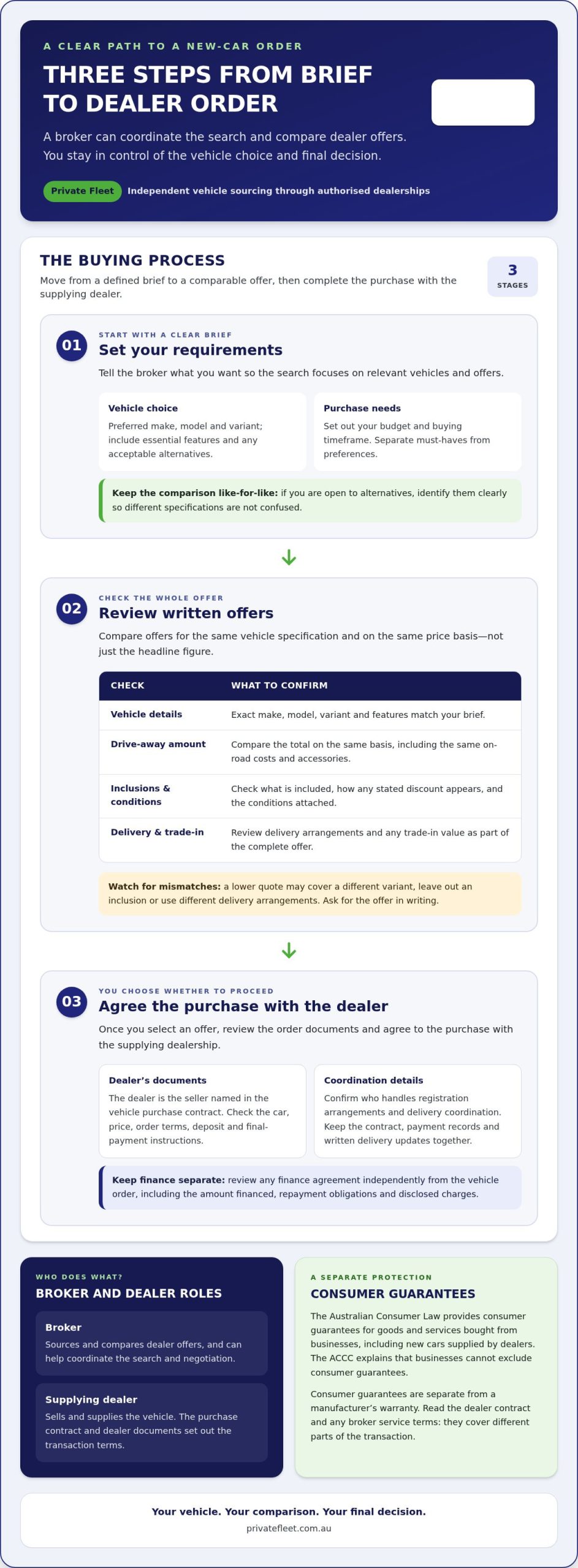
A broker-guided purchase can be organised into three stages: define your brief, compare offers, then place an order. For Australian consumer purchases, the Australian Consumer Law (ACL) provides consumer guarantees for goods and services bought from businesses, including new cars supplied by dealers.
The ACCC explains that businesses cannot exclude consumer guarantees. Read the dealer contract and any separate broker service terms, as they cover different parts of the transaction.
New-car buying steps
Start by giving the broker your preferred make, model and variant, essential features and buying timeframe. A precise brief helps the broker seek relevant offers from dealerships. If you’re open to alternatives, name them so the search can include suitable vehicles without mixing up different specifications.
- Set your requirements. Decide which features are essential and which are preferences. For example, list the cabin or safety features you want in a particular SUV.
- Review the offers. Compare vehicle details, written terms and drive-away pricing. Ask how any stated discount appears in the offer, and read conditions before choosing.
- Proceed with the dealer. Once you select an offer, review the order documents and agree to the purchase with the supplying dealership.
A broker provides independent buying assistance, but the final vehicle and purchase decision remain yours. Consumer guarantees are separate from a manufacturer’s warranty. If a new car has a problem, the ACL may provide rights against the responsible business, depending on the circumstances and nature of the fault.
Contract, payment and delivery responsibilities
The supplying dealer is the seller named in the vehicle purchase contract. The agreement sets out the car, price and order terms. Follow its instructions for the deposit and final payment, and check who is responsible for registration arrangements and delivery coordination.
The broker can assist with sourcing and communication, but the written documents set out each party’s responsibilities. The dealer supplies the vehicle and provides warranty information; the broker’s service terms describe its role. Keep the contract, payment records and written delivery updates together.
If you use finance, review the finance agreement separately from the vehicle order. Check the amount financed, repayment obligations and any disclosed charges before signing. This keeps the car purchase and credit commitment clear as separate agreements.
To discuss your preferred make or model, postcode and buying timeframe, get help with your new-car purchase.
Negotiating and finding the best customer price
Effective negotiation starts with a clearly defined vehicle and a consistent comparison point. The broker can present your requirements to dealers and assess their responses against the offer you’re considering.
Brokers can search dealer channels for electric vehicles, commercial vehicles and models with limited availability. The search can cover the exact vehicle you want, not just options readily displayed in a showroom.
Vehicle sourcing and price negotiation
Give the broker a specific brief: preferred make, model, variant, colour and acceptable alternatives. For example, if a particular electric SUV is your first choice, say whether another variant would also suit. This helps dealers respond to the same request and gives you a clearer basis for comparing offers.
Negotiation can cover both the vehicle offer and its purchase terms. Imagine comparing two offers for the same commercial vehicle: one includes accessories, while the other has different inclusions. Reviewing the written details helps distinguish a price reduction from a change in what’s supplied.
A broker can handle dealer discussions, reducing the hassle of managing each enquiry yourself. You still decide which response to pursue and what terms to accept. If you’re a member of a buying programme, state that when the broker prepares the enquiry, so eligibility can be reflected in the quote request.
Price comparisons across buying options
A manufacturer’s drive-away offer and a dealer quote can provide useful reference points, but compare their conditions carefully. An advertised offer may apply to a particular variant or come with stated conditions. Assess a broker-negotiated offer against the same vehicle, location and inclusions, not an unrelated headline price.
Use a simple comparison record to keep the basis consistent:
- Vehicle: Write down the exact model, variant and any selected options.
- Offer: Record whether the price is drive-away and what it includes.
- Conditions: Note eligibility requirements and the offer’s stated expiry.
- Decision: Compare the complete written terms before choosing.
For example, a buyer considering a limited-run variant can compare the dealer’s written offer with the manufacturer’s published offer for that same variant. If the conditions differ, record the differences rather than treating the figures as directly comparable. This makes the negotiation clearer and keeps the focus on a suitable purchase, not just a lower-looking headline price.
A strong negotiating brief gives dealers enough detail to provide comparable offers. Set out your preferred vehicle and acceptable alternatives, then assess each response on its own terms before deciding.
Customer testimonials
Customer examples can illustrate outcomes from individual new-car purchases, but they don’t predict what another buyer will receive. Each figure relates to a particular vehicle purchase.
Treat those examples as individual reference points, not a promise of savings or a typical result. The BMW, Hyundai and Mazda examples cover different models, so their figures aren’t directly comparable. If you’re considering one of those vehicles, focus on the details behind the specific example, including what the reported saving was measured against.
Testimonials may describe help with arranging a purchase, communication or the overall buying experience. Separate comments about service from claims about price. A review praising clear updates, for example, can give insight into the buyer’s experience, while a stated saving needs a clear comparison basis to be meaningful. Neither kind of feedback predicts exactly what you’ll receive.
Before relying on broker reviews, check the business name and the terms of its service. Read recent reviews from more than one source and look for specific descriptions, not just broad praise. Note whether the feedback relates to new-car sourcing, a completed purchase or another service. Before signing, read the agreement for the broker’s responsibilities, remuneration, customer charges and cancellation conditions.
A practical review check can help separate useful detail from promotional wording:
- Identify the vehicle. Look for the model and variant connected to any claimed saving.
- Understand the comparison. See whether the figure refers to a quoted retail price, another offer or a different measure.
- Look for process detail. Notice whether the reviewer explains communication, order handling or delivery coordination.
- Read the terms independently. Confirm the written service scope and payment arrangements rather than relying on a review to explain them.
For example, a testimonial naming a Mazda CX-30 G25 Astina and describing how the purchase was arranged offers more context than an unqualified claim of a competitive deal. It still represents one buyer’s experience. Use reviews to understand the service and its process, then assess your own purchase using the offer and documents prepared for you.
Customer feedback is most useful when it explains what was bought, what the broker did and how the stated outcome was calculated. That context makes testimonials a useful part of your decision without turning another person’s experience into a guarantee for your purchase.
Benefits and drawbacks of using a broker
A broker can make buying a new car less time-consuming by managing dealer enquiries and comparing offers. The value depends on your priorities, whether that’s saving time, getting negotiation support or comparing several brands. If you already have a strong dealer relationship and enjoy negotiating directly, handling the process yourself may suit you better.
One benefit is having a single point of contact for sourcing and comparing quotes. Rather than approaching dealerships individually, you can give a broker your requirements and review the offers they gather. For example, a buyer choosing between two SUV brands could use the same model, variant and postcode criteria for each enquiry.
There are trade-offs. A broker may receive a dealer commission or charge you for arranging a purchase. A dealer referral payment may also be reflected in the vehicle price, even if you pay the broker nothing directly. Before proceeding, understand how the broker is remunerated and what work the arrangement covers.
Price is only one consideration. A broker may save you the hassle of repeated conversations, but you still need to decide whether each offer suits your needs. Check the exact vehicle specification, drive-away terms, delivery arrangements and conditions. A lower price for a different variant isn’t a like-for-like comparison.
Consider these checks before authorising a broker to act:
- Clarify the service. Ask which steps the broker will handle, from dealer enquiries to purchase coordination.
- Understand remuneration. Find out whether payment comes from the customer, dealer or another arrangement, and how it relates to the quote.
- Keep control of the decision. Review written offers and choose the vehicle and terms yourself.
- Consider your own time. Compare the broker’s support with the effort you’re willing to spend contacting dealers directly.
Broker support may suit a buyer with a clear shortlist and little time to approach several dealers. Someone who prefers face-to-face negotiation with a dealership may value direct contact more. Neither approach suits every purchase: the right choice depends on how much support you want and how you prefer to make decisions.
Before proceeding, ask for the broker’s role and payment arrangement in writing. Then compare the offer with a direct dealer quote for the same vehicle. This gives you a practical basis for weighing convenience against any cost or limitations attached to the service.
Private Fleet: New Cars
Private Fleet is an independent vehicle sourcing and car buying service that helps Australian private buyers compare new-car offers. Its tender process invites multiple dealers in a national network of authorised dealerships to compete for your business. You choose the make, model and variant; Private Fleet sources dealer offers rather than holding its own vehicle inventory.
This service can suit buyers who want help comparing quotes or coordinating a purchase without contacting dealerships one by one. Trade-In Assistance can help when you replace your current car, and Car Finance is available as a separate consideration alongside the vehicle purchase. You remain in control of the final choice and purchase terms.
Share your preferred make or model, postcode and buying timeframe to get started. Get help buying my new car
Set your priorities before choosing your next step
Your next step is to turn a broad preference into a clear buying brief. Write down the features you’ll use every day, the compromises you can accept and the conditions that would make you walk away. This keeps a polished presentation or persuasive negotiation from distracting you from your priorities.
If you’re considering new vehicle broker services in Australia, the best starting point isn’t simply choosing a broker. First, decide what outcome you want: a particular variant, a clear basis for comparing the total purchase price, or less time spent contacting dealers. Once your priorities are clear, it’s easier to judge which buying route fits.
To put your brief into action, share your preferred make or model, postcode and buying timeframe with Private Fleet. This gives the conversation a practical focus while keeping the final decision in your hands.
Get help buying my new car
A considered brief is a strong start.
Frequently Asked Questions
What is a car broker?
A car broker represents a buyer in sourcing and arranging a vehicle purchase. For a new car, this can include seeking dealer offers and helping compare options, while the buyer chooses the vehicle and agrees to the purchase. The dealership remains the seller named in the contract. Before authorising a broker to act, clarify which tasks they’ll handle and how they’re paid.
Are broker-sourced cars the same as showroom cars?
Broker-sourced cars are new vehicles supplied through dealerships, not a separate type of car. The make, model, variant and specification determine what you receive, not whether a broker arranged the purchase. Compare the written vehicle details with the manufacturer’s specification for your chosen variant. Before accepting the offer, confirm the supplying dealer, order terms and delivery arrangements.
Can you get the same deal yourself?
Yes, you can contact dealers directly and negotiate your own offer. The result depends on the vehicle, the dealer’s offer and how effectively you compare equivalent quotes. A broker may save time by managing dealer enquiries, but that convenience is separate from the price itself. If you enjoy negotiating, request written offers for the same variant and compare the complete terms before deciding.
Car broker or car buyer’s agent: is there a difference?
The terms can overlap: both may describe someone helping a buyer source and arrange a vehicle purchase. The label alone doesn’t define the service. One agent may focus on finding a specific car, while another may coordinate dealer offers and purchase steps. Ask for a clear description of the work, who sells the vehicle, how the representative is paid and which decisions remain yours.
How much does it cost?
Broker costs depend on how the service is funded. A broker may charge the buyer, receive dealer remuneration, or use another arrangement. Ask which applies and whether any payment affects the offer you receive. A service price depends on the case and is provided after a quote request; relevant factors include the vehicle and assistance required. Don’t assume “no direct fee” means no dealer payment.
What do new car brokers in Australia do, and how do their services work?
New car brokers help private buyers source vehicles through dealerships and may coordinate parts of the purchase. The scope varies: some focus on finding offers, while others may also help coordinate an order or trade-in. If you’re comparing new vehicle broker services in Australia, describe the car and support you need, then review the broker’s role and written terms before proceeding.
How much do new vehicle broker services cost in Australia, including fees and commissions?
There isn’t one fee structure for every broker. Some charge customers directly; others may receive dealer commissions, and a referral payment may be reflected in the vehicle price. Ask for the payment arrangement and any customer charge in writing, including what the service covers. A service price depends on the case and is provided after a quote request; factors include your vehicle choice and requested assistance.
What information do I need to get a new vehicle quote from an Australian broker?
To enquire about new vehicle broker services in Australia, tell Private Fleet your preferred make, model and variant, postcode and buying timeframe. Add your budget range, essential features and acceptable alternatives so the discussion can focus on suitable vehicles. If you have a trade-in, include its make, model and condition. Mention if you’d like finance assistance, but assess the vehicle offer and finance terms separately.