
Buying a new car online can be straightforward, but you still need to make decisions about the vehicle, dealership and purchase terms. The online car buying process in Australia may involve an authorised dealer, a car-buying service, or both. A service can coordinate the purchase while you remain in control of the choices that matter to you.
Registration is another important step: compulsory third party (CTP) insurance is required to register a car. It is included in registration costs in every state and territory except New South Wales, where you must buy a Green Slip from a licensed insurer before registering the car.
This guide explains how a new-car purchase through a licensed dealer can progress, where buying assistance fits, and how registration and CTP relate to getting the car on the road. It also covers what to consider when reviewing an offer, so you can understand each party’s role and make informed decisions about the steps ahead.
Key Takeaways
- Compare the exact make, model and variant, then look at drive-away pricing and what each offer includes.
- A dealer tender can invite multiple authorised dealerships to compete for your specific new-car purchase.
- Allow for ongoing ownership costs as well as the purchase price, with finance considered as part of the wider budget.
- Registration processes vary across Australia; CTP insurance is included in registration costs except in New South Wales, where a Green Slip is required.
- A car-buying service can assist with negotiation, paperwork and delivery updates while you focus on choosing the right car.
How does the online car buying process work in Australia?
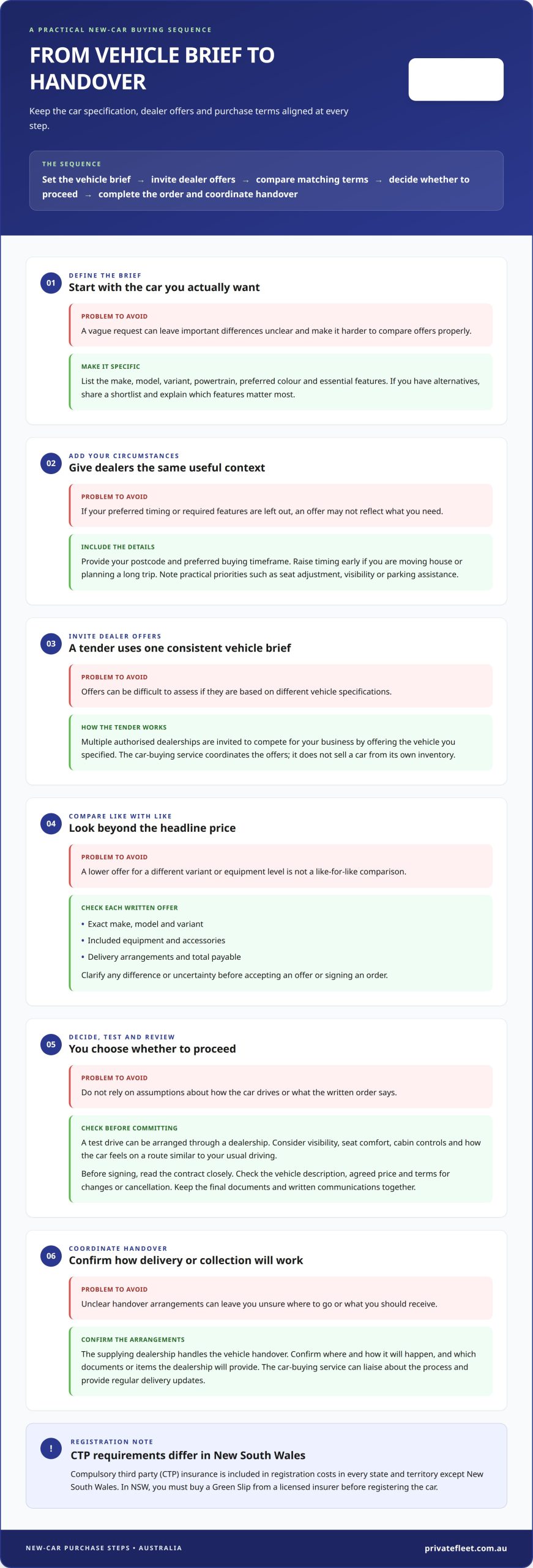
A professional car-buying service coordinates a new-car purchase through authorised dealerships. You provide a clear brief, then the service organises dealer offers, negotiation and purchase paperwork. You choose the car and decide whether to proceed. This can suit buyers who want dealerships to compete without having to manage separate conversations themselves.
Start by identifying the car you want. Specify the make, model, variant, powertrain, preferred colour and essential features. If you are considering alternatives, provide a shortlist and explain which features matter most. For example, when choosing between two SUV variants, you might prioritise seat adjustment, visibility and parking assistance over optional styling details.
Your postcode and preferred buying timeframe help shape the brief. If you are moving house or planning a long trip, raise timing early. The service can then approach dealerships in its network with consistent requirements. Clear details reduce the risk of comparing different versions of a car or overlooking a feature you need.
In a tender, multiple authorised dealerships are invited to compete for your business by offering the vehicle you specified. The service coordinates the offers rather than selling a car from its own inventory. Dealer responses can then be assessed against the same brief. If an offer includes a different variant or equipment, clarify the difference before comparing it with another offer.
Compare each offer using the vehicle details and written terms, not just the headline price. Confirm the exact variant, included equipment, accessories, delivery arrangements and total payable. A lower offer for a different specification is not a like-for-like comparison. Clarify anything uncertain during the purchase discussions before accepting an offer or signing an order.
After you select an offer, the service can assist with negotiation and coordinate paperwork with the supplying dealership. Read the contract before signing, paying close attention to the vehicle description, agreed price and terms for changes or cancellation. Keep the final documents and written communications together as a record of what you agreed to buy.
A test drive can be arranged through a dealership before you commit. Tell the service which vehicle you want to try and what practical questions you have. A drive can help you assess visibility, seat comfort, cabin controls and how the car feels on a route similar to your usual driving. The dealership arranges access to the vehicle.
Delivery or collection is coordinated with the supplying dealership. The service liaises about the process and provides regular delivery updates, while the dealer handles the vehicle handover. Arrangements depend on the purchase. Confirm where and how handover will happen, and which documents or items the dealership will provide with the car.
For example, if you want a particular hybrid variant, provide its exact specification and your postcode. The service can seek dealership offers for that vehicle, help compare responses and support the paperwork once you select an offer. You can arrange a test drive through the dealership and follow delivery updates as the order progresses.
The sequence is straightforward: set the vehicle brief, invite dealer offers, compare matching terms, choose whether to proceed, then complete the order and coordinate handover. The new-car buying process brings these stages together while keeping the authorised dealership involved in supplying the vehicle.
What should you budget for when buying and owning a new car?
Start with the new car’s drive-away price, then budget for the costs of using and maintaining it. Separating the amount due at purchase from ongoing expenses helps you judge whether a model suits your driving and circumstances. In an online car-buying process in Australia, your location and vehicle details also affect which costs appear in an offer.
Compare offers for the same make, model, variant and included features. Check what the quoted drive-away price covers, including registration-related charges, and note any separately priced accessories. A different trim level or optional equipment can change the total, so compare like with like. Keep the written offer beside your budget as you weigh up each vehicle.
Next, estimate the costs of ownership after collection. Your expected kilometres, usual routes and parking arrangements all affect your budget. A car used mainly for short suburban trips has different fuel or charging needs from one regularly driven on regional roads. Base your estimate on your own routine, and allow for changes in how you drive during the time you expect to own the car.
- Fuel or charging: estimate use from your expected driving and the vehicle’s powertrain.
- Insurance: compare cover and policy conditions for the car and your circumstances.
- Registration: include renewal costs and any relevant charges for your location.
- Servicing and maintenance: allow for scheduled servicing, tyres and ordinary upkeep.
- Parking and tolls: include these if they form part of your regular travel.
- Depreciation: recognise that a vehicle’s value can change during ownership.
Compare insurance separately. Premiums depend on factors such as the vehicle, where it is kept, who drives it and the cover selected. Read the excess, exclusions and policy conditions, not just the quoted premium. A lower premium may mean different cover or a higher excess, affecting what you pay after a claim. Include the policy cost in your regular budget rather than treating it as a one-off purchase expense.
Use the servicing schedule for the exact model and variant when estimating regular costs. Ask whether the proposed purchase includes a servicing offer, and read its terms before including it in your budget. During the pre-delivery inspection, note any agreed accessories or items needing attention, then keep the final paperwork with the vehicle records.
Finance is one part of the purchase, not a substitute for comparing cars. If you borrow, compare interest rates, fees, loan terms and the total amount repayable. A longer loan term can affect the total interest, while a deposit changes how much you borrow. Check the payment schedule and conditions in writing before accepting an offer. As you progress through the online car buying process in Australia, consider whether repayments remain manageable alongside ownership costs.
For an online car loan, the lender assesses your application and sets out the proposed rate, term, repayments and fees. Make deposits and other payments according to the written dealership contract, which should explain when they are due and which payment methods are accepted. Read the terms before paying or signing.
Cooling-off rights are not uniform across Australian states and territories for online car purchases. Read the contract’s cancellation terms before signing. Any applicable rights depend on the jurisdiction and transaction.
Finally, consider how long you expect to keep the car. Someone planning regular long-distance driving may weigh fuel use, servicing intervals, comfort and insurance differently from someone making shorter local trips. A realistic budget combines the purchase offer with expected ongoing costs, helping you compare cars on more than their initial price.
How do registration and compulsory third party insurance work for a new car?
Registration and compulsory third party (CTP) insurance are linked: a car needs CTP insurance to be registered in Australia. The process varies by state and territory, so the supplying dealership’s registration arrangements matter. Before signing, confirm whether the quoted drive-away price includes registration, CTP and number plates for your location.
In most states and territories, CTP is included in registration costs. New South Wales is the exception: you must buy a Green Slip from a licensed insurer before the vehicle can be registered. This can affect what appears in the dealer’s paperwork and what you need to arrange separately.
When buying a new car through a dealership in the state where it will be registered, buyers generally do not need to manage registration themselves. The dealer can explain which steps it handles, including the registration application and number plates. Confirm the details in writing, especially if the car is supplied across state or territory borders.
Number plates are part of preparing a new vehicle for road use. Ask how they will be issued and fitted, and whether the dealership will have them in place before collection. If the delivery location differs from the dealership’s location, clarify who coordinates registration and plates before making collection plans.
A car-buying service can assist with purchase paperwork and coordinate questions with the supplying dealership. It can help establish what the dealer is arranging for registration and CTP, and identify any steps that need your input. The dealership remains responsible for its sales and registration processes, so written confirmation helps keep responsibilities clear.
Choose insurance based on how you will use the car and your circumstances. CTP is compulsory for registration, but it is separate from optional cover such as comprehensive insurance. Consider who will drive the car, where it will usually be kept and how often it will be used. Compare policy limits, exclusions, excesses and the claims process, not just the premium.
Registration and CTP costs may be included in a drive-away offer, but the exact breakdown depends on your location and the dealer’s arrangements. Ask for an itemised purchase document showing the vehicle, registration and included charges. This makes it easier to compare offers and see whether one leaves a cost for you to arrange separately.
Once you have the registration details, update any toll account you use with the new vehicle’s number plate. This helps associate trips with the correct car. If you are transferring an existing toll tag or account, follow the provider’s process for changing vehicle details.
Before collection, review the order paperwork and confirm the registration status, CTP arrangement and number plates with the dealership. If you are collecting across a state or territory border, clarify how the vehicle will be registered for its intended location. This connects the online purchase to a properly arranged handover, without leaving registration questions until collection day.
Private Fleet’s New Car Buying Service
Private Fleet’s New Car Buying Service can help you arrange a new-car purchase through authorised dealerships. Private Fleet is an independent car-buying service, not a dealership and not a business with its own vehicle inventory. It represents your buying brief, coordinates dealer offers and helps manage the purchase.
The process starts with the car you want. Share your preferred make, model, variant, colour and key features, along with your postcode and buying timeframe. If you are deciding between options, a shortlist helps clarify your priorities. For instance, you might compare two variants for seat comfort, visibility, cabin controls and parking assistance.
Private Fleet tenders your specified vehicle to dealerships across its national network. Multiple authorised dealers are invited to compete for your business. This keeps the comparison focused on the car in your brief, rather than a similar vehicle that happens to be available. It is useful if you want dealer offers coordinated without managing each conversation yourself.
When offers come in, Private Fleet assists with negotiation and helps you understand the purchase details. Compare the exact variant, included equipment, drive-away price and any terms that affect the order. The final decision is yours. Before signing, read the dealership’s paperwork and check that the vehicle description, agreed price and included items match your expectations.
Paperwork is a key part of the service. Private Fleet assists with the documents and communication needed to progress your purchase through the supplying dealership. You still need to review and sign the dealership’s contract, which sets out your order terms. Keep the signed copy and related written details together for easy reference.
As your order progresses, Private Fleet provides regular delivery updates. Delivery arrangements remain connected to the supplying dealership and your vehicle order. Updates help you follow progress and plan based on the information provided, rather than an assumed handover date. Confirm practical collection arrangements with the dealership as the order moves forward.
Trade-in assistance can also support your new-car planning. If you have a vehicle to trade, share its details so the trade-in can be considered alongside your new-car requirements. Keep its value separate from the new car’s price when reviewing the overall offer. This makes it easier to see how each part contributes to the final arrangement.
Finance is another consideration when planning how to pay. Keep the car and its drive-away offer central, then compare any proposed finance terms, including the interest rate, fees, repayment schedule and total amount repayable. This helps you assess the car purchase first while still accounting for the effect of borrowing.
Private Fleet’s new-car buying service suits buyers who know what they want, as well as those who need help refining a shortlist before dealerships are approached. It brings tendering, negotiation support and purchase coordination into one process, while authorised dealerships remain responsible for supplying the vehicle and completing their sales arrangements.
If you’re ready to discuss your preferred make or model, postcode and buying timeframe, contact Private Fleet or call 1300 303 181.
Frequently Asked Questions
Are there any major assistance services?
Yes. A car-buying service can coordinate dealership offers and support your purchase, while trade-in assistance can help arrange a valuation for your current vehicle. Finance assistance can help you compare borrowing terms, but keep the new car’s model, variant and purchase terms at the centre of your decision. Private Fleet offers these services for private buyers, so you can choose the support that suits your purchase without treating every extra as essential.
Where and how can a professional car-buying service source a new car?
A professional service can source a new car through its network of authorised dealerships rather than from its own vehicle inventory. Private Fleet sends your requirements to dealerships through a tender process. For example, a brief can specify the exact variant and preferred equipment, keeping dealer responses focused on the same car. You can then review the offers and decide whether to proceed with a dealership.
What are the steps when a professional car-buying service buys a car online in Australia?
The process moves from defining the car to comparing dealer offers and completing an order. You provide your preferred model, variant, postcode and timing; the service approaches dealerships and helps coordinate negotiation and paperwork. Review the written offer and contract before signing. Once the order is placed, the service shares delivery updates and helps coordinate communication with the supplying dealership.
What fees and costs should you clarify when choosing a professional car-buying service in Australia?
Ask for the service’s pricing and scope in writing before proceeding, including whether any service charge is separate from the dealership’s vehicle price. Clarify what the dealer’s offer includes, such as accessories or registration-related costs, and whether optional products or finance have separate terms. The total depends on the purchase and its requirements. A written breakdown helps distinguish the vehicle cost from other items.
How can a professional car-buying service help with registration, transfer of ownership and stamp duty when buying a new car in Australia?
A service can help coordinate with the supplying dealership and clarify which registration paperwork the dealer will manage. For a new vehicle, ask how registration, number plates and any applicable stamp duty appear in the purchase documents for your state or territory. The dealership’s paperwork should show the buyer, vehicle and amounts payable. New-car registration arrangements differ from second-hand registration transfers, so confirm the process that applies to your order.
How can you assess a car-buying service’s safeguards against online car-buying scams in Australia?
Look for a documented process connecting your order, payment instructions and vehicle contract to the supplying dealership. Scamwatch warns that online car-buying scams can involve requests for deposits or transport fees, so treat unexpected payment requests cautiously and verify them against established transaction records. Before paying, check that the vehicle description and payment details match the written order. The service should explain how it coordinates with the dealership, rather than asking you to rely on informal messages alone.