
Could a strong trade-in offer make a new-car deal look better than it really is? When you’re replacing a car, it’s sensible to want a fair value for your current vehicle and a clear price for the one you plan to buy. The challenge is that the two figures can be bundled together, making them harder to assess separately. A trade in valuation and car buying service can help bring both decisions into one coordinated process without losing sight of what each offer means.
This guide explains what shapes a trade-in valuation, from kilometres and condition to service records and demand for your model. You’ll also learn how to compare the trade-in amount with the new-car offer, prepare your vehicle for assessment and keep the transaction straightforward. Private Fleet is an independent Australian vehicle sourcing and car buying service that works with authorised dealerships; its tender process invites multiple dealers to compete for your new-car business. With a clear view of each part of the deal, you can make a considered choice and reduce the effort of managing separate sale and purchase conversations.
Key Takeaways
- Prepare accurate details about your car’s variant, kilometres, condition and service history to support a well-informed valuation.
- Use a trade in valuation and car buying service to coordinate your current car’s trade-in with sourcing your next new car.
- Compare the new-car drive-away quote, trade-in offer and other stated terms in separate columns before judging the overall deal.
- Understand how a dealer tender works: multiple authorised dealerships are invited to compete for your business.
- Shortlist your preferred model and variant, then weigh comfort, visibility, controls and ownership plans alongside your budget and timeframe.
Trade-in valuation and a car buying service: how they fit together
A trade-in valuation estimates what a dealer may offer for your current car as part of a purchase. It’s one part of the decision, not the price of your next car and not a guaranteed sale price. Keeping the trade-in offer and new-car quote visible as separate figures makes it easier to understand each on its own merits.
A trade-in and a private sale involve different processes. Trading in can bring the sale of your current car into the new-car transaction. A private sale means managing the sale separately, including finding a buyer and handling discussions. Neither route automatically produces a better outcome for every vehicle or buyer. The right choice depends on the offer, the terms and how much time and administration you’re prepared to take on.
What does a trade-in valuation tell you?
A valuation is an assessment used to inform a dealer’s proposed offer. It can reflect the car’s make, model, variant, age, kilometres, condition and buyer demand. For an overview of factors influencing car valuation, see Wikipedia’s summary of valuation approaches.
An online or preliminary estimate may be based on information you provide. A final offer can differ if the car’s details or condition aren’t as described, or after the vehicle is inspected. For example, an assessor may identify wear or damage that wasn’t apparent from the initial information. Treat an indicative figure as a starting point, then review the offer made for the actual vehicle.
What does a car buying service do alongside a trade-in?
Private Fleet is an independent Australian vehicle sourcing and car buying service. It works with a national network of authorised dealerships and doesn’t hold its own vehicle inventory. Through its tender process, multiple dealers are invited to compete for your business, while the service supports you through sourcing and the new-car purchase.
Trade-in assistance can sit alongside that support, helping you consider the current car and your next purchase as connected steps. Still, assess the figures separately: a new-car offer and a trade-in offer are distinct parts of the arrangement. A stronger figure in one doesn’t, on its own, show that the overall terms suit you best.
Explore the new-car buying service to see how vehicle sourcing and purchase support can fit into your plans. The aim is a clearer process, with less need to manage every conversation independently.
What affects your trade-in valuation, and how can you prepare?
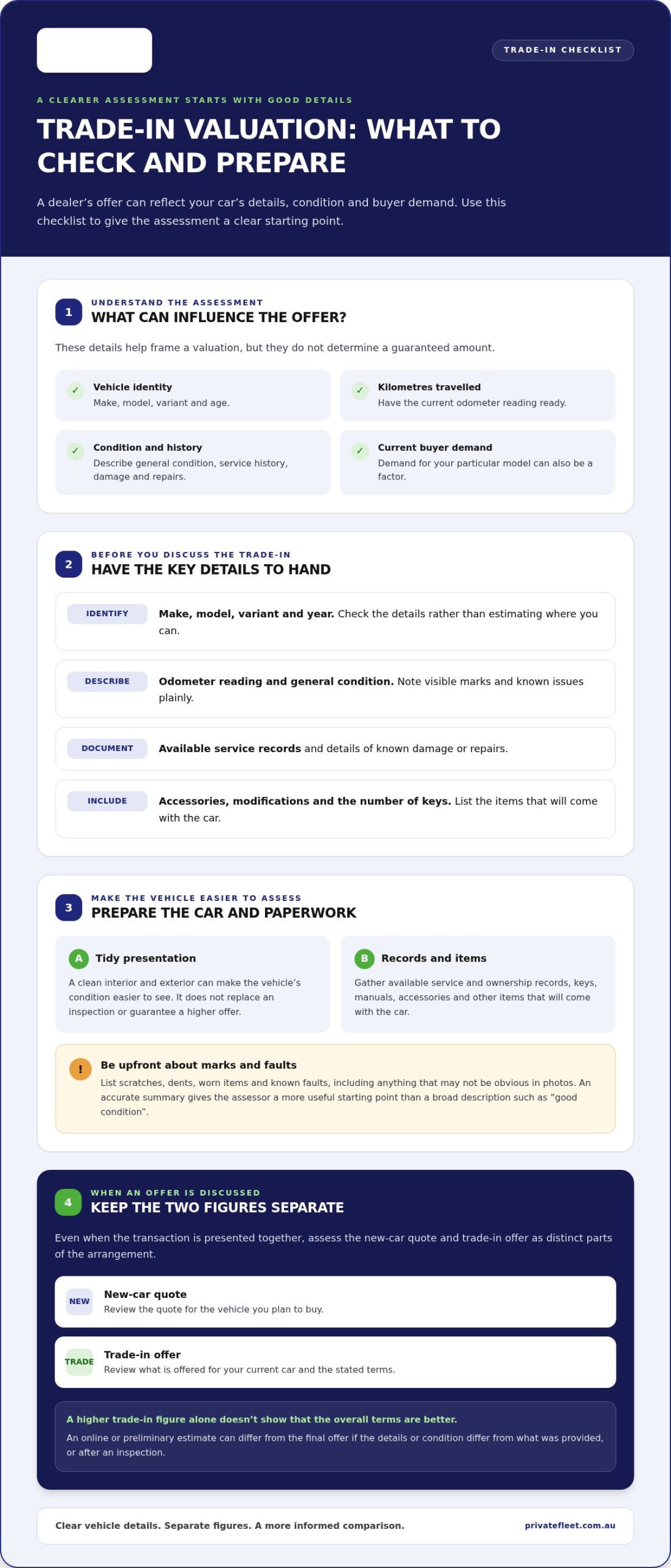
A car’s make, model, variant, age, kilometres, condition and current buyer demand can all influence a trade-in offer. These factors help frame an assessment, but they don’t determine a guaranteed amount. Presenting accurate information and having useful records ready helps the dealer assess your car on a clearer basis.
Some details are easy to report yourself, such as the odometer reading, service history and visible marks. Other aspects, including the full condition of the vehicle, may need an in-person assessment. A clean presentation can make visible wear easier to identify, but it can’t replace an inspection or promise a higher offer.
Which vehicle details should you have ready?
Before discussing the trade-in, write down the details that identify your car and describe how it has been used. Be accurate rather than estimating where you can check the information. Missing or incorrect details may affect an initial assessment or lead to questions when the car is reviewed.
- Vehicle identity: make, model, variant and year.
- Usage: current odometer reading in kilometres and general condition.
- History: available service records and any known damage or repairs.
- Equipment: accessories, modifications and the number of keys you have.
Include modifications even if they seem minor, and describe known issues plainly. An accurate summary gives the assessor a more useful starting point than a broad description such as “good condition”.
How can you prepare the car and its paperwork?
Give the car a tidy, straightforward presentation. A clean interior and exterior make it easier to see the vehicle’s condition, but cosmetic preparation shouldn’t be treated as a way to guarantee a particular offer. Note scratches, dents, worn items or other issues rather than relying on them to be discovered later.
- Gather available service and ownership records.
- List the keys, manuals, accessories and other items that will come with the car.
- Record known damage or faults, including anything that may not be obvious in photos.
Keep the information together so you can refer to it during discussions about your next car. A trade in valuation and car buying service can bring the assessment and new-car purchase into a coordinated process, while clear vehicle details help keep the trade-in part transparent. If you’re planning a purchase, you can share your car details and new-car plans with Private Fleet.
How to compare a trade-in offer with your new-car deal
Keep the new-car quote and the trade-in offer in separate columns, even if they’re discussed as one transaction. This makes it easier to see what you’re being offered for each part and whether the terms suit your priorities. A higher trade-in figure alone doesn’t establish that the overall arrangement is better, just as a lower new-car quote may not be like-for-like if the vehicle or included items differ.
Which figures and terms belong in the comparison?
For each option, record the quoted drive-away price for the new car and the proposed trade-in amount as distinct figures. Then compare the same make, model and variant, along with any stated inclusions and quote conditions. Note an expiry date if one is provided; don’t assume two offers remain available for the same period.
| What to compare | Details to record |
|---|---|
| New-car offer | Drive-away quote, make, model, variant and stated inclusions |
| Trade-in offer | Proposed amount for your current car and any conditions attached |
| Other terms | Quote conditions, included items and any stated expiry |
Look at the whole arrangement only after reviewing each entry. A trade-in offer can make the amount you need to pay for the next car appear smaller, but that changeover figure doesn’t show by itself whether either original offer is competitive or suitable. The trade in valuation and car buying service should help you organise the steps, not leave you guessing how the figures were combined. Ask for the new-car and trade-in amounts to be clear in the written information you’re comparing.
How do convenience and private-sale alternatives compare?
A trade-in can bring the sale and purchase together, reducing the separate tasks involved in finding a buyer. A private sale may involve preparing a listing, responding to enquiries, arranging inspections and negotiating, as well as completing the sale. These routes involve different balances of effort and convenience; neither guarantees a better financial outcome for every car or seller.
Choose by weighing the offers alongside the time and administration you’re comfortable taking on. Private Fleet’s process supports the new-car purchase and trade-in discussion, while its dealer tender invites multiple authorised dealerships to compete for your business. For more detail on the steps, read the guide to how car buying works. If you’d like help organising your next-car priorities, share your preferred make and model, postcode and buying timeframe.
What happens when a car buying service coordinates your trade-in?
A car buying service can bring new-car sourcing and trade-in assistance into one organised process, while keeping each decision clear. Private Fleet is an independent Australian vehicle sourcing and car buying service that works with a national network of authorised dealerships. It sources vehicles through dealers rather than holding its own inventory.
The process generally follows these steps:
- Share your requirements. Provide your preferred make and model, variant preferences, postcode and buying timeframe. Include details of your current car and what matters most to you in a trade-in.
- Source the new car. Your requirements are used to seek suitable responses from authorised dealerships.
- Review dealer responses. The tender process invites multiple dealers to compete for your business. Consider the new-car details and terms against your preferences.
- Discuss trade-in assistance. Share the information about your current vehicle so its proposed trade-in terms can be considered alongside the purchase.
- Assess the figures separately. Review the new-car offer and trade-in offer as distinct parts of the arrangement before deciding whether the overall terms work for you.
This approach can reduce the need to manage separate sourcing and trade-in conversations yourself. It doesn’t remove the need to review the details: check that the proposed car matches your chosen model and variant, and understand the basis of the trade-in offer before making a decision.
What information helps start the buying process?
A concise, accurate brief helps keep the discussion focused. Note your preferred make and model, any variant preferences, your postcode and when you’re looking to buy. If you’re still deciding between options, describe your priorities, such as cabin comfort, visibility, ease of parking or how you expect to use the car.
For the trade-in, gather the current car’s make, model, variant, year, odometer reading, condition and available service history. Add any known damage, modifications, accessories and trade-in priorities. Clear details help support the assessment and make it easier to discuss both parts of the transaction.
How does the dealer tender fit into the purchase?
Private Fleet’s tender invites multiple authorised dealers to compete for your business based on your new-car requirements. Their responses can then be reviewed against the vehicle and terms you’re seeking. A tender is a way to invite competing dealer responses, not a promise of a particular price, saving, stock status or delivery date.
Trade-in assistance sits alongside this sourcing and purchase support. You can consider the dealer’s proposed new-car terms separately from the trade-in offer, so one figure doesn’t obscure the other. Read the car buying process for more detail on how the service works.
Choose your next step with clear trade-in and new-car priorities
A short, considered brief can make it easier to compare your trade-in with the new-car options available to you. Decide what matters most before requesting assistance, so you can assess the vehicle, terms and process against your own priorities rather than focusing on a single figure.
What should you decide before requesting assistance?
Start with a shortlist and identify your preferred variant, as equipment and specifications can differ between versions of the same model. Check current Australian specifications for the vehicles you’re considering. Think about how each car will suit your driving and how long you expect to keep it. Comfort, visibility, ease of entry and exit, and whether the controls feel intuitive can matter just as much as the headline features.
Use this checklist to organise your priorities:
- Shortlist: list your preferred make, model and vehicle type, plus acceptable alternatives.
- Variant: note the exact variant you favour and any must-have features.
- Budget: set your priorities for the new-car terms and the amount you’re comfortable contributing.
- Trade-in: gather your current car’s details and decide what matters most in its assessment and handover.
- Timing: note your buying timeframe and any practical considerations around changing vehicles.
Be clear about the balance you want. You might place greater importance on a particular new-car specification, a straightforward trade-in process or having the proposed figures clearly separated for comparison.
How can Private Fleet help with the next step?
Private Fleet is an independent Australian vehicle sourcing and car buying service that works with a national network of authorised dealerships. Its tender process invites multiple dealers to compete for your business. The service supports the new-car purchase, with trade-in assistance as part of the process. You can request help without treating a valuation as guaranteed or committing to a particular purchase outcome.
Share your preferred make or model, postcode and buying timeframe, along with your variant preferences and current vehicle details. This gives the process a useful starting point and helps keep your new-car and trade-in priorities in view. A trade in valuation and car buying service can help coordinate the decisions, while you remain able to review each proposed term on its own.
Bring your trade-in and next-car plans together
A fair assessment starts with accurate details about your current car, including its variant, kilometres, condition and service history. When you compare offers, keep the trade-in amount separate from the new-car drive-away quote so you can see what each part of the deal involves.
A trade in valuation and car buying service can coordinate the process without making the two figures one unclear number. Private Fleet is an independent Australian car brokerage firm founded in 1999. It works with a national network of authorised dealerships, and its tender process invites multiple dealers to compete for your business. Trade-in assistance can sit alongside support with sourcing and purchasing your next new car, without guaranteeing a particular valuation or outcome.
To get started, bring together your preferred make and model, postcode, buying timeframe and details of your current vehicle. A clear brief can help keep your priorities in focus as you consider the responses and decide what suits you.
Get help buying my new car
With the figures clearly separated and your priorities set, you can approach your next-car decision with greater confidence.
Frequently Asked Questions
How is a trade-in valuation calculated?
A trade-in assessment can consider the car’s make, model, variant, age, kilometres, condition, service history and current buyer demand. The information supplied and any later vehicle assessment can also affect the proposed offer. Treat an online estimate as indicative, not guaranteed. Once you receive a written offer, compare it separately with the new-car drive-away quote and note any conditions before deciding.
Can I trade in my car when using a car buying service?
Yes, trade-in assistance can be part of a new-car buying service, alongside sourcing your replacement vehicle. Private Fleet sources vehicles through a national network of authorised dealerships; it doesn’t sell from its own inventory. Its dealer tender invites multiple dealers to compete for your business. Ask for the proposed trade-in terms and new-car quote as separate figures, so you can assess each part of the arrangement clearly.
Is a trade-in easier than selling privately?
A trade-in can be more convenient because it may coordinate your current car with your next purchase. A private sale is a separate process, which can involve preparing a listing, responding to enquiries, arranging inspections and discussing terms with potential buyers. The better fit depends on how you weigh time, simplicity and the offers available. Compare the actual trade-in offer and new-car quote rather than assuming one approach will always suit you better.
Does trading in my car affect the price of the new car?
A trade-in offer and a new-car quote are separate figures, even if they’re discussed during the same purchase. Compare the quoted drive-away price, trade-in amount and any stated conditions individually. This helps you understand the full arrangement instead of relying on a combined changeover figure. A trade-in doesn’t automatically improve or worsen the new-car price, so assess the quoted vehicle and trade-in terms on their own merits.
What should I provide to get a trade-in valuation?
Provide the car’s make, model, variant, year and odometer reading, along with its service history and an honest description of its condition. Include known damage, modifications, accessories and how many keys you have. Accurate details help the assessment reflect the vehicle being discussed. An initial estimate may remain indicative until the vehicle and its information have been reviewed, so note any conditions attached to a written offer.
Can a car buying service guarantee the best trade-in price?
No particular trade-in price or outcome should be assumed. A car buying service can help coordinate new-car sourcing and trade-in assistance, but the proposed terms depend on the vehicle and dealer offer. Review the trade-in amount separately from the new-car quote, including any conditions. Private Fleet’s tender invites multiple authorised dealers to compete for your business, but it doesn’t guarantee a lowest price or a saving.
What details should I have ready before using a car buying service?
Have your preferred make and model, variant preferences, postcode and buying timeframe ready. If you’re considering a trade-in, gather your current car’s identifying details, kilometres, service records and a clear description of its condition. It also helps to note the features and ownership priorities that matter to you. This information gives the new-car search and trade-in discussion a practical starting point tailored to your circumstances.