
A trusted car buying agency in Australia makes its process clear: what it negotiates, how it presents offers and savings, and what support it provides with your purchase. The service should be tailored to the new car you want, rather than treating every buyer the same.
It’s reasonable to want a clear view of the fees and final drive-away price before committing. Compare what the service includes, how offers are assessed and whether the support suits your needs.
Private Fleet is an independent new-car buying service that uses a tender process to invite dealers across Australia to compete for your preferred vehicle. It manages the purchase process, from sourcing and negotiation to paperwork, with trade-in assistance and finance available too.
Key Takeaways
- Assess a car buying service by looking for a clear process, relevant reviews and transparent explanations of its role.
- Understand what the service includes and how it is compensated before deciding whether it suits your purchase.
- Compare new-car offers on the same make, model, variant and drive-away terms to make price differences easier to judge.
- Read savings claims in context, focusing on what was compared and how the result was calculated rather than relying on a headline figure.
- Share your preferred vehicle, postcode, timeframe and priorities so the buying assistance can be tailored to your needs.
How can you assess a trusted car buying agency in Australia?
An Australian car-buying agency demonstrates trust through a transparent process, clear written terms and verifiable business details. Assess its reviews alongside how it handles quotes, dealer negotiations, paperwork and delivery updates.
Customer Reviews and Ratings
Read individual customer reviews, not just the overall rating. Look for specific descriptions of the buying experience, such as how communication worked, whether the process was explained and how questions were handled. These details help you judge whether the support matches what you need.
Compare feedback across review platforms and look for recurring themes. A comment about clear updates during ordering, for example, gives more context than a rating alone. Treat brief praise or criticism as limited evidence, and don’t assume one customer’s experience predicts yours.
Check when reviews were posted and whether they concern new-car purchases. Experiences involving a different service or an older process may not reflect the assistance you’re considering. This distinction makes review patterns more useful.
Independent Reviews and Comparisons
Look for independent comparisons that explain what services were assessed and how. A useful comparison distinguishes vehicle sourcing, dealer negotiation and paperwork support rather than treating every agency as identical. Check that the information is current and relevant to Australian new-car buyers.
Car reviews can also help you assess advice about a vehicle, but they don’t rate an agency’s service. Use them to understand a model’s strengths and trade-offs, then consider whether the agency can source your preferred make, model and variant. Australian car reviews can support that vehicle research.
When a comparison discusses quotes, check whether they use the same variant and drive-away basis. A different specification or price basis can make two offers seem comparable when they aren’t.
Market Insights and Trust Checks
Check whether an agency explains how changes in the market affect your options. New models, variants and dealer offers can change, so useful guidance identifies the vehicle being discussed and clarifies when an offer applies.
Before proceeding, read the service terms and note what the agency handles, how it communicates with dealers, and what remains your decision. Ask for the process and any compensation arrangements to be explained clearly. A trustworthy service should make those points understandable before you commit.
Finally, judge claims against evidence. If an agency describes savings, look for the comparison basis, matching vehicle details and any conditions. Clear explanations make it easier to decide whether the service fits your purchase.
Buyer fees and how services are compensated
Before proceeding, understand the service inclusions and payment terms. Compare what the agency handles with what you would arrange directly through a dealer.
Agency Fees and Compensation
A car-buying agency or concierge should explain its compensation in its service terms. Find out whether the buyer, a dealer or another party pays, and whether that arrangement could influence which offers are presented. Before agreeing, clarify what the service covers and when payment is due.
For example, confirm whether sourcing a specified vehicle, negotiating with dealers and coordinating paperwork are included. Ask how a change in your preferred model affects the arrangement, and whether optional assistance is separate. Written answers make it easier to compare the full service, rather than judging it by one fee alone.
Comparing Agencies with Direct Dealer Buying
Buying directly means discussing the vehicle and offer with a dealer yourself. An agency can act as an intermediary, coordinating dealer discussions and negotiations. The practical difference is who manages those conversations and how much of the process you want handled for you.
Compare the same make, model, variant and drive-away inclusions. Then weigh the agency’s written terms against the time you would spend handling discussions yourself. The dealer supplies the new vehicle; the agency supports your purchase process.
Australian Consumer Law applies nationally to new-car purchases and relevant service arrangements. Read the agency agreement and vehicle sale documents, and identify who is responsible for each step. Keep copies so the agreed terms are clear.
Reduce scam risks by checking the business identity, reading written terms and understanding where payments go. Be cautious if someone pressures you to transfer money before explaining the agreement, vehicle or payment process. Keep records of quotes and signed documents, and make sure the payment instructions match the paperwork.
Car-buying services may operate nationally or serve buyers through particular networks. Coverage can vary between agencies, so establish whether the service can arrange your preferred new vehicle for your postcode. Location may affect which dealers can participate and how purchase coordination is handled, even when the agency’s process is otherwise consistent.
Car purchase price negotiation and new-car sourcing
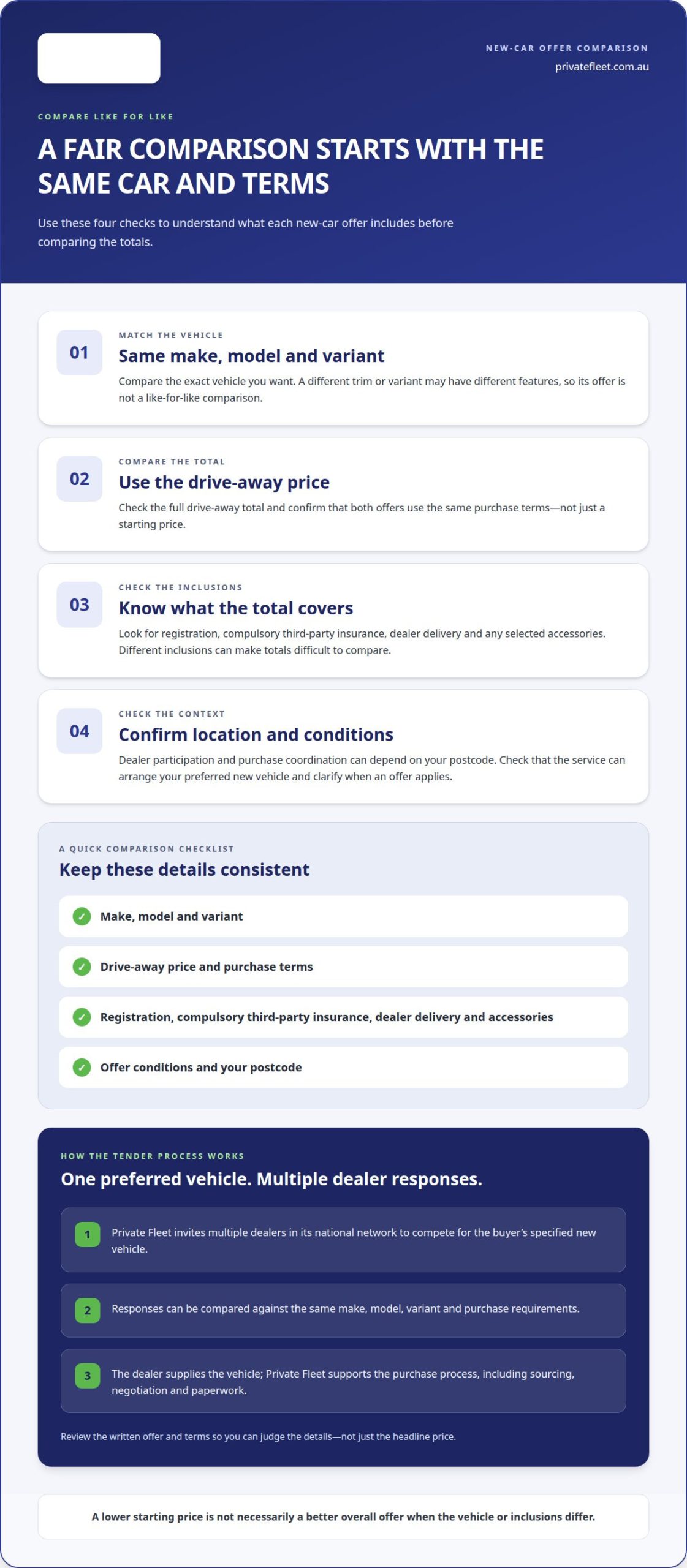
A fair comparison starts with the same new vehicle, variant and purchase terms. A tender process can invite multiple authorised dealers to compete for a buyer’s specified car, keeping the model and requirements consistent. A trusted car buying agency in Australia can coordinate this process and help make the responses easier to compare.
For example, compare a quote for a particular SUV variant with that same variant, not a different trim with fewer features. Check the drive-away total and what it includes, such as registration, compulsory third-party insurance, dealer delivery and selected accessories. A lower starting price may not be a better overall offer if the inclusions differ.
Negotiation is more than asking for a discount. It can involve seeking a clearer total price, reviewing included accessories or discussing the terms attached to an offer. Your preferred colour, specification, postcode and timeframe can affect which dealer offers are relevant. A like-for-like comparison makes differences easier to see, without treating any saving as certain.
With a tender, the agency sends your exact vehicle requirements to multiple authorised dealers in its network. Dealers can then compete for that purchase. The agency coordinates the responses and can present offers for comparison, keeping discussions focused on your chosen vehicle rather than unrelated alternatives. This can be useful if you want an intermediary to organise dealer responses.
Before deciding, compare each written offer against the same details:
- Make, model, variant and any factory-fitted options.
- Drive-away price and the items included in that total.
- Accessories, delivery arrangements or conditions attached to the offer.
- Offer timing and the process for accepting it.
Consider this hypothetical example: two offers relate to the same new-car variant, but one includes accessories and the other doesn’t. Comparing only their headline totals could obscure the difference. A like-for-like review identifies what each offer provides and whether those items suit your needs. A trusted car buying agency in Australia should make the comparison basis clear rather than relying on a headline saving.
A “great deal” depends on more than a low figure. The chosen specification, useful inclusions, clear conditions and suitable purchase arrangements all matter. Written offer details give you a record of the comparison and its basis, helping you decide whether to proceed.
For a new-car purchase, clear sourcing and tender steps help keep the chosen vehicle and offers aligned. The new-car buying process explains how sourcing and tendering can fit into the broader purchase.
How to assess claims about customer savings
Assess a savings claim by checking the comparison behind it, not just the headline. For a new-car purchase, the make, model, variant, location and price inclusions should match. That makes it easier to see whether the reported difference reflects negotiation or a different vehicle or deal.
Start with the stated reference price. Was the comparison made against an actual written offer, an advertised online car price or a recommended retail price? These are different baselines. Check whether both figures use the same drive-away terms, accessories and offer conditions. Without that context, a saving figure tells you little about the purchase.
For any customer-reported result, look for a clear explanation of the transaction and how the result was calculated. Useful details include:
- The make, model and variant involved.
- The location and timing of the comparison.
- Whether the amounts included registration, delivery and accessories.
- Whether finance, trade-in value or other products affected the total.
Consider this hypothetical example: a buyer compares two written offers for the same new-car variant. One includes accessories, while the other does not. The headline difference alone cannot show which offer represents better value. Comparing the inclusions and final drive-away amounts gives the buyer a clearer basis for judging the reported saving.
Finance needs separate attention. A lower vehicle price does not, by itself, show the total cost of a finance arrangement. Compare the relevant finance terms and costs separately from the vehicle price, and avoid counting a trade-in allowance as a discount on the new car. Keeping each part distinct helps explain what changed and why.
Also consider whether a published result is one person’s account or a broader pattern. A single customer experience can illustrate a process, but it cannot establish what every buyer will achieve. Look for the calculation method, the original comparison and any conditions. If those details are absent, treat the claim as a headline rather than a useful measure.
Finally, ask what the claimed saving leaves out. If an online car offer excludes delivery or required items, while another figure includes them, the comparison is incomplete. A transparent account should make the baseline and inclusions easy to follow. That gives you a practical way to assess the claim and decide what information you need before moving forward, without assuming there is nothing more to compare.
Personalised buying assistance
Useful assistance starts with your preferred vehicle and the details that shape its purchase. Make, model, variant, postcode, timeframe and practical needs help define which dealer offers are relevant. A clear brief also reduces the hassle of discussing options that don’t suit your plans.
Start with the vehicle itself. If you have a firm shortlist, identify the exact model and variant. If you’re deciding between options, explain what matters most, such as cabin space, ease of entry, visibility or regular regional travel. That gives the buying service a basis for narrowing the search without assuming one vehicle suits every buyer.
Location matters too. A postcode helps identify relevant authorised dealers and frame delivery arrangements. A buyer in a regional town may have different practical considerations from someone near a metropolitan dealership. The postcode doesn’t change the preferred vehicle, but it can help focus the sourcing process on offers connected to the buyer’s location.
Timeframe is another useful part of the brief. Share whether you’re planning ahead or working towards a particular purchase period. This helps set expectations for the search and keeps discussions grounded in your timing, rather than treating every request as identical.
A useful starting brief can include:
- Your preferred make, model, variant and colour, if decided.
- Your postcode and the area where the vehicle will be registered.
- Your intended buying timeframe.
- Features that matter, such as easy access, comfortable seating or parking assistance.
- Whether you want help coordinating a trade-in alongside the new-car purchase.
For example, a buyer downsizing from a large vehicle might prioritise a manageable body size, comfortable seats and clear visibility. Another buyer travelling long distances may place greater weight on cabin comfort and the vehicle’s suitability for regular highway trips. These examples show how individual priorities can shape assistance without relying on age-based assumptions.
Trade-in assistance can also be relevant when replacing a vehicle. Keeping the new-car choice and trade-in discussion distinct helps clarify each part of the transaction. If a household member will regularly drive the vehicle, their preferences can also inform the shortlist before negotiations begin.
Personalisation doesn’t mean the vehicle selects itself. You remain the decision-maker; the service organises sourcing and negotiation around your requirements. Clear priorities let the assistance focus on a suitable new-car purchase, rather than adding options that don’t fit your needs.
Private Fleet: New Car Buying Service
Private Fleet is an independent car buying agency that helps Australians source a new vehicle through a national network of authorised dealerships. It doesn’t hold its own vehicle stock. Instead, its tender process invites multiple dealers to compete for your business based on the make, model, variant and requirements you specify.
This can suit you if you’ve chosen a vehicle but would rather not coordinate dealer discussions and negotiations yourself. Private Fleet sources offers based on the details you provide and supports the purchase process through negotiation and paperwork. You remain in control of the vehicle you choose and whether to proceed with an offer.
Clear requirements help focus the search. Share your preferred vehicle, postcode, buying timeframe and any features that matter. If you’re weighing up variants, explain your priorities so the options can be considered against your needs. Private Fleet’s new-car buying service focuses on sourcing new vehicles rather than holding its own inventory.
As dealer responses come in, the process supports a like-for-like review of offers. The vehicle specification and purchase terms matter, so a lower headline figure alone doesn’t tell the whole story. Private Fleet handles dealer negotiations and coordinates purchase paperwork, keeping the process connected from offer discussions through to ordering.
After an order is placed, customers receive regular updates on delivery times. The authorised dealership remains responsible for supplying the vehicle, while updates help you follow progress without relying on a promised delivery date.
If you’re replacing a vehicle, Private Fleet’s Trade-In Assistance can help with that part of the purchase. Car Finance is also available if you’re considering finance alongside your new-car purchase. You can consider these options in the context of your vehicle choice and overall buying plans.
To discuss your preferred make or model, postcode and timeframe, Get help buying my new car with Private Fleet, or call 1300 303 181.
Frequently Asked Questions
Can these services source any make or model?
Private Fleet can source new cars across makes and models, rather than limiting buyers to one manufacturer. If you’re still choosing, share a shortlist and the features that matter, such as seating comfort, cabin space or parking assistance. That gives the sourcing process a practical starting point. The specific vehicle and dealer response determine the terms of an offer.
What car-buying agencies operate in Australia?
Australian buyers can consider independent car-buying agencies and broker-style services that help arrange new-car purchases. Their processes and inclusions differ, so compare the role each service takes in sourcing, negotiation and paperwork. Private Fleet is an independent Australian car-buying agency. This article focuses on its new-car purchasing process, rather than ranking or naming other providers.
Which Australian car-buying agencies have the best customer reviews?
There isn’t a reliable basis for naming an agency as having Australia’s best reviews. Ratings can change, and a high score alone may not show how a service handles the details you care about. Read recent reviews about new-car purchases and look for specific comments on communication, offer explanations and paperwork. Then consider whether those experiences match the assistance you’re seeking.
What services do car-buying agencies in Australia provide?
Services vary, but a new-car agency may help source a vehicle, negotiate with dealerships and coordinate purchase paperwork. Private Fleet also provides trade-in assistance and car finance for buyers considering those options alongside a new-car purchase. For example, a buyer replacing a family car can discuss the new vehicle first, then consider whether support with the trade-in or finance would be useful.
How much do car-buying agencies in Australia charge?
There’s no single fee that applies to every car-buying agency or purchase. Before agreeing to a service, understand what the service covers, when any payment is payable and whether optional assistance is separate. Compare the service inclusions as well as the cost, so you know what you’re paying for.
What is the process for using a car-buying agency in Australia?
Typically, you provide your preferred vehicle, postcode, timeframe and priorities. Private Fleet then sources relevant offers, coordinates negotiations and paperwork, and supports the purchase if you choose to proceed. If you haven’t settled on a variant, say so at the start. That lets the conversation account for your shortlist instead of treating your first preference as a final decision.
Do car-buying agencies in Australia inspect vehicles and negotiate prices?
Some agencies negotiate new-car offers, but an inspection isn’t automatically part of that service. Private Fleet sources new vehicles and negotiates with authorised dealers; it doesn’t provide mechanical repair services. For a new-car offer, focus on the exact model, variant, inclusions and written purchase terms. Understand the agency’s role before proceeding.
Are car-buying agencies available in every Australian state and territory?
Private Fleet serves buyers across Australia through its national dealer network. Your postcode helps identify relevant dealers for your preferred new vehicle.