
What if the trade-in offer looks strong, but the new-car price tells a different story? It’s easy to focus on one figure and miss the total cost of changing cars. Good vehicle trade in assistance for new car buyers helps you weigh the value of your current car against the new-car deal, so you can make a clearer decision.
A trade-in is usually simpler, while a private sale may bring a higher price but involves more work. The right choice depends on the offer, your time and the practicalities of handing over your current car. This guide explains how to assess your vehicle, compare both selling options and look beyond the headline figures to the full changeover. You’ll also find ways to plan the handover around your new car’s delivery, helping reduce the chance of being left without transport or managing two cars at once. Private Fleet can assist with the trade-in as part of the wider new-car purchase, sourcing vehicles through a national network of authorised dealerships. Its tender process invites multiple dealers to compete for your business, while you keep sight of the whole deal.
Key Takeaways
- Prepare your car’s make, model, variant, year, kilometres and condition to give the trade-in assessment useful context.
- Compare new-car quotes on the same model and variant, with the price basis clearly stated, before judging the overall deal.
- Weigh the time and coordination involved in a private sale against the simpler handover of a trade-in.
- Use vehicle trade in assistance for new car buyers to bring the current-car disposal into the wider purchase plan.
- Keep quotes, trade-in details and agreed conditions together so the changeover stays organised as your new car is ordered.
Vehicle trade-in assistance for new car buyers: what help can make the changeover easier?
Trade-in assistance helps coordinate your current vehicle with the purchase of your next car. The key is to assess the changeover as one connected decision: the new-car deal and the disposal of your existing vehicle considered together. That gives you a clearer view of the overall arrangement, rather than letting a trade-in figure or new-car quote dominate on its own.
Convenience can make a trade-in appealing, especially if you want fewer separate steps. But an easier process doesn’t automatically make it the best choice. Selling privately may suit someone willing to manage the sale themselves, while a trade-in may suit a buyer who values having the current car considered as part of the new-car purchase. Compare the full terms and practical effort before deciding.
This guide is for people buying a new car and working out how to manage their current one at the same time. It isn’t a general guide to car finance or selling used vehicles. Instead, it focuses on where trade-in assistance fits within the new-car buying process, and how coordination can help keep the changeover clearer.
What does trade-in assistance mean when buying a new car?
Trade-in support brings the existing vehicle into the wider purchase conversation. Rather than treating the new car and old car as unrelated transactions, you can consider how the proposed trade-in terms sit alongside the new-car offer, ordering steps and handover arrangements. This makes it easier to understand what’s included and what still needs to be organised.
Private Fleet is an independent Australian vehicle-sourcing and car-buying service. It sources new vehicles through a national network of authorised dealerships, with a tender process that invites multiple dealers to compete for the buyer’s business. Private Fleet doesn’t own the vehicles it sources. Its trade-in assistance is part of the broader new-car purchase process, not a claim that every buyer will receive the same outcome.
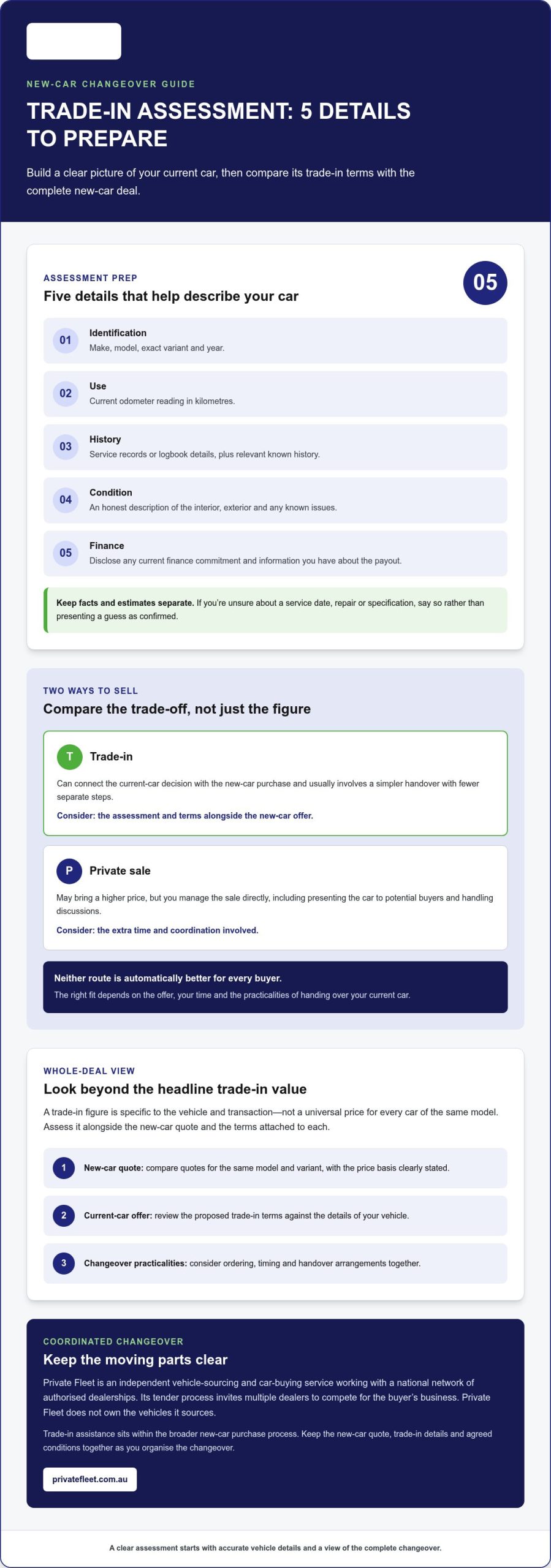
Selling privately is a different route: you manage the sale directly, including presenting the car to potential buyers and handling the discussions. A trade-in can connect the old-car decision with the new-car purchase; a private sale gives you a separate transaction to manage. Neither approach is automatically better for every buyer.
Who may find a coordinated changeover useful?
A coordinated approach can suit buyers who want a more structured path from their current car to a new one. If you’re busy, keeping the purchase and trade-in details together may make it easier to track decisions and timing. It can also help if you’re choosing a different vehicle for a specific reason, such as downsizing, changing your commuting needs or preparing for longer trips.
Start by identifying what matters most: fewer tasks, more control over the sale, or a clear view of the whole new-car deal. The concept of car valuation also helps explain why different types of value, including trade-in and private-sale value, shouldn’t be treated as interchangeable. Your next step is to compare those options in the context of your purchase, not in isolation.
What shapes a trade-in assessment, and what information should you prepare?
A useful trade-in assessment starts with a clear, accurate picture of the car. The exact variant, kilometres travelled and condition all help describe the vehicle being considered, while missing or uncertain details can make it harder to interpret the assessment. There’s no single figure that applies to every car of the same model: vehicle-specific details and market conditions vary.
Before discussing your car as part of a new-car purchase, collect the facts you can verify and distinguish them from estimates. This gives the assessment a sound basis without suggesting there’s a universal valuation formula. It also helps you compare the proposed trade-in with the rest of the changeover on clear terms.
Which vehicle details help describe your current car?
Prepare a concise vehicle summary, then gather supporting records where available. Include:
- Identification: make, model, exact variant and year.
- Use: current odometer reading in kilometres.
- History: service records or logbook details you have, plus relevant known history.
- Condition: an honest description of the interior, exterior and any known issues.
- Finance: disclose any current finance commitment and information you have about the payout.
Clear photographs can help show visible condition if they’re requested. Use recent images and describe what they show, rather than relying on photos to represent details that aren’t visible. If you’re unsure about a service date, repair or specification, say so instead of presenting a guess as confirmed fact. Accuracy makes the conversation more straightforward and reduces the risk of a mismatch between the description and the vehicle.
How should you interpret a trade-in figure?
Trade-in value is an assessment specific to a vehicle and transaction, not a universal price for every car of the same model. Treat the figure as one part of the changeover, alongside the new-car quote and the terms attached to each. A compelling figure on its own doesn’t establish whether the complete deal suits you.
Condition, exact specification and market context can all affect an individual assessment. For example, two cars of the same model and year may differ in variant, kilometres, service documentation or visible wear. These details give context; they don’t create a guaranteed result. Compare like-for-like new-car offers and note how each trade-in figure is presented, including any conditions that apply.
This is where vehicle trade in assistance for new car buyers can help keep the current car’s details connected to the new-car discussion. Keep your vehicle summary, records and any finance information together, then use the same verified details when comparing terms. For tailored help bringing your current car into the purchase conversation, contact Private Fleet about your new-car changeover.
Trade-in or private sale: how to compare the complete new-car deal
A trade-in offer is only useful in context. To compare it with a private sale, line up the new-car price, the proposed value for your current vehicle, the effort involved and the handover arrangements. The highest trade-in figure doesn’t automatically make the strongest overall deal if the new-car quote or its conditions differ.
Keep the new-car offer and trade-in assessment visible as separate figures. That makes it easier to see what each part contributes and compare it with another offer on the same basis.
- Coordination: A trade-in can connect your current car with the new-car purchase. A private sale is managed separately by you.
- Effort: With a trade-in, consider the information and handover steps involved. With a private sale, allow for preparing the car, responding to enquiries and arranging the sale.
- Timing: Compare the proposed trade-in handover with the new car’s expected delivery arrangements. A private sale has its own timing, which may not align neatly with your purchase.
- Overall changeover: Set the new-car price and the current-car outcome side by side, then account for any stated conditions before deciding which route fits.
What does a fair like-for-like comparison include?
Start with the same new-car make, model and variant in each quote. Check that the price basis is clearly stated, such as drive-away pricing, and note what each written offer says it includes. Keep the trade-in assessment separate rather than relying on a combined changeover figure. Record any conditions or expiry dates stated in the offers, then compare the terms that apply to your specific purchase.
If a quote bundles the new-car price and trade-in into one figure, ask for the components to be shown separately as part of the comparison. This isn’t about assuming a problem; it’s a practical way to understand what you’re being offered and compare equivalent details consistently.
When might convenience outweigh a private-sale route?
Your available time and preferred handover process matter. A private sale may suit you if you’re comfortable managing a separate transaction and its timing. A trade-in may be a better practical fit if you value coordinating the current car with the new purchase. Neither route guarantees a particular financial result, so weigh the written terms against the effort you’re prepared to take on.
Compare the complete changeover, not a single headline figure. For example, if one offer shows a higher trade-in assessment but uses a different new-car price basis, the figures aren’t directly comparable until the quote details are aligned. Keep the comparison grounded in actual written offers rather than assumed market averages.
For a consistent view of the purchase steps, use the new-car buying process alongside your quote comparison. If you’d like help considering a trade-in as part of your new-car purchase, share your preferred make or model, postcode and buying timeframe with Private Fleet. That gives the changeover discussion a clear starting point.
How to organise your trade-in around a new-car order and handover
A smooth changeover starts with a clear sequence. Shortlist the new car, prepare details of your current vehicle, compare the written terms, then coordinate the handover around the arrangements for your new car. Keeping each step in one place can make the process easier to follow and help you spot unanswered questions before you commit.
Ordering, vehicle availability and delivery timing depend on the specific vehicle and the written arrangements. Avoid planning around assumed stock or an informal estimate. Instead, use the details set out in your offer and keep your plans flexible until the relevant arrangements are clear in writing. Understanding the new-car buying process can help you see how sourcing, purchase coordination and trade-in assistance fit together.
Before accepting a new-car and trade-in arrangement
Review the offer as two connected parts, but make sure each is clear on its own. Confirm the exact new-car model and variant, then check the stated price basis and the separate trade-in figure. Read any conditions attached to either figure, including an expiry date if one is stated. Keep the written quote and trade-in details together so you can refer to the same terms throughout the purchase.
Before accepting, check that the documents match your understanding of the arrangement. If a detail is missing or unclear, have it addressed in writing rather than relying on an assumption or verbal promise. This is particularly useful if the vehicle being ordered has a different specification from the one you first considered, or if the trade-in assessment is subject to stated conditions.
Planning the current-car handover
Think through how you’ll manage transport between the trade-in handover and receiving your new car. Agree on the relevant steps and timing as part of the purchase arrangements, and keep your current vehicle available for any agreed inspection or handover. Don’t assume the two handover moments will happen on the same day unless that’s set out in the arrangement.
A simple checklist keeps the details together:
- Shortlist: identify the new-car model and variant that suit your needs.
- Prepare: gather the current vehicle’s details and relevant records.
- Compare: review the new-car quote and trade-in terms separately, including any stated conditions.
- Coordinate: note the agreed next steps for ordering, updates and the current-car handover.
- File: keep written quotes, trade-in information and agreed conditions in one place.
This organised approach makes vehicle trade in assistance for new car buyers more useful: you can see what’s agreed, what still needs attention and how each step connects. Keep the plan practical, especially if you rely on your current car for commuting, appointments or regular travel.
How Private Fleet provides trade-in assistance for new car buyers
Trade-in assistance is most useful when it helps you make decisions with the full purchase in view. Bring your priorities for the next car and your preferred changeover approach into the discussion early. That creates a practical basis for considering the new-car options and current-car arrangements together, without treating an initial assessment as a final commitment.
As you consider the new-car buying service, focus on the choices you need to make: which model and variant suit your needs, how the written offer is structured, and what needs to happen before you hand over your current vehicle. Private Fleet’s support is intended to help organise these decisions as part of the purchase, not to guarantee a particular trade-in figure or outcome.
What happens when Private Fleet supports your new-car purchase?
Start by describing what you want from your next car and where you are in the decision process. You might have a firm shortlist, or you may still be weighing options for commuting, longer journeys or changing household needs. With that context, the new-car discussion can stay focused on the details that matter to you, while your current vehicle remains part of the overall changeover conversation.
As written terms take shape, keep each decision distinct. Note the vehicle specification, the price basis, trade-in conditions and any agreed handover steps in one place. This makes it easier to return to the relevant detail when comparing options or planning what comes next. The car-buying process provides context for how the purchase is organised.
What details should you share to get practical help?
Give a concise picture of your plans, including your preferred make and model, postcode and buying timeframe. For the current car, share its variant, kilometres, condition and any relevant finance details. Be clear about what you know and what you’re uncertain about; that helps keep the discussion grounded in your actual circumstances rather than assumptions.
You can also explain what matters most in the changeover. For example, you may need to keep using your current car until a particular stage, or want to understand which arrangements need to be settled before confirming your new-car order. These preferences help focus the conversation on practical next steps. Private Fleet’s assistance supports the buyer’s process; it doesn’t replace your review of written terms or guarantee a valuation.
Share your preferred make or model, postcode and buying timeframe to start planning your next-car purchase.
Make your next-car decision with a clear plan
Your next car should suit the way you expect to use it, whether your priorities include daily commuting, longer drives or adapting to a change in household needs. Write down what matters most and where you’re prepared to be flexible. A focused brief can help keep your purchase decisions connected to your real requirements.
Vehicle trade in assistance for new car buyers can support that decision by bringing the current car into the purchase conversation. Share your preferred make or model, postcode and buying timeframe to make the next step specific to your plans.
With your priorities clear, you can move towards your next car with greater confidence.
Frequently Asked Questions
Can I get trade-in assistance before choosing my new car?
Yes. You can discuss your current car while you’re still narrowing down your new-car shortlist. This can help you identify what information to prepare and how the changeover might fit your plans. You don’t need to have every detail decided, but sharing a preferred make or model and an approximate buying timeframe gives the discussion a useful starting point. You can refine your shortlist as you compare options.
What if I still owe money on my current car?
You can still explore a trade-in, but include the finance commitment in your planning. Ask your lender for an up-to-date payout figure and keep it with the trade-in information. The payout amount and the vehicle’s assessment are separate figures, so consider them together to understand the likely position after the existing loan is addressed. Don’t assume the trade-in value will cover the balance or leave a particular amount available.
Does a trade-in assessment guarantee the amount I will receive?
No. An assessment may be conditional rather than a final amount. Check the written terms for conditions, an expiry date and whether the figure depends on the car matching the information supplied. If its kilometres or condition changes before handover, provide an accurate update. Understanding these details helps you plan without relying on an amount that may change when the vehicle is inspected or the stated conditions are applied.
Can I trade in my car while arranging a new car through an independent buying service?
Yes. Trade-in assistance can be considered alongside the new-car purchase, so you can discuss both parts of the changeover in one process. Share the current car’s details and your preferred next vehicle, then review the written purchase and trade-in terms before deciding. Confirm how the proposed handover fits your plans, particularly if you need to keep using your current car while the new-car arrangements progress.
Should I get a new-car quote before comparing my trade-in?
Get a written new-car quote early, then assess it alongside the trade-in terms. This gives you a reference point for the complete transaction without relying on a single combined figure. Check that the quote identifies the model and variant, states its price basis and records any relevant conditions. If the new-car price and trade-in are bundled together, ask for a clear breakdown so you can compare each component.
How do I compare a trade-in with selling my car privately?
Compare the written trade-in terms with a realistic private-sale estimate, while accounting for the tasks and timing involved in selling the car yourself. A private sale can mean preparing the vehicle, responding to enquiries, arranging viewings and coordinating handover. A trade-in may connect the car’s disposal to the new-car purchase. Consider how much time you can allow for a separate sale and whether its timing works for you.
What details should I provide when seeking trade-in assistance?
Share the car’s make, model, exact variant, year, odometer reading in kilometres and a clear description of its condition. Include service history and relevant vehicle history where available. If you’re unsure about a detail, identify it as uncertain instead of guessing. Mention any finance commitment and provide payout information if you have it. These details help make the discussion more specific to your vehicle and circumstances.