
Walking away from a car deal isn’t rude. It’s a reasonable choice if the offer or terms don’t suit you. Thank the salesperson, say you’re not ready to proceed, and end the discussion there. A clear, calm response keeps things respectful without committing you to a purchase.
It’s understandable to wonder whether leaving could cost you a better offer or what to say if the dealer follows up. A follow-up may bring a revised offer, but you can take time to consider it rather than deciding on the spot. Timing can influence a dealer’s flexibility, though an end-of-month visit doesn’t guarantee a particular price.
This article explains how to leave politely, gives you simple words to use and outlines what may happen after you go. It also covers how to compare written drive-away offers for the same new-car model and variant, so you can judge any revised deal on its full terms, not on pressure or guesswork.
Key Takeaways
- Pause if the vehicle details or quoted terms don’t match, and ask for the discrepancy to be explained in writing before proceeding.
- Use a calm, direct sentence to decline or set a condition, rather than feeling you need to justify your decision at length.
- Assess finance and add-ons separately from the car itself so you can see what each part of the offer involves.
- When a dealer gets back in touch, look at whether the revised terms address your original concern, not just whether one figure has changed.
- Month- and quarter-end timing may affect a dealer’s flexibility, but after signing, read the contract and act promptly if you want to raise an issue.
1. Is it rude to walk away from a car deal?
No. You can end a new-car negotiation politely if the price, vehicle details or terms don’t work for you. Walking away is a decision, not a personal insult. For example, if the written drive-away offer differs from the figure discussed, pause and ask the salesperson to explain the difference before deciding whether to continue.
Walking away can also give you negotiating leverage. A dealer knows you may compare another written offer or wait rather than accept terms you’re uncomfortable with. Treat the possibility that a dealer may recognise your willingness to leave early in the discussion as a reminder to know your priorities, not a reason to bluff. Be ready to decline if the deal still doesn’t suit you.
Waiting can be sensible when you don’t need to buy immediately. If a dealership won’t move on the price, you can leave and revisit the discussion later in the month, when fewer people may be shopping. Timing alone doesn’t determine whether an offer is good. Compare the same model and variant, and consider the full drive-away price and any conditions attached.
Keep your exit calm and specific. You might say, “Thanks for your time. The terms don’t work for me, so I’m going to leave and think it over.” If there’s one issue you’d reconsider, name it: “I’d continue if the written price includes the agreed items.” Take your licence, keys and paperwork with you. If your trade-in keys have gone for an appraisal, ask for them back before leaving.
You can walk away from a private car sale after agreeing to buy, but don’t assume the agreement has no consequences. What you agreed and the applicable state or territory rules matter, so put any withdrawal in writing and keep a copy.
There’s no single penalty for refusing to complete every signed car purchase contract. The outcome depends on the contract and circumstances, so review its cancellation terms before acting. The ACCC says consumer guarantee rights apply to new and second-hand cars bought from a licensed dealer.
A deposit isn’t automatically refundable or forfeited just because you change your mind. Its treatment depends on the agreement and why the purchase is being cancelled, so check the deposit terms and keep the receipt.
To notify a dealer in writing, email a clear statement identifying the vehicle, contract and date. Say whether you’re seeking cancellation or raising a specific issue. Ask for a written response, save the message and attachments, and don’t rely only on a phone conversation.
2. What’s the best phrase to use when walking away?
Use a brief sentence that makes your decision clear without inviting another sales pitch. For example: “I’m not proceeding with this finance arrangement. I’ll review the documents before deciding.” If you’re open to continuing on different terms, identify the change you need, such as removing an optional product from the paperwork.
During finance and insurance discussions, separate the vehicle price from the loan and any add-ons. Ask the salesperson to show each component in writing. That helps you see whether a revised offer changes the car’s price, finance terms or extras. A dealer may offer different vehicle prices depending on whether you use its finance, so compare the full written terms rather than a single headline figure.
If a lower interest rate is tied to buying an extended warranty, request both options separately. Compare the loan rate and warranty cost, coverage, exclusions and loan term, and ask for the loan terms without the warranty. This helps you assess the rate change without accepting an add-on before understanding its effect.
Compare finance offers using the same details: amount borrowed, interest rate, repayment schedule, loan term, fees and total amount payable. A smaller repayment can reflect a longer loan rather than a lower overall cost. Ask whether the quoted vehicle price depends on using a particular lender, and have that condition shown clearly in writing. Don’t compare one lender’s repayment with another lender’s rate alone.
Persistent pressure after you’ve declined an optional product is a red flag. You can say, “I’ve declined that product. I’m not signing until the documents reflect my decision.” If you need more time to consider an add-on, ask to take the paperwork away for review instead of deciding at the desk.
Finance approval conditions can affect your options after signing, but the contract wording matters. Check whether approval is expressly a condition of the purchase, and note any required notice method or deadline. If the lender declines your application, notify the dealer promptly in writing and keep the lender’s decision with your message.
If finance terms are making it difficult to assess a new-car offer, discuss your buying options or call 1300 303 181.
3. Dealer follow-up offers after walking away
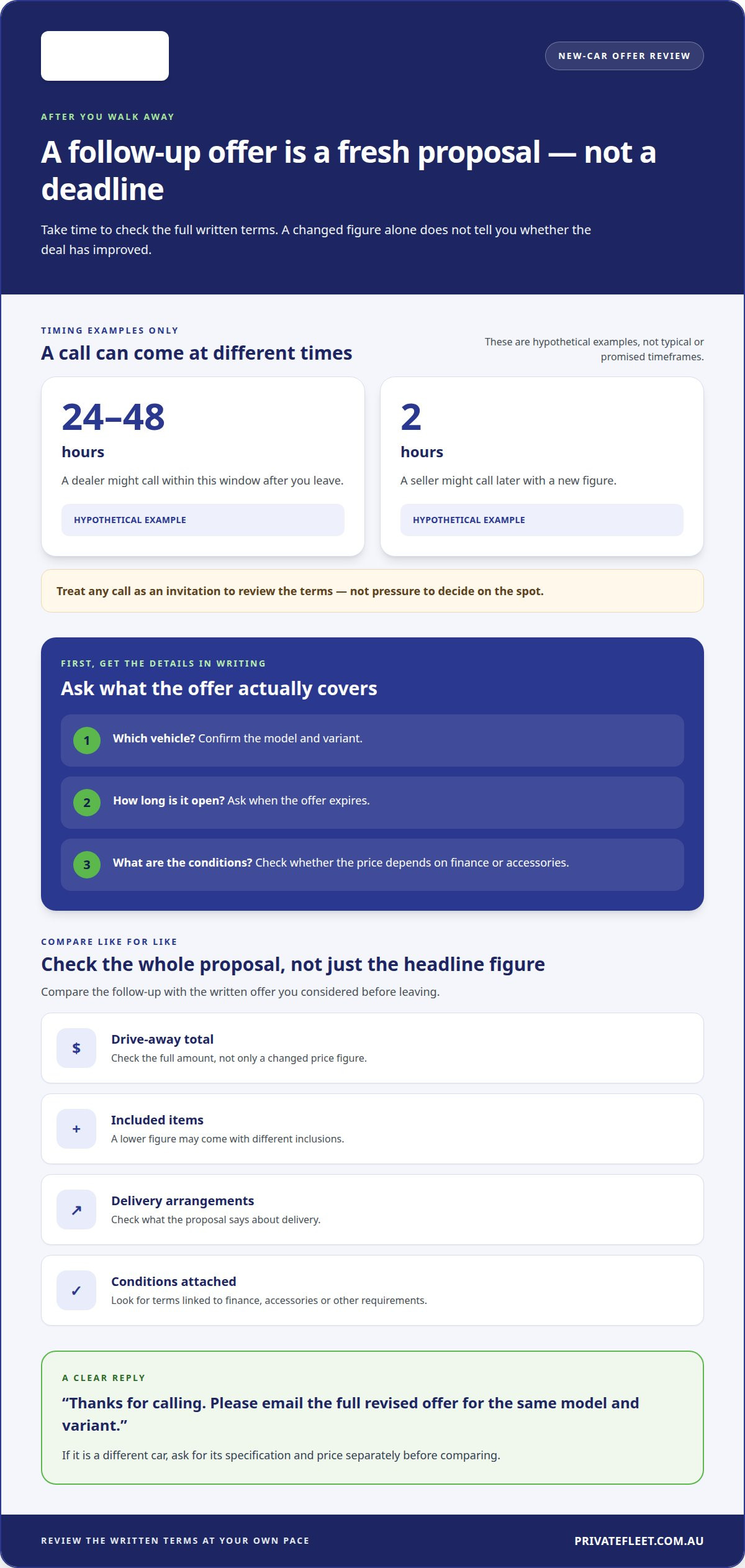
As hypothetical examples only, a dealer might call within 24 to 48 hours after you leave, or a seller might call two hours later with a new figure; these are not typical or promised timeframes. Treat any call as an invitation to review terms, not a deadline to decide. Ask which vehicle and variant the offer covers, how long it remains open, and whether the price depends on conditions such as finance or accessories.
Compare the follow-up with the written offer you considered before leaving. Check the drive-away total, included items, delivery arrangements and any conditions. A lower figure can still come with different inclusions, so ask for the whole proposal in writing before weighing it.
Use the call to clarify the dealer’s position. You could say, “Thanks for calling. Please email the full revised offer for the same model and variant.” If the dealer describes a different car, ask for its specification and price separately. This keeps the comparison clear and gives you time to assess the actual offer rather than relying on a verbal summary.
One manager check may be part of a negotiation. Repeated checks can extend the discussion without changing the terms. If a follow-up repeats the original offer, say that it hasn’t addressed your concern. You can end the conversation there or contact the dealer again yourself if you still want that vehicle.
There isn’t one cooling-off period that applies to every dealer purchase across Australia. The applicable state or territory rules and the circumstances of the transaction matter. Read the contract and consult current consumer guidance for your jurisdiction before relying on a cancellation right.
A dealer doesn’t automatically keep a deposit or charge a cancellation fee whenever a buyer withdraws. The contract terms and circumstances affect the outcome. Ask the dealer to identify the clause supporting any deduction and explain how it applies to your situation. If you dispute the charge, keep the deposit receipt, contract and written response together.
The ACCC says Australian Consumer Law consumer guarantee rights apply to new and second-hand cars bought from a licensed dealer. Those protections differ from cancelling simply because you’ve changed your mind. If you believe a guarantee issue applies, describe the specific problem and the outcome you’re seeking. For an unresolved deposit or fee dispute, keep your correspondence and take the contract to the consumer affairs or fair trading agency in your state or territory.
4. Comparing offers near month-end or quarter-end
The end of a month may be a convenient time to compare new-car offers, but it doesn’t establish what a particular dealership will offer. Treat the calendar as one factor, alongside the exact model, variant, location and written drive-away terms.
Calendar quarters end in March, June, September and December. If you’re comparing offers near one of those dates, ask whether the quoted terms are available now and in writing. Don’t assume every dealer has the same offer. Compare the terms themselves, including delivery charges, accessories and any conditions, rather than relying on a comment about the date.
For example, if you’re considering the same variant from two dealerships in June, line up both written offers before negotiating. Check that each price covers the same vehicle specification and costs. If one quote excludes an accessory or registration-related charge included in the other, the apparent difference may not mean it’s a better overall deal. Ask for any revised price and its expiry date in writing.
December 30 and 31 are dates some buyers may consider when comparing offers. The date is not a substitute for checking the vehicle and contract terms. In Australia, base your decision on the offer in front of you, not an assumption that a calendar date automatically produces a lower price.
Trying to make a decision before month-end can leave less time to read the paperwork. Set your priorities before visiting: the exact variant, acceptable drive-away terms, trade-in arrangements if relevant, and the items you expect included. If a revised offer arrives late in the day, ask for a copy and take time to review it rather than treating the date as a reason to sign.
If the offer doesn’t suit you, you can pause the negotiation and return later. What a dealer can offer depends on its circumstances and the vehicle being discussed. Keep the conversation focused: state the terms you would accept, ask whether the dealer can meet them, and decline politely if it can’t.
Use the last few days of a month or quarter to prompt a clear comparison, not to rush. Keep the written quotes, note when each expires, and compare like-for-like terms. If you’re not ready to commit by March, June, September or December month-end, buying later may be preferable to signing an offer you haven’t had time to assess.
5. Can you cancel a car purchase contract in Australia after signing?
After signing, don’t assume you can cancel simply because you’ve changed your mind. Start with the contract: identify the vehicle, agreed price, deposit terms, delivery arrangements and any clause describing cancellation or finance conditions. These details help you understand what you agreed to and the options described in the document.
Check that the signed paperwork matches the deal you intended. Compare the model, variant, colour, included accessories and drive-away price against the final written offer. If a detail differs, note the exact wording and contact the dealer promptly in writing. Keep the contract and your messages together so the issue is clear.
Look for any condition that may affect the purchase, such as finance approval or a delivery requirement. Read the whole clause, including any notice method or deadline it specifies. If the wording is unclear, don’t treat a salesperson’s verbal explanation as a change to the signed agreement. Ask for the explanation in writing and keep the response.
A deposit’s treatment depends on the agreement and circumstances, so don’t assume it will automatically be refunded or forfeited. Find the deposit clause, receipt and any cancellation wording. If the dealer proposes keeping part of the deposit, ask which contract term supports that amount and request the calculation in writing.
For a new car bought from a licensed dealer, the ACCC says Australian Consumer Law consumer guarantee rights apply. Those rights are distinct from a request to cancel because you’ve changed your mind. If your concern is a vehicle problem or a mismatch with what was agreed, describe the issue precisely and keep supporting documents, such as the contract and relevant correspondence.
To raise a cancellation request, write to the dealer using the contact details in your paperwork. Include the contract date, vehicle description and the outcome you’re seeking. Refer to the clause or specific discrepancy behind your request, and ask for a written response. Save your email and attachments, and note the date and time if you also speak by phone.
If the dealer disputes your interpretation, don’t sign a replacement document before understanding its effect. Keep the original contract, revised paperwork, deposit receipt and messages together. For a disagreement about consumer guarantees, explain the vehicle issue and the remedy you’re seeking, rather than describing it only as a change of mind.
If you’re still choosing a new car, get help buying your new car or call 1300 303 181.
Private Fleet
Private Fleet can help if you’re still deciding which new car to buy or want support negotiating its terms. As an independent car buying agency, it puts your vehicle request to a national network of authorised dealerships, inviting them to compete for your business. Private Fleet handles the negotiation and paperwork, so you can focus on comparing the offer with your needs.
If you’re changing vehicles, Trade-In Assistance can be part of the buying process. Car Finance is also available to consider alongside the purchase. Private Fleet sources new cars through its dealer network rather than holding its own vehicle inventory, and provides regular delivery updates.
To discuss your preferred make or model, postcode and buying timeframe, get help buying your new car from Private Fleet, or call 1300 303 181.
Make your next move on your terms
Let walking away from a car deal create space for a clearer decision, not an obligation to return. Before speaking with a dealer again, decide which vehicle, variant and written terms meet your needs. That gives you a practical basis for continuing, considering another offer or pausing your search.
If you’re ready to buy a new car, Private Fleet’s New Car Buying Service can put your preferred vehicle to its national dealer network for tender, then manage the negotiation and paperwork. Trade-In Assistance can also support your purchase if you’re replacing a vehicle.
You can also call 1300 303 181 to discuss your preferred make or model, postcode and buying timeframe. Take the next step when you’re comfortable with your choice and ready to move forward.
Frequently Asked Questions
Is it rude to walk away from a car deal?
No. Walking away from a car deal is a normal way to decide whether a purchase suits you. Thank the salesperson, explain that you’re not proceeding today and leave without turning the discussion into an argument. If you’re comparing options with someone else, agree beforehand on who will speak and which terms matter most. That keeps your decision clear and avoids mixed messages at the dealership.
What are the biggest red flags that mean it’s time to walk?
Pause if the written vehicle details or price conflict with what the salesperson told you, or if the advertised car is suddenly replaced by a more expensive alternative. Ask for the discrepancy to be explained in writing. Anger, aggression or guilt-tripping when you raise a concern are also reasons to end the conversation. Keep the paperwork and note what was discussed so you can assess the offer calmly afterwards.
What’s the best phrase to use when walking away?
Try: “Thanks for your time. I’m not ready to proceed on these terms, so I’m leaving it here for now.” If you might reconsider, state the specific change you need, such as a corrected written vehicle specification. Keep your message courteous and brief. You don’t need to debate your decision at the dealership. Collect your belongings and any paperwork, then leave the discussion open only if that suits you.
Will the dealer actually call back with a better offer?
A dealer may call after you leave, often within 24 to 48 hours, but a call doesn’t guarantee a better offer. Ask for any revised proposal in writing, then compare the complete drive-away terms with your original offer. If the new figure changes the vehicle, included items or conditions, it may not be a like-for-like improvement. You can also contact the dealer yourself later if you still want to discuss the same car.