
When comparing new cars, look beyond the purchase price and check what happens at the end of any finance term. The final payment doesn’t always mean the same thing: it may clear your car loan, leave a balloon amount to pay or mark the end of a lease. First identify the type of agreement you’re considering.
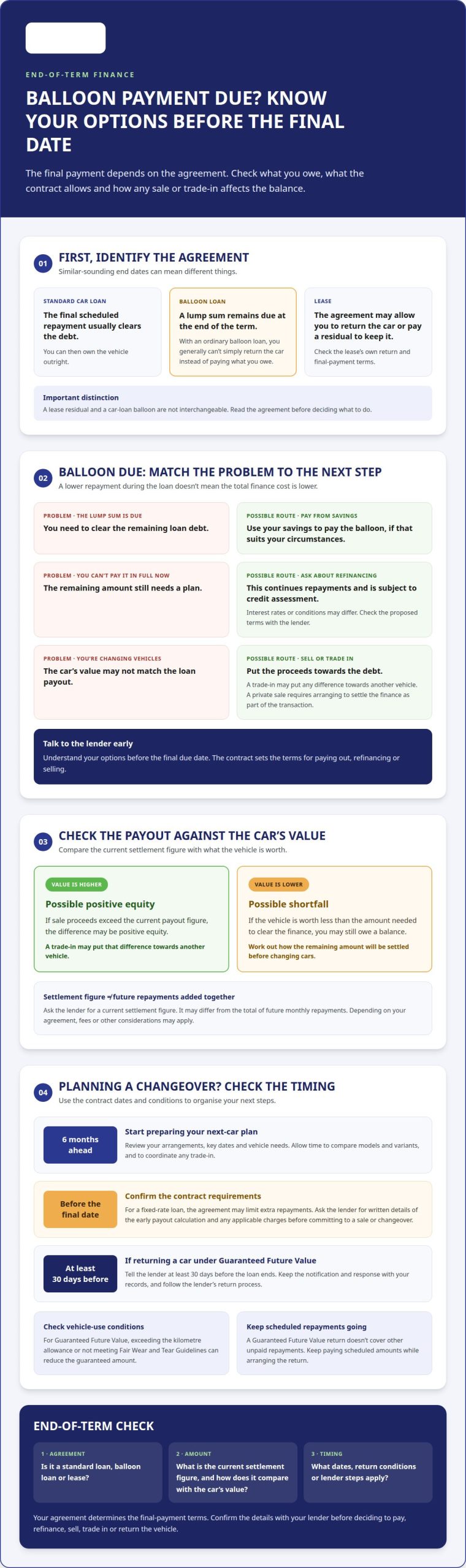
With a standard Australian car loan, the final scheduled repayment usually clears the debt, allowing you to own the vehicle outright. A balloon loan leaves a lump sum due at the end, while a lease may let you return the car or pay a residual to keep it.
It’s also worth comparing your settlement figure with the vehicle’s value when deciding whether to keep or replace it. If the car is worth more than the amount needed to clear the finance, you may have positive equity; if it’s worth less, you may still owe a balance. This article explains balloon payments and settlement figures, what can happen to any equity or shortfall, and which end-of-term options to consider.
Key Takeaways
- Compare the drive-away price of the new cars on your shortlist, including their make, model and variant.
- Check which features, servicing terms and warranty coverage matter for how long you plan to keep the car.
- Ask for a current drive-away quote for your preferred car and compare what is included.
- Consider your trade-in as part of the overall purchase, and compare its value with the new-car price.
- Before ordering, confirm the vehicle specification, paperwork and how you’ll receive delivery updates.
What Is a Balloon Payment on a Car Loan?
A balloon payment is a lump sum due at the end of a vehicle loan to clear the remaining debt. It can reduce your monthly repayments during the loan, but the balance is still due on the final day of the term. With an ordinary balloon loan, you generally can’t simply return the car instead of paying what you owe.
Lower monthly repayments don’t mean the vehicle costs less to finance overall.
At the end of the term, you could pay the balloon from your savings, refinance the amount, or sell or trade in the vehicle and put the proceeds towards the debt. Refinancing means continuing to make repayments, subject to a credit assessment and potentially different interest rates or conditions. Contact the lender early to understand your options before the final due date.
A sale or trade-in can leave you with equity or a shortfall. If the sale proceeds exceed the current payout figure, the difference may be positive equity. A trade-in can put that difference towards another vehicle, while a private sale requires arranging to settle the finance as part of the transaction.
Paying out a loan early may also be an option, but the contract determines how it works. Ask the lender for a current settlement figure, which may differ from the total of your future monthly repayments. Depending on the agreement, fees or other considerations may apply. The options for paying off a fixed-rate vehicle loan early depend on the terms of your agreement.
Balloon loans, leases and novated leases are different agreements. According to the Federal Register of Legislation, vehicle leases for business or commercial purposes and novated leases are not covered by the National Consumer Credit Protection Act 2009. A lease’s residual and return conditions therefore shouldn’t be treated as interchangeable with a car-loan balloon. Read the agreement’s final-payment terms before deciding whether to pay, sell, trade in or refinance.
Planning a New-Car Changeover at the End of a Lease or Loan
Your contract sets the timing, responsibilities and conditions that apply as the agreement approaches its end. These details matter when you’re planning a new-car changeover, especially if your plans shift before the scheduled finish.
Check your lease or loan end date before choosing your next car
A lease can include vehicle-use conditions that affect its end-of-term value or return arrangements. With a Guaranteed Future Value agreement, exceeding the kilometre allowance or failing to meet the Fair Wear and Tear Guidelines can reduce the guaranteed amount. That difference can affect the amount available to settle the loan, so check the agreed vehicle standards and usage limits.
Under a Guaranteed Future Value arrangement, the lender applies the GFV to the loan balance. It doesn’t cover other unpaid repayments, which must be settled separately. Keep making scheduled repayments while arranging a return, because choosing that option doesn’t cancel amounts already due under the loan.
Coordinate the changeover with your finance end date
A repayment schedule sets out the amounts due during the loan term. If your circumstances change, the lender and borrower may agree to vary the credit contract, including by reducing repayments and extending the term. A variation changes the agreement’s timing, so make sure you understand the revised obligations before accepting it.
Take particular care with a fixed-rate loan if you’re considering ending the agreement early. The agreed rate applies for its specified period, and the contract may limit extra repayments. Before committing to a vehicle sale or changeover, ask the lender for written details of the early payout calculation and any applicable charges.
For a Guaranteed Future Value return, tell the lender at least 30 days before the loan ends. Keep the notification and any response with your agreement records, and follow the lender’s return process. Separately, a lease contract may set out costs for ending early, so an early return should be treated differently from reaching the scheduled end.
If you’re organising a new-car changeover alongside the finance timing, discuss your next-car plans or call 1300 303 181.
Planning your next new-car purchase
Start preparing well before you plan to change vehicles, so the timing suits your needs and plans. Review your current arrangements and note any dates or steps that could affect when you buy your next car.
Before you start comparing cars, map out the key dates and decide what you need from your next vehicle. Reviewing your plans six months before a changeover gives you time to compare options and consider your next-car priorities.
Planning your new-car purchase
Make a shortlist based on how you’ll use the car, your preferred features and your planned changeover timing. This matters because your purchase may coincide with other household commitments or a planned trade-in.
List the features and practical needs that matter alongside your preferred purchase date. If your plans change, revisit your shortlist and timing. Keep a note of the models and variants you want to compare.
Build your plan around your needs and preferred timing. If a trade-in is part of your next step, allow time to coordinate the changeover rather than relying on everything happening at the last moment.
Choosing your next car
Compare the models and variants that suit your intended use. Understanding the differences matters if you intend to keep the vehicle for several years or plan another purchase later.
Review each shortlisted car’s features and identify what matters most to you. Keep your notes and written information together in case questions arise about your choice. If you plan to keep the vehicle for several years, factor that into your budget and next-car timing.
A calendar reminder can help you stay on top of your buying plans. Note when to compare models, arrange a trade-in or prepare for the changeover. Keep your shortlist and relevant correspondence together, especially if someone else is helping with household or purchase plans.
Set a practical fallback in case your preferred timing changes. For example, if your new-car purchase is delayed, consider how you’ll manage transport in the meantime. If your needs or circumstances change, revisit your shortlist promptly rather than waiting until your planned purchase date.
If you’re planning a new-car purchase, discuss your next-car plans or call 1300 303 181.
Trading in a car with positive equity
If you’re changing cars, treat the trade-in and the new-car purchase as separate parts of the decision. Clear figures for each help you see how the current vehicle contributes to the changeover and what you’re agreeing to buy next.
Understanding positive equity
Positive equity is the portion of a vehicle’s value left after accounting for the existing finance obligation. Its practical value depends on how you use it: you might put it towards your next car or use it another way that suits your plans.
Before deciding, consider your next vehicle’s total purchase cost and how much you intend to finance. A trade-in contribution may reduce the amount you need to borrow, but it doesn’t change the new car’s agreed price. Keeping those figures separate makes it easier to assess the overall changeover.
Selling or trading a financed car
A trade-in combines the current vehicle and next-car purchase in one changeover, while a separate sale means coordinating two transactions. Either way, arrange the timing so the finance is dealt with as part of the vehicle transfer. Keep the lender’s settlement information and transaction paperwork together.
Ask for the trade-in amount, new-car price and any finance adjustments to be listed separately in the written breakdown. A single net figure can make it harder to see how each part affects the deal. A clear breakdown helps when comparing new-car offers or deciding whether to proceed with the changeover.
Trading in or upgrading
For an upgrade, first settle on the make, model and variant that suit your needs. Then consider the vehicle’s trade-in contribution alongside the new car’s drive-away offer and any finance you may need. This keeps your decision focused on the car and the full transaction, not just one attractive figure.
For example, someone moving to a different vehicle size might put available equity towards the purchase, shaping the amount financed. The right choice depends on their budget and ownership plans. A buyer who wants to keep cash available may weigh that differently from someone who prioritises a smaller new loan.
Allow time for the lender, trade-in and new-car paperwork to align, particularly if your current finance term is ending. If the next vehicle or purchase timing changes, update your plan before committing to the changeover.
To discuss a new-car changeover, get in touch with Private Fleet or call 1300 303 181.
Account closure and final statements
After the final payment, the lender’s records should show whether the car loan has been fully settled. Review the closing statement against your finance agreement, including the last repayment, interest, any balloon payment and any charges. If an item differs from what you expected, ask the lender to explain how it was calculated.
A settlement figure applies to a specific payout date, so timing matters if you’re selling the vehicle or paying out the loan early. Compare the figure with the amount debited and any payment confirmation. For example, if the lender receives your payout after the stated date, ask whether a balance remains rather than assuming the earlier figure still applies.
Once the lender confirms the loan is settled, check that the account shows a zero balance and that no final adjustment remains. Keep the closing statement, payment receipt and settlement confirmation together. These records can help resolve later questions about charges, interest or the date the loan term ended.
Direct debit and recurring EFT payments need separate attention. Don’t assume a scheduled payment has stopped just because you made a final lump sum. Once settlement is confirmed, contact the lender about cancelling future debits, then check your bank account for any payment scheduled after the loan closes. If another repayment is taken, use your records to discuss it with the lender.
If the final amount includes a balloon payment, make sure the statement reflects that obligation as well as any ordinary instalment. A balloon can reduce monthly repayments during the agreement, but remains payable at the end. The closing statement should make clear whether the final payment has cleared the account or whether an amount is still outstanding.
Selling a financed vehicle adds another point to reconcile: account for the sale proceeds and lender payout separately. Keep the sale paperwork and the lender’s settlement confirmation. If the proceeds exceed the payout, the remaining equity can be dealt with according to the sale arrangements. If they fall short, you remain responsible for the difference.
With early repayment, compare the lender’s current settlement figure with the remaining scheduled repayments. The figures may differ because the settlement calculation reflects the payout date and the agreement’s terms. Check for applicable charges or other considerations before paying. For a fixed-rate loan, the repayment conditions may also limit extra payments during the agreed period.
Clear account records help if your circumstances change, for example, if you buy another car or sell before the loan term ends. Keep copies of the finance agreement, final statement and proof of payment, and retain the lender’s written settlement confirmation as evidence that the debt has been cleared.
Private Fleet: Car Finance
Private Fleet can help when the end of your finance term is part of planning for your next new car. Its independent new-car buying service puts your preferred vehicle to a national network of authorised dealerships, where dealers compete for your business through a tender process. Private Fleet manages the purchase process, and Trade-In Assistance can help coordinate your current vehicle’s trade-in as part of the changeover.
If you’re considering finance for your next purchase, Private Fleet can also help with Car Finance. Share your preferred make or model, postcode and buying timeframe to discuss the next steps.
Contact Private Fleet or call 1300 303 181.
Make your next car decision with a clear plan
Understanding what happens at the end of your car finance term can help you plan your next purchase around your budget and preferred vehicle. If you’re ready to move into a new car, decide which make and model suits your needs, then consider how your current vehicle and any trade-in value fit into the changeover.
Private Fleet can help you source a new car through its New Car Buying Service, with authorised dealerships invited to tender for your business. Trade-In Assistance can support the changeover, while its New Cars offering gives you a practical next step if you’re still choosing a vehicle. Share your preferred make or model, postcode and buying timeframe to start a conversation about your plans.
You can also call 1300 303 181 to discuss your next step. A clear plan puts you in a better position to choose a car that fits the way you want to drive.
Frequently Asked Questions
What should I compare when choosing your next car?
Start with the models and variants that suit your needs, then compare their drive-away prices, features and expected delivery information. If you’re replacing a car with finance owing, check the agreement’s final amount and any return conditions before deciding when to change over.
How should I compare a trade-in with a balloon payment?
Compare the new car’s price and trade-in value with the lender’s payout figure. If the vehicle’s value is below the amount needed to settle the loan, the sale or trade-in proceeds won’t clear the debt. You’re generally responsible for the shortfall, so account for it when planning your changeover. Any new finance requires a credit assessment and leaves you with an ongoing repayment obligation.
What should I check before refinancing to buy a new car?
If you’re considering refinancing a final balance as part of buying a new car, compare the new agreement’s total repayments, interest rate and repayment schedule. The lender’s credit assessment and the new agreement’s conditions apply. Consider how long you’ll remain in debt, not just the new monthly amount. Refinancing doesn’t remove the balance; it moves repayment into a new agreement.
How do I compare a trade-in when buying a new car?
Ask for the trade-in value and any lender payout figure to be shown separately in the changeover paperwork. If the trade-in value exceeds the payout, the difference may contribute towards your next car. If it falls short, account for the remaining debt as part of the transaction. Compare the changeover figures alongside the new car’s price.
What should I check before returning a car and buying another?
Don’t assume a PCP agreement gives you an Australian return option. The term is associated with finance arrangements used overseas, and your rights depend on the contract and jurisdiction. For an Australian Guaranteed Future Value agreement, notify the lender at least 30 days before the loan ends if you plan to use its return option. Check the agreement’s conditions before planning your next car purchase.
Can I hand my current car back when buying a new one?
Not under an ordinary Australian balloon-payment car loan: you generally can’t simply return the vehicle instead of paying the outstanding amount. A separate guaranteed buy-back or Guaranteed Future Value arrangement may include a return option, subject to its terms. Check whether your contract names such an option and what conditions apply before planning your changeover.
What should I check before selling or trading in a financed car?
Contact the lender and request a current payout or settlement figure for the date you intend to pay. Provide the account or agreement details requested, and ask how long the figure remains valid. It may differ from the balance in an earlier statement because it’s calculated for a particular payout date. Request an updated figure if your payment or sale date changes.
What should I check before replacing a financed car in Australia?
Before choosing a replacement, identify your current agreement type and check its final-payment or return conditions. A standard car loan usually ends when the scheduled repayments clear the debt, while a balloon loan requires a final lump sum. A lease may involve returning the vehicle, paying a residual or following another option in the contract. Factor these terms into your new-car changeover plans.