
What if the best negotiating move isn’t a sharper counter-offer, but a clearer comparison? In Australia, you can negotiate a new-car price directly with a dealer or use an independent car-buying service to handle dealer discussions for you.
It’s reasonable to want a fair, clear deal without pressure, especially when quotes include different delivery and on-road costs. The key is comparing written offers for the same make, model and variant, with the final drive-away price spelled out.
In this guide, you’ll see what negotiating yourself involves, when a buying service may suit you, and what to check before accepting an offer. Private Fleet is an independent vehicle sourcing and car-buying service that works with a national network of authorised dealerships. Its tender process invites multiple dealers to compete for your business, while you stay in control of the vehicle and purchase decision. We’ll also cover how to compare dealer and service options, clarify quote details and keep trade-ins separate enough to assess the new-car price fairly.
Key Takeaways
- The answer to who can negotiate a new car price australia is either you or an independent car-buying service acting on your behalf.
- Keep your make, model, variant and key requirements consistent when requesting offers, so you can compare them fairly.
- Choose between negotiating yourself and using a buying service based on the time and direct involvement you prefer, not assumptions about your ability.
- Before agreeing, review the written offer’s price basis, included equipment, listed charges, trade-in treatment and optional products.
- Private Fleet’s tender process invites multiple dealers to compete for your business, while you retain control of the purchase decision.
Who can negotiate a new car price in Australia?
You can negotiate directly with a dealership, or ask an independent car buying service to help source offers and manage discussions. The dealership representative presents the dealer’s offer; a buying service helps represent your requirements during the process. In either case, you choose the vehicle and decide whether to accept an offer.
A negotiated price is an agreed offer, not a guaranteed discount or outcome. The terms depend on the vehicle and what’s included. Review the written details before deciding, and remember you’re not obliged to proceed simply because an offer has been made.
Can a private buyer negotiate directly with a dealership?
Yes. Any private buyer can discuss a new-car offer with a dealership representative. You don’t need special status or industry connections. To keep the conversation focused, note the make, model and variant you want, along with essential equipment and any preferences that affect your choice.
Ask for the offer in writing and check that it identifies the vehicle and explains what the price covers. If you speak with more than one dealership, give each the same requirements so you can compare their offers accurately. A car dealership sells vehicles to customers, and its representative discusses offers on the dealership’s behalf.
What does an independent car buying service do?
An independent car buying service helps a private buyer source a vehicle and coordinate discussions with dealerships. It acts as an intermediary rather than as the vehicle’s manufacturer or the dealership selling it. The vehicle is supplied through a dealership, and the buyer remains responsible for deciding whether to accept an offer.
This option may suit someone who wants assistance coordinating enquiries while keeping control of the purchase decision. The new-car buying process explains how the steps can work in practice.
So, who can handle the price discussions for your new car? You can speak with dealers yourself, or use an independent service to help manage the process. Choose the approach that fits the time and involvement you prefer, then assess the written offer on its merits before making a decision.
How new-car price negotiations work, from brief to written offer
A clear process makes dealer offers easier to assess and helps prevent a change in specification from being mistaken for a better deal. Start with a defined brief, request offers against that same brief, review the written terms and decide whether an offer suits you. Whether you negotiate directly or use an independent car buying service to coordinate dealer offers, the comparison works best when the details stay consistent.
- Define your brief. Set out the vehicle and the features you consider essential.
- Request comparable offers. Give each dealer the same requirements and ask for the offer in writing.
- Review the terms. Check the vehicle, price basis, inclusions, charges and any conditions.
- Decide. Accept, seek clarification or decline; an offer doesn’t oblige you to proceed.
Comparable written offers turn a negotiation from a memory test into a practical, like-for-like decision. That clarity matters more than comparing headline figures alone.
What information helps a dealer quote the right new car?
Include the preferred make, model, variant and colour, plus essential features or accessories where known. State your buying timeframe and whether you have a trade-in, so the offer can reflect the purchase you’re actually considering. If you’re open to alternatives, identify each one separately rather than treating different vehicles as equivalent.
For example, if you’re considering two variants, ask for each to be quoted as a separate option. Their equipment and price basis may differ, so combining them in one comparison can obscure what you’re being offered. You don’t need every detail settled before asking for a quote; be clear about what’s fixed and what you’re willing to consider.
How do you compare new-car offers fairly?
First, confirm that each written offer refers to the same make, model, variant and required equipment. Then check how the price is presented. Is it a drive-away figure, or does it exclude particular charges? An advertised price can be a useful starting point, but it isn’t a complete comparison unless the vehicle, inclusions and price basis are clear.
Review listed charges, accessories and optional products separately. If one offer includes an accessory or product that another doesn’t, identify that difference before judging the totals. Keep any trade-in valuation distinct from the new-car offer as well, so you can see each figure on its own.
Check when an offer applies and what it says about delivery timing. These details can change, so treat stated dates and estimates as information to verify, not guaranteed outcomes. A consistent comparison helps you assess offers whether you handle dealer discussions yourself or ask a service to coordinate them.
If you’d like support putting your preferred vehicle and requirements into a buying brief, get help buying your new car by sharing your preferred make or model, postcode and buying timeframe.
Negotiating yourself or using a car buying service: which suits you?
Both approaches can help you explore a new-car offer, but they place different demands on your time and attention. The right fit depends on how much you want to speak with dealers, how comfortable you feel coordinating quotes and how involved you’d like to be. It isn’t a question of age or ability. And using a service doesn’t mean giving up the final choice: you decide whether to proceed.
| Consideration | Negotiate directly | Use an independent buying service |
|---|---|---|
| Buyer effort | You organise dealer conversations and keep track of offers. | The service supports vehicle sourcing and dealer discussions. |
| Direct involvement | You speak with dealership representatives yourself. | You can leave more of the dealer coordination to the service. |
| Quote coordination | You request and compare offers from dealerships. | The service can coordinate competing dealer offers through its process. |
| Decision control | You choose whether to accept an offer. | You still choose the vehicle and whether to accept an offer. |
When might negotiating directly suit you?
Direct negotiation may suit you if you enjoy speaking with dealerships, have time to manage the conversations and are comfortable comparing the details yourself. A clear shortlist and consistent requests can make the task more manageable. You’ll still need to assess each written offer, including any differences in equipment, charges or optional products, before deciding which one meets your needs.
When might an independent buying service suit you?
An independent service may suit you if you’d prefer support sourcing the vehicle and coordinating dealer competition rather than managing every discussion yourself. Private Fleet’s new-car buying service works with a national network of authorised dealerships and uses a tender process that invites multiple dealers to compete for your business. You retain the purchase decision; an offer or price outcome isn’t guaranteed.
The table is a guide, not a ranking. If you have a clear shortlist and want direct contact, negotiating yourself may feel straightforward. If coordinating several dealer conversations would add friction, support with sourcing and discussions may be more comfortable. Either way, take time to assess the actual offer and make the choice that fits your priorities.
So, who can negotiate a new car price australia? You can handle it yourself, or an independent vehicle sourcing service can manage dealer discussions for you. Neither option removes your responsibility to decide what suits your budget and requirements, and neither guarantees a particular price. The benefit of choosing deliberately is that you can match the process to the time and involvement you want to give it.
If you’d like help with the buying process, get help buying your new car by sharing your preferred make or model, postcode and buying timeframe.
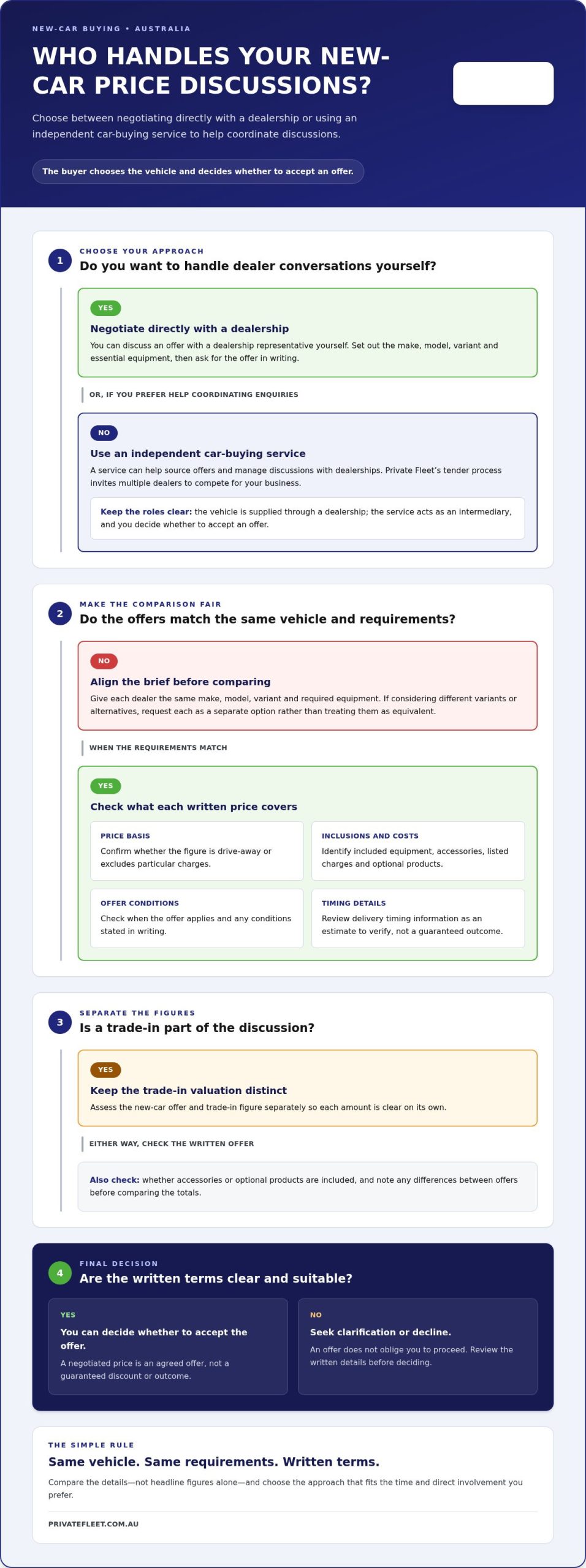
A practical checklist for reviewing a negotiated new-car offer
Before accepting an offer, check that the car and every included item match what you intend to buy. Then examine the price basis, charges, trade-in and optional products as separate parts of the deal. A written offer makes these details easier to review at your own pace, without relying on memory or feeling rushed to decide.
What should a new-car quote show clearly?
Look for enough detail to identify the exact vehicle and understand what the quoted figure covers. If a detail is missing or unclear, ask for it in writing before comparing the offer with another one. Record the quote date and any stated expiry or delivery information so you know what to follow up.
- Vehicle: make, model, variant and the equipment or accessories included.
- Price basis: whether the figure is drive-away or excludes listed charges.
- Additional items: accessories, protection products and other optional additions shown separately from the vehicle offer.
- Trade-in: the trade-in figure set out separately from the new-car price.
- Timing: the quote date, any stated offer expiry and delivery information, noting that estimates aren’t guarantees.
This layout helps reveal whether two offers differ because of the vehicle price or because one includes extra items. If a trade-in is part of the discussion, keeping its valuation separate makes it easier to assess the new-car offer on its own.
How should you assess optional interior protection?
Treat interior protection as an optional product to consider, not an assumed necessity. Read the specific description in the offer and compare its stated coverage, inclusions and conditions with your needs and budget. Avoid relying on broad claims about effectiveness, durability or resale value unless they’re supported by terms you can review.
Check whether the product is itemised separately and whether its conditions are provided in writing. If they aren’t clear, pause before agreeing rather than assuming what the product covers. You can then decide whether the stated offer is relevant to how you expect to use the car.
Use this checklist for every quote, whether you’re dealing with a dealer yourself or reviewing an offer arranged with support. The answer to who can negotiate a new car price australia may vary, but your review can follow the same steps: match the vehicle to your brief, separate the figures and optional items, then take the time you need to decide. An offer is only useful if you understand what you’re agreeing to.
How Private Fleet can handle new-car negotiations for you
Private Fleet is an independent Australian vehicle sourcing and car buying service. It works with a national network of authorised dealerships, using your requirements to guide the sourcing process and invite dealers to compete for your business. Private Fleet doesn’t hold its own vehicle inventory. The car is supplied through a dealership, while you remain in control of which vehicle you want and whether to accept an offer.
The process can reduce the time you spend organising dealer discussions yourself. It doesn’t guarantee a particular price, discount, vehicle or delivery date. The value is in having a structured way to seek and review dealer offers against your stated needs, then make your own decision.
What happens when Private Fleet manages dealer discussions?
You share the vehicle you’re looking for and the requirements that matter to you. Private Fleet uses that brief to source through its dealership network and invites multiple dealers to compete for your business through a tender process. You can then consider the offers and decide whether one suits your needs. The car buying process sets out how the steps fit together.
A specific brief helps keep the search relevant. For instance, if you’ve settled on a model but are open to different colours, make that distinction clear. If you’re comparing variants, list them as alternatives rather than treating them as identical. Dealer responses depend on the offer and circumstances, so competition should not be taken as a promise of a set saving or outcome.
What information should you share to get started?
To help shape a useful brief, prepare your preferred make or model, postcode and buying timeframe. You can also share a shortlist, the variant or key features you have in mind, and any requirements that could affect vehicle selection. If you have a trade-in, include that information as a separate part of your buying plans so it can be considered alongside the new-car purchase.
Be as specific as you can, but it’s fine to explain where you’re flexible. You might have a preferred model and colour, for example, while still considering another variant. Clear priorities help focus sourcing and make it easier for you to judge whether an offer matches what you asked for. You’re not committing to buy simply by outlining your preferences.
For anyone considering who can negotiate a new car price australia, Private Fleet offers an independent route for buyers who’d rather not manage dealer discussions alone. It coordinates the sourcing and tender process, while you assess the written offer and decide what to do next. Share your shortlist, postcode and timeframe to begin with a clear brief.
Take the next step with confidence
If you’re asking who can negotiate a new car price australia, focus on the approach that makes it easiest for you to assess an offer calmly. Set your priorities before entering discussions, and give yourself room to consider whether a proposed vehicle and its terms fit your plans. You don’t need to decide under pressure.
A useful next step is to turn your preferred vehicle into a clear brief. Note what you’re set on, where you’re flexible and what you still need to understand. That gives you a practical starting point, whether you want to manage the conversations yourself or have support with the process.
There’s no single negotiation style that suits every buyer. Choose the level of involvement that feels right, then make your decision when the offer is clear and you’re comfortable with it.
Get help buying my new car with Private Fleet
With a considered brief and a clear sense of your priorities, you can move towards your next car purchase at your own pace.
Frequently Asked Questions
Can I negotiate the price of a new car in Australia?
Yes, you can discuss a new car’s price and terms directly with a dealership. The outcome depends on the vehicle and the offer being considered, so don’t assume a particular discount is available. For the question of who can negotiate a new car price australia, the buyer can negotiate personally or appoint someone to assist. Before agreeing, check the written offer matches the car and inclusions you want.
Can someone else negotiate a new-car price on my behalf?
Yes, you can use an independent car buying service to source offers and handle dealer discussions. For example, a service can coordinate enquiries while you focus on deciding whether an offer suits you. Be clear about what you authorise the representative to discuss, and remember that you choose whether to proceed with a purchase. This can be useful if you want help managing conversations without handing over the final decision.
Is a car broker the same as a car dealer?
No, they generally have different roles. A dealer sells the vehicle and handles the sale through the dealership. A car broker or buying service typically acts as an intermediary, helping a buyer source or negotiate a vehicle through dealers. Business models can vary, so understand who is making the offer and who will supply the car. Check that the written documents identify the selling dealership and the vehicle clearly.
Should I negotiate the drive-away price or the vehicle price?
Ask for the total drive-away figure for your intended registration location, then review any itemised vehicle price and charges alongside it. A vehicle-only figure may not show the full amount you’ll be asked to pay. If two offers use different price bases, request clarification before comparing them. Also check whether accessories or optional products are included, since these can affect the total without changing the vehicle specification.
Can a dealer make me buy interior protection with a new car?
Interior protection should be treated as an item to assess, not an automatic requirement. If it appears in an offer, ask for the product description, coverage, conditions and price to be shown separately. You can then decide whether it suits your needs and budget. If the quote is presented as a package, ask for the vehicle offer with the optional item clearly identified before deciding whether to accept the package.
What details should I give someone negotiating a new-car price for me?
Share your preferred make or model, postcode and buying timeframe, then add the details that narrow down the right vehicle. These might include a specific variant, must-have features, preferred colour and any acceptable alternatives. Mention a trade-in separately, and note what you’re flexible about. For instance, you might prefer one variant but consider another if it still meets your key requirements. A precise brief helps keep enquiries relevant.