
What if the invoice figure that looks like a clear bargain tells you very little about the deal you’ll actually get? The dealer invoice price australia buyers hear about generally refers to what the manufacturer charges the dealer for a vehicle, but it may not show incentives or other arrangements that affect the dealer’s final cost. So it can be a reference point, not a reliable measure of the best offer.
It’s understandable to want a firm benchmark when you’re comparing a dealer’s quote with the recommended retail price (RRP) or a drive-away price. The key is to compare like with like: the same model, variant and features, with each quote using the same price basis and accounting for relevant on-road costs.
This article explains what an invoice price can and can’t tell you, how it differs from RRP and drive-away pricing, and what to check before weighing up offers. You’ll also learn how a competitive process can help you assess real dealer quotes without relying on unverified cost figures or assuming one number reveals a dealer’s margin.
Key Takeaways
- Learn what dealer invoice price australia refers to, and why it may not show a dealer’s complete net cost.
- Use invoice estimates as context, not proof that a quote is fair or the best available.
- Compare written offers for the same model year, variant and options, checking the price basis, inclusions and conditions.
- Weigh the vehicle’s comfort, usability and fit for your ownership plans alongside the quoted price.
- See how Private Fleet’s tender process invites multiple authorised dealers to compete for your business.
What does dealer invoice price mean in Australia?
A dealer invoice price generally refers to the amount shown on an invoice for a dealer’s acquisition of a vehicle from its manufacturer or supplier. It’s not automatically the dealer’s complete net cost, and a private buyer may have no way to see or verify every factor that affects that cost. A figure described as the dealer invoice price australia buyers should use may be an estimate, rather than a document that reflects the dealer’s full commercial position.
That distinction matters. An invoice figure can provide context for a new-car discussion, but it doesn’t tell you by itself whether a particular written offer is competitive. To judge an offer, first understand what price you’re comparing and what the quote includes.
How invoice price differs from RRP and drive-away price
The manufacturer’s recommended retail price (RRP) is a recommended reference for the vehicle, not necessarily the amount you’ll pay. A dealer’s drive-away quote is buyer-facing: check what it includes, which registration location it assumes, and whether any conditions apply. The general invoice price concept can help explain why an invoice figure and a buyer’s final price are not the same thing. For another perspective on dealer pricing, see how to get a wholesale car price in Australia as a private buyer.
Hypothetical example: Two quotes might refer to the same model but use different price bases. One could show the vehicle price before on-road charges; another could state a drive-away amount with charges included. Without checking the written inclusions and conditions, the figures aren’t a fair comparison, even if one appears lower.
Why invoice price may not show a dealer’s full cost
An acquisition invoice is one part of a transaction, not necessarily a complete account of the dealer’s net position. Other commercial arrangements between a manufacturer and dealer may affect the overall picture, and their terms might not be visible to a buyer. Without reliable evidence, an estimated invoice amount can’t establish the dealer’s exact cost or margin.
This is why an asserted “invoice price” shouldn’t be treated as a guaranteed negotiation target. You may not be able to verify whether the figure is accurate, what it covers, or whether it reflects relevant arrangements. Asking for a particular amount below an unverified figure can distract from the clearer question: what is the dealer’s written offer for the exact vehicle you want?
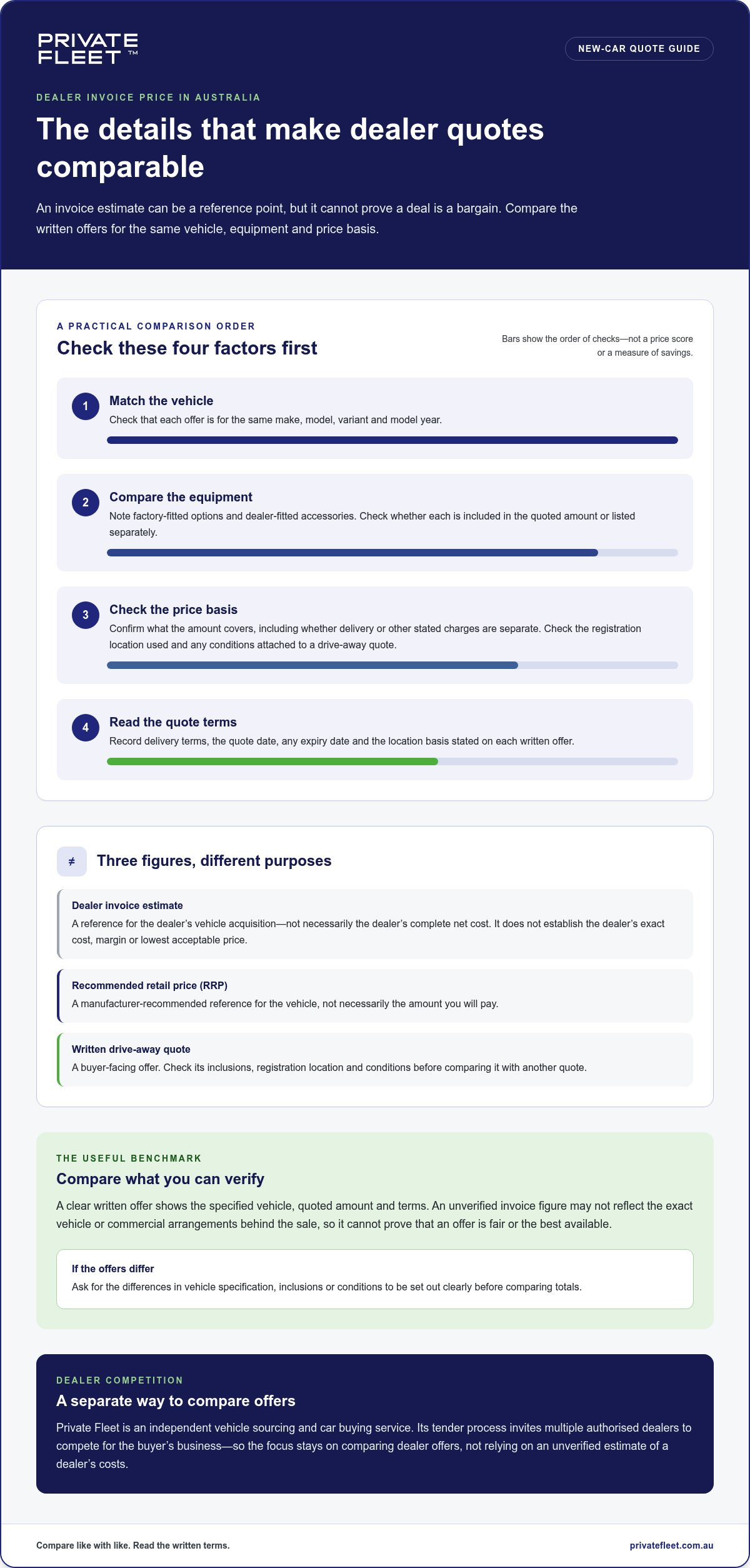
Keep the comparison grounded in details you can check. Match the model, variant, model year and any factory-fitted options, then review the quoted price basis, inclusions and conditions. If the offers differ, ask for the differences to be set out clearly before comparing totals. That gives you a practical way to assess the offer without needing access to a dealer’s confidential cost information.
In short, an invoice price can be a reference, but it isn’t proof of a bargain. The RRP helps identify a manufacturer-recommended vehicle price, while a properly understood drive-away quote gives you a more useful view of the amount being offered. Compare the written terms, not just the label attached to a figure.
What can, and can’t, a dealer invoice price tell you?
An invoice estimate may offer a rough reference for understanding a vehicle offer, but it can’t confirm that the offer is fair, current or the best available. Nor does it reveal a dealer’s private decision-making. Treat claims about dealer invoice price australia as unverified unless you can establish what the figure represents and how it was calculated.
A clear written offer matters more to the buyer than an unverified estimate of the dealer’s cost. The written terms show what you’re being asked to pay for a specified vehicle. An estimated cost figure may not reflect the exact vehicle or the commercial arrangements behind the sale.
Does invoice price reveal a dealer’s lowest acceptable price?
No. An invoice figure doesn’t disclose a dealer’s minimum acceptable price or the considerations behind a particular offer. Those decisions can differ between dealers and transactions, so there’s no reliable universal margin or negotiation threshold to apply. Rather than trying to calculate a supposed floor from an estimated invoice, assess the complete written offer, its inclusions and any conditions attached to it.
This reframes the negotiation around what you can verify: the vehicle specification, total quoted amount and terms. A dealer might be willing to discuss the offer, but an invoice estimate alone can’t show what adjustment is possible or what a dealer will accept.
Which details can change the offer being compared?
Small specification differences can make two seemingly similar quotes incomparable. Check the make, model, variant and model year, then note factory-fitted options and any accessories listed separately. Also record delivery terms, the quote date, any expiry date and the location basis stated on the quote. These details help you see whether a price difference reflects the offer itself or a different vehicle or condition.
Use a short comparison checklist for each written offer:
- Vehicle: Confirm the make, model, variant and model year match.
- Equipment: Record factory options and dealer-fitted accessories, including whether they’re included in the quoted amount.
- Price basis: Note what the price covers and whether delivery or other stated charges are separate.
- Terms: Capture the quote date, expiry and location basis where specified.
Hypothetical example: If one quote includes an accessory package and another doesn’t, comparing the headline totals alone could mislead you. First identify the difference, then decide whether you want both vehicles configured alike or prefer to assess each offer as written. Keep a copy of each quote so you can refer to the actual terms rather than relying on memory or a salesperson’s verbal summary.
Once the details line up, you can judge whether an offer suits your requirements without needing to know a dealer’s private costs. If you’d like support comparing new-car offers, you can discuss your vehicle shortlist with Private Fleet.
How to compare invoice price with Australian new-car offers
Compare written quotes for the same vehicle and on the same price basis. A dealer invoice estimate can sit alongside your comparison as background, but keep it separate from the amount the dealer is offering you to pay. This makes it easier to assess the actual offer without treating an estimated dealer cost as a confirmed benchmark.
A like-for-like checklist for dealer quotes
Before weighing up totals, match the make, model, variant and model year. Check paint, factory-fitted options and any accessories, then note whether each figure is an RRP, a quoted vehicle price or a drive-away amount. Record inclusions, exclusions, delivery requirements, quote date and expiry where supplied. These details help reveal when a price difference reflects a different configuration or set of terms.
Use a table to keep the details together. Add one row for each written offer, and leave the invoice estimate in its own column so it can’t be mistaken for payable pricing.
| Vehicle specification | Quoted price basis | Inclusions | Conditions | Invoice estimate, separate reference |
|---|---|---|---|---|
| Make, model, variant, model year, paint and options | RRP, vehicle price or drive-away quote | Items and charges stated in the written offer | Quote date, expiry, location and delivery terms | Source and basis of estimate, if available |
| Same details for the next offer | Record the stated basis exactly | Note differences or exclusions | Capture any stated conditions | Keep separate from the amount payable |
How to assess a price difference without guessing
Once the rows are complete, compare offers on the same stated basis. If one quote is drive-away and another is a vehicle price before specified charges, don’t rank them by the headline figure. First identify what each includes and what remains separate. This avoids a misleading comparison and keeps the discussion focused on differences you can verify, rather than an assumed dealer margin.
For example, hypothetically, a lower quote may relate to a different variant, omit an option, or set out delivery differently. Ask for the configuration and listed inclusions to be made clear in writing. If the quotes still differ for the same specification and terms, you’ll have a more useful basis for discussing the offers with the dealers.
Good comparisons depend on clear details, not a guessed invoice target. For a broader overview of the new-car buying process, consider how quote comparison fits alongside choosing a vehicle and arranging the purchase.
A practical way to use invoice pricing when buying a new car
Use an invoice estimate as background, not as the target that decides whether to buy. A more dependable approach is to settle what you want, request written offers for that specification, then compare the terms and the vehicle’s suitability. That keeps an uncertain dealer invoice price australia figure in perspective while helping you make a decision based on information you can assess.
Prepare a useful new-car shortlist
Start with your budget and preferred make and model. Narrow the choice to a variant, then list the features that matter most so you can assess comparable vehicles rather than being drawn into comparing different specifications. Think about how long you expect to keep the car and how you’ll use it, such as regular commuting, regional trips or carrying passengers.
Price matters, but so does living with the car. Consider seat comfort, ease of entry and exit, visibility, cabin controls and how manageable the vehicle feels in everyday settings. These are useful checks for any buyer, including people over 50, but priorities differ from person to person. A shortlist should reflect your preferences, not assumptions based on age.
Request comparable offers and review the paperwork
With a shortlist in place, give each dealer the same vehicle specification and buying timeframe. Ask for the offer in writing, then review its price basis, stated inclusions, conditions and expiry. A practical new-car buying process helps keep each step clear, from choosing a vehicle through to reviewing an offer.
Follow this sequence:
- Settle your shortlist. Choose the preferred make, model, variant and essential features, with a realistic budget and buying timeframe.
- Match the specifications. Make sure the options, accessories and delivery requirements you want are described consistently in each request.
- Request written offers. Send the same details to each dealer and keep each response with its quote date and any stated expiry.
- Compare the complete picture. Consider the vehicle’s price and terms alongside comfort, usability and how well it suits your intended ownership period.
Keep a trade-in valuation separate from the new-car offer. A trade-in can affect the amount you need to contribute, but combining it with the vehicle price can make the offer harder to assess. Apply the same separation to finance: first understand the new-car price and its terms, then consider finance separately so the vehicle offer remains clear.
An estimated invoice figure can’t prove that a quote is fair or unfair. Use it only as a reference if you have one, and base your decision on the written offer and the car that’s actually specified. That gives you a practical route from research to a considered purchase without relying on a guessed dealer cost.
How Private Fleet helps buyers compare dealer offers
You don’t need a verified invoice figure to invite competition between dealers. Private Fleet is an independent Australian vehicle sourcing and car-buying service, not a vehicle inventory holder or an authorised brand dealer. It works with a national network of authorised dealerships and uses a tender process to invite multiple dealers to compete for a private buyer’s business. That gives you a practical way to compare actual offers rather than building your negotiation around an assumed dealer cost.
What the dealer tender process does
The process starts with your requirements. Private Fleet uses the vehicle details you provide to seek offers from dealers in its network. Since the dealers are responding to your requested vehicle, their offers can be compared on the specification and terms stated, rather than against an invoice estimate you may not be able to verify.
Compare the details that matter to your purchase: the model and variant, specified options, quoted price basis, inclusions and any conditions. A sourcing service can help bring those offers together, making it easier to assess them side by side without assuming an invoice figure represents the dealer’s full cost. Learn more about the new-car buying service and how it supports vehicle sourcing.
What to provide when seeking help
Clear requirements help keep the process focused. Share enough detail to identify the vehicle you want and the timing of your purchase. If you’re still weighing up variants, include your shortlist so the options can be understood in context.
- Your preferred make and model, or the models you’re considering
- Your postcode, which helps set the location context for dealer offers
- Your expected buying timeframe
- Any shortlisted variants, factory options or essential features
If you have a trade-in, treat its value as a separate part of the overall purchase so it doesn’t obscure the new-car offer. Finance can also be considered as supporting assistance, but keeping it separate makes the vehicle price and dealer terms easier to compare. You can then decide whether the offer suits your requirements without relying on an estimated invoice figure as proof of a fair or unfair price.
Private Fleet’s role is to manage the sourcing and buying process, while authorised dealerships provide the offers. The tender approach does not guarantee a particular price or outcome; it provides a structured way to invite competing offers and review their stated terms. That can replace guesswork with a clearer comparison of the options available for your shortlist.
Share your preferred make or model, postcode, buying timeframe and shortlist to get help with your next new-car purchase.
Take the next step with a clear shortlist
Your next move is to turn research into a brief that reflects what you actually want to drive. Note your preferred make and model, postcode, buying timeframe and any variants you’re considering. Add the features that matter in daily use, such as seat comfort, visibility, cabin controls or space for passengers. These priorities can help keep dealer discussions focused on a car that suits you, rather than just a figure attached to an uncertain dealer invoice price in Australia estimate.
If you’re still weighing up options, that’s fine. A shortlist can include alternatives, and your budget and timing can help shape a useful comparison. Sharing those details gives you a practical starting point for discussing your new-car purchase and considering the offers available for your requirements.
A considered purchase starts with the vehicle that fits your life. Take the next step with confidence.
Frequently Asked Questions
What is a dealer invoice price in Australia?
It generally means the invoice figure associated with a dealer acquiring a vehicle. The phrase dealer invoice price australia can refer to an estimate or a specific document, so look at the source and what the figure describes before relying on it. For instance, check whether it relates to the exact model year and vehicle configuration you’re considering, rather than a similar car or an older price reference.
Can private buyers find out a car dealer’s invoice price?
A private buyer may be shown an invoice figure, but access to one figure doesn’t necessarily explain the dealer’s full commercial position. If you’re given a document, check its date, vehicle description and whether it records the acquisition amount or another charge. If you’re looking at a published estimate, note who produced it and what assumptions it uses. That context helps you judge how much weight to give the number.
Is dealer invoice price the same as drive-away price?
No. An invoice figure concerns the dealer’s vehicle acquisition, while drive-away pricing is presented to the buyer for a purchase. Use the drive-away quote to understand the amount proposed for your purchase, then read its stated terms before making a decision. The invoice figure serves a different purpose and shouldn’t be used as a substitute for the buyer-facing offer or as a personal spending limit.
Does a dealer invoice price show the dealer’s true cost?
Not by itself. A single invoice figure doesn’t necessarily account for all commercial arrangements that may affect the dealer’s overall position. As a buyer, you don’t need to establish a dealer’s internal cost to make a considered choice. Focus on whether the vehicle and offer suit your needs, budget and intended ownership period, and whether the written terms are clear enough for you to decide.
Can you negotiate below a dealer invoice price?
You can discuss the offer with the dealer, but an invoice estimate can’t establish a guaranteed price floor. Rather than insisting on a set amount below an uncertain figure, explain what you’re seeking and invite the dealer to respond with its best written offer for the vehicle. You can then consider that response on its own merits, without assuming the dealer’s cost or margin.
How should I compare a dealer quote with an invoice-price estimate?
First check the estimate’s source, date and vehicle scope. An undated figure or one based on a different model year may be a poor reference for a current purchase. Keep it separate from the dealer’s offer in your notes, and avoid treating a gap between the figures as proof of a bargain or an unfair quote. Your decision should rest on the actual offer and the vehicle you intend to buy.
Can a car-buying service help compare dealer prices?
Yes. A car-buying service can suit buyers who want help coordinating the sourcing and purchase process rather than approaching dealers independently. Private Fleet is an independent vehicle sourcing and car-buying service that manages the purchase process. You can share your preferred make or model, postcode and buying timeframe, then decide which offer best fits your requirements. Trade-in assistance and finance are optional support for the wider purchase.