
Could a strong trade-in offer still leave you with a less attractive new-car deal? It’s easy to focus on the value offered for your current car while overlooking the total changeover cost. Comparing the trade-in and new-car price separately can make the overall deal clearer.
This guide to trade in assistance australia explains how to weigh a trade-in against selling privately, assess the offer and understand the steps before you commit. You’ll see what can affect your car’s value and which details to compare so you can make a considered decision without managing every conversation alone.
Private Fleet is an independent vehicle sourcing and car buying service. Its national network of authorised dealerships competes through a tender process, and trade-in assistance can be part of the coordinated new-car purchase. The following guide covers how to compare the whole transaction, prepare your vehicle and documents, and decide which option suits your priorities for convenience, value and negotiation.
Key Takeaways
- Compare a dealer trade-in, private sale and coordinated trade-in to see which best fits your priorities for convenience, effort and timing.
- Assess the written trade-in offer alongside the new-car price and terms, not as a standalone headline figure.
- Use this guide to trade in assistance australia to understand how trade-in support can fit into a new-car purchase.
- Prepare your replacement-car brief and current vehicle details before reviewing offers, so you can compare the transaction with greater clarity.
- Learn how Private Fleet’s dealer tender process brings multiple authorised dealerships into competition for your new-car business.
What is Trade-In Assistance for New-Car Buyers?
Trade-in assistance is support coordinating the sale or trade-in of your current car as part of buying a new one. Rather than treating the old vehicle and replacement as unrelated decisions, you can consider how they fit into the same purchase while keeping the figures and terms for each clear.
A trade-in is different from a private sale. In a trade-in, a dealership assesses your current vehicle and may include an offer for it in the broader transaction. A private sale means you arrange the sale directly with a buyer, separately from your new-car purchase. Buying a new car is its own decision, involving the model, variant, price and purchase terms.
Looking at the overall changeover helps you understand what you’ll pay or receive across the transaction. But don’t let a favourable-looking trade-in figure distract from the new-car offer, or vice versa. Compare each part separately: the new-car price and terms, the trade-in offer and any conditions attached. This makes it easier to see how the figures combine and whether the arrangement suits your priorities.
In plain English, trade-in assistance helps coordinate your current-car trade-in with a new-car purchase, without promising a particular valuation or sale price. For buyers researching trade in assistance australia, the key is to understand what is being offered for each vehicle and how the terms work together.
How does a trade-in fit into a new-car purchase?
Your current vehicle forms one part of the broader transaction: a dealership assesses it and may make a trade-in offer while you arrange to buy a replacement. The assessment can depend on the vehicle’s details and condition, as well as the transaction terms. Share accurate information and compare the written trade-in figure with the new-car offer, rather than relying on a combined headline amount.
What is trade-in assistance, and what is it not?
Assistance can make the process more coordinated, but it isn’t a guaranteed offer or a promise that your car will sell for a particular amount. Private Fleet is an independent Australian vehicle-sourcing and car-buying service, not a vehicle seller with its own stock. Its national network of authorised dealerships competes through a tender process that invites multiple dealers to compete for your business. Dealerships are central to this process; see Car Dealership for general background.
Private Fleet’s new-car buying service can include trade-in assistance as part of a coordinated purchase. You remain in control of whether to proceed. Before committing, review the trade-in terms alongside the new-car details, including any conditions that could affect the final arrangement. Understanding both sides gives you a clearer basis for deciding whether to trade in or consider selling privately.
Comparing Trade-Ins, Private Sales and Assistance
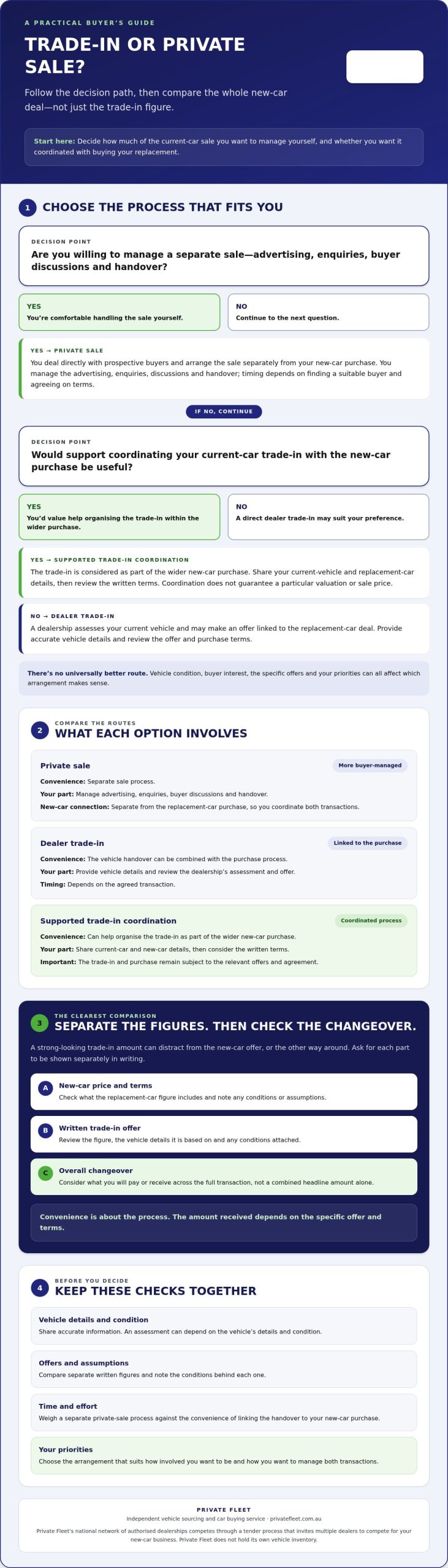
The right route depends on how you want to manage the sale of your current car alongside buying its replacement. A private sale gives you more direct control over finding a buyer, while a dealer trade-in can connect the vehicle handover with the new-car purchase. Supported coordination can help bring those decisions together without removing the need to compare the written terms.
| Option | Convenience | Buyer effort | Negotiation and timing | Connection to new-car purchase |
|---|---|---|---|---|
| Dealer trade-in | Can combine the car handover with the purchase process. | The dealer assesses the vehicle; you provide details and review the offer. | Discuss the trade-in and new-car terms. Timing depends on the agreed transaction. | Directly linked to the replacement-car deal. |
| Private sale | Requires a separate sale process. | You manage advertising, enquiries, buyer discussions and handover. | You deal directly with prospective buyers; timing depends on finding a suitable buyer and agreeing on terms. | Separate from buying the new car, so you coordinate both transactions. |
| Supported trade-in coordination | Can help organise the trade-in as part of the wider purchase. | You share vehicle and new-car details, then consider the written terms. | Trade-in and purchase terms remain subject to the relevant offers and agreement. | Designed to coordinate the current-car trade-in with the new-car process. |
No route always produces a better outcome. Offers, vehicle condition, buyer interest and your own priorities can all affect which arrangement makes sense. A private sale may suit someone prepared to manage a separate process; a trade-in may appeal if bringing the vehicle and new-car purchase together is more important. The useful comparison is not just the amount offered, but what you receive in return for the time and effort involved.
Convenience is about the process; the amount received depends on the specific offer and terms.
Is a trade-in or private sale better for your circumstances?
Consider how much time you can give the sale, how involved you want to be in buyer discussions, and whether you prefer one coordinated purchase or two separate transactions. A private sale means handling enquiries and arranging the sale independently of the new-car deal. Trade-in assistance australia can help organise the trade-in within the broader purchase, while leaving the offer itself to be assessed on its terms.
How can you compare a trade-in with a new-car quote?
Ask for the replacement car’s price and the trade-in offer to appear as separate written figures. Then compare the overall amount payable and note what each figure includes, along with any conditions or assumptions. A larger trade-in figure alone doesn’t establish which deal is better if the new-car price or other terms differ. Compare like with like, including the same model and variant. If you’d value support bringing the two decisions together, share your preferred vehicle and buying timeframe with Private Fleet.
What affects a trade-in assessment, and what should you compare?
A trade-in assessment reflects the information available about your vehicle and the terms of the current offer. Make, model, variant, year, kilometres and condition may all be relevant, but there’s no need to guess how a particular detail will change the figure. Give accurate, consistent information, then compare written offers against the complete replacement-car transaction.
A headline trade-in amount can look appealing on its own. It doesn’t show whether the new-car quote is for the same specification, what price basis is being used or whether conditions apply. For buyers weighing trade in assistance australia, a clear comparison separates confirmed figures from estimates and assumptions, making the changeover easier to assess.
Which vehicle details should buyers prepare?
Before discussing an assessment, write down the vehicle’s make, model, variant, year and odometer reading in kilometres. Note its general condition and any relevant features, damage or modifications. Be straightforward about what you know; don’t assume that a particular detail will automatically increase or reduce the offer. Consistent information gives the assessor and you a clearer basis for discussing the vehicle.
Useful details to gather include:
- Identity: make, model, variant and year.
- Use: current odometer reading in kilometres.
- Condition: a clear account of the vehicle’s general state and any known damage.
- Features and changes: relevant equipment, accessories or modifications.
If you’re unsure of a detail, distinguish what you know from what you’re estimating. That small step can prevent confusion when offers are compared or an assessment is discussed further.
Which parts of an offer deserve a side-by-side check?
Start with the replacement car. Confirm that each quote refers to the same model, variant and specification, and note whether the stated price is drive-away or uses another basis. Then record the trade-in figure separately. Look for written conditions, inclusions and an offer validity period so you can compare what each quote actually covers.
A simple comparison can include:
- New-car details: model, variant, specification and stated price basis.
- Trade-in details: offered figure and any conditions linked to it.
- Transaction total: the overall amount payable after the new-car and trade-in figures are applied.
- Status of information: identify what is confirmed in writing, what is an estimate and what remains an assumption.
For example, if two offers show different trade-in figures, compare the new-car price and terms beside them before deciding which is more suitable. Don’t treat a calculation based on an estimate as a confirmed offer. Specifications, availability and promotions can change, so check current details against Australian manufacturer or authorised-dealer sources and note when you checked them. This keeps your comparison grounded in current, like-for-like information.
Preparing for Trade-In Assistance in Australia
Start with the decision that will shape the rest of the process: what do you need your next car to do? A clear replacement-car brief helps keep trade-in discussions connected to a vehicle that suits your plans, rather than letting the current car determine the choice for you.
Work through these steps:
- Set your priorities. Note your preferred make, model and variant, plus any suitable alternatives. Think about how you’ll use the car, how long you expect to own it and the features you consider essential.
- Choose a realistic timeframe. Consider when you’d like to make a decision and whether that timing is flexible. This gives the purchase discussion a useful frame without assuming a particular delivery date.
- Prepare for the conversation. Gather the information and records you’ve already assembled about your current vehicle. Write down questions about coordinating the trade-in with your replacement-car purchase, so the points that matter to you are easy to raise.
This preparation is especially useful if you’re considering several models or haven’t settled on a variant. Separate must-haves from preferences, and be ready to explain what would make you consider an alternative. That can help focus the new-car brief while leaving room to assess suitable options.
What should you decide before discussing your trade-in?
Think beyond the vehicle badge. Consider the journeys you expect to make, the space you need and the ownership period you have in mind. If comfort, ease of entry, visibility or straightforward controls matter to you, include them in your shortlist criteria. Set a working budget and identify what you’d be willing to compromise on. A short, prioritised brief makes it easier to discuss options without locking you into a single choice too early.
It can also help to keep a few questions ready:
- Which alternatives meet my essential requirements?
- What should I decide before moving from a shortlist to a preferred variant?
- How will the trade-in fit into the timing of the new-car purchase?
- Which parts of the arrangement do I want explained in writing?
What information helps coordinate the next steps?
When requesting assistance, have your preferred make or model, postcode and buying timeframe ready. If you’re open to alternatives, say so and describe what matters most. This helps shape a focused conversation around your needs and intended timing. You can also use Private Fleet’s new-car buying process to understand how the wider purchase is organised, from defining your requirements to considering the next steps.
There’s no need to finalise every preference before starting. A clear shortlist, a realistic timeframe and a prepared set of questions are enough to begin with purpose and keep the process manageable.
How can Private Fleet help coordinate a new-car trade-in?
Private Fleet brings trade-in assistance into the wider process of buying a new car, helping you consider your current vehicle alongside the replacement you’re looking for. This can give you one clear point to organise your priorities, rather than treating the trade-in as an afterthought once you’ve chosen a new vehicle.
Keep the decisions distinct as you progress. Be clear about the model and variant you want, then review the new-car offer and trade-in terms as separate parts of the proposed purchase. This makes it easier to understand what each offer covers and decide whether the overall arrangement suits your needs. Trade-in assistance helps coordinate the process, but it doesn’t promise a particular valuation or outcome.
Private Fleet’s new-car buying service includes trade-in assistance within the broader purchase process. You can share what you’re looking for and raise questions about how your current car fits into the transaction, then consider the written terms before deciding how to proceed.
What role does the dealer tender process play?
The tender process is used to source a new-car offer for your brief. Compare the responses against the same model, variant and requirements, and assess the terms rather than assuming one result. Keep any trade-in figure visible as a separate part of the proposed transaction. Dealer competition relates to the new-car sourcing process; it does not guarantee a specific trade-in valuation or saving.
The new-car buying process can help you understand how the purchase is organised. As you review the options, note any points that need clarification and consider the new-car and trade-in details together before making your decision.
What should you include when asking for help?
Give a concise brief: your preferred make or model, any variant preferences, postcode and realistic buying timeframe. If you’re still weighing alternatives, say what matters most so your requirements are clear without needing to have every choice finalised.
Include your current car’s make, model, year, kilometres and an accurate description of its condition. Add any questions about coordinating the trade-in with the new-car purchase. A clear brief helps focus the discussion and gives you a practical basis for reviewing the next steps.
Make your next move with a clear brief
Your trade-in decision can shape how smoothly you move into your next car. Before progressing, decide what matters most: keeping the process connected, managing the sale yourself, or weighing both approaches before choosing. There’s no single route that suits every buyer, so let your priorities guide the next conversation.
For trade in assistance australia, a useful next step is to share the details behind your decision, not just the vehicle you’re replacing. Tell Private Fleet your preferred make or model, postcode and buying timeframe, along with any questions about coordinating the trade-in. That gives the discussion a practical starting point and helps keep the focus on a new car that fits your needs.
You don’t need to have every detail settled before asking for help. Start with your shortlist and what you hope the purchase process will look like, then work through the options with a clearer sense of direction.
Get help buying my new car
A considered next step can make the change to your new car feel more straightforward.
Frequently Asked Questions
Is trade-in assistance in Australia only useful if I am buying a new car?
It’s most relevant when you’re planning a new-car purchase, because the trade-in can be considered alongside that decision. If you’re not ready to choose a replacement, avoid treating an early trade-in discussion as a commitment or a standalone sale arrangement. First work out whether and roughly when you intend to replace your car. That gives you a more useful basis for deciding whether to explore assistance now or later.
Can I compare a trade-in offer with selling my car privately?
Yes. A useful extra consideration is how each option fits your schedule: a private sale may require you to coordinate viewings and a handover around your new-car plans, while a trade-in discussion is connected to the purchase. For buyers considering trade in assistance australia, compare the practical sequence as well as the figures. Keep any private-sale estimate clearly labelled as an estimate, not a confirmed buyer offer.
How is a trade-in vehicle assessed?
The assessment may involve reviewing the vehicle’s details and condition, and the offer can depend on the terms of the transaction. To make the discussion more useful, gather supporting material you already have, such as the service logbook, records of servicing and receipts for work completed. These documents provide context; they don’t establish a particular valuation. The actual offer remains specific to the vehicle and the assessment.
Does a trade-in reduce the price of the new car?
A trade-in can contribute towards the amount payable in the overall purchase, but it doesn’t necessarily change the new car’s stated price. Check how the written proposal applies the trade-in credit and whether the quoted new-car price is on the same basis as other quotes you’re considering. This distinction helps you understand the changeover amount without mistaking a credit for a change to the vehicle’s listed or quoted price.
Do I have to accept a trade-in offer when buying a new car?
You can consider an offer without deciding immediately to proceed. Before accepting, make sure you understand what the offer covers, any stated conditions and how it relates to the rest of the purchase. If you’re unsure whether you’ve reached a decision point, ask for the status and terms to be explained in writing. Avoid relying on an assumption about what a discussion or an earlier expression of interest means.
What details should I provide when asking for trade-in assistance?
Along with a concise description of your car, mention anything that could help clarify its history, such as service records, recent work or accessories that will be included. State whether any details are estimates, and note questions you want addressed about the proposed handover. For the new car, identify your preferred direction and timing. Clear context helps frame the discussion, but it doesn’t determine an offer or new-car delivery date.