
Glossary
- What is Bench Seat?
- What is ANCAP?
- What is Acceleration?
- What is Adaptive Cruise Control?
- What is After-Market Products?
- What is Air Conditioning?
- What is Airbags?
- What is All Wheel Drive (AWD)?
- What is Anti-Lock Braking System (ABS)?
- What is Aquaplaning?
- What is Bio-Diesel?
- What is Black Ice?
- What is Brake Assist?
- What is Brake Fluid?
- What is CVT?
- What is Camber?
- What is Car Jacking?
- What is Carbon Fibre?
- What is Central Locking?
- What is Climate Control?
- What is Coasting?
- What is Coolant?
- What is Crash Testing?
- What is Cruise Control?
- What is Direct Injection?
- What is Drive-By-Wire?
- What is Dual Fuel?
- What is Duco?
- What is Engine Braking?
- What is Flexibility?
- What is Fuel-Injection?
- What is Gross Vehicle Mass?
- What is Independent Suspension?
- What is Keyless Entry?
- What is LPG?
- What is Limited Slip Differential?
- What is Memory Seating?
- What is Metallic Paint?
- What is Methanol?
- What is Opposite-Lock?
- What is Overdrive?
- What is Oversteer?
- What is Park Distance Control?
- What is Power-Assisted Braking?
- What is Power-Assisted Steering?
- What is Rack-And-Pinion Steering?
- What is Radial Tuned Suspension?
- What is Riding The Clutch?
- What is Semi-Automatic Transmission?
- What is Suspension?
- What is Tiptronic?
- What is Torque?
- What is Traction Control?
- What is Turbo Diesel?
- What is Understeer?
- What is Vehicle Stability Control?
- What is Velour?
- What is Wheel Alignment?
- What is Wheel Balance?
- What is Wheel Spin?
- What is Wheelbase?
- What is Whiplash?
- What is a Alloy Wheel?
- What is a Blood Alcohol Level?
- What is a Bowser?
- What is a Brake Disc?
- What is a Brake Pad?
- What is a Breathalyser?
- What is a Bull-Bar?
- What is a CV Joint?
- What is a Cab/Chassis?
- What is a Cabriolet?
- What is a Carburettor?
- What is a Cat’s Eyes?
- What is a Centre Console?
- What is a Chamois?
- What is a Chassis?
- What is a Child-Proof Lock?
- What is a Choke?
- What is a Clutch Start?
- What is a Combustion Chamber?
- What is a Compliance Plate?
- What is a Coupe?
- What is a Crankshaft?
- What is a Crumple Zone?
- What is a Cylinder Head?
- What is a DC?
- What is a Dash Panel?
- What is a Differential Lock?
- What is a Differential?
- What is a Disc Brake?
- What is a Distributor Cap?
- What is a Distributor?
- What is a Drive Shaft?
- What is a Driveaway Price?
- What is a Driving Light?
- What is a Flat Spot?
- What is a Four-Wheel Drive?
- What is a Gear Ratio?
- What is a Gearbox?
- What is a Hot Wire?
- What is a Hybrid-Electric?
- What is a Jumper Lead/Cable?
- What is a Lap Belt?
- What is a Lap Sash Seat Belt?
- What is a Long Wheelbase?
- What is a Manual Gearbox/Transmission?
- What is a Misfire?
- What is a Moon Roof?
- What is a Muffler?
- What is a Naturally Aspirated Engine ?
- What is a Passenger Airbag?
- What is a Pentroof Head?
- What is a Piston?
- What is a Poppet Valve?
- What is a Pre-Delivery Inspection?
- What is a Radiator?
- What is a Retread?
- What is a Retrofit?
- What is a Rev-Counter?
- What is a Road-Test?
- What is a Roadworthy Certificate?
- What is a Rotary Engine?
- What is a SUV?
- What is a Shock Absorber?
- What is a Sidebag?
- What is a Snow Chain?
- What is a Space-Saver Tyre?
- What is a Spark Plug?
- What is a Spoiler?
- What is a Station Wagon?
- What is a Steering Column?
- What is a Sunroof?
- What is a Supercharger?
- What is a Supplementary Restraint?
- What is a T-Bone Collision?
- What is a Tachograph?
- What is a Targa Roof?
- What is a Timing Belt?
- What is a Tonneau Cover?
- What is a Traffic Calmer?
- What is a Transmission?
- What is a Turning Circle?
- What is a Twin-Cam Engine?
- What is a Utility – Ute?
- What is a Valve?
- What is a Vehicle Identification Number (Vin)?
- What is a Wishbone Axle?
- What is an All Terrain Vehicle (ATV)?
- What is an Alternator?
- What is an Automatic Transmission?
- What is an Engine Immobilizer?
- What is an Octane Number?
- What is an Odometer?
- What is an Oil Cooler?
- What is an Oil Filter?
- What is an On-Road Cost?
- What is an On-Road Price?
- What is an Option Pack?
- What is an RPM?
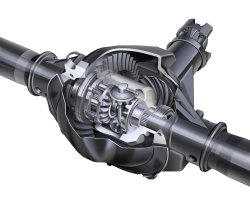
All cars require a differential unit. A differential unit (sometimes called the diff) is a very special mechanism designed to feed the engine’s torque to the driving wheels. In most cars, the differential is where the engine torque goes through its last gearing mechanism before spinning the wheels.
A differential’s purpose can be broken down into three functions. Firstly, a differential takes the power from the engine and connects it with the driving wheels. Secondly, a differental is the last gear reduction that will occur in the vehicle. Thirdly, the differential transmits the power from the engine to the wheels while allowing the wheels to rotate at different speeds.
A motor vehicle needs a differential because a vehicle’s wheels spin at different speeds, especially during a cornering manoeuvre. If the car did not have a differential, the driving wheels would have to be locked together and forced to spin at the same speed. Ouch! This would not only make turning a nightmare and increase the chance of losing control, but it is also hard on the vehicle. For the car to turn with the wheels locked, one tyre would have to slip. The large force needed to make a tyre slip on tarmac is great and the force would have to be transmitted through the axle from one wheel to the other, which would put a huge strain on the axle componentry – not to mention the rubber!
An open differential is the simplest type of diff and always applies the same amount of torque to each wheel. The problem is that as soon as a driving wheel loses traction, the torque gets thrown to that wheel – a bit like water always finding the easiest way down a hill.
With a limited slip differential, the diff mechanism can transfer the torque away from the wheel that starts slipping and shove it onto the wheel that still has traction. There are a number of ways of offering the limited slip differential feature. For serious four-wheel-drive vehicles, you can’t go past the Locking and Torsen option, which is simple but very effective. Even the mighty, massive Hummer has this feature. It’s a must for serious 4×4 trucks: if one wheel ends up off the ground, because the differential is locked into position, the driving wheels will continue to spin at the same speed.
The viscous coupling limited slip differential (what a mouthful!) is often found in all-wheel drive vehicles and is commonly used to lock the back wheels to the front wheels so that when one set of wheels starts to slip, torque will be transferred to the other set.
The clutch-type limited slip differential is perhaps the most common version of limited slip differential. The clutches only work if one wheel wants to spin faster than the other, so as to keep as much torque to the wheel that has traction.
I love differentials! Where would we be without its inventors? Probably stuck in a ditch beside a sharp corner or something like that.
We hope that helps answer the question ‘What is What is a Differential?’!
Back to Car Glossary