
Glossary
- What is Bench Seat?
- What is ANCAP?
- What is Acceleration?
- What is Adaptive Cruise Control?
- What is After-Market Products?
- What is Air Conditioning?
- What is Airbags?
- What is All Wheel Drive (AWD)?
- What is Anti-Lock Braking System (ABS)?
- What is Aquaplaning?
- What is Bio-Diesel?
- What is Black Ice?
- What is Brake Assist?
- What is Brake Fluid?
- What is CVT?
- What is Camber?
- What is Car Jacking?
- What is Carbon Fibre?
- What is Central Locking?
- What is Climate Control?
- What is Coasting?
- What is Coolant?
- What is Crash Testing?
- What is Cruise Control?
- What is Direct Injection?
- What is Drive-By-Wire?
- What is Dual Fuel?
- What is Duco?
- What is Engine Braking?
- What is Flexibility?
- What is Fuel-Injection?
- What is Gross Vehicle Mass?
- What is Independent Suspension?
- What is Keyless Entry?
- What is LPG?
- What is Limited Slip Differential?
- What is Memory Seating?
- What is Metallic Paint?
- What is Methanol?
- What is Opposite-Lock?
- What is Overdrive?
- What is Oversteer?
- What is Park Distance Control?
- What is Power-Assisted Braking?
- What is Power-Assisted Steering?
- What is Rack-And-Pinion Steering?
- What is Radial Tuned Suspension?
- What is Riding The Clutch?
- What is Semi-Automatic Transmission?
- What is Suspension?
- What is Tiptronic?
- What is Torque?
- What is Traction Control?
- What is Turbo Diesel?
- What is Understeer?
- What is Vehicle Stability Control?
- What is Velour?
- What is Wheel Alignment?
- What is Wheel Balance?
- What is Wheel Spin?
- What is Wheelbase?
- What is Whiplash?
- What is a Alloy Wheel?
- What is a Blood Alcohol Level?
- What is a Bowser?
- What is a Brake Disc?
- What is a Brake Pad?
- What is a Breathalyser?
- What is a Bull-Bar?
- What is a CV Joint?
- What is a Cab/Chassis?
- What is a Cabriolet?
- What is a Carburettor?
- What is a Cat’s Eyes?
- What is a Centre Console?
- What is a Chamois?
- What is a Chassis?
- What is a Child-Proof Lock?
- What is a Choke?
- What is a Clutch Start?
- What is a Combustion Chamber?
- What is a Compliance Plate?
- What is a Coupe?
- What is a Crankshaft?
- What is a Crumple Zone?
- What is a Cylinder Head?
- What is a DC?
- What is a Dash Panel?
- What is a Differential Lock?
- What is a Differential?
- What is a Disc Brake?
- What is a Distributor Cap?
- What is a Distributor?
- What is a Drive Shaft?
- What is a Driveaway Price?
- What is a Driving Light?
- What is a Flat Spot?
- What is a Four-Wheel Drive?
- What is a Gear Ratio?
- What is a Gearbox?
- What is a Hot Wire?
- What is a Hybrid-Electric?
- What is a Jumper Lead/Cable?
- What is a Lap Belt?
- What is a Lap Sash Seat Belt?
- What is a Long Wheelbase?
- What is a Manual Gearbox/Transmission?
- What is a Misfire?
- What is a Moon Roof?
- What is a Muffler?
- What is a Naturally Aspirated Engine ?
- What is a Passenger Airbag?
- What is a Pentroof Head?
- What is a Piston?
- What is a Poppet Valve?
- What is a Pre-Delivery Inspection?
- What is a Radiator?
- What is a Retread?
- What is a Retrofit?
- What is a Rev-Counter?
- What is a Road-Test?
- What is a Roadworthy Certificate?
- What is a Rotary Engine?
- What is a SUV?
- What is a Shock Absorber?
- What is a Sidebag?
- What is a Snow Chain?
- What is a Space-Saver Tyre?
- What is a Spark Plug?
- What is a Spoiler?
- What is a Station Wagon?
- What is a Steering Column?
- What is a Sunroof?
- What is a Supercharger?
- What is a Supplementary Restraint?
- What is a T-Bone Collision?
- What is a Tachograph?
- What is a Targa Roof?
- What is a Timing Belt?
- What is a Tonneau Cover?
- What is a Traffic Calmer?
- What is a Transmission?
- What is a Turning Circle?
- What is a Twin-Cam Engine?
- What is a Utility – Ute?
- What is a Valve?
- What is a Vehicle Identification Number (Vin)?
- What is a Wishbone Axle?
- What is an All Terrain Vehicle (ATV)?
- What is an Alternator?
- What is an Automatic Transmission?
- What is an Engine Immobilizer?
- What is an Octane Number?
- What is an Odometer?
- What is an Oil Cooler?
- What is an Oil Filter?
- What is an On-Road Cost?
- What is an On-Road Price?
- What is an Option Pack?
- What is an RPM?
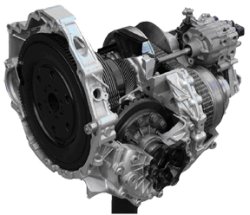
CVT stands for the Continuously Variable Transmission. A traditional automatic transmission has gears that are able to interlock by toothed wheels that help transmit rotary motion and torque. An automatic transmission moves through the gears, and the driver can usually feel the car jolt as each gear is engaged. The beauty of a CVT is that, unlike the traditional automatic transmission, they don’t have a gear box with a set number of gears. This means that a CVT does not have interlocking toothed wheels.
The most common type of CVT works by a clever pulley system. The pulley system allows an infinite variability of gearing between the highest and lowest gears. A CVT has no set gear shifts and therefore is very smooth in its delivery of engine power to the driving wheels.
There are three types of CVT. Firstly, there are pulley-based CVTs which are simple in design, and consist of a metal or rubber belt on two pulleys. Secondly, there is the toroidal CVT, which replaces the belts and pulleys with disks and power rollers. And thirdly, there is the hydrostatic CVT which is not driven by friction like the other two types. The hydrostatic CVT uses variable displacement pumps to vary fluid flow into hydrostatic motors, which governs the relational motion to the drive wheels.
CVTs offer constant and stepless acceleration. They prove to be more fuel-efficient because the CVT works to keep the car at its optimum power range, however fast the car is travelling. Because less power is lost in a CVT compared to an automatic transmission of the usual type, acceleration is better.
With the technological advancements in CVTs, the capacity for handling greater amounts of torque are becoming a reality. The new Nissan Murano CVT handles 245 bhp without a problem. More power to the CVT, I say!
We hope that helps answer the question ‘What is What is CVT?’!
Back to Car Glossary